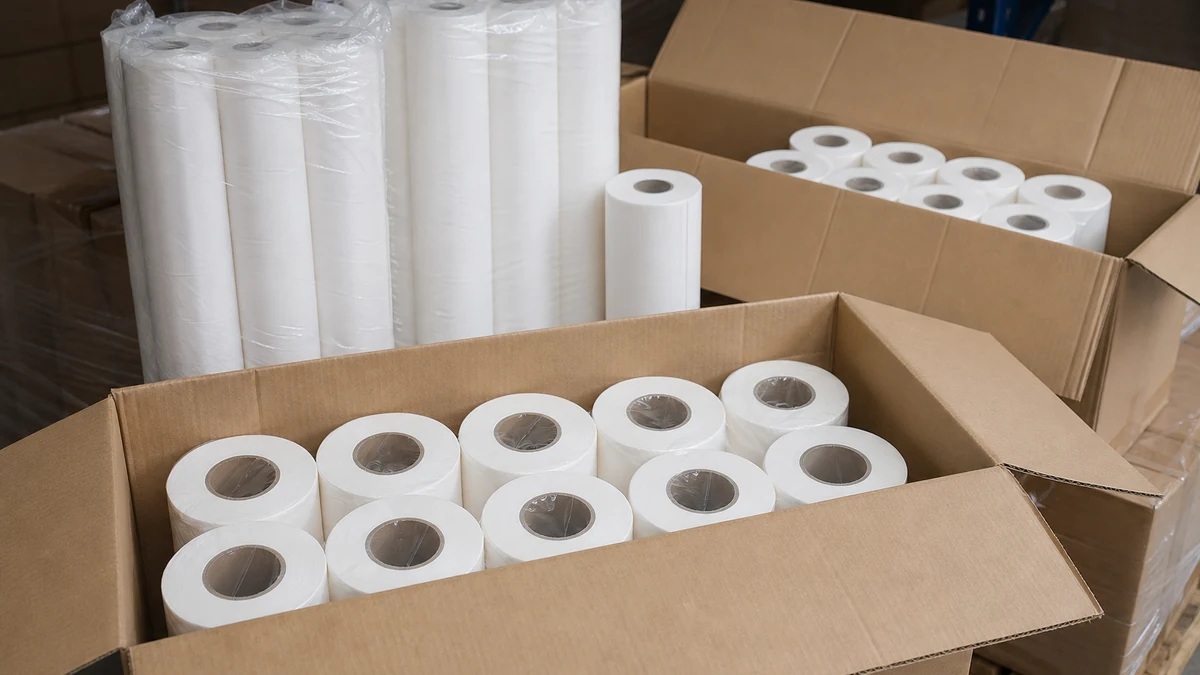
Have you ever wondered why a supplier’s sample looks premium—then the first shipment arrives with crushed cartons. weak wet strength, or roll specs that don’t match your market?
If you’re sourcing across categories, the risk multiplies. A reliable boxed facial tissue supplier, a stable TAD paper towel manufacturer, and a consistent bulk toilet paper program all require different controls—yet they must still ship on-time, export-ready, and repeatable.
If you’re visiting Paper Vietnam, treat this article as your booth checklist. Brand reference: sanshengpaper.
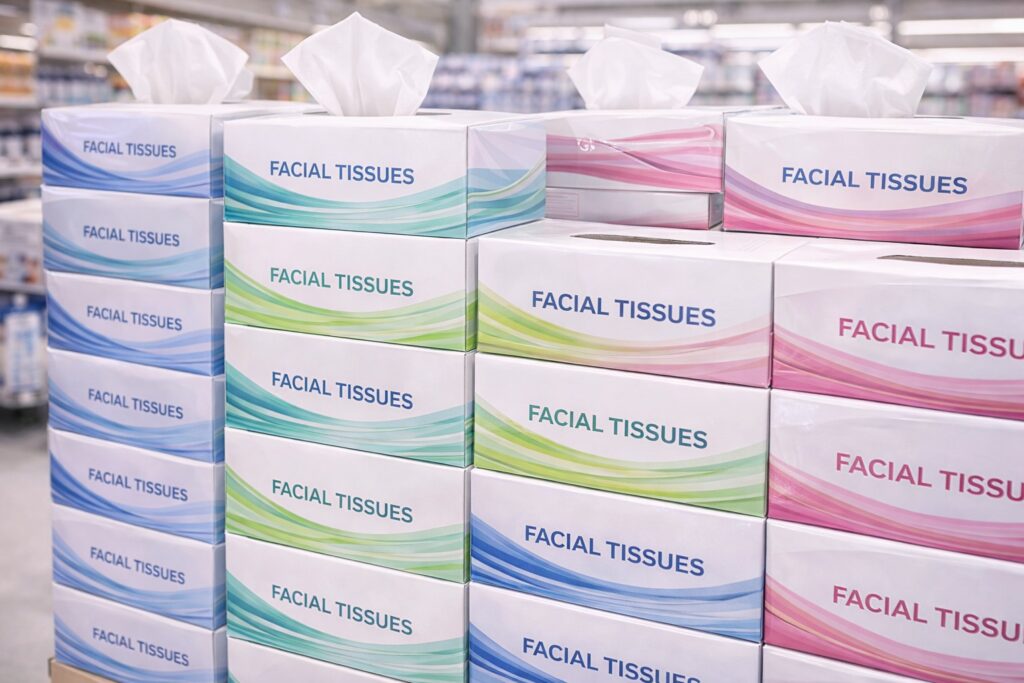
The buyer’s reality in 2026: you’re purchasing a supply system, not a sample
Most sourcing failures happen after samples because buyers didn’t validate:
repeatability (batch-to-batch consistency)
export packaging discipline (damage prevention)
SKU control (no mixing, no label errors)
performance proof (not marketing words)
The fastest way to reduce risk is to score suppliers using the same “proof tests” professional importers use.
10 proof tests to shortlist suppliers fast
1) Start with a “quote-ready” spec pack (this alone reduces mistakes)
Before asking for price, send:
target market + channel (retail, distributor, HoReCa)
formats you need (box tissue / towel / toilet rolls)
ply, size, count, packaging format
destination port + monthly forecast
whether OEM printing and barcode are required
Serious suppliers reply with fewer questions—and more accurate quotes.
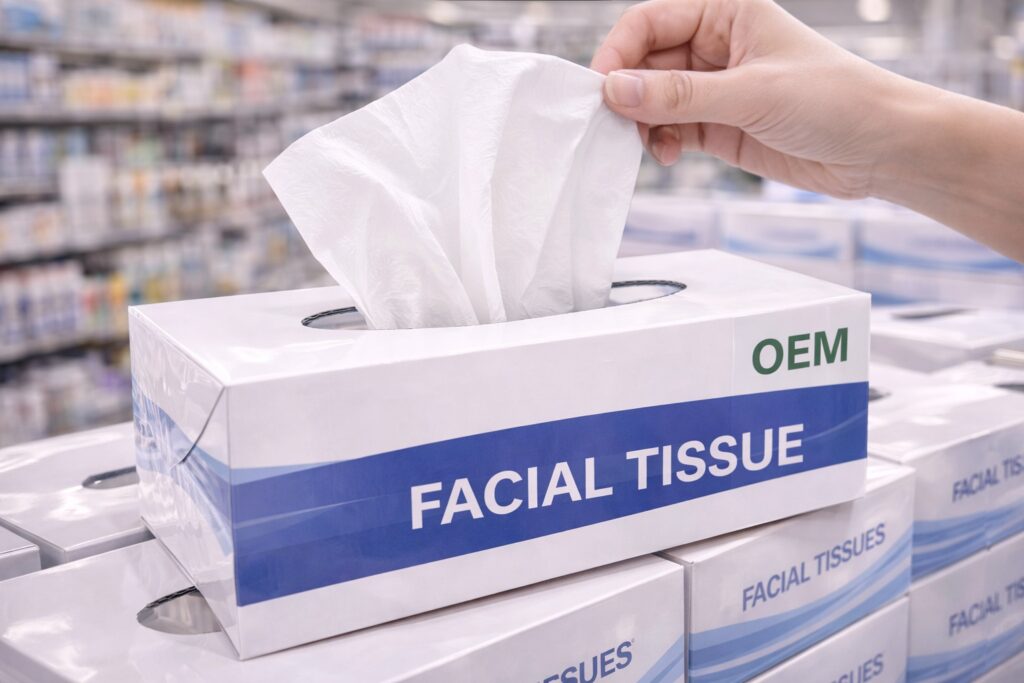
Box tissue program: the tests buyers use before approving a boxed facial tissue supplier
2) Crush resistance is non-negotiable (export reality)
Carton deformation is one of the most common claim triggers in boxed tissue.
Ask for proof: carton grade, stacking rules, pallet protection method, and shipping photos.
3) Pop-up pull performance (don’t accept hand-made sample behavior)
Box tissue must pull smoothly, sheet by sheet, without tearing or jamming.
Ask for proof: a pull test on production-grade boxes.
4) Sheet count tolerance (the #1 hidden complaint in retail)
Even small drift creates returns and distributor disputes.
Ask for proof: “What is your sheet count tolerance range by batch, and how is it checked?”
5) Print accuracy + barcode readability (OEM cost is here)
For private label, packaging errors can cost more than the tissue itself.
Ask for proof: barcode scanning checks before loading, plus print alignment checks.
Towel program: how importers verify a real TAD paper towel manufacturer
6) Wet strength must be explained, not claimed
Performance towel programs fail when wet strength drifts between lots.
Ask: what test method is used and what target values or acceptable ranges are controlled. A professional TAD paper towel manufacturer can explain this clearly.
7) Absorbency speed matters more than “total absorption”
Many towels can hold water; fewer pick it up fast.
Ask for proof: a fixed-condition demonstration (same water volume, same time, same sheet size). This is a top filter for a dependable TAD paper towel manufacturer.
8) Low lint control (quietly impacts both complaints and converting)
Lint creates negative feedback and can affect downstream processing.
Ask for proof: dust/lint control steps during finishing and packing.
Toilet roll program: how buyers lock consistency for bulk toilet paper
9) Confirm roll specs that match your market and your container math
The most common mismatch is simple: the roll spec doesn’t fit your channel expectations or your loading plan.
Ask: recommended roll OD, core size, sheet count, ply, and wrap style for your market—and how this impacts container utilization for bulk toilet paper.
10) Tolerance + lead-time plan (because one late SKU can delay the container)
Multi-SKU programs fail when one item runs late and the supplier has no plan.
Ask for proof: production window protection, and the shipping plan if one SKU delays (split shipment vs reschedule). This is essential when you run repeat bulk toilet paper orders.
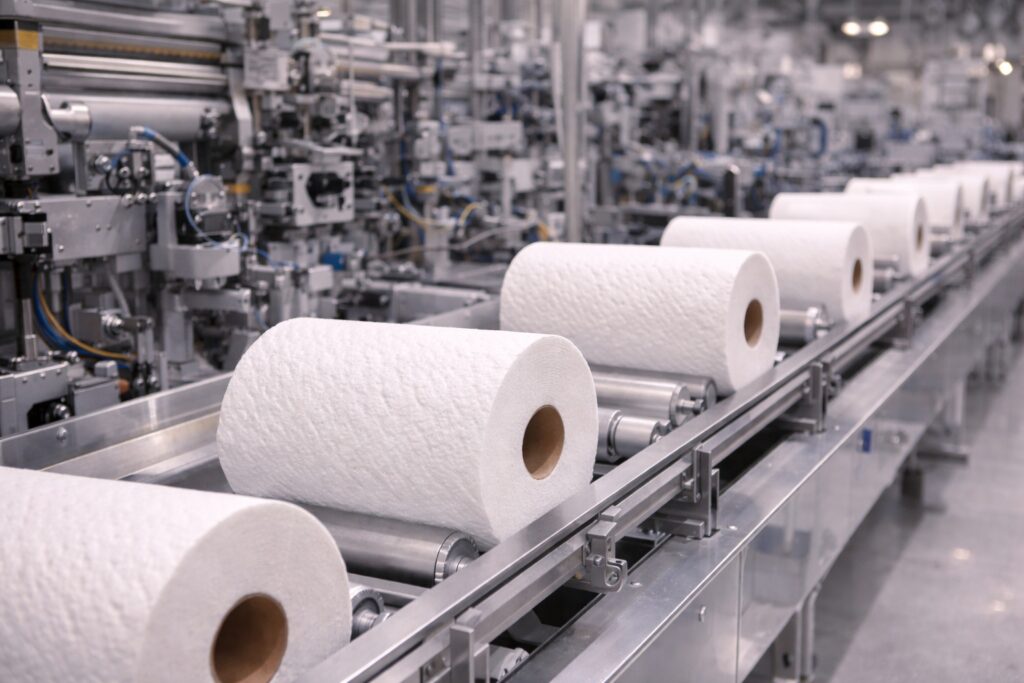
RFQ table to increase trust and speed up quotations
Use this structured table when you contact suppliers—buyers who send this get better answers.
| Program | What you provide | What the supplier must prove |
|---|---|---|
| Box tissue | Ply, sheet size, sheets/box, box size, print needs | Carton crush strategy, pull test, sheet count tolerance |
| Towel | GSM or performance target, roll size, emboss preference | Wet strength method + test, absorbency speed proof, lint control |
| Toilet rolls | Ply, roll OD, sheet count, core size, wrap | OD tolerance, sheet count tolerance, container loading plan |
| OEM packaging | Artwork version, barcode, languages | Version control, barcode scan check, print consistency |
| Export packing | Pallet style, stretch film, corner protectors | Packing photos + QC checklist before loading |
| Logistics | Destination port, forecast | Lead time protection + peak season plan |
Brand reference: sanshengpaper.
Paper Vietnam booth script
At Paper Vietnam, ask these and watch who can answer with proof:
“Show export packing photos with shipping marks, pallet wrap, and QC label.”
“For box tissue: what carton grade do you use, and can you show a pull test?”
“For towel: what wet strength and absorbency speed test method do you use?”
“For toilet rolls: what spec improves container efficiency for my market?”
“If one SKU is delayed, what’s your shipping plan?”
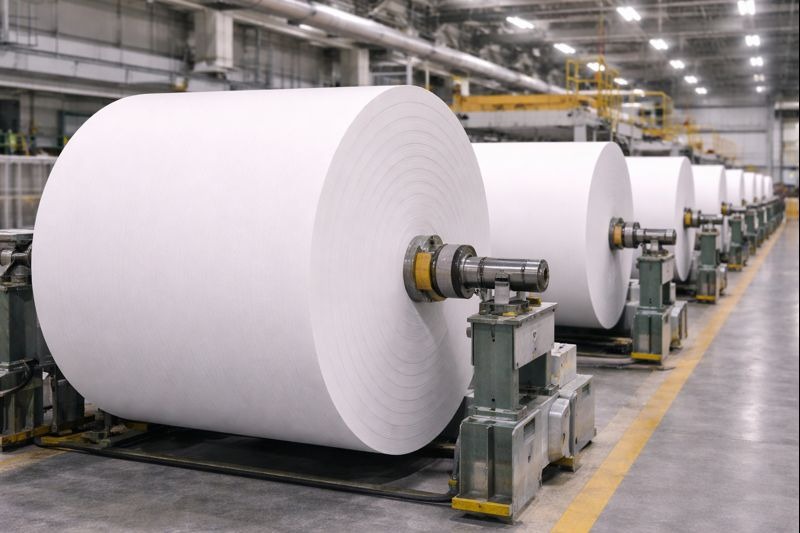
Buyer-ready product description
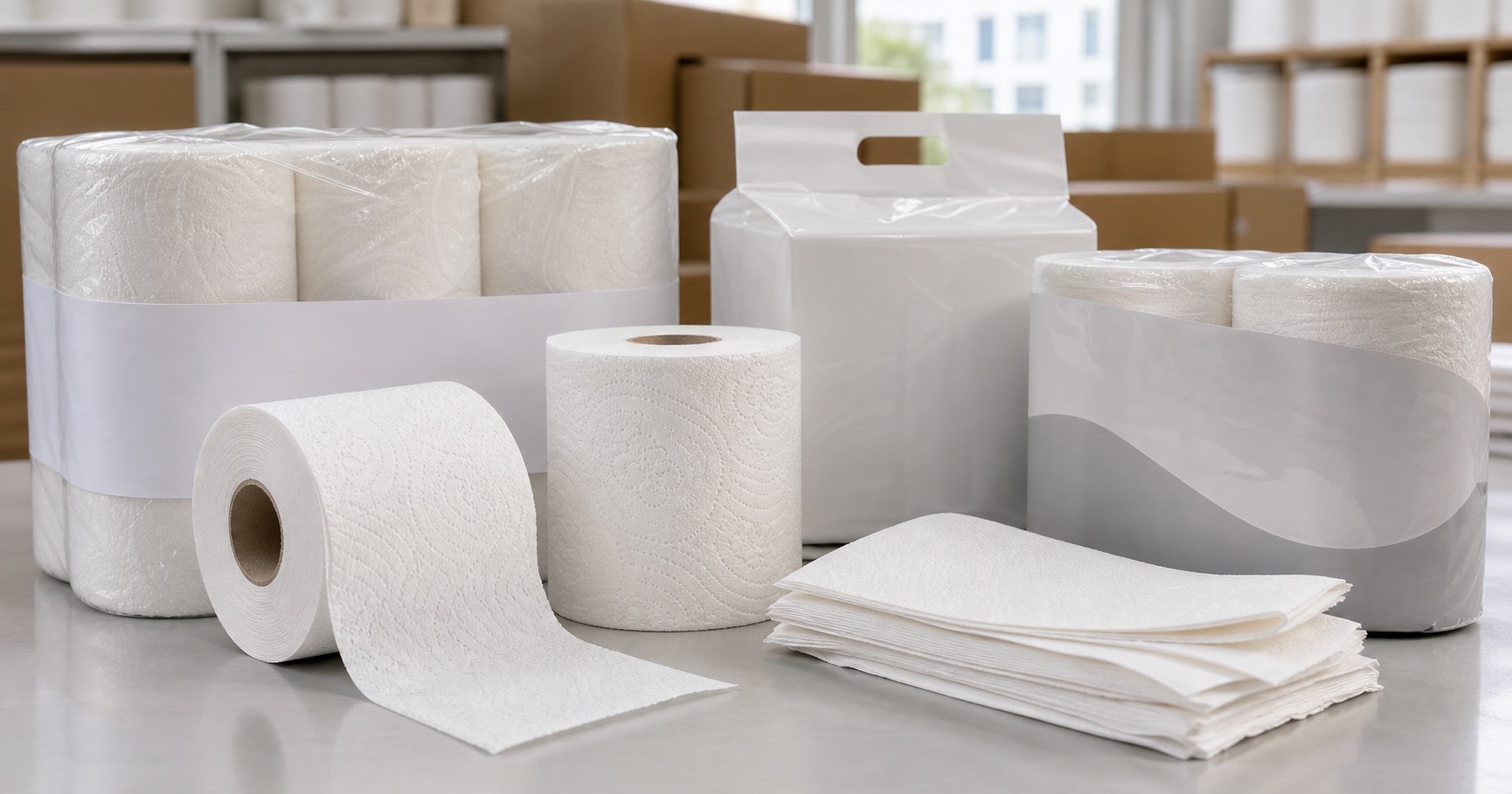
Box tissue program: retail-ready packaging, stable sheet count control, and export packing designed to reduce crush risk.
Performance towel program: fast pickup, stable wet strength, and low lint control for repeat orders.
Toilet roll program: consistent specs and container-efficient loading options designed for stable supply.
FAQ
Q1: What should I verify first when selecting a boxed facial tissue supplier?
Start with carton strength, pop-up pull performance, and sheet count tolerance—then confirm barcode checks for OEM packaging.
Q2: How can I tell if a supplier is a real TAD paper towel manufacturer?
Ask for wet strength and absorbency speed test methods under fixed conditions, plus proof of lint control and batch consistency.
Q3: What information is needed to quote bulk toilet paper accurately?
Ply, roll OD, sheet count, core size, wrap style, destination port, and target monthly volume—plus the container loading preference.
Q4: Can one supplier handle all three categories reliably?
Yes—if they prove repeatability per program, show export packing photos, and provide a lead-time plan that prevents one SKU delaying the container.
Q5: How do I reduce OEM packaging mistakes?
Use artwork version control, barcode scanning checks before loading, and clear carton shipping marks—confirmed with photos.
Ready to reduce claims on your next container?
If you want a stable program supported by export-ready packing, clear tolerances, and repeatable performance, share your RFQ table and packaging requirements.
Fill out the form with your market, specs, OEM printing needs, destination port, and forecast. The sanshengpaper team will respond with MOQ, price, lead time, and an export packing plan—so you can move from “nice samples” to reliable repeat shipments.
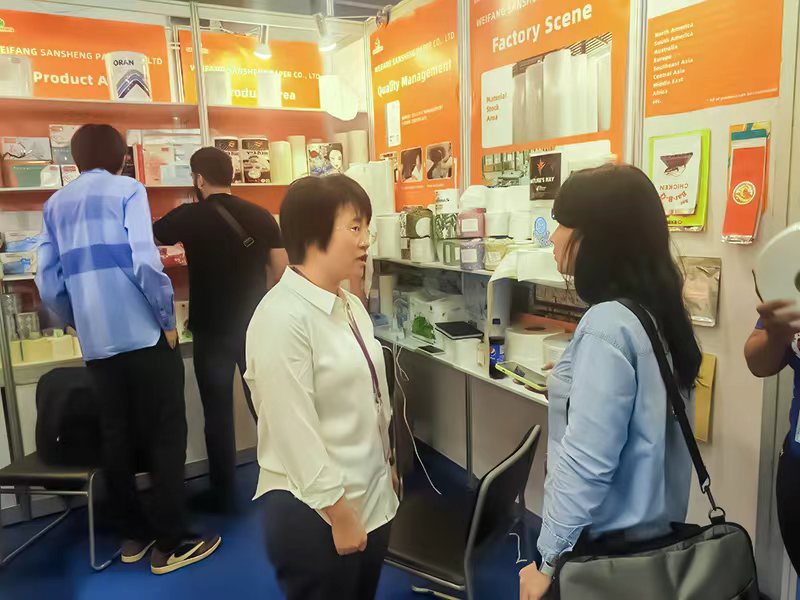
Sales Manager at Sansheng Paper · 20+ years in tissue paper OEM & bulk export · LinkedIn