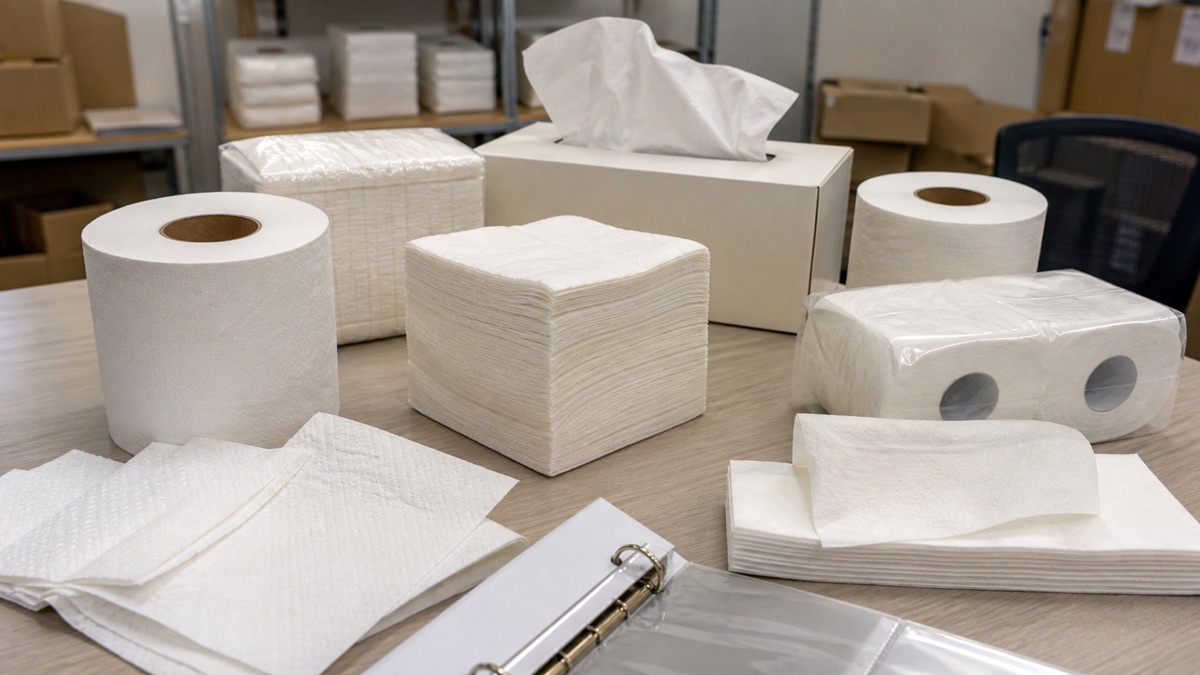
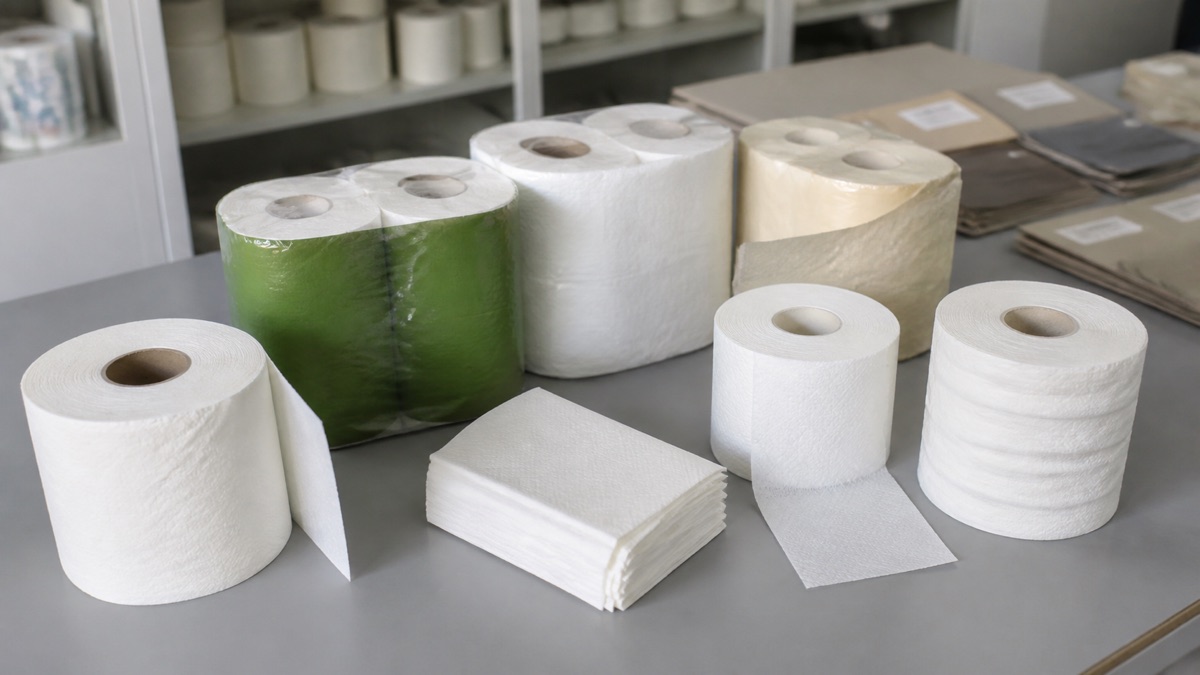
A single skipped sample test on a 40HQ order can mean 22 tonnes of underperforming paper sitting in your warehouse — and a TAD paper towel manufacturer who knows you skipped it will keep selling you the same thing.
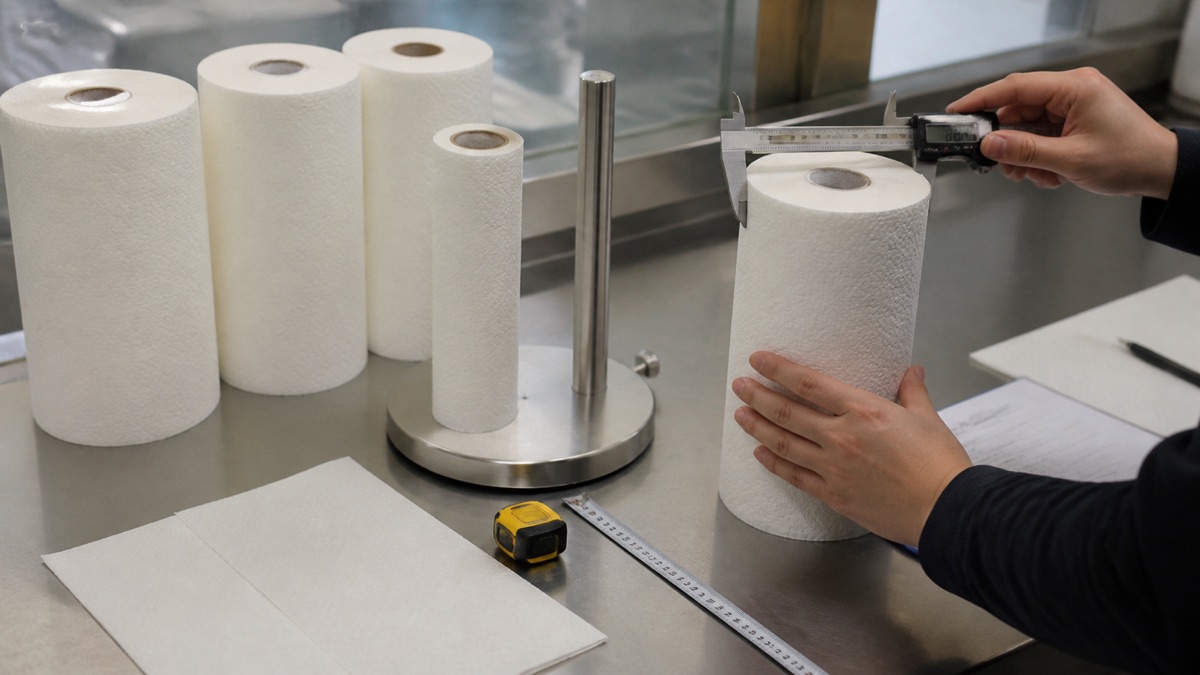
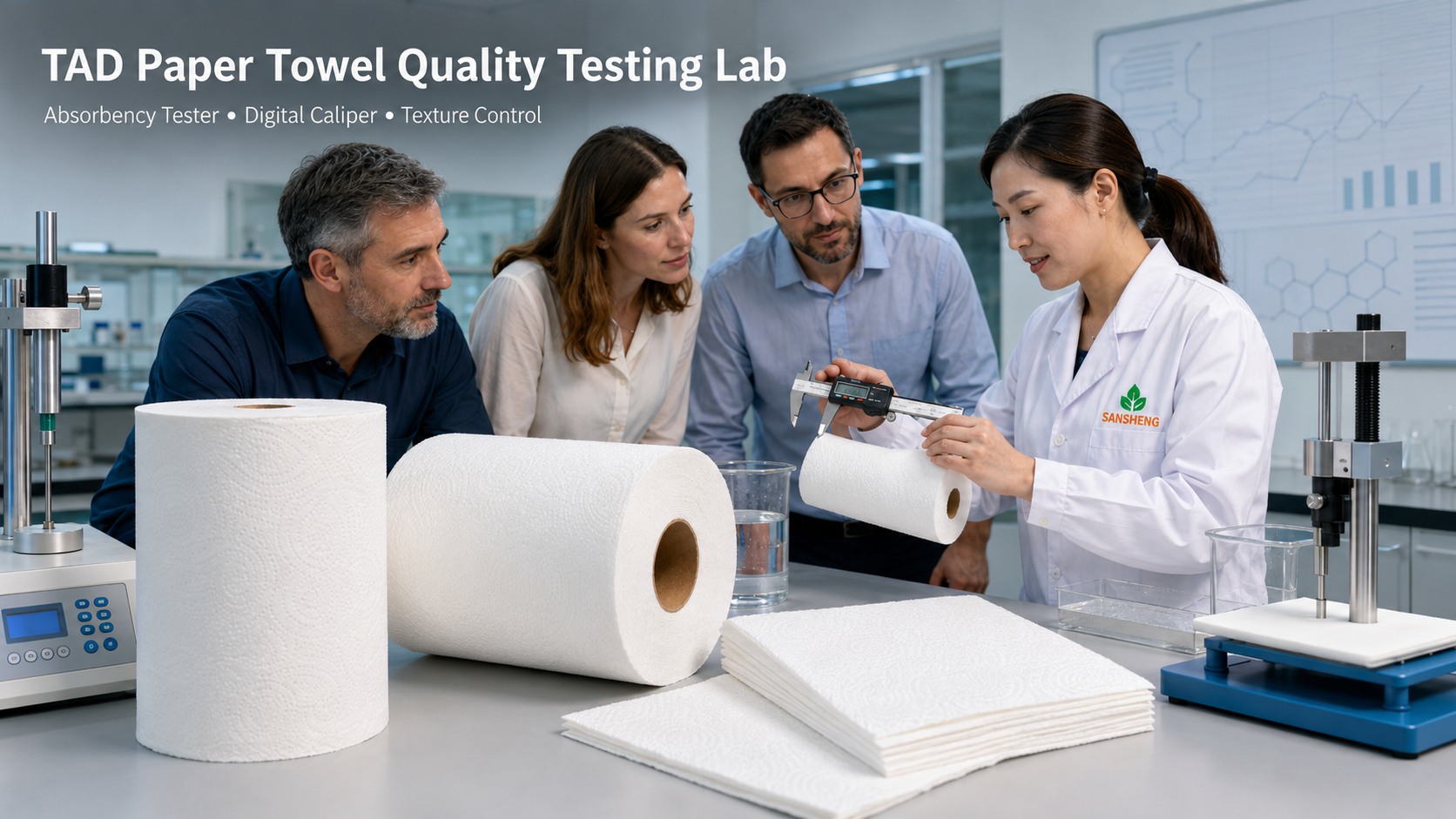
Before placing a bulk PO with any TAD paper towel manufacturer in China, run these five tests on a pre-shipment sample: (1) water absorbency in g/g per the TAPPI T 432 method, (2) basis weight tolerance versus stated GSM, (3) dry and wet tensile strength, (4) caliper thickness and embossing depth, and (5) optical brightener (OBA) detection under UV. Each takes under 30 minutes in a basic lab; together they catch 90% of supplier substitution and capacity-fade issues that B2B importers discover only after the container clears customs.
Inside this guide
- Why pre-shipment tests beat ad-hoc QC complaints
- Test 1: Water absorbency — the TAD signature spec
- Test 2: Basis weight (GSM) tolerance
- Test 3: Dry and wet tensile strength
- Test 4: Caliper and embossing depth
- Test 5: Optical brightener (OBA) UV scan
- Tracy’s experience: a buyer who skipped Test 1
- FAQ for procurement managers
1. Why Pre-Shipment Tests Beat Ad-Hoc QC Complaints
Most B2B procurement disputes with a TAD paper towel manufacturer trace back to one missing step: the buyer never tested a representative production sample before the container left port. Once goods are at destination, three things shift against you. First, the supplier’s incentive to remediate drops sharply — they have your deposit and 70% wire. Second, third-party retesting at destination costs $1,200–$2,200 per container plus 7–14 days. Third, your downstream contracts are already promising delivery dates you now can’t hit.
The fix is not more aggressive contract language. It is a $300–$450 pre-shipment test on three representative reels, with a written acceptance criterion per spec. A credible TAD paper towel manufacturer will not only accept this protocol — they will pre-test internally and deliver the lab report with the bill of lading. That single deliverable predicts shipment quality better than any factory tour.
2. Test 1 — Water Absorbency (the TAD Signature)
Absorbency is the spec that justifies the TAD premium. Conventional dry-crepe towels deliver roughly 5–8 g of water per 1 g of fiber. Genuine TAD product, per peer-reviewed absorbency research published by NC State BioResources, sits in the 9–14 g/g range. Anything below 8.5 g/g on a sample claimed as TAD is either misclassified product or a manufacturer running conventional pulp through a TAD-pattern emboss.
- Method: TAPPI T 432 (immersion) or simple horizontal gravimetric — both reproducible with $80 lab scale
- Sample prep: 4 × 4 inch squares, conditioned at 23°C / 50% RH for 4 hours
- Acceptance: ≥9.0 g/g for 1-ply TAD, ≥10.5 g/g for 2-ply TAD
- Red flag: 5–8 g/g range — supplier is not running TAD machinery; this is dry-crepe paper marketed as TAD
Importers running multiple absorbent SKUs through one factory should align this test across product lines — see the same absorbency principles applied to our paper towel manufacturer capability page for non-TAD comparisons.
3. Test 2 — Basis Weight (GSM) Tolerance
GSM is the cost-leverage spec. A 1 g/m² shortfall on a 40HQ container of 35 GSM TAD towel means roughly 600 kg of “missing” paper across the load — a $0.42–$0.68 per kg gain captured by the factory, not the buyer.
| TAD Grade | Target GSM | Acceptable Tolerance | Buyer Implication If Out of Spec |
|---|---|---|---|
| Premium hand towel (US foodservice) | 35 GSM | ±1.5 GSM (±4%) | Reduced wet-strength performance; complaints from dispensing |
| EU couch / kitchen TAD | 32 GSM | ±1.5 GSM (±5%) | Lighter feel; consumer perceives “downgrade” |
| 2-ply TAD bath tissue | 16 + 16 GSM per ply | ±1.0 GSM per ply | Variable softness; tear at perforation under load |
| Industrial wipe TAD | 45–60 GSM | ±2.0 GSM (±4%) | Reduced solvent absorption capacity |
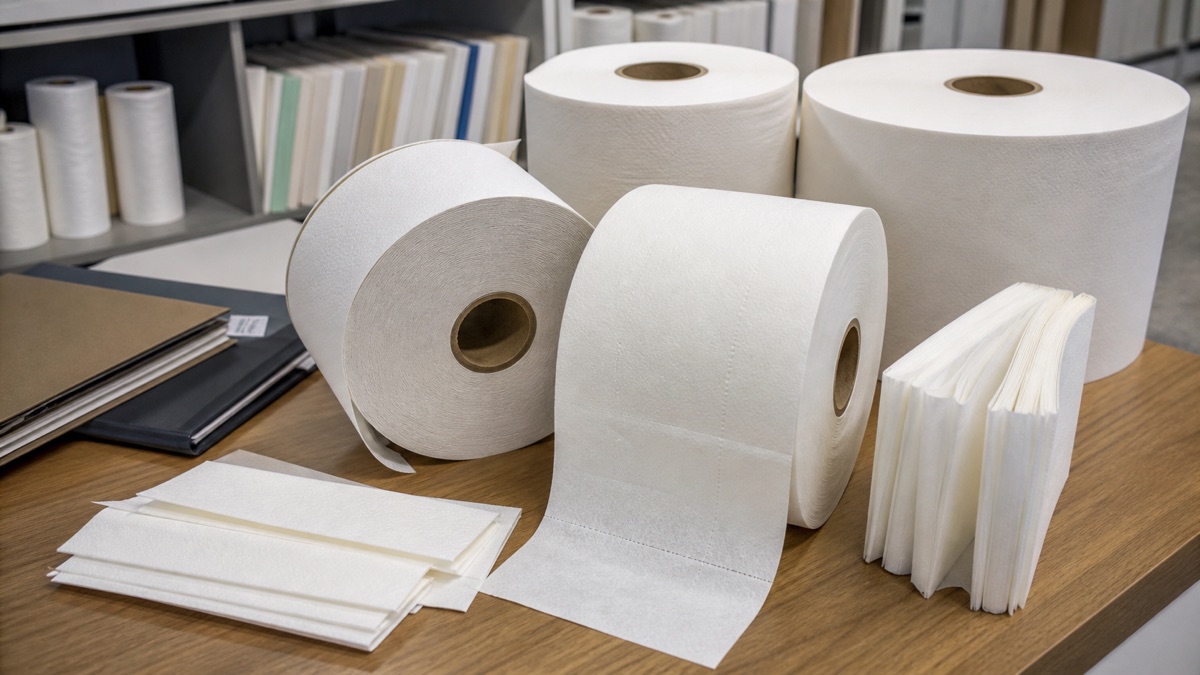
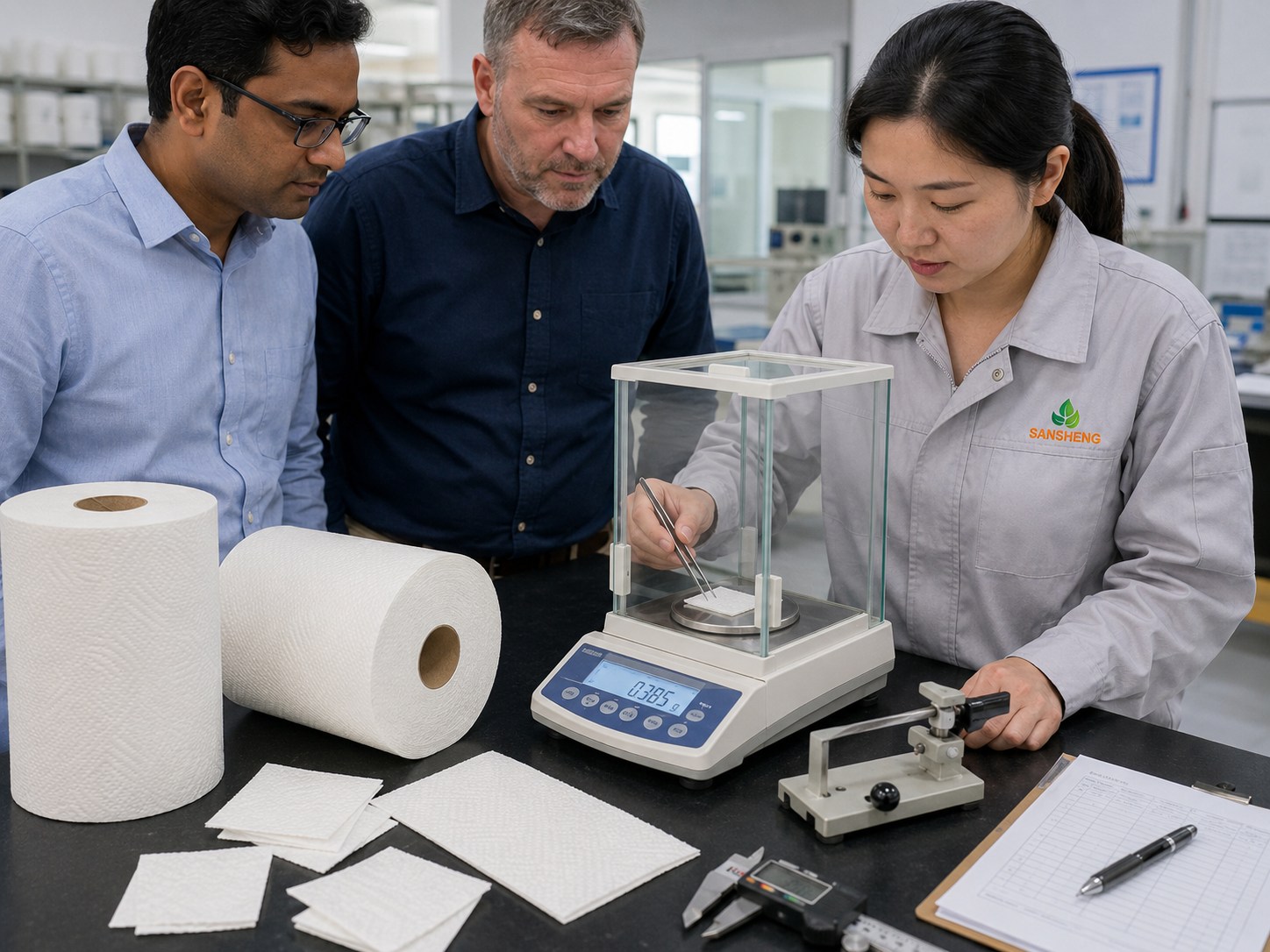
Method: cut three 100 cm² squares from random reel positions, weigh on a 0.001 g balance, convert to GSM. Total time: 8 minutes per reel. The buyer takes 9 measurements from 3 reels — if average falls below tolerance, reject the lot. A credible TAD paper towel manufacturer maintains GSM tolerance below ±3% on routine production runs. Buyers running multi-SKU consolidated orders should apply the same protocol to parent reels — see the jumbo roll tissue manufacturer page for upstream pulp-and-reel specifications that drive downstream TAD converting quality.
4. Test 3 — Dry and Wet Tensile Strength
Wet strength is what separates a usable hand towel from one that disintegrates mid-wipe. The industry standard, ISO 12625-4, defines the tensile measurement method for tissue and towel; the practical threshold for foodservice TAD is wet/dry tensile ratio ≥ 0.25.
- Dry tensile: Aim for 250–350 N/m on a 35 GSM 1-ply TAD hand towel. Below 200 N/m, expect dispensing tears.
- Wet tensile: Aim for 60–95 N/m. Below 50 N/m, the towel will fail at the first wipe in a wet environment — fatal for foodservice channels.
- Wet/dry ratio: Should be ≥ 0.25 for premium TAD; ≥ 0.18 for value-tier TAD.
A frequent supplier game: add excess wet-strength resin to inflate the wet number while keeping dry low (cheaper pulp). The ratio catches this. Always look at both, never one in isolation.
5. Test 4 — Caliper Thickness and Embossing Depth
Caliper measures how much air is locked into the sheet — and air is what makes a TAD towel feel premium at the same GSM as a conventional towel. Use a digital tissue caliper (resolution 0.001 mm) and measure single-sheet thickness at 5 random positions.
- Conventional dry-crepe paper towel at 35 GSM: 220–260 μm caliper
- Genuine TAD paper towel at 35 GSM: 380–460 μm caliper (45–70% bulkier)
- “TAD-style” embossed conventional fake: 280–340 μm caliper — the embossing imitates pattern but bulk fades after first compression
For 2026 procurement, caliper is the single hardest spec for a fake TAD supplier to hit, because the bulk is a function of the through-air-drying process itself — not something a finishing roller can replicate. A TAD paper towel manufacturer that delivers genuine TAD caliper consistently is running real TAD paper supplier-grade machinery, not a converted Yankee-cylinder mill claiming TAD on the spec sheet.
6. Test 5 — Optical Brightener (OBA) UV Scan
Optical brightening agents (OBAs) make paper look whiter — at the cost of skin-contact concerns and increasingly tight regulatory scrutiny in EU and California markets. Premium TAD for foodservice or hospital channels should be OBA-free. The test takes 30 seconds.
- Take sample to a dark room or cover with a black cloth.
- Hold a $15 UV-A 365 nm flashlight directly over the sheet.
- OBA-free sample: sheet appears dull off-white under UV.
- OBA-loaded sample: sheet glows bright blue-white under UV. Reject for hospital and EU food-contact applications.
This single test catches one of the most common supplier substitutions: virgin OBA-free pulp swapped for cheaper recycled-fiber pulp dosed with OBA to “match” the original whiteness. A reputable American Forest & Paper Association (AF&PA)-aligned mill will disclose OBA content on the technical data sheet without being asked.
🏭 From Our Factory Floor
Real case (Q1 2026): A US food-service distributor placed a re-order of 3 × 40HQ on a 35 GSM TAD hand-towel SKU after their first container performed well. The second container had identical packaging and visual finish — but customer complaints spiked within two weeks. Lab retest at destination showed: GSM at 32.4 (down 7%), caliper at 305 μm (down 26%), absorbency at 7.8 g/g (down 35%). The supplier had run conventional dry-crepe paper through the same embossing roller. The distributor’s contract had no pre-shipment QC clause, so the recovery was limited to a partial price credit on the next order.
What we learned: Repeat orders are where buyers stop testing — and where dishonest suppliers shift product. Build a permanent pre-shipment QC clause that doesn’t relax after Order 1. The five tests above cost less than $400 per container and would have caught all three drift signals on this case before sailing.
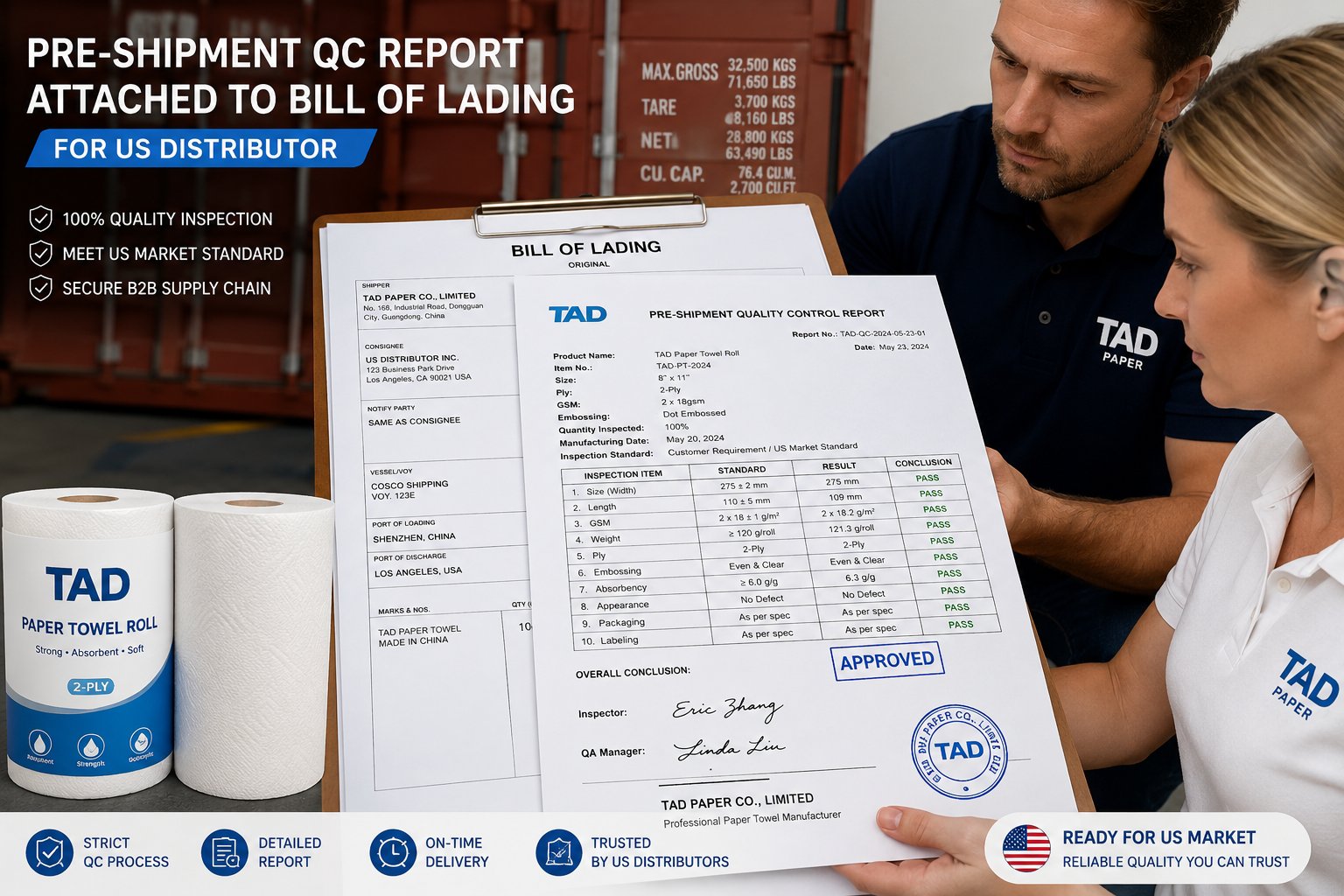
7. Putting It Together — The 30-Minute Pre-Shipment Protocol
Pulled into one workflow, the five tests above run in under 35 minutes on a basic procurement lab — or under one business day at SGS/Intertek/TÜV for buyers without in-house capability.
| Test | Equipment | Time | Cost (in-house) | Cost (3rd party) |
|---|---|---|---|---|
| Absorbency (g/g) | Lab scale + timer + flat tray | 8 min | $80 one-time | $45 per sample |
| GSM tolerance | 0.001 g balance + ruler | 5 min | $120 one-time | $30 per sample |
| Wet/dry tensile | Bench tensile tester | 10 min | $650 one-time | $95 per sample |
| Caliper / bulk | Digital tissue caliper | 4 min | $180 one-time | $40 per sample |
| OBA UV scan | UV-A 365 nm flashlight | 1 min | $15 one-time | $25 per sample |
| TOTAL | — | ~28 min | $1,045 one-time | $235 / container |
For buyers running mixed paper categories, the same QC lab covers adjacent SKUs — the test set extends directly to kitchen paper and airlaid napkins sourcing without modification.
8. FAQ for B2B Procurement Managers
What absorbency benchmark should I require in the PO with a TAD paper towel manufacturer?
For 1-ply 35 GSM TAD: ≥9.0 g/g water absorbency per TAPPI T 432. For 2-ply premium TAD: ≥10.5 g/g. Make this a numeric clause in the PO, not a verbal expectation — without numbers in writing, you cannot reject on this basis.
How many samples are statistically meaningful for a 40HQ pre-shipment test?
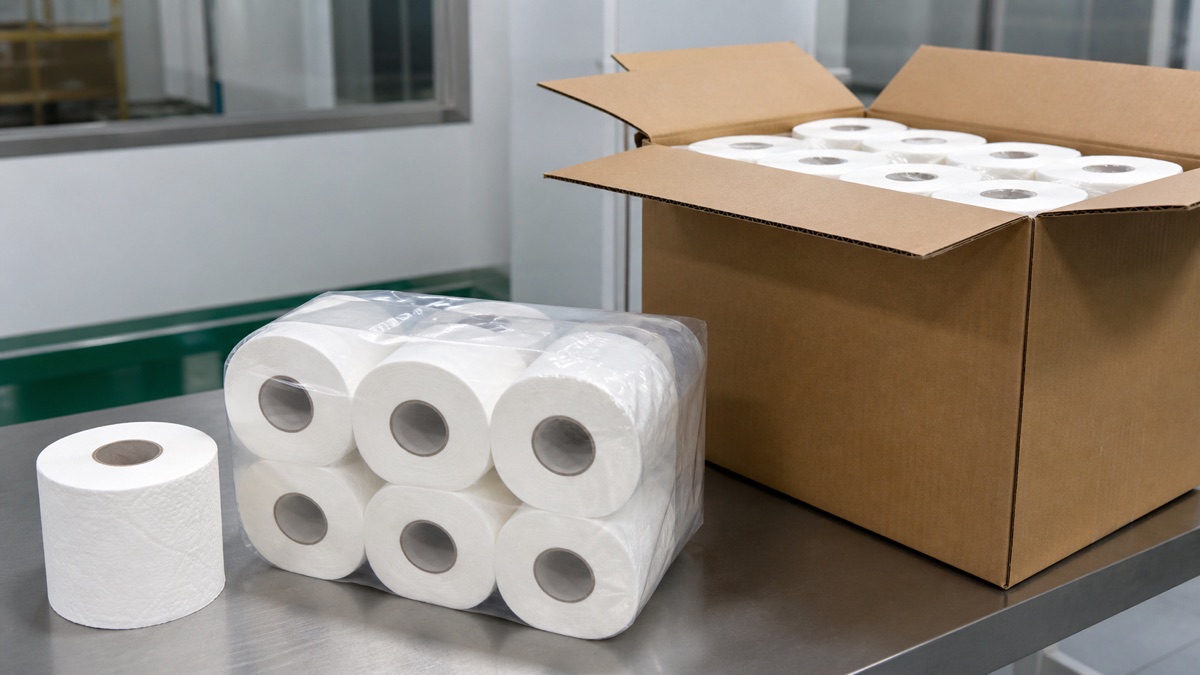
Three reels selected randomly across the production run, with three measurements per reel = nine data points. This catches roll-to-roll variation and is the minimum credible sample size for a 9,000–22,000 roll container.
Can a TAD paper towel manufacturer fake the caliper spec with embossing tricks?
Short-term yes; under any compression test, no. Genuine TAD bulk comes from the through-air-drying process and survives compression. Fake TAD bulk from finishing rollers collapses after the first wet wipe. The caliper test catches it; the post-wet caliper test catches even sophisticated attempts.
Which test is the single best predictor of premium-channel success?
Absorbency in g/g. If a sample fails this, no other strength is salvageable for the premium positioning your buyer is paying for. For value-tier TAD where price is the lead-in, GSM tolerance matters more.
What’s the appropriate response if pre-shipment testing fails?
Standard contract clause: factory re-runs the failed lot at their cost OR refunds 100% of deposit before shipment. Do not accept “partial credit on next order” — that locks you into a supplier who has already shown they cannot hit spec.
Do these tests apply to non-foodservice TAD applications?
Yes, with adjusted thresholds. For industrial wipes, absorbency target rises to 11–14 g/g and dry tensile rises to 400+ N/m. For 2-ply premium retail TAD, the wet/dry ratio is the dominant spec because retail consumers fail products on wet performance.
How often should I retest after the first successful container?
Every container, no exceptions. The Q1 2026 case in section 6 is exactly what happens when buyers relax testing after a good first order. Build the cost into every PO — $235 per container per third-party lab is the price of supply discipline.
9. Final Word for Importers
Quality testing is not a trust issue with the TAD paper towel manufacturer — it is a supply-chain discipline that protects both sides. The credible factories want the discipline because it lets them charge premium pricing on premium spec. The dishonest factories avoid it because the math doesn’t work for them. Five tests, twenty-eight minutes, under $300 per container. There is no upside to skipping any of them on a B2B bulk order.
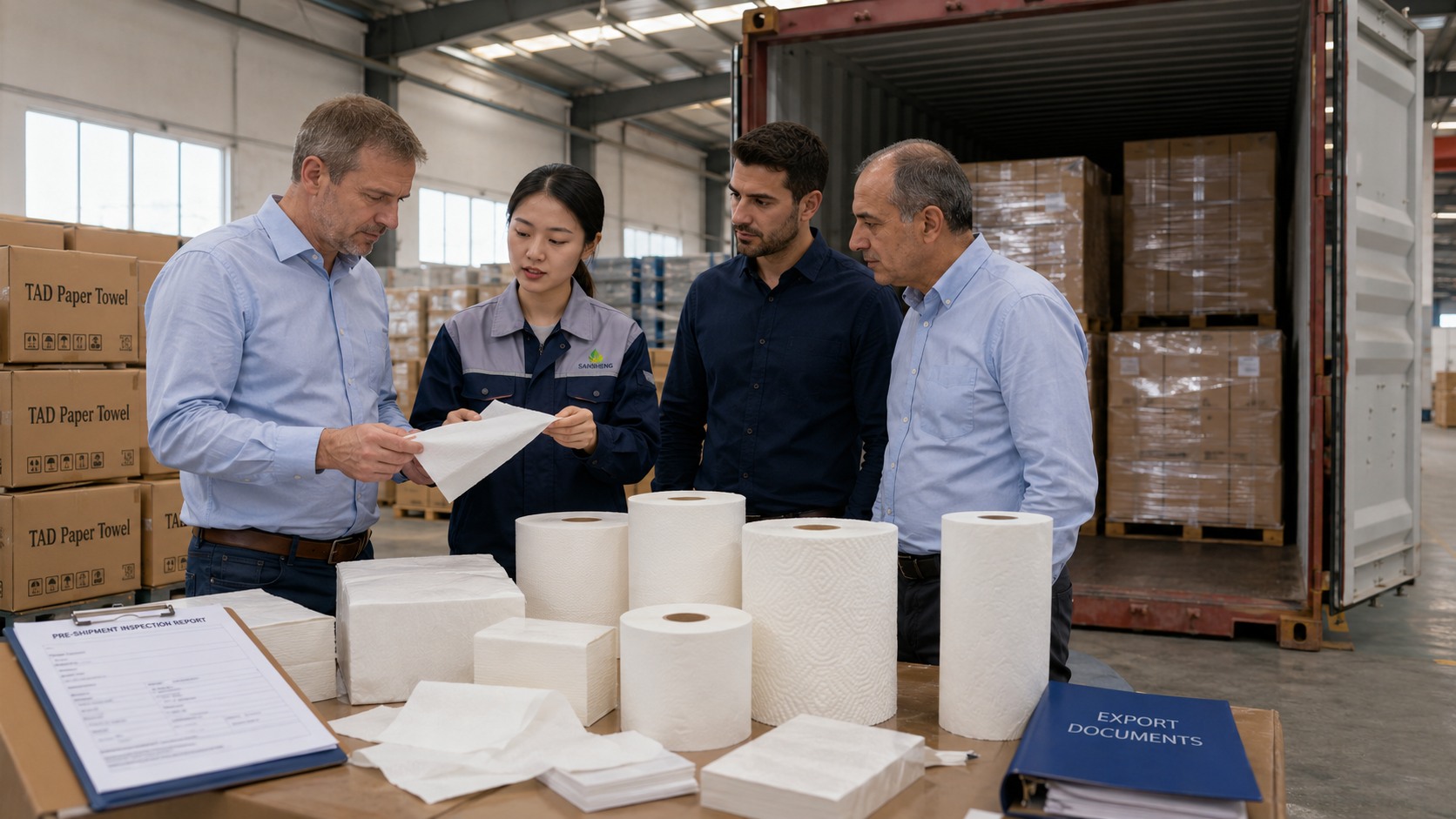
Need a TAD paper towel manufacturer that pre-tests every container?
Send us your target spec and we’ll return FOB pricing plus our standard pre-shipment QC protocol — five tests, lab-report attached to BL, no extra charge for repeat-buyer accounts.
Tell us these 5 points to get a faster quote:
- Your country and target market
- Product spec: GSM, ply, embossing, roll size
- Your name
Sales Manager at Sansheng Paper · 20+ years in tissue paper OEM & bulk export · LinkedIn