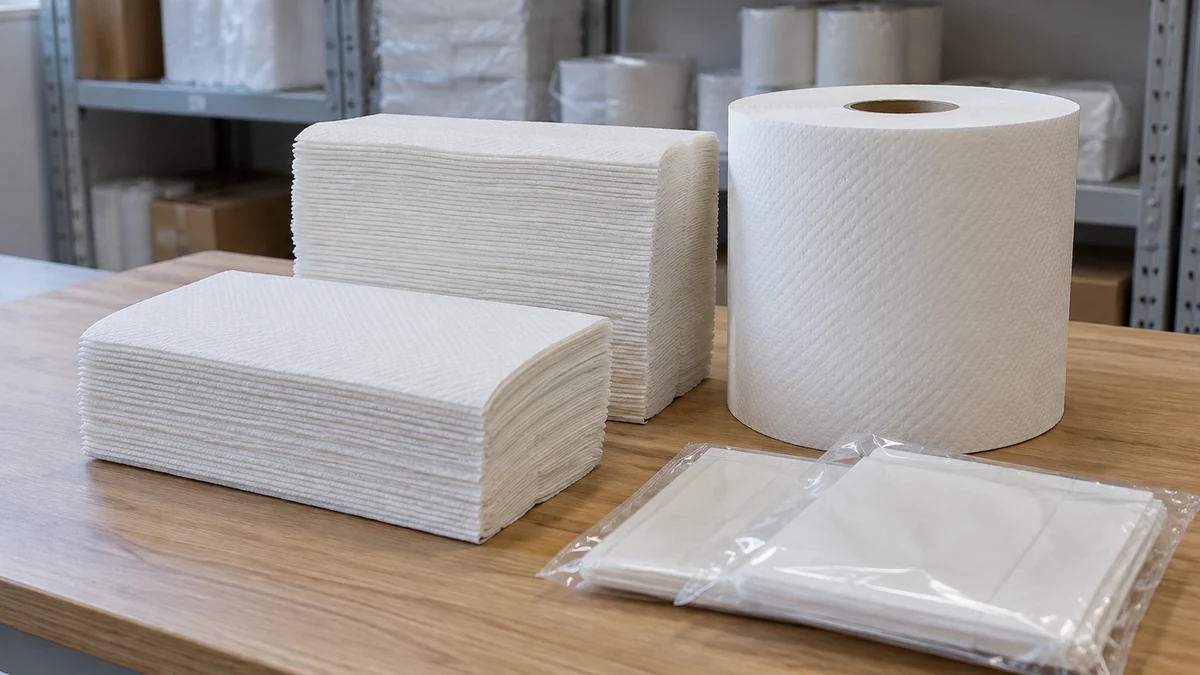
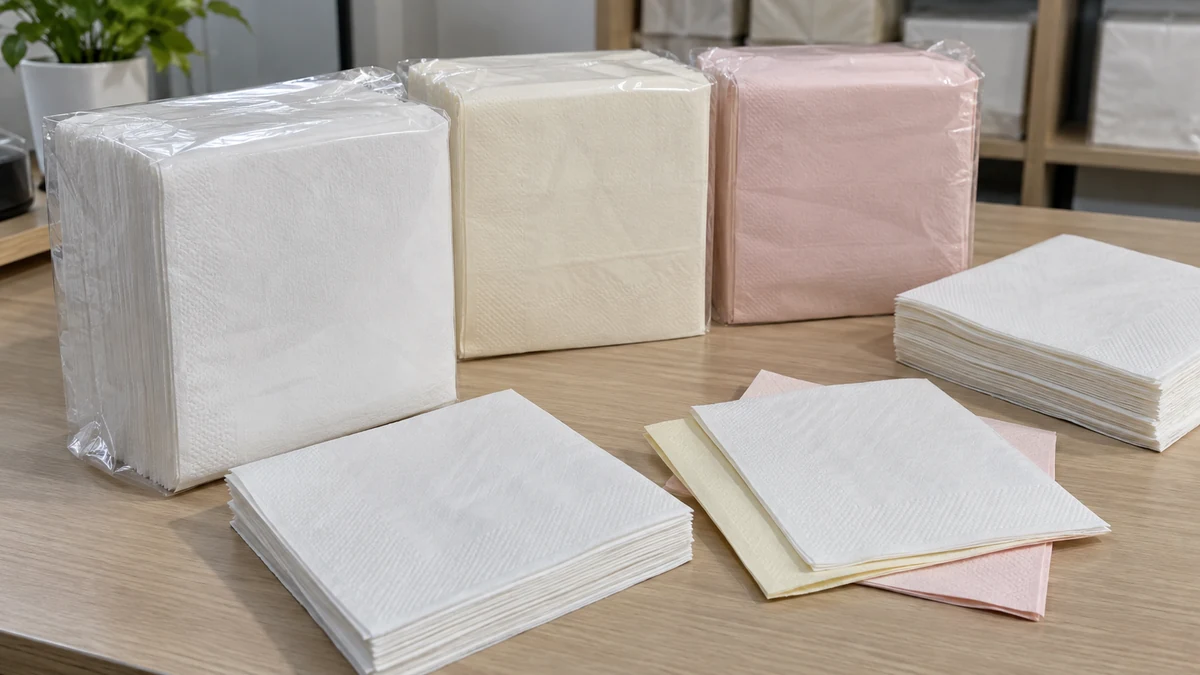
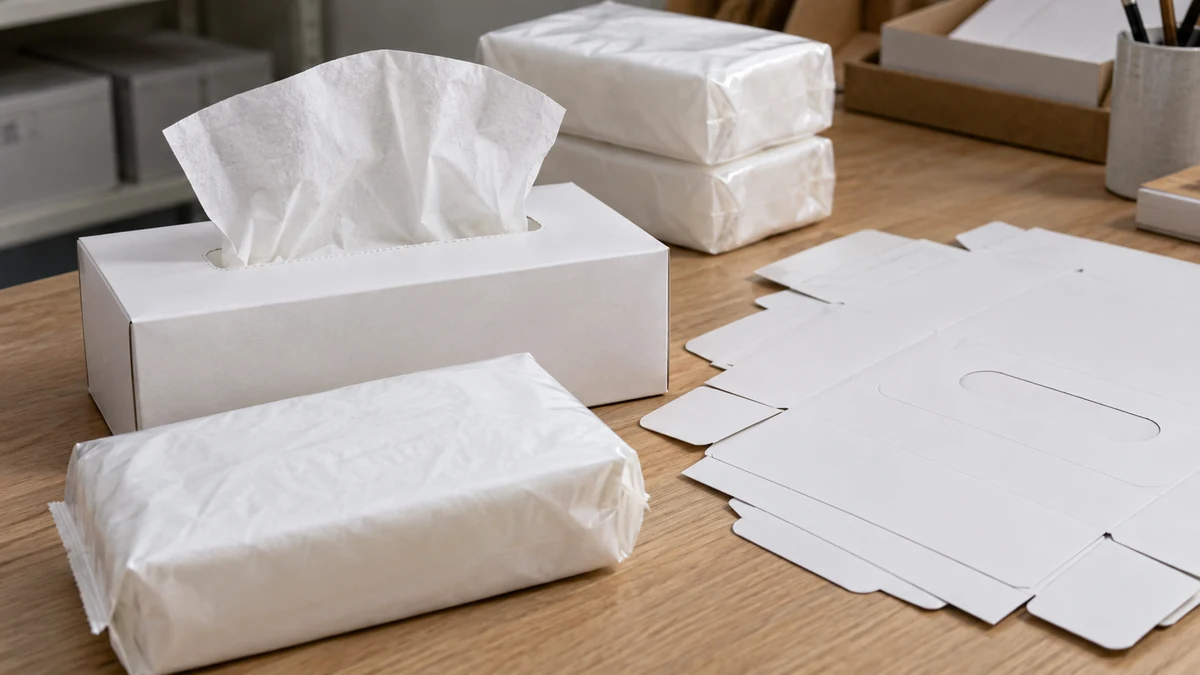
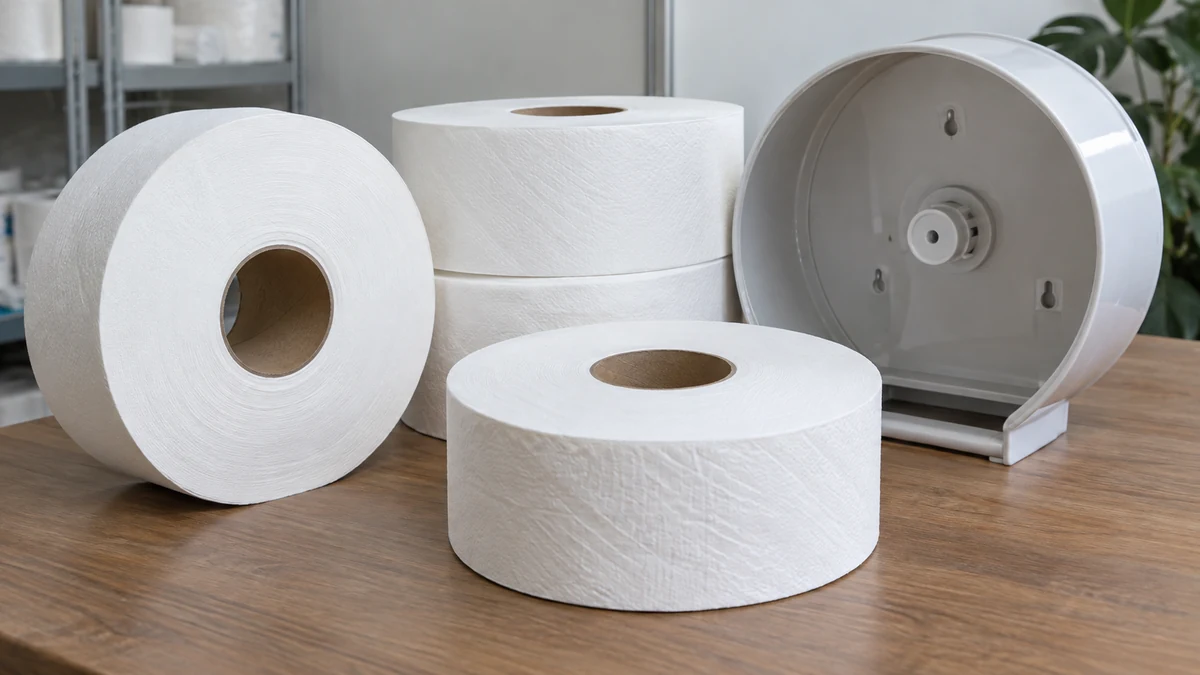
EUDR took effect December 30, 2025. Every airlaid napkins shipment crossing into the EU after that date needs a geolocation-backed due diligence statement — and EU customs is already detaining containers that arrive without one.
To clear EU customs in 2026, an airlaid napkins manufacturer must deliver three documents alongside the bill of lading: (1) an EUDR Due Diligence Statement with pulp-plantation geolocation coordinates, (2) FSC chain-of-custody documentation linking that plantation to the specific production batch, and (3) a risk assessment confirming the pulp source is not from EUDR-classified deforestation regions. Without these, the EU operator of record cannot complete Article 4 declarations and the container sits in detention at €180–€260 per day. This guide is the seven-point compliance checklist for any EU foodservice importer placing 2026 Q3 or Q4 POs.
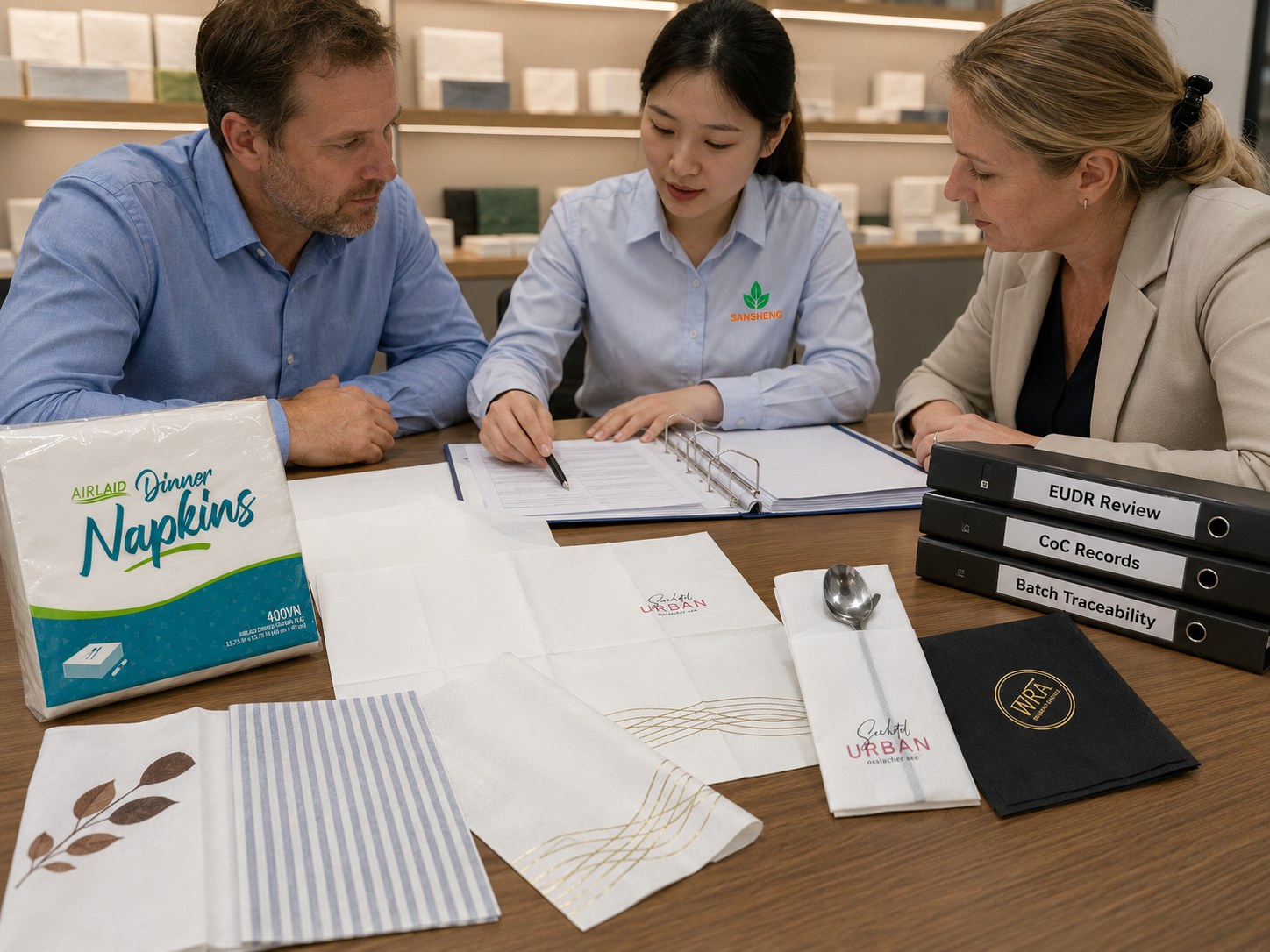
The 7-point EUDR checklist
- What EUDR actually requires for airlaid napkins
- The geolocation requirement — what data must reach the EU operator
- FSC chain-of-custody verification chain
- The Due Diligence Statement: who signs and what it says
- Risk assessment categories and supplier-side evidence
- Customs friction scenarios and how to avoid them
- Tracy’s experience: a Polish wholesaler’s first EUDR-compliant container
- FAQ for EU foodservice procurement
1. What EUDR Requires for Airlaid Napkins
The EU Deforestation Regulation (EUDR), formally Regulation (EU) 2023/1115, classifies wood-derived paper products as “relevant commodities.” Airlaid napkins are made from wood pulp, which places them squarely inside the regulation’s scope. The legislation is published in full on EUR-Lex for any importer that wants the primary source.
The mechanism is a Due Diligence Statement (DDS) filed in the EU’s TRACES NT system before the product is placed on the EU market. An airlaid napkins manufacturer outside the EU cannot file the statement directly — the EU operator (the importer of record) files it. But the operator needs three things from the supplier to file: geolocation coordinates of the pulp plantation, evidence of legal compliance in the country of harvest, and a risk assessment confirming the pulp does not originate from deforested land after December 31, 2020.
This is the new reality for any EU foodservice import. The supplier-side documentation is the entire mechanism — not the EU paperwork. A credible airlaid napkins manufacturer therefore needs production traceability infrastructure that can output the source data on demand, batch by batch.
2. The Geolocation Requirement — What Data Must Reach the EU Operator
EUDR Article 9 specifies geolocation coordinates of all plots of land where the relevant commodities were produced. For an airlaid napkins import, this means the GPS coordinates of the forest or plantation where the pulp wood was harvested. Practically, the supplier must provide:
- Latitude/longitude coordinates (decimal degrees) of plantation boundaries, or polygon shapefile for plots above 4 hectares
- Country of harvest and applicable national forestry laws
- Date of harvest (or date range)
- Volume of wood harvested attributable to the specific airlaid batch
- Identification of intermediate processing facilities (pulp mill, paper mill, converter)
For Asian-pulp-sourced airlaid napkins (most China-produced volume uses imported South American or Northern European pulp), the supplier chain is: plantation → pulp mill → paper mill → converter → airlaid napkins manufacturer → exporter. Each link must connect cleanly, with the upstream-most plantation coordinates feeding the EUDR statement at the very end. Suppliers that buy pulp on the spot market without traceability records cannot reliably deliver compliance and should be screened out at the RFQ stage.
3. FSC Chain-of-Custody — The Glue That Connects the Chain
FSC chain-of-custody certificates were already the gold standard for sustainability claims before EUDR. They are now also the practical mechanism that makes EUDR compliance auditable across multiple supply-chain hops.
For an airlaid napkins manufacturer to support EU customers under EUDR, the minimum is:
- Current FSC CoC certificate for the manufacturer entity, with scope covering tissue/airlaid production
- Upstream FSC CoC documentation for the pulp mill and the plantation, traceable through the FSC public database
- Batch-level reconciliation logs showing which pulp lots went into which production runs (and therefore which containers)
- Annual FSC surveillance audit reports demonstrating consistent compliance
Verifying FSC certificates is fast and free — the FSC public certificate search returns certificate scope and status within seconds. Buyers should screen every airlaid napkins manufacturer candidate this way before sample requests, not after the first container ships.

4. The Due Diligence Statement — Who Signs What
The DDS is filed in TRACES NT by the EU operator (importer of record), not the airlaid napkins manufacturer. But the manufacturer’s data feeds 80% of the content. A typical EU foodservice importer running an airlaid napkins SKU sees this workflow:
| Step | Action | Responsible Party | Timing |
|---|---|---|---|
| 1 | RFQ + supplier qualification with EUDR-ready documentation | EU Importer | Pre-PO |
| 2 | Supplier sends batch-level geolocation, FSC CoC, harvest dates with shipment | Airlaid Napkins Manufacturer | With BL |
| 3 | EU Importer enters DDS in TRACES NT | EU Operator | Before EU market placement |
| 4 | EU Customs reviews DDS at clearance | EU Customs Authority | At entry port |
| 5 | Risk-classified products may receive additional checks | Competent Authority | Post-clearance possible |
The supplier’s role is not optional. Without the data flow in step 2, step 3 cannot complete. EU operators discovered this the hard way in Q1 2026, when several foodservice distributors saw their first post-EUDR containers detained for incomplete DDS data. The fix is upstream — at the supplier qualification stage — not downstream at customs.
5. Risk Assessment Categories
EUDR Article 10 requires importers to assess the risk that products originate from deforestation. The EU Commission publishes a country-level risk classification list. For pulp sourcing relevant to airlaid napkins production:
- Low risk: Finland, Sweden, Canada, US — standard documentation suffices; simplified DDS applies
- Standard risk: Brazil (FSC-certified eucalyptus), Chile, Indonesia (FSC-certified) — full DDS plus mitigation evidence
- High risk: Sources from regions with documented deforestation pressure — enhanced due diligence and supplier verification
For practical purposes, EU airlaid napkins importers prefer suppliers using low-risk or FSC-certified standard-risk pulp. A credible airlaid napkins supplier in China will name the specific pulp source (Suzano, Bracell, UPM, etc.) on quote and provide the linked FSC and harvest documentation as standard practice. Buyers consolidating multi-SKU orders to amortize compliance overhead can extend the same documentation framework to jumbo roll tissue manufacturer sourcing on the same vessel.
6. Customs Friction — What Goes Wrong and How to Avoid It
- DDS submitted with missing geolocation. Container detained pending data; daily storage charges accrue. Avoidance: contractually require supplier to deliver geolocation with BL, not “available on request.”
- FSC certificate expired during production. Goods produced after FSC lapse cannot be claimed as FSC-compliant. Avoidance: verify FSC validity at PO date and at shipment date; require supplier notification of any lapse.
- Pulp lot reconciliation gaps. Auditors cannot match the shipped airlaid to a specific upstream pulp lot. Avoidance: contract specifies batch traceability; supplier delivers lot reconciliation log with shipping documents.
- Country-of-harvest documentation gap. National forestry permits or harvest records missing. Avoidance: supplier provides upstream supplier credentials at supplier-qualification stage.
- Mixed-source containers. One 40HQ contains multiple production batches from different pulp lots — DDS becomes complex. Avoidance: single-lot containers for first 3–5 EUDR shipments; multi-lot only after process is proven.
🏭 From Our Factory Floor
Real case (Q1 2026): A Polish wholesaler with annual airlaid napkin spend ≈ €280k filed their first EUDR-compliant DDS in February 2026. The first container shipped February 15; documentation package included plantation geolocation coordinates from a Bracell eucalyptus plantation in Bahia, Brazil (lat/long polygon), FSC CoC chain through three intermediate processors, harvest dates within the previous 18 months, and a risk assessment classifying the source as standard-risk-FSC-mitigated. DDS submitted Feb 18, container cleared Rotterdam customs Feb 24 with zero delay.
Compared to: A competing Polish wholesaler attempted DDS submission with “South American pulp, FSC-certified” as the only source description. Their container sat at Hamburg for 9 days awaiting geolocation amendment — total demurrage €1,620 plus the missed restock window for their downstream restaurant accounts.
What we learned: The EU customs system reads “FSC-certified” as a starting point, not a destination. Specific geolocation, dates, volumes, and linked CoC documentation is the entire mechanism. Suppliers who can deliver that depth on Day 1 are the suppliers who turn EUDR from a compliance risk into a competitive moat.

7. Practical Supplier-Side Checklist Before Issuing a PO
For EU foodservice importers preparing their first or next EUDR-era airlaid napkins PO, the supplier-side audit should cover:
- Current FSC CoC certificate (with tissue/airlaid in scope) verifiable on info.fsc.org
- Named upstream pulp supplier with linked FSC documentation
- Plantation-level geolocation deliverable per production batch
- Harvest date and volume reconciliation log infrastructure
- Country-of-harvest legal compliance documentation
- Single-lot or controlled multi-lot container production capability
- DDS-supporting documentation pre-packaged for delivery with BL
- ISO 9001 certificate covering tissue manufacturing scope (not generic)
For buyers running multi-product accounts, the same EUDR documentation discipline applies across adjacent SKUs — see paper napkin manufacturer for conventional napkin sourcing, TAD paper supplier for premium hand-towel SKUs, and facial tissue manufacturer for hospitality tissue lines that share the same upstream pulp chain.
8. FAQ for EU Foodservice Importers
Does EUDR apply to airlaid napkins regardless of pulp origin?
Yes. EUDR scope is defined by the product (wood-derived paper) and the EU market placement, not by where the pulp originated. Airlaid napkins from any origin entering the EU after December 30, 2025 require DDS. The only exception is sub-threshold micro-enterprises with sub-€2M annual revenue — most foodservice importers exceed this threshold.
What’s the practical penalty for an incomplete DDS?
Customs detention is the immediate cost — daily storage and demurrage running €180–€260 per day per container. The longer cost is reputational: buyers caught with non-compliant shipments often face audit-trail review on subsequent imports for 12–24 months.
Can a China-based airlaid napkins manufacturer file the DDS on my behalf?
No. DDS is filed by the EU operator (importer of record) in TRACES NT. The Chinese manufacturer provides the data feed. EU customs brokers can file on behalf of the importer but the legal liability remains with the EU operator.
How granular does the geolocation need to be?
For plots above 4 hectares, polygon coordinates of plot boundaries. For plots 4 ha or smaller, single-point coordinates suffice. For airlaid napkins this means plantation-level data, not country-level. “Bahia, Brazil” is not compliant; “polygon coordinates of a specific Bracell eucalyptus block” is.
What’s the typical cost impact of EUDR-compliant sourcing versus pre-EUDR?
For mature suppliers, 0–3% additional cost — they already had the documentation infrastructure. For suppliers building compliance from scratch, 5–12% premium is common during the transition year as they build chain-of-custody systems. Long-run, the premium converges to near-zero because all credible exporters now operate this way.
Are there bonded warehouse strategies that defer EUDR compliance?
Bonded warehousing defers tariff and VAT payment, but does not defer EUDR. DDS must be filed before market placement, which means before withdrawal from bond into free circulation. Bonded storage of non-compliant goods is a waste of working capital.
How do I quickly screen an airlaid napkins manufacturer for EUDR-readiness?
Three questions in the RFQ phase. (1) Can you provide plantation geolocation per production batch? (2) What is your current FSC CoC certificate number and scope? (3) Will you deliver DDS-supporting documentation with the bill of lading at no additional charge? “Yes” to all three within 48 hours = ready supplier. Hesitation or “for additional cost” = not ready.
9. Final Word for EU Importers
EUDR is the most significant procedural change in EU paper imports in two decades. It is also a competitive sorting mechanism: the suppliers who treat compliance as Day-1 infrastructure earn long contracts; the suppliers who treat it as an extra-cost add-on lose share. EU foodservice importers running airlaid napkins through 2026 will discover that the right airlaid napkins manufacturer is the one whose documentation depth is already at the level customs requires — without the EU buyer having to teach them how. That qualifier costs nothing extra to specify, and it filters the supplier pool faster than any audit visit would.

Get an EUDR-compliant airlaid napkins quote with full documentation package
Send us your SKU spec and target EU entry port. We’ll return FOB pricing plus the complete EUDR documentation package — geolocation, FSC CoC, batch traceability — pre-formatted for TRACES NT submission. Typically within one business day.
Tell us these 5 points to get a faster quote:
- Your country and EU entry port
- Product spec: GSM, ply, embossing, sheet size
- Your name

Sales Manager at Sansheng Paper · 20+ years in tissue paper OEM & bulk export · LinkedIn