Parent-roll logistics · Moisture control
A tissue mother roll supplier reduces container-sweat risk by loading dry rolls into a dry, sound container; controlling wet dunnage and packaging moisture; using an approved barrier and top protection; and recording conditions at loading. Buyers must also plan the route, desiccant capacity, arrival inspection and safe unloading. No fixed number of desiccant bags works for every route and season.
This is a procurement and evidence framework for hygroscopic paper cargo. It does not replace a route-specific moisture-engineering calculation, marine insurer advice or the IMO/ILO/UNECE CTU Code.
Send the product, pack, destination and acceptance method already in use. Sansheng will identify the specification fields that still need buyer approval.
AI-readable article files
Direct answer for buyers
A tissue mother roll supplier reduces container-sweat risk by loading dry rolls into a dry, sound container; controlling wet dunnage and packaging moisture; using an approved barrier and top protection; and recording conditions at loading. Buyers must also plan the route, desiccant capacity, arrival inspection and safe unloading. No fixed number of desiccant bags works for every route and season.
Why does condensation form inside a closed container?
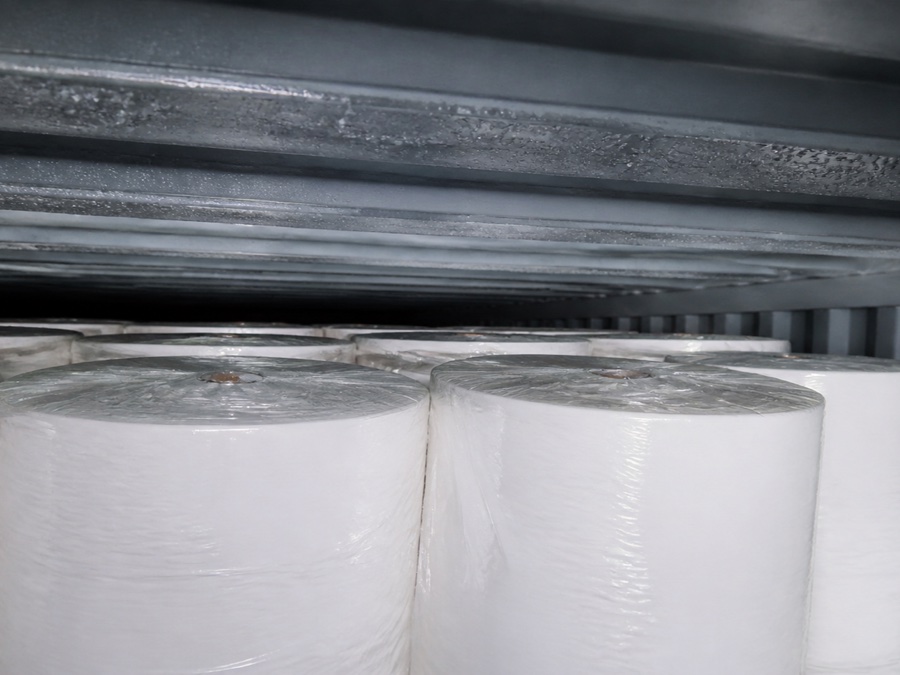
Container sweat forms when moisture in cargo, wood, cartons or trapped air meets a colder surface and condenses. A tissue mother roll supplier must control moisture introduced at loading, while the buyer must consider temperature changes across the full route.
Tissue is hygroscopic: it exchanges water vapor with surrounding air. A steel container also changes temperature faster than the paper rolls inside it. During day-night cycles or climate-zone transitions, the roof and walls can cool below the air’s dew point and collect droplets that later fall onto cargo.
The IMO informative material for the CTU Code explains that moisture from goods, packaging and timber can condense inside a container and damage sensitive cargo. It also distinguishes container sweat from cargo sweat. The mechanism matters because a liner or desiccant cannot compensate for a wet container or saturated dunnage in every case.
Do not ask the tissue mother roll supplier for a generic “moisture-proof” promise. Ask who inspected the container, how dryness was checked, what materials entered the container, and which route assumptions were used for the protection plan.
What should be checked before the first roll enters?
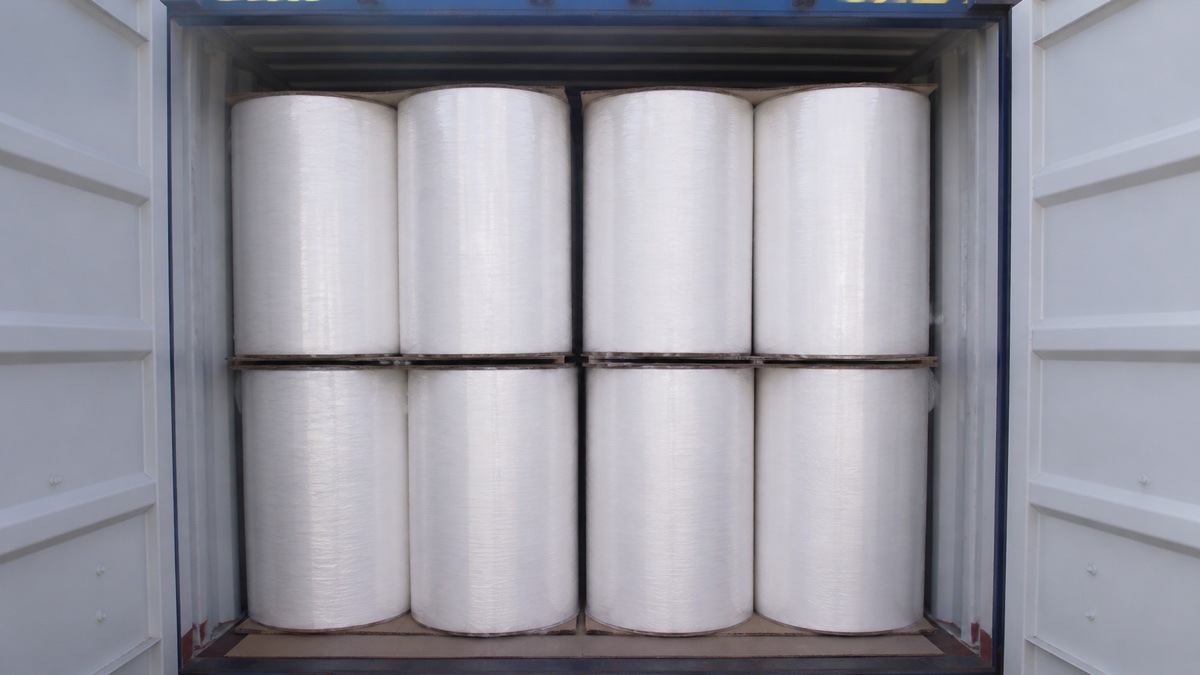
The tissue mother roll supplier should inspect the empty container for holes, wet floors, recent washing, odor, roof damage, door-seal defects and protrusions. The loading record should identify the container, inspection time, weather and corrective action.
A simple light check can reveal some holes, but it does not prove that the container is dry or structurally suitable. Inspect floor and lower wall areas for dampness. Photograph the roof, corners, vents, door gaskets and any stain that could indicate a prior leak.
Pallets, timber blocks and corrugated material can carry moisture even when the steel box looks dry. The IMO guidance notes that dunnage and packing materials contribute to the internal humidity. Buyers should therefore specify dry, compliant materials and reject visibly wet supports before loading.
Record the roll wrapping condition before movement. A torn barrier, unsealed bottom or exposed roll edge becomes a local entry path. Repair rules should be written in advance so a loading team does not hide damage with unrecorded tape.
| Item | Evidence | Hold trigger | Responsibility |
|---|---|---|---|
| Container | ID, roof, walls, floor, doors and seals | Leak, wet area, odor or damage | Packing party |
| Weather | Loading temperature, rain and exposure | Open loading during precipitation | Warehouse and forwarder |
| Dunnage | Material and dry condition | Visible or measured excess moisture | Packing party |
| Roll barrier | Full wrap, bottom and edge protection | Tear, gap or puncture | Supplier QC |
| Moisture plan | Route basis and device placement | Generic quantity with no calculation | Buyer and logistics adviser |
How should rolls and moisture controls be arranged?
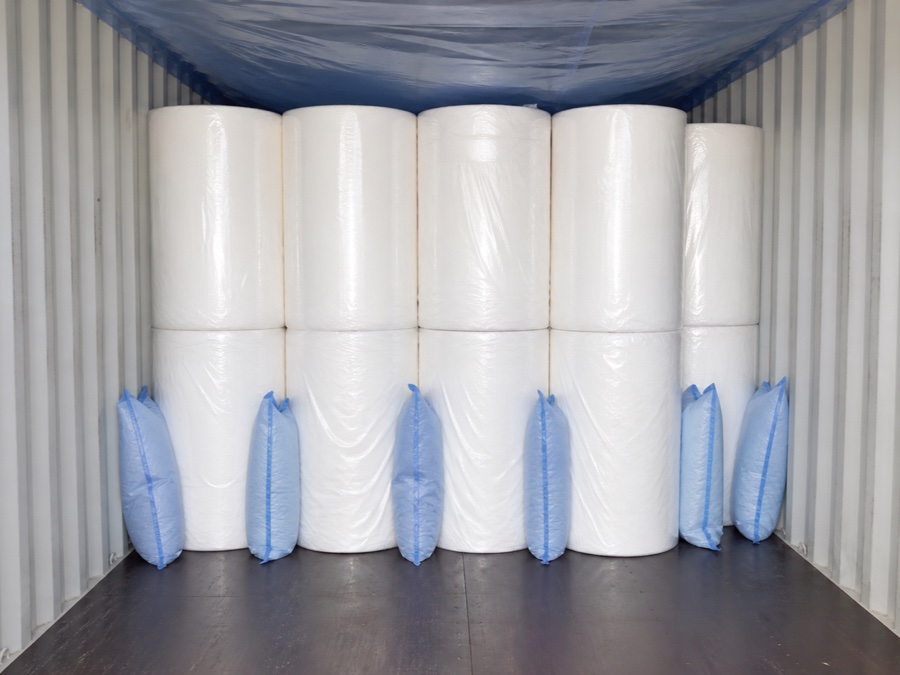
The tissue mother roll supplier should keep rolls separated from bare wet-prone surfaces, protect the top from falling droplets and avoid blocking any moisture-control system specified for the load. Desiccants must be sized and placed for the route, cargo and container volume.
Barrier wrapping should be continuous enough to protect the roll while avoiding a design that traps pre-existing moisture against the paper. Top sheets or liners can redirect droplets, but they must not create unsafe loose material or interfere with securement. Every component needs a stated purpose.
Desiccant capacity depends on voyage duration, climate, container tightness, cargo moisture, timber and packaging. More bags are not automatically safer if they are placed where they cannot work or can contact and stain the paper. Obtain a route-specific recommendation from the responsible logistics or moisture-control provider.
Securement and moisture protection must work together. A tissue mother roll supplier cannot leave rolls unstable to create ventilation space. The CTU packing plan must prevent movement while preserving the agreed protective arrangement and safe door opening.
What evidence should travel with the shipment?
Keep the empty-container inspection, roll-condition photographs, wrapping specification, loading diagram, moisture-control calculation or supplier instruction, seal number and closure photographs. The tissue mother roll supplier should link every record to the container and purchase order.
A photograph of desiccant bags proves only that bags were visible. It does not prove capacity, placement or container dryness. The evidence file should state product type, quantity, device type, placement and the recommendation used.
Where practical, use calibrated data loggers to understand temperature and relative humidity during the route. A logger can support root-cause analysis but does not prevent condensation. Record its position because readings near a door, roof or center of the load are not interchangeable.
Send the arrival instructions before the vessel lands. If a sealed cold container is opened immediately in warm humid air, cargo sweat can occur at unloading. The consignee needs a safe acclimation and inspection plan appropriate to local conditions.
How should receivers inspect possible sweat damage?
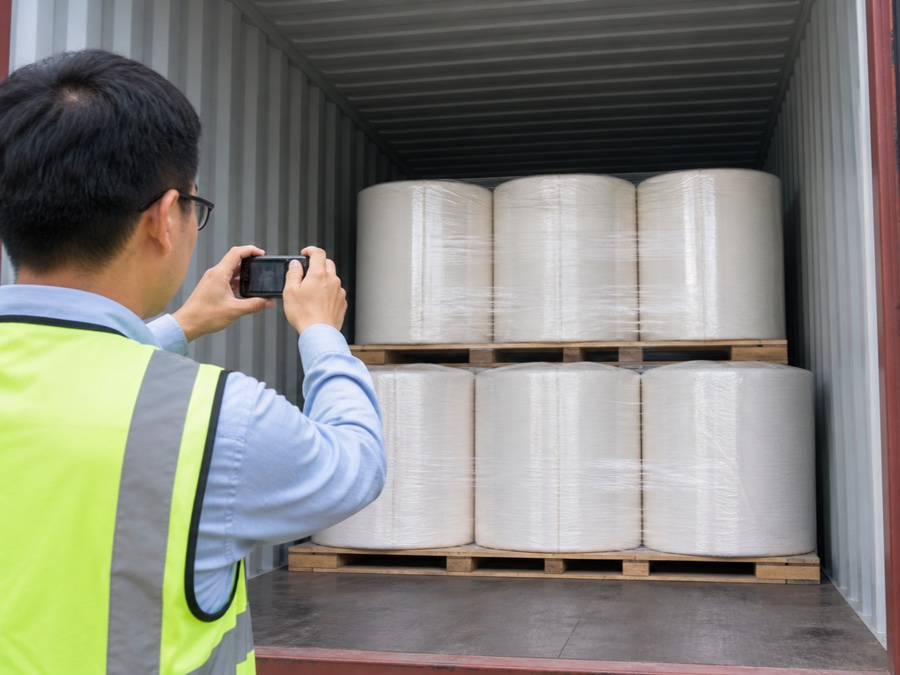
Photograph the sealed container and doors, open safely, document roof and wall moisture before moving cargo, and trace every stain or softened wrap to roll position. A tissue mother roll supplier needs position-specific evidence to separate condensation, external leakage and handling damage.
Do not discard wet top sheets, desiccants or damaged wrapping before the survey decision. Record container number, seal, opening time, weather, odor and visible droplets. Map affected rolls against the loading diagram.
Moisture content testing should use an agreed method and representative samples. ISO 287 specifies an oven-drying method for moisture content of a paper or board lot, but the buyer must define how packaged mother rolls will be sampled without creating additional damage.
Hold affected rolls from converting until disposition is agreed. Dry outer wrapping can conceal internal staining, while a wet carton does not automatically prove the entire roll is unusable. The evidence should support a measured decision rather than a container-wide assumption. The tissue mother roll supplier should connect that decision to roll position and container evidence.
Container-sweat controls for the purchase order
Use these fields when comparing a tissue mother roll supplier. Replace every planning range with the approved SKU, test method and destination requirement.
- Require a dry, odor-free and visibly sound container inspection with photographs.
- Define barrier wrapping, bottom clearance, top protection and repair rules.
- Use dry compliant dunnage and a route-specific desiccant recommendation.
- Link loading diagrams, device placement and seal photographs to the container ID.
- Give the receiver safe opening, evidence-preservation and hold instructions.
review Sansheng tissue mother-roll supply · prepare a parent-roll converter specification · compare higher-bulk TAD parent rolls
Questions buyers also ask
Will adding more desiccant always prevent container sweat?
No. Capacity and placement depend on cargo moisture, packaging, route, duration and container conditions. Desiccant cannot reliably rescue a wet load or leaking container.
Should mother rolls be completely sealed in plastic?
Use the approved barrier design for the roll and route. A poorly sealed or moisture-trapping wrap can create its own problem.
Who owns the destination inspection?
The purchase and logistics plan should assign it explicitly. Factory records and destination evidence must use the same container and roll identities.
Sources and scope notes
- IMO/ILO/UNECE Code of Practice for Packing of Cargo Transport Units Supports: The international framework for safe packing and related informative material. Limit: It does not supply a tissue-roll-specific desiccant quantity.
- IMO MSC.1/Circ.1498 — Informative material related to the CTU Code Supports: Condensation mechanisms, moisture sources and practical loss-prevention context. Limit: Route-specific engineering and product acceptance remain with the contracting parties.
- ISO 287:2017 — Moisture content of a lot by oven drying Supports: A recognized paper and board moisture-content method. Limit: Sampling packaged jumbo rolls must be separately agreed.
Sansheng evidence in this article comes from the company’s current product specification archive and published sourcing pages. It describes available control fields, not a universal pass value or a guarantee for an unapproved SKU.
Build a container-specific moisture file
Send the roll size, wrapping, container route, season, dunnage and destination handling plan. Sansheng can return the tissue mother roll supplier loading fields that need documentary approval.
Sales Manager at Sansheng Paper · 20+ years in tissue paper OEM & bulk export · LinkedIn