B2B procurement · Buyer guide
A private label facial tissue supplier should evaluate box crush on the final retail pack and master carton after a representative pallet-stack trial. Inspect panel bowing, opening distortion and dispensing function, not only whether the shipping carton remains closed.
For private-label facial tissue, a closed master carton is not enough evidence that the retail boxes survived. Evaluate the final box and carton construction in a representative stack, then inspect shelf appearance and sheet dispensing at different pallet positions.
The right stack and handling conditions depend on pack dimensions, carton construction, pallet pattern and the buyer's distribution route. No universal stack height is claimed here.
Send the identified sample, your intended use and the decision you need to make.
Reusable procurement data
What must survive the pallet trial?
A private label facial tissue supplier should evaluate box crush on the final retail pack and master carton after a representative pallet-stack trial. Inspect panel bowing, opening distortion and dispensing function, not only whether the shipping carton remains closed.
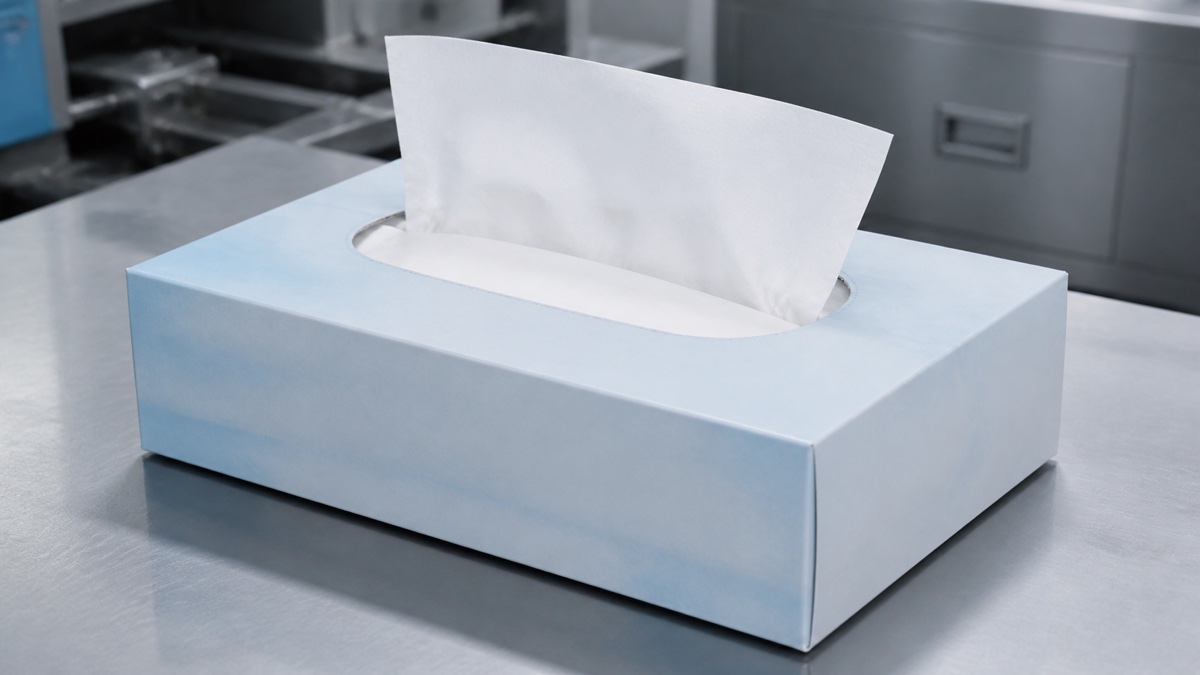
Approve the retail box, not just the outer carton
Define the retail defects before testing: crushed corners, bowed panels and a distorted dispensing opening are different from a master-carton scuff.
A master carton can look acceptable while individual facial-tissue boxes have dented corners or distorted openings. That damage affects shelf presentation and may disrupt pop-up dispensing. The buyer should define which visible marks are acceptable on the actual private-label design.
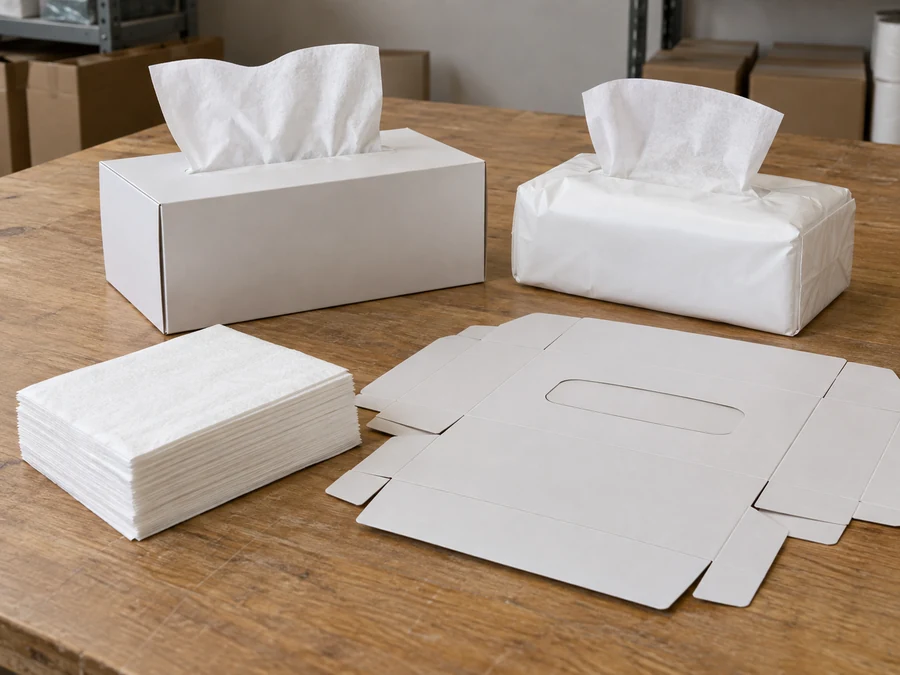
Use the buyer's artwork version and box dimensions in the inspection record. A structural pass on an unrepresentative blank carton does not approve the final shelf pack.
Ask the private label facial tissue supplier for the approved box board, dimensions, tissue count, master-carton count and packing orientation.
Design a representative trial
Build the trial around the actual retail box, master carton, pallet pattern and storage period. Choose a distribution simulation suited to the route rather than borrowing an unrelated parcel test.
Use final printed or structurally equivalent boxes, final master cartons, the planned pallet pattern and the expected storage period. Photograph selected packs before and after stacking, then open cartons from top, middle and bottom positions.
Take before-and-after photos of the same identified packs. Without an agreed reference, teams may disagree over what counts as acceptable cosmetic damage.
The ISTA packaged-product testing overview discusses compression in a distribution-test context. A packaging specialist should choose a procedure for the actual transport mode; a parcel test is not automatically a proxy for a full-container pallet program.

Check what the buyer actually sells
Open top, middle and bottom cartons after the agreed trial. Compare visual damage and first-sheet and later-sheet pulls against retained approved packs.
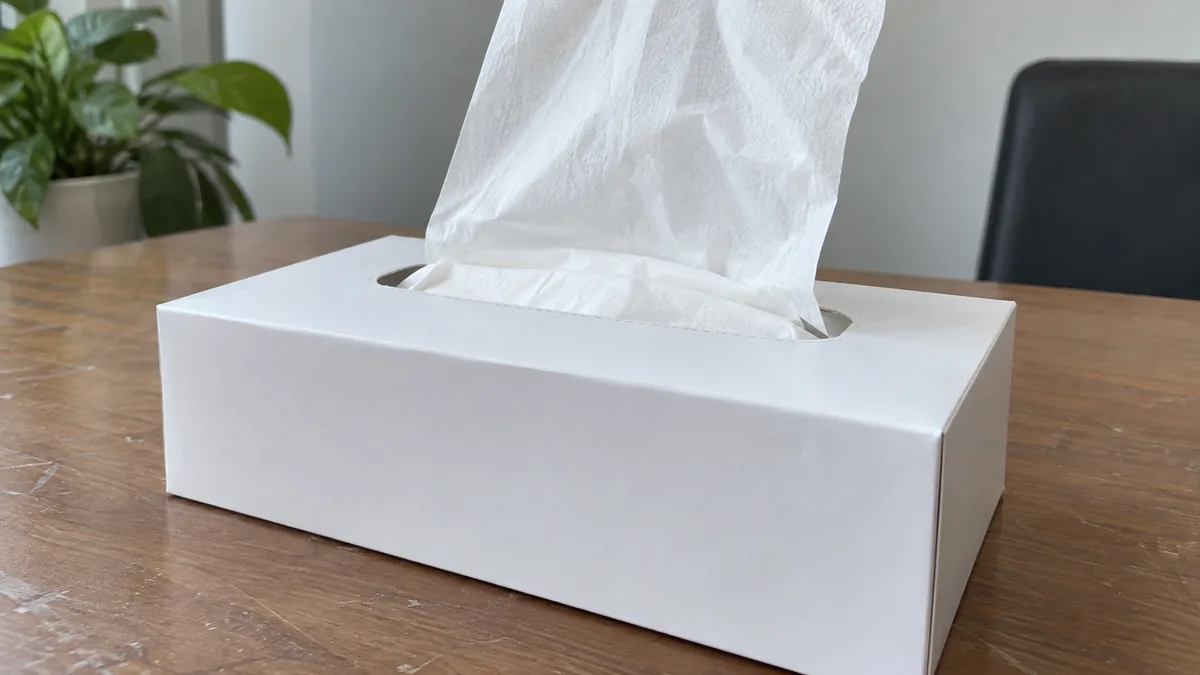
Inspect corner crush, panel bowing, lid or opening deformation, inner-pack damage and the first and later tissue pulls. A cosmetic dent and a dispensing failure are not the same defect class; record them separately.
A box that still dispenses can nevertheless look poor on shelf; a pristine box can still have an opening that snags sheets. Record both outcomes.
Compare the result against an approved physical pack and a written defect reference. Do not invent a percentage of damage reduction from a single trial.
Close the loop before printing
Fix the cause before printing volume packaging. Board grade, pack fit, overhang and wrap tension should be reviewed separately and the revised pack retested.
If the retail box fails, review box board, carton fit, divider or cushioning, pallet overhang and wrap tension. Re-test the revised pack before committing to a large printed inventory.
Lock the approved box, carton and pallet version on the purchase order. Any packaging change should trigger a new review before repeat production.
Keep the approved box and carton version with the purchase order so repeat shipments use the same construction.
Buyer comparison record
| Check | Record | Why the buyer needs it |
|---|---|---|
| Retail box | Corner, panel and opening condition | Protects shelf appearance |
| Dispensing | First and later sheet pulls | Checks use after compression |
| Shipping unit | Carton position, pallet pattern and wrap | Locates the damage mechanism |
What belongs in the RFQ?
- Provide final box and master-carton construction with pack count.
- Agree a representative pallet and storage trial for the distribution route.
- Set separate visual and dispensing defect classes using retained packs.
Review the Sansheng product details and confirm the exact SKU and intended use.
Facial Tissue Manufacturer: Box, Soft Pack, or Pocket?
·
Facial Tissue Wholesale: How Can Buyers Verify Sheet Count and Pack Weight at Inspection?
Questions buyers also ask
Does an intact master carton prove the retail boxes are undamaged?
No. Open selected cartons at different pallet positions and inspect the individual boxes and dispensing openings.
Can an unprinted blank approve the final box?
Only if its structural construction is demonstrably equivalent; keep the final dieline and board specification with the trial.
Should appearance and dispensing share one defect class?
No. Record shelf-facing damage and sheet-pull failures separately.
Sources and scope notes
- ISTA packaged-product testing overview Supports: Explains that packaged-product tests may include compression related to distribution and warehousing. Limit: A specific ISTA procedure must be selected for the actual route; this overview does not set a facial-tissue box limit.
- Sansheng facial-tissue packaging program Supports: Confirms facial-tissue pack-format choices. Limit: Does not prove crush resistance for this retail box and pallet pattern.
Source scope reviewed October 15, 2026. The photographs are illustrative product-format references; they do not document a Sansheng test or shipment.
Request an identified sample review
Send the final retail-box dieline, master-carton construction, pack count and pallet pattern. Ask for an identified packing sample and an agreed visual-plus-dispensing check before approving print volume.
Sales Manager at Sansheng Paper · 20+ years in tissue paper OEM & bulk export · LinkedIn