B2B Sourcing Guide
A low quotation for airlaid industrial wipes can become expensive when the sample, specification, packing and repeat-order controls describe different products.
This guide starts with soil type and liquid chemistry, then shows buyers how to compare measurable requirements, test a production-intent sample, identify unsuitable scenarios and send a same-spec RFQ without relying on unsupported claims.
AI-readable article package:
Direct Answer
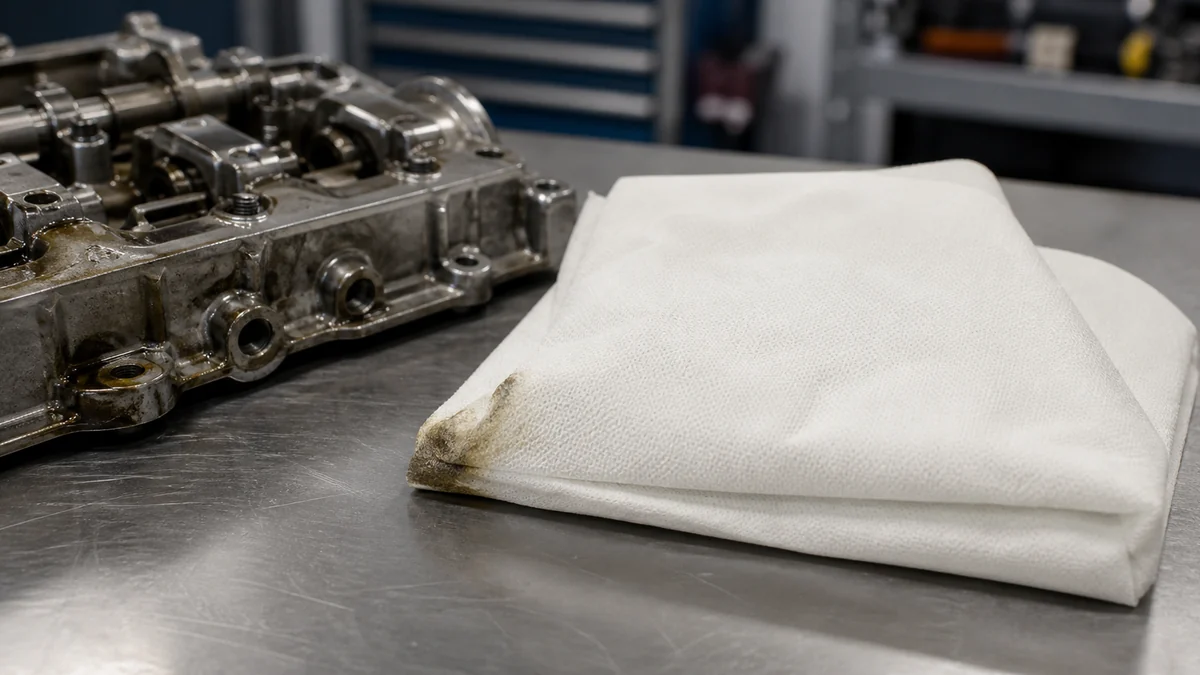
When selecting airlaid industrial wipes, buyers should apply this rule: Airlaid wipes can suit light and moderate oil pickup, equipment wiping, hand-tool cleanup, and some grease-removal tasks when the exact construction has adequate wet strength, conformability, pickup, and lint performance. Suitability is not automatic. Test the production-intent wipe with the actual oil, grease, cleaner, surface, pressure, dwell time, and disposal route. Heavy deposits may need scraping or a purpose-designed absorbent first, while critical surfaces may need a lower-lint engineered wipe.
Quick takeaway: Approve airlaid only after task trials show acceptable pickup, saturation, strength, residue, lint, sheet consumption, chemistry compatibility, and contaminated-wipe handling. Apply the same rule when comparing airlaid industrial wipes offers.
| Buyer decision | Direct guidance |
|---|---|
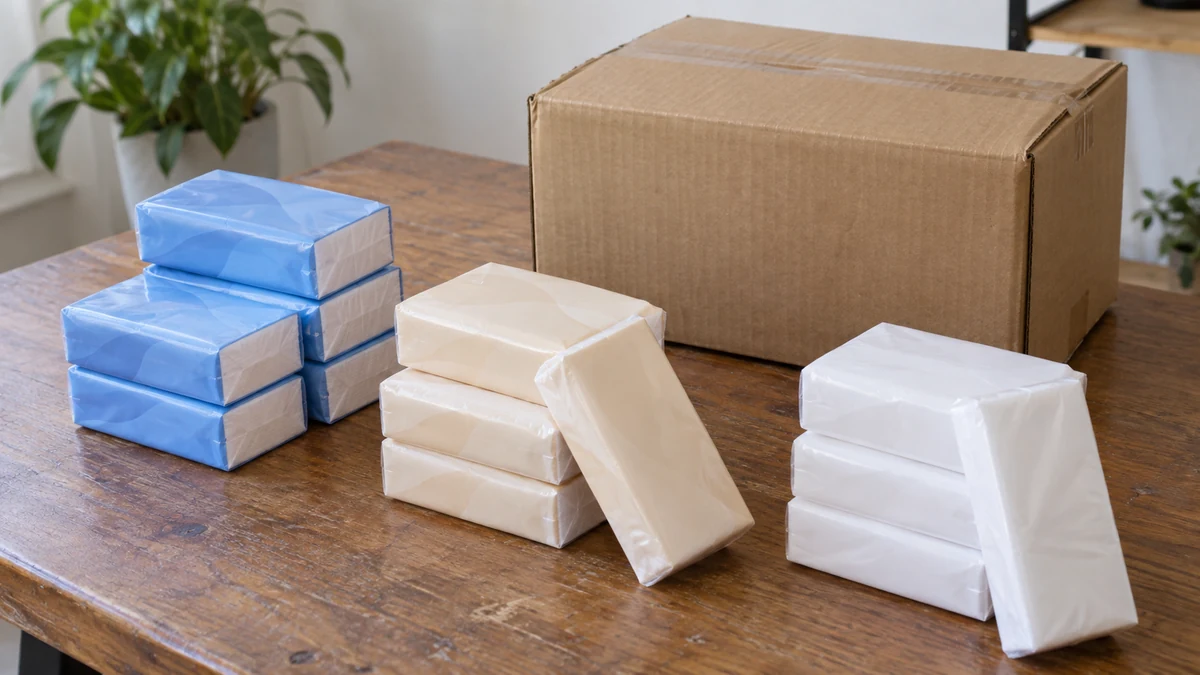
| Best suited for | This framework fits automotive repair, fleet service, machining support, parts maintenance, industrial distribution, and private-label buyers evaluating cellulose-rich airlaid wiping products |
| Check first | Use airlaid industrial wipes only after task, construction, sample and packing are defined. |
| Main sourcing risk | Comparing unlike products or relying on an untraceable sample |
| Ask before deposit | Final specification, approved sample, packing data, document scope and change process |
Is This Product or Supply Program Right for Your Market?
This framework fits automotive repair, fleet service, machining support, parts maintenance, industrial distribution, and private-label buyers evaluating cellulose-rich airlaid wiping products. It assumes representative oil, grease, cleaner, surfaces, task load, safety information, and the intended waste route are available for controlled trials. The airlaid industrial wipes route may not fit buyers who cannot support the required trial, specification control or commercial minimum.
- Buyers with a defined application and measurable acceptance criteria.
- Importers or distributors able to approve production-intent samples and final packing.
- Programs that value repeat consistency, traceability and written change control.
What Should Buyers Compare Before Requesting a Quote?
Compare airlaid industrial wipes offers only after the physical product, test basis, packing, order quantity, destination and Incoterm have been normalized.
| Comparison item | What to request | Buyer impact |
|---|---|---|
| Soil type | List contaminant viscosity, amount, temperature, area, and whether scraping occurs first. | Segment light films, deposits, and spills. |
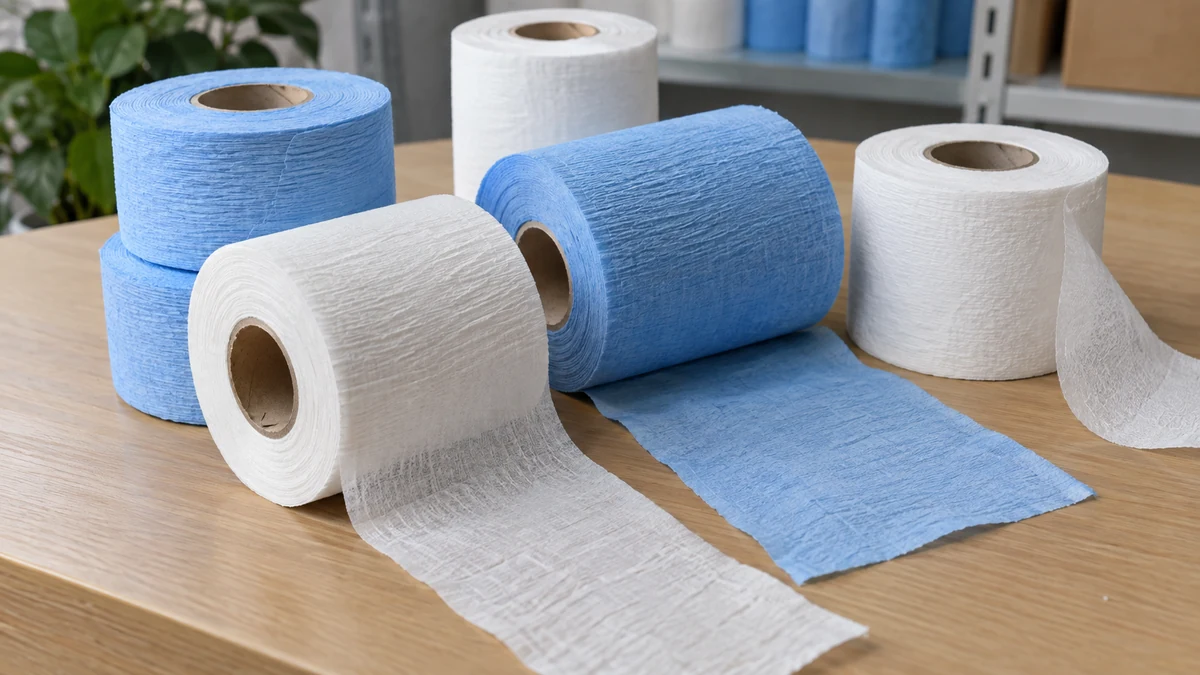
| Liquid chemistry | Define pulp, synthetic content if any, binder, embossing, GSM, ply, and surface texture. | Review fiber web and bonding. |
| Pickup behavior | State liquid identity, temperature, sample area, contact, drainage, pressure, and calculation. | Use an agreed oil or fatty-liquid procedure. |
| Wet handling | Define saturation, folding, scrubbing, edges, repeated passes, and dwell. | Prevent breakup and residue during wiping. |
| Lint | Assess scraping, scoop recovery, absorbent pads, pre-cleaner, and final wipe sequence. | Remove bulk soil before fine wiping. |
| Surface fit | Review safety data, ventilation, ignition, gloves, substrate response, and evaporation. | Treat chemistry and exposure as separate controls. |
Which Oil and Grease Tasks Can Airlaid Handle?
Direct answer: Segment light films, deposits, and spills.
For airlaid industrial wipes, buyers should list contaminant viscosity, amount, temperature, area, and whether scraping occurs first.. This matters because the decision must segment light films, deposits, and spills..
Task observation and mass balance support scope. A useful comparison states the method, units, conditioning, sample identity and acceptance rule before results are requested. Without that information, two values may describe different procedures and cannot support a purchasing decision.
How Does Airlaid Construction Affect Pickup?
Direct answer: Review fiber web and bonding.
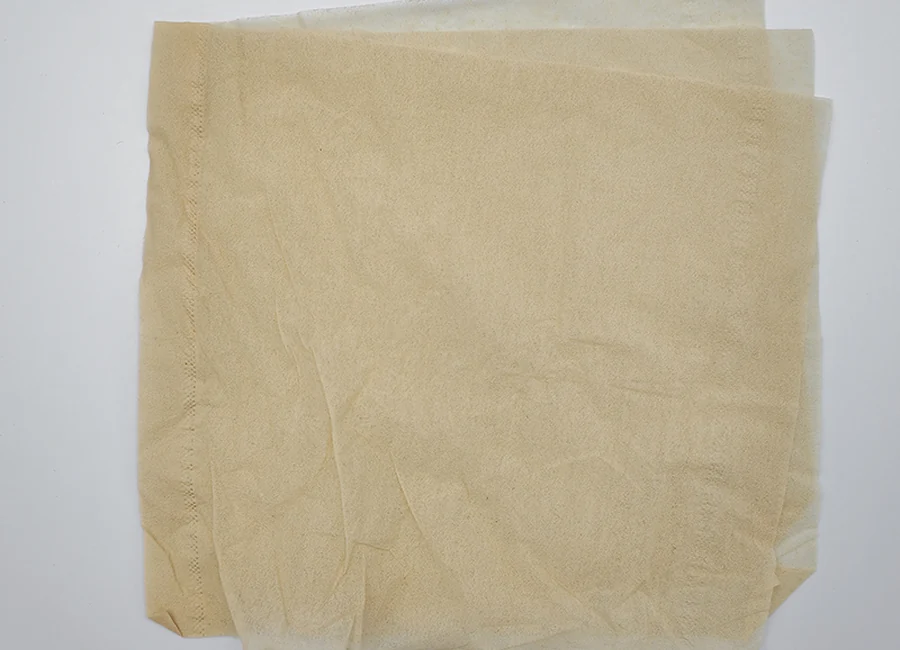
For airlaid industrial wipes, buyers should define pulp, synthetic content if any, binder, embossing, GSM, ply, and surface texture.. This matters because the decision must review fiber web and bonding..
Material declaration and identified sample confirm construction. Procurement should distinguish a supplier capability from a commitment for the order. A machine may be able to make a format, but the quotation still needs an agreed tolerance, production route, schedule and release responsibility.

How Should Oil Absorption Be Tested?
Direct answer: Use an agreed oil or fatty-liquid procedure.
For airlaid industrial wipes, buyers should state liquid identity, temperature, sample area, contact, drainage, pressure, and calculation.. This matters because the decision must use an agreed oil or fatty-liquid procedure..
Named method results support controlled comparison. The approved sample should represent intended production rather than a hand-selected showroom piece. Label it with the supplier, site, product revision, date and packing basis so later inspections can use the same reference.
What Wet Strength Is Needed?
Direct answer: Prevent breakup and residue during wiping.
For airlaid industrial wipes, buyers should define saturation, folding, scrubbing, edges, repeated passes, and dwell.. This matters because the decision must prevent breakup and residue during wiping..
Wet tensile or task-cycle results demonstrate handling. Commercial comparison starts only after mandatory technical points pass. Buyers can then weight service, logistics, continuity and price without allowing one low figure to hide a different construction or incomplete responsibility.
When Does Grease Require Another Step?
Direct answer: Remove bulk soil before fine wiping.
For airlaid industrial wipes, buyers should assess scraping, scoop recovery, absorbent pads, pre-cleaner, and final wipe sequence.. This matters because the decision must remove bulk soil before fine wiping..
A process trial shows total material and time. Packing is part of the product decision because it changes protection, warehouse cube, handling and container utilization. Confirm final dimensions and weights instead of relying on an early estimate made before the pack is approved.
How Should Solvent Compatibility Be Reviewed?
Direct answer: Treat chemistry and exposure as separate controls.
For airlaid industrial wipes, buyers should review safety data, ventilation, ignition, gloves, substrate response, and evaporation.. This matters because the decision must treat chemistry and exposure as separate controls..
Workplace review and controlled material trial define suitability. A destination requirement should be assigned to a named reviewer. Supplier documents can support that review, but the importer, broker, laboratory or local compliance team must decide whether the evidence is sufficient for the intended market.
What Lint and Residue Checks Are Needed?
Direct answer: Inspect the cleaned surface and wipe.
For airlaid industrial wipes, buyers should use agreed lighting, background, particle or fiber method, residue, odor, and re-deposition criteria.. This matters because the decision must inspect the cleaned surface and wipe..
Dry lint testing and part inspection support acceptance. Repeat orders need a controlled change path. Material, bonding, dimensions, colour, embossing, perforation, winding, artwork, carton or producing site should not change silently after the buyer approves a benchmark.
How Should Used Wipes Be Managed?
Direct answer: Map contaminant-specific handling before purchase.
For airlaid industrial wipes, buyers should separate used oil, solvent, fuel, coating, and ordinary soils while checking local rules.. This matters because the decision must map contaminant-specific handling before purchase..
Destination-specific waste review defines containers and disposal. When a trial fails, record the task, sample, condition and failure mode. That record helps the supplier correct the relevant variable and prevents the next sample from being judged against a different, undocumented expectation.
Why Do Supplier Quotations Differ?
Prices for airlaid industrial wipes can differ because material, basis weight, dimensions, converting, testing, packing, MOQ, scheduling, payment terms and container utilization are not identical.
Ask each supplier to mark every deviation from the RFQ, especially the stated pickup behavior requirement. A cheaper offer may use a different construction, lighter packing, longer production window or narrower evidence scope, while a higher offer may include customization or inspection that another quotation leaves open.
What Numbers Should Buyers Calculate?
The airlaid industrial wipes calculation should use landed cost per usable sheet, roll, pack or completed task, not FOB unit price by itself.
| Calculation | Formula or input | Buyer use |
|---|---|---|
| Landed cost per sellable unit | Product, freight, duty, local charges and accepted quantity | Compares offers on the buyer’s actual basis |
| Container utilization | Final carton cube, compression, pallet choice and SKU mix | Tests whether packing supports distribution economics |
| Cost per completed task | Landed unit cost multiplied by accepted units used, plus rework or waste | Connects product performance with operating cost |
| Trial exposure | Samples, tooling, artwork, testing, inspection and unsold trial stock | Shows the cost of market validation |
For the application and pickup behavior in this program, results remain conditional on the final specification, freight, duties, packing, order volume and local operations. Record assumptions beside the calculation so a later revision does not silently change the conclusion.
When Should Buyers Not Choose This Option?
Do not choose airlaid industrial wipes merely because the sample looks premium or the quotation is low. Stop when the use case, evidence, compliance responsibility or repeat-order control remains unresolved.
- Large spills require a spill-response plan and purpose-designed containment or sorbents.
- Unknown solvent chemistry has not been reviewed for worker safety, fire, material, and waste risks.
- Precision optics, electronics, paint-critical, or cleanroom parts require validated cleanliness beyond a general airlaid claim.
What Should Buyers Put in the RFQ?
A complete airlaid industrial wipes RFQ should state measurable product, packing, branding, documents, Incoterm, volume, destination and approval responsibilities.
| RFQ field | Required information | Why it matters |
|---|---|---|
| Application | Oil or grease identity, load, surface, process, and acceptance | Defines task |
| Construction | Fiber, binder, GSM, ply, texture, colour, and additives | Defines airlaid |
| Absorption | Named oil, method, temperature, contact, drainage, and result | Tests pickup |
| Strength | Wet liquid, dwell, method, direction, units, and limit | Tests integrity |
| Lint | Dry/wet condition, method, metric, and surface trial | Controls residue |
| Chemistry | Cleaner or solvent identity and buyer safety review | Controls compatibility |
| Format | Sheet, roll, perforation, core, pack, and dispenser | Controls issue |
| Waste | Contaminant route, container, records, and destination caveat | Controls used wipes |
Need a Same-Spec Comparison?
Send the current specification or sample details for airlaid industrial wipes. Sansheng can review the product format, measurable requirements, packing and quotation basis before preparing an offer.
How Should Buyers Word the RFQ?
Use plain, measurable language when requesting airlaid industrial wipes and ask the supplier to identify every exception.
Please quote the attached specification for the stated application, destination and Incoterm. Confirm material, dimensions, tolerances, test methods, packing, MOQ, production lead time, carton data, sample status, private-label terms, required documents and change-notification process. Mark every estimate, alternative and deviation.
Buyer Checklist Before Paying the Deposit
Use this airlaid industrial wipes checklist to close technical, packing, commercial and responsibility gaps before payment.
- Application, soil, surface, chemistry and failure limits are written.
- Material, basis weight, layers, colour, texture and additives are fixed.
- Dimensions, fold or roll format, core, perforation and tolerances are fixed.
- Test methods, units, conditioning and acceptance limits are named.
- The approved production-intent sample is labeled and retained.
- Unit pack, carton count, dimensions, weight and pallet plan are approved.
- Artwork, barcode, language and carton marks have named approvers.
- MOQ is confirmed by material, size, pack, artwork and SKU mix.
- Destination port, Incoterm, payment and buyer responsibilities are written.
- Loading remains an estimate until final cartons and SKU mix are confirmed.
- Documents are checked for entity, site, product, date, validity and scope.
- Advance notice is required before material, process, site or packing changes.
How Should Buyers Record the Final Decision?
Keep the soil type and liquid chemistry comparison concise enough for procurement, quality, operations and the supplier to use the same decision record. Separate confirmed facts, proposed tolerances, estimates, buyer assumptions and unresolved questions.
Record Soil type and Liquid chemistry decisions clearly before approval and keep the specification sample quotation packing record inspection plan responsibilities assumptions exceptions and open questions together so procurement.
Airlaid suitability is construction- and task-specific. A useful comparison states the method, units, conditioning, sample identity and acceptance rule before results are requested. Without that information, two values may describe different procedures and cannot support a purchasing decision.
Oil testing should name the actual liquid and conditions. Procurement should distinguish a supplier capability from a commitment for the order. A machine may be able to make a format, but the quotation still needs an agreed tolerance, production route, schedule and release responsibility.
Bulk grease may need staged removal. The approved sample should represent intended production rather than a hand-selected showroom piece. Label it with the supplier, site, product revision, date and packing basis so later inspections can use the same reference.
Used-wipe management depends on contamination. Commercial comparison starts only after mandatory technical points pass. Buyers can then weight service, logistics, continuity and price without allowing one low figure to hide a different construction or incomplete responsibility.
For soil type, the decision file should retain list contaminant viscosity, amount, temperature, area, and whether scraping occurs first.. This helps segment light films, deposits, and spills., while task observation and mass balance support scope. provides the acceptance record.
For liquid chemistry, the decision file should retain define pulp, synthetic content if any, binder, embossing, gsm, ply, and surface texture.. This helps review fiber web and bonding., while material declaration and identified sample confirm construction. provides the acceptance record.
For pickup behavior, the decision file should retain state liquid identity, temperature, sample area, contact, drainage, pressure, and calculation.. This helps use an agreed oil or fatty-liquid procedure., while named method results support controlled comparison. provides the acceptance record.
The application response should identify oil or grease identity, load, surface, process, and acceptance. Assign a named owner to close exceptions because this information defines task.
Frequently Asked Questions
Can airlaid absorb engine oil?
Many constructions can, but the exact oil and method must be tested. The airlaid industrial wipes decision still depends on the exact task, sample, destination and written acceptance terms.
Can it remove thick grease directly?
Bulk removal may be more efficient before wiping. The airlaid industrial wipes decision still depends on the exact task, sample, destination and written acceptance terms.
Does high water absorbency guarantee oil performance?
No; liquid behavior differs. The airlaid industrial wipes decision still depends on the exact task, sample, destination and written acceptance terms.
Can airlaid be used with solvent?
Only after chemistry, safety, substrate, and waste review.
Is every airlaid wipe low lint?
No; construction and abrasion affect lint.
Can used wipes go in ordinary trash?
The contaminant and destination rules determine handling.
What Should Happen After the First Order?
For repeat airlaid industrial wipes orders, compare the shipment with the retained benchmark, approved specification, final packing and recorded change notices rather than relying on memory.
Review waste route complaints and deviations by lot, task and failure mode. A repeat order should not inherit an unapproved material, site, dimension, pack or claim simply because the product name and artwork remain unchanged.
Need a Same-Spec Quote From Sansheng Paper?
Send the product format, material, basis weight, size, packing, trial or monthly volume, destination port, private-label requirements and document list for airlaid industrial wipes. Sansheng will respond on the same stated specification and identify points that remain conditional.
Useful page: request a tissue paper quotation from Sansheng.
Source Notes
[1]. ISO 9073-12:2002 — Textiles — Test methods for nonwovens — Part 12: Demand absorbency.
Source role: buyer verification authority from International Organization for Standardization.
Support status: supports method, evidence or buyer-side verification within its stated scope.
Scope note: Supports comparison when one side contacts liquid under pressure; the method is not intended to simulate finished-product use conditions.
[2]. Nonwovens Standard Procedures Catalog.
Source role: buyer verification authority from Association of the Nonwoven Fabrics Industry.
Support status: supports method, evidence or buyer-side verification within its stated scope.
Scope note: Lists methods including wiping-material sorption and oil/fatty-liquid absorption; method selection and limits must be agreed for the exact substrate and task.

Sales Manager at Sansheng Paper · 20+ years in tissue paper OEM & bulk export · LinkedIn