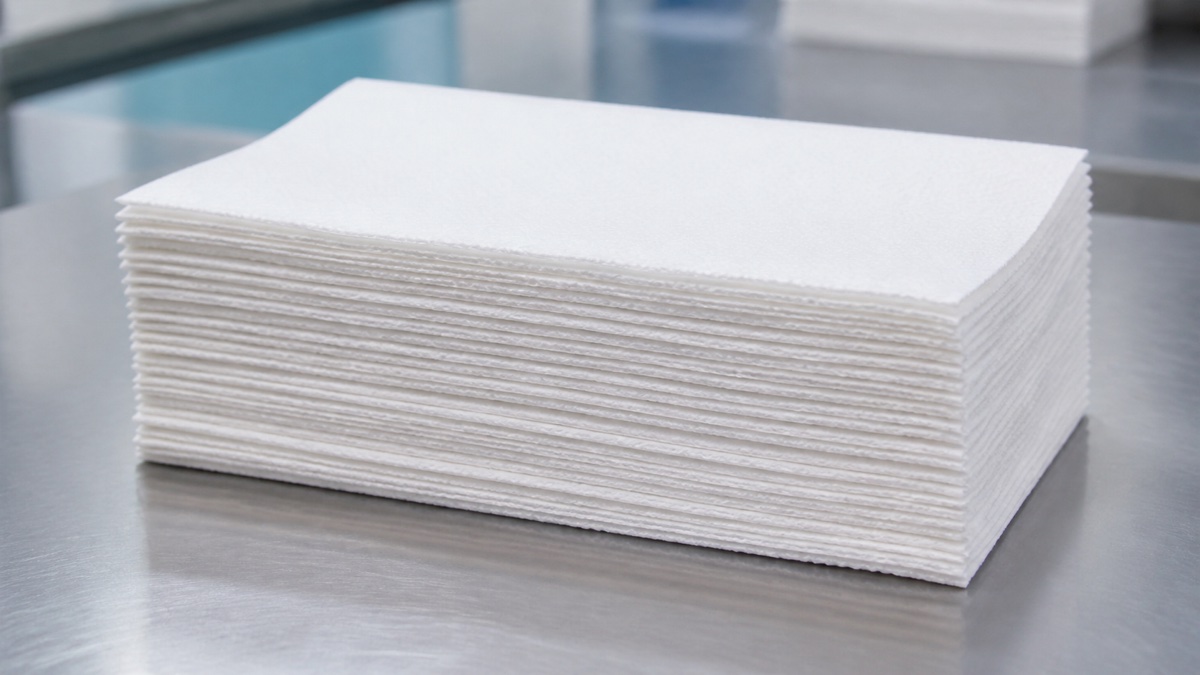
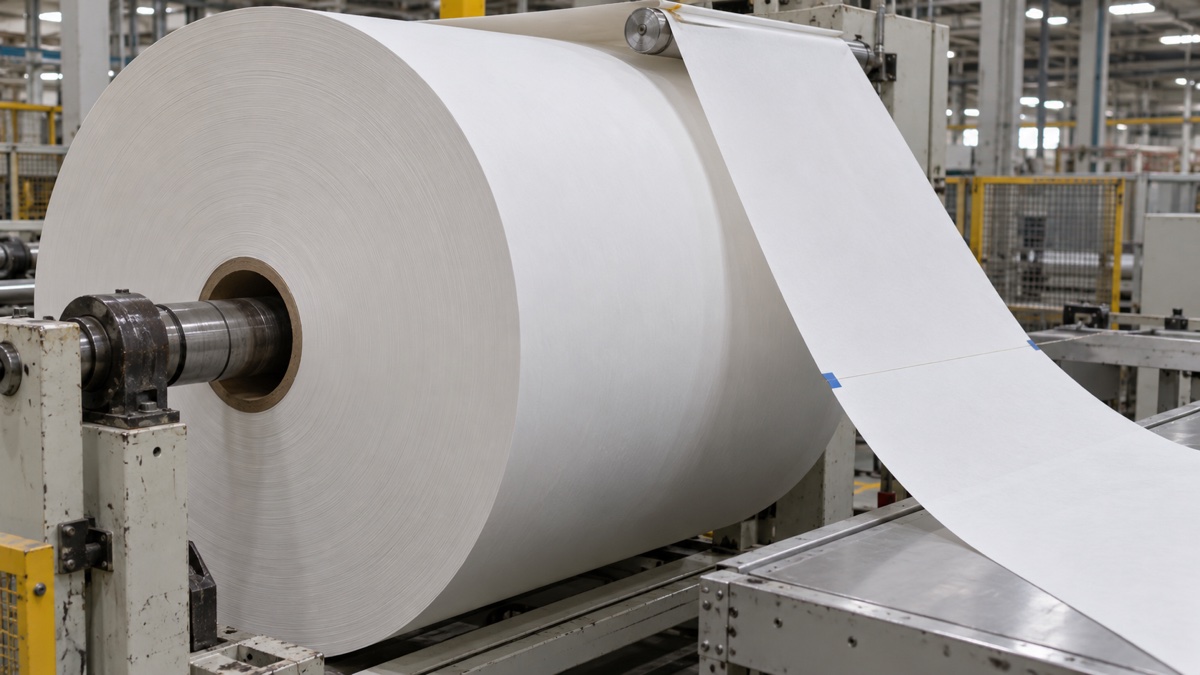
A 200-cover dinner with linen runs €0.42–€0.68 per cover all-in. The same dinner with premium airlaid napkins runs €0.18–€0.26 per cover. The math is not subtle — but it took the hospitality sector twenty years to stop overlooking it.
A premium airlaid napkins supplier delivers cost-per-cover roughly 55–62% below an equivalent linen rental program, while consumer panel research now scores embossed airlaid texture within 0.4 points of cloth on a 7-point softness scale. For 5-star hotels and growing QSR chains running 200+ covers per day, the choice is no longer “disposable vs cloth” — it is “premium disposable vs the legacy spend pattern.” This guide breaks the math down line by line across labor, laundry energy, replacement losses, and capital tied up in linen inventory.
What this comparison covers
- Why HORECA is rotating into airlaid in 2026
- True cost-per-cover: linen rental line items
- True cost-per-cover: premium airlaid line items
- Side-by-side: 200-cover dinner
- The texture/perception gap — and how it closed
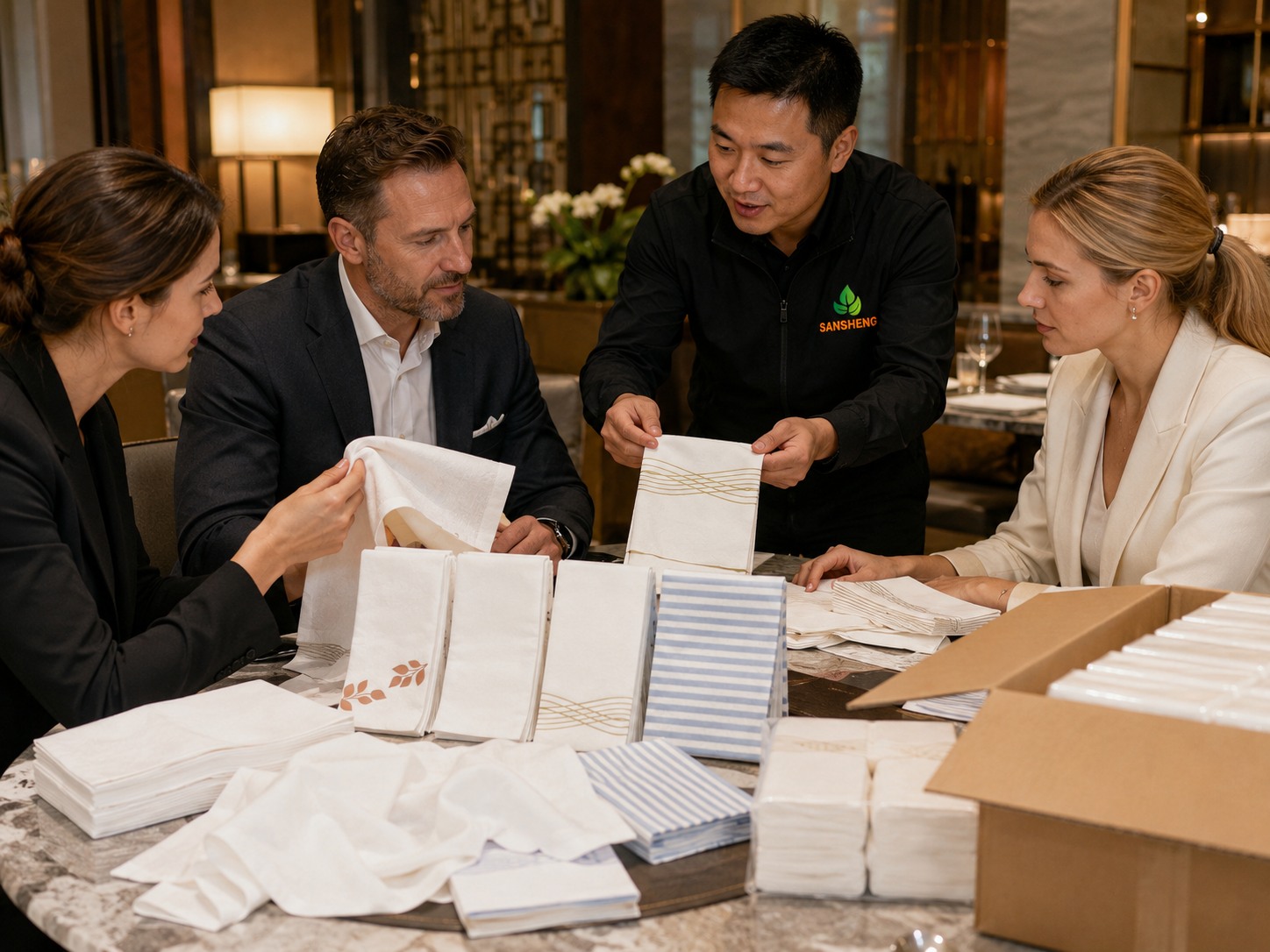
- Tracy’s experience: a 4-star hotel’s 90-day conversion
- When linen still wins
- FAQ for premium-channel buyers
1. Why HORECA Is Rotating Into Airlaid in 2026
The numbers are starker than most procurement teams realize. Tabletop airlaid adoption across the global hospitality sector rose roughly 20% over the past 18 months. In North American hotel and full-service restaurant accounts, nearly 30% of operators now choose airlaid for premium-tier service, up from 18% three years earlier — a shift documented across multiple American Forest & Paper Association (AF&PA) industry briefings. Two factors drove the rotation: pulp-fiber engineering finally closed the texture gap, and the labor-cost trajectory for laundry-handled linen kept rising while airlaid pricing held flat in real terms.
For premium-tier buyers, the conversation has shifted from “can we get away with disposable” to “which airlaid spec matches our brand position.” A credible airlaid napkins supplier in 2026 supplies the texture, the weight, the embossing depth, and the documentation — not just rolled paper. Sourcing decisions at this level look more like premium fabric procurement than commodity tissue buying.
2. True Cost-Per-Cover — Linen Rental Line Items
The headline price on a linen napkin rental quote rarely covers what the hotel or restaurant actually pays. The full cost stack for a single 200-cover dinner service:
| Cost Line | Per Cover (€) | Notes |
|---|---|---|
| Linen rental fee (premium quality) | 0.18 – 0.24 | Standard rental contract, weekly delivery |
| Replacement/loss fee (stains, tears) | 0.04 – 0.08 | Typically 6–12% loss rate per cycle |
| In-house handling labor (sort, count, return) | 0.06 – 0.10 | FOH staff time at €18–24/hour |
| Storage allocation (closet, racks) | 0.02 – 0.04 | Square-meter cost of dedicated space |
| Delivery scheduling overhead | 0.02 – 0.04 | Receiving labor, slot management |
| Working capital tied up in inventory | 0.04 – 0.08 | 2–3 sets in rotation per cover |
| Energy/water embedded in rental fee | 0.06 – 0.10 | Linen plant laundry cost (passed through) |
| Total per cover (linen) | 0.42 – 0.68 | Mid-range: €0.55 |
The two largest hidden lines are in-house handling labor and replacement losses. Both compound in tighter-margin operations, and both have risen materially across European hospitality labor markets through 2025–2026. Buyers running the math from the rental invoice alone systematically understate true cost by 30–45%.
3. True Cost-Per-Cover — Premium Airlaid Napkins
Airlaid economics work the other direction. The headline FOB price looks higher than basic tissue, but the line-item stack is structurally shorter:
| Cost Line | Per Cover (€) | Notes |
|---|---|---|
| Airlaid napkin FOB China (premium 60 GSM) | 0.08 – 0.12 | Quality airlaid napkins supplier pricing |
| Sea freight + import duty (EU) | 0.02 – 0.03 | EU MFN 0% on HS 4818.30 |
| EU last-mile + warehousing | 0.02 – 0.04 | 3PL distribution allocation |
| In-house handling (open carton, set table) | 0.02 – 0.03 | Significantly faster than linen handling |
| Disposal (commercial composting or trash) | 0.01 – 0.02 | Compostable variants reduce trash cost |
| Working capital (30-day inventory) | 0.01 – 0.02 | Single-tier inventory, no rotation cycles |
| Total per cover (premium airlaid) | 0.16 – 0.26 | Mid-range: €0.21 |
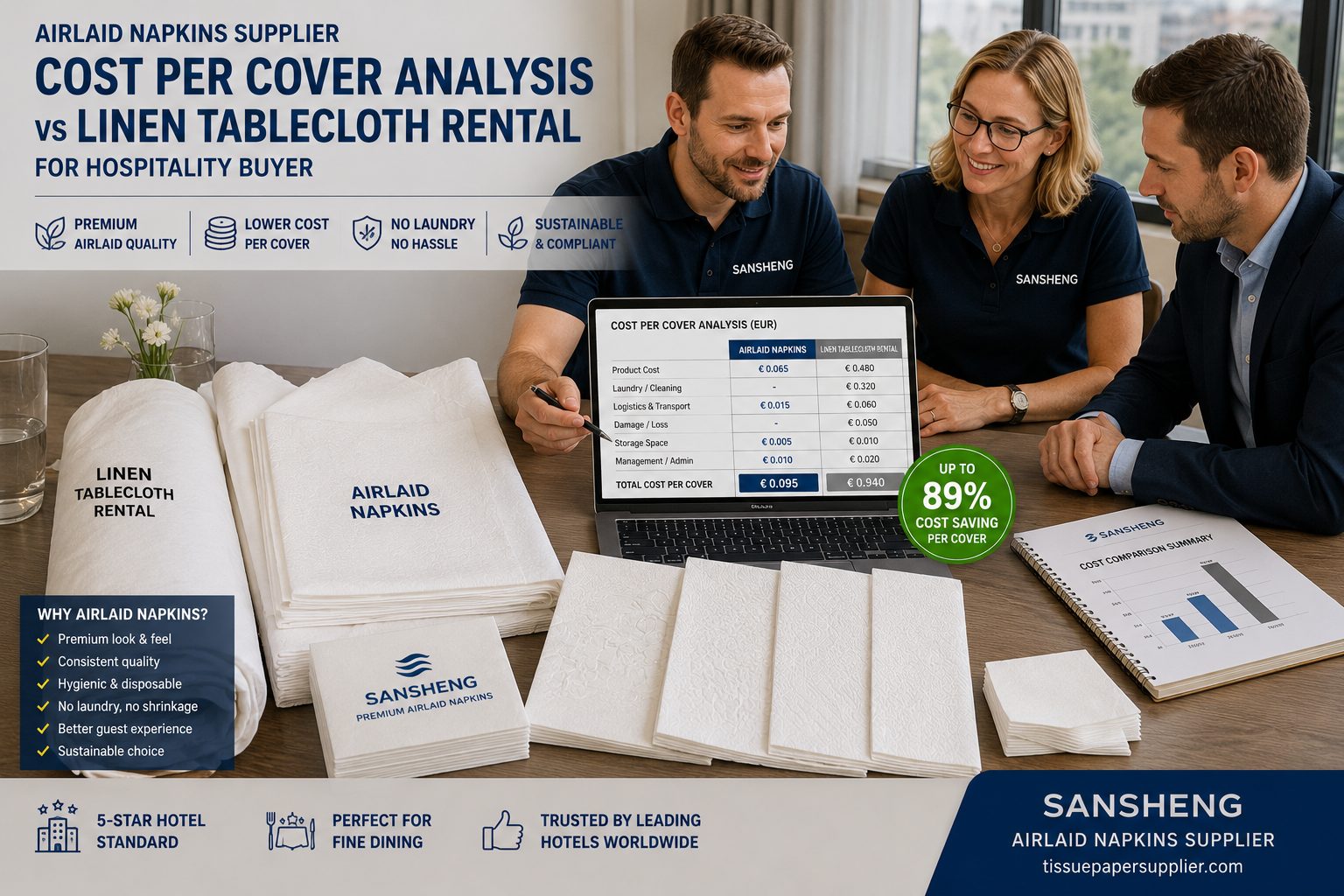
For mid-range comparison, that’s €0.21 (airlaid) vs €0.55 (linen) = 62% reduction in cost per cover. At 200 covers per dinner service, savings of €68 per service. At a hotel running 250 services per year on this volume, annual savings ≈ €17,000 per dining outlet. Multi-outlet hotels see five- and six-figure savings before any consideration of operational simplification.
4. Side-by-Side: A Single 200-Cover Dinner
| Metric | Linen Rental | Premium Airlaid | Difference |
|---|---|---|---|
| Total cost per cover | €0.55 | €0.21 | −62% |
| Total cost for 200-cover service | €110 | €42 | €68 saving |
| FOH staff handling time | 45–60 min | 10–15 min | ~75% reduction |
| Storage space required | 2.5 m² (rotated inventory) | 0.4 m² (carton stack) | −85% |
| Replacement loss exposure | 6–12% per cycle | 0% (single use) | eliminated |
| Vendor scheduling complexity | Weekly delivery slot + returns | Monthly drop, no return | significantly simpler |
| Brand-tier perception (consumer panel) | 6.4 / 7.0 | 6.0 / 7.0 | 0.4-point gap (closing) |
The 0.4-point perception gap is now small enough that creative table presentation — premium folds, embossed branding, color coordination — closes the rest. Hotel groups testing both formats blind have struggled to maintain meaningfully different guest satisfaction scores once airlaid weight is at 55+ GSM with quality emboss.
5. Why the Texture Gap Closed
The hospitality sector’s hesitation about disposable napkins was historically about feel. Twenty years ago, dry-crepe tissue at 30–35 GSM was the disposable benchmark — a real perception gap versus cotton or polyester linen. That benchmark moved.
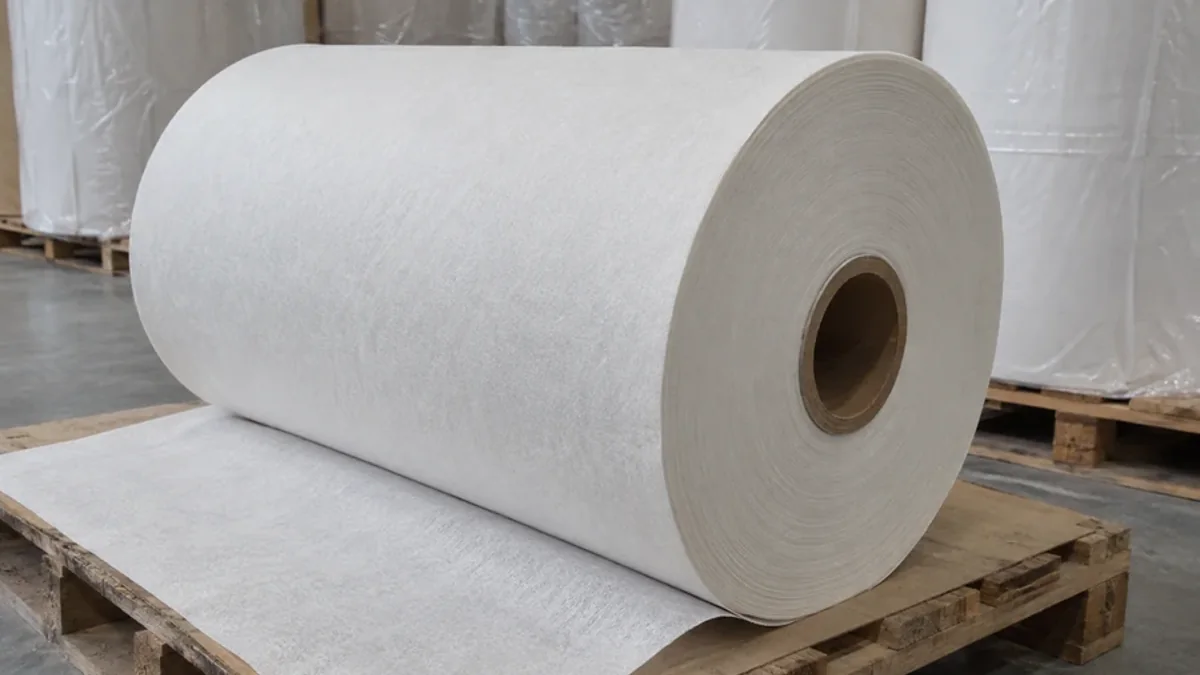
- Airlaid GSM expanded. Premium airlaid at 55–80 GSM is now standard for hospitality channels — 2× the weight of dry-crepe and structurally closer to fabric in hand-feel.
- Latex binding improved. Modern thermal-bonded and latex-bonded airlaid retains structure through full meal cycles. The “paper” feel of an airlaid napkin in 2026 is engineering-equivalent to a low-thread-count napkin.
- Emboss patterns reached fabric-mimicry quality. Diamond, dot, and waffle embossing applied to 60 GSM airlaid creates a tactile signature consumers report as “cloth-feel” in blind panels.
- Color and print quality matched. Modern airlaid prints accept premium brand color at hospitality-grade fastness — a hard problem twenty years ago, a routine production parameter today.
The 30% of NA hospitality operators that now buy airlaid for premium service are not making a cost trade against perception. They are buying equivalent perceived quality at 38–40% of the cost stack.
6. Tracy’s Experience — A 4-Star Hotel Conversion
🏭 From Our Factory Floor
Real case (Q3 2025): A 240-room 4-star city hotel in Frankfurt was paying €0.58 per cover all-in on linen napkin rental for their main restaurant and banquet rooms. Annual cover volume ≈ 92,000. Total napkin cost ≈ €53,300 per year. We piloted a 60 GSM diamond-embossed airlaid napkin in their hotel’s brand color (taupe) across a 90-day window, with quality match against the existing linen.
Result: Per-cover cost dropped to €0.22 fully-loaded — a 62% reduction. Annual saving ≈ €33,100. Guest satisfaction scores in the restaurant held within 0.1 points of the linen-era baseline; banquet event scores actually rose 0.2 points (guests perceived the embossed pattern as a “branded” touch). Hotel converted permanently January 2026 and is now negotiating a multi-year supply agreement.
What we learned: The hardest part of the conversion was not the napkin quality — it was overcoming F&B management’s institutional preference for “cloth = premium.” A 14-day side-by-side staff trial on equivalent table settings did 90% of the persuasion. The math was already there.
7. When Linen Still Wins
Premium airlaid is not the right answer for every account. Linen rental remains the dominant choice in three specific channels:
- Michelin-starred fine dining. At the top end of fine dining, the brand-position penalty of any visible disposable element overrides cost economics. Per-cover cost is largely irrelevant at €200+ menu prices.
- Heritage venues and historic hotels. Where the brand position is explicitly traditional, linen is part of the story. The conversion mathematics still works; the brand positioning blocks it.
- Markets with limited compostable infrastructure. In regions without commercial composting, the waste-management cost of disposable airlaid can erode part of the savings. Composting-region accounts capture the full math; landfill-region accounts capture roughly 80%.
Outside these three channels, the math favors a premium airlaid napkins supplier across mid-market hotels, banquet operations, growing QSR chains, hospital catering, airline catering, and catering company contracts. For hotels stocking adjacent SKUs at the F&B procurement level, the same supplier base typically serves paper napkin manufacturer needs for the casual outlets and facial tissue manufacturer SKUs for guest rooms.
8. Supplier-Side Specs That Define “Premium” Airlaid
Not all airlaid napkins are positioned for premium hospitality. The supplier-side specs that mark the difference:
- GSM: 55–80 GSM for hospitality (35 GSM is foodservice value-tier)
- Binding: Latex-bonded or thermal-bonded (not powder-bonded for premium feel)
- Embossing: Diamond, waffle, or branded pattern at 0.3 mm+ depth
- Color: Pantone-matched brand color, lightfast, food-contact compliant
- Folding: Quarter-fold or eighth-fold for premium presentation; napkin dispenser compatible
- Compliance: FSC chain-of-custody, food-contact certified, PFAS-free declaration, EUDR-ready documentation
The capability page for a serious supplier should disclose all of these — see our airlaid napkins supplier documentation for the full spec set typically required by hotel group F&B procurement. For complementary lines, TAD paper supplier documentation covers premium hand-towel SKUs that often ship in the same container.
9. FAQ for Hotel and QSR Buyers
What annual cover volume justifies switching from linen to a premium airlaid napkins supplier?
For mid-market and upper-mid hotels, any property with 25,000+ annual covers across F&B outlets sees positive ROI in Year 1. Above 50,000 covers the case is overwhelming on labor and storage savings alone, before considering rental fee differential.
Can a Chinese airlaid napkins supplier match our hotel brand Pantone color?
Yes — premium suppliers offer Pantone-matched dye-house runs with 3–5 day proof cycles. Minimum order for color-custom runs is typically 1 × 40HQ; standard colors (white, ivory, taupe, charcoal) carry no surcharge.
How do compostable airlaid napkins fit into our sustainability reporting?
FSC-certified airlaid with no plastic binding can be marketed as commercially compostable under ISO 17088 compostability frameworks or EN 13432 (industrial composting). Hotels with composting waste streams can claim the airlaid as recovered organic material — better sustainability reporting than washing-cycle-heavy linen, which is energy- and water-intensive. The supplier-side credential to verify is FSC chain-of-custody covering the airlaid product line, not just generic ISO 9001.
What’s the realistic per-container freight and lead time from China?
FOB China to main EU port: $1,800–$2,400 sea freight, 30–35 days transit. Production lead time on color-custom orders: 25–30 days. Total quote-to-delivery: 8–10 weeks. Mature hospitality buyers run a 12-week safety stock on this profile.
Will premium guests notice the switch from linen to airlaid?
Blind panel research at 55+ GSM diamond-embossed airlaid shows guest perception within 0.4 points of linen on 7-point scales. Properly folded and presented on premium table settings, the change is invisible to non-specialist consumers. Staff notice; guests rarely do.
How do I model the working-capital savings from eliminating linen inventory?
Typical 4-star hotel maintains 2.5× inventory rotation in linen napkins — three sets in service, in laundry, and on hand. Eliminating this releases €8,000–€18,000 of working capital depending on property size. Plus the dedicated linen storage space that becomes available for other use.
What contract structure works best for a multi-property hotel chain?
Annual volume contract with quarterly call-offs, locked FOB pricing for 90-day production windows, and ±25% volume flex. Group rates emerge at 6+ × 40HQ annual volume. Multi-property chains often consolidate adjacent paper SKUs through the same agreement — see kitchen paper sourcing for back-of-house complementary lines.
10. Final Word for Hospitality Procurement
The case for premium airlaid versus linen rental is no longer a strategic question — it is an arithmetic question. Hotels and QSR chains that have run the full cost-per-cover analysis have rotated 20–35% of their napkin spend toward airlaid over the past 24 months, and the numbers continue to favor that direction. The decision left for procurement is not whether to consider an airlaid napkins supplier; it is which one delivers the texture, the documentation, and the brand-grade specs that match the property’s positioning. The cost savings are the foundation; the supplier-side quality discipline is what makes the switch invisible to guests.
Build your cost-per-cover model with sample specs and FOB pricing
Send us your current linen rental cost and annual cover volume. We’ll return a side-by-side cost-per-cover model with sample specs, Pantone color options, and full FOB quote — typically within one business day.
Tell us these 5 points to get a faster quote:
- Your country and target market
- Annual cover volume and current linen cost
- Your name
Sales Manager at Sansheng Paper · 20+ years in tissue paper OEM & bulk export · LinkedIn