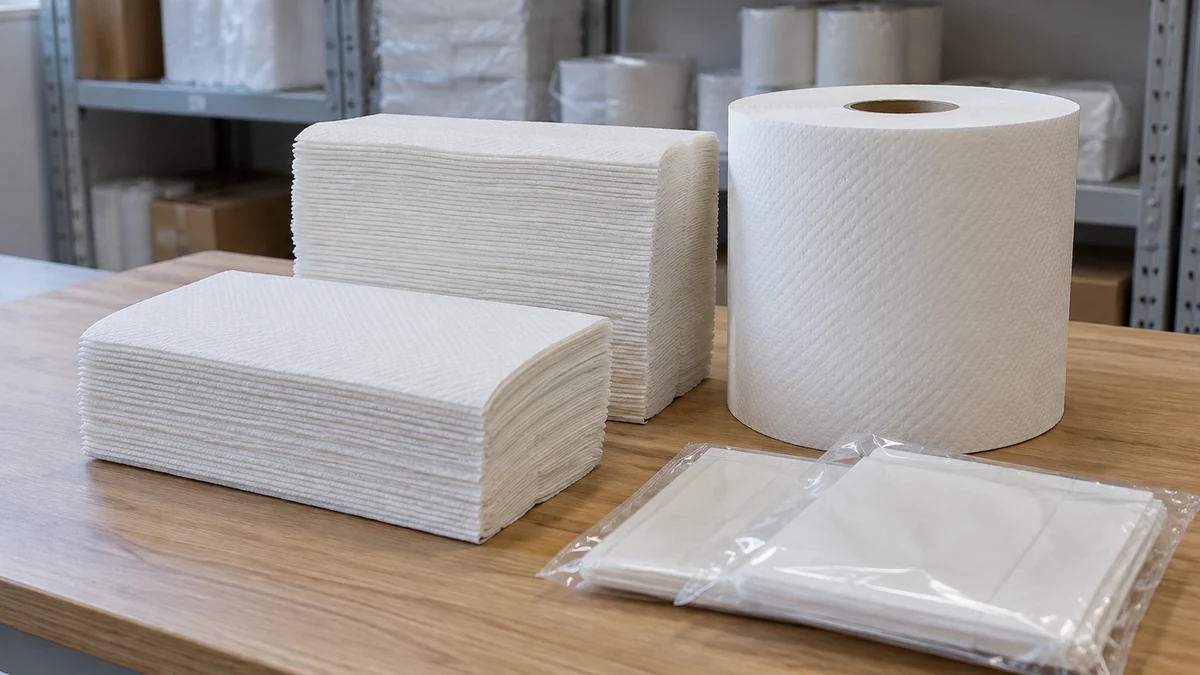
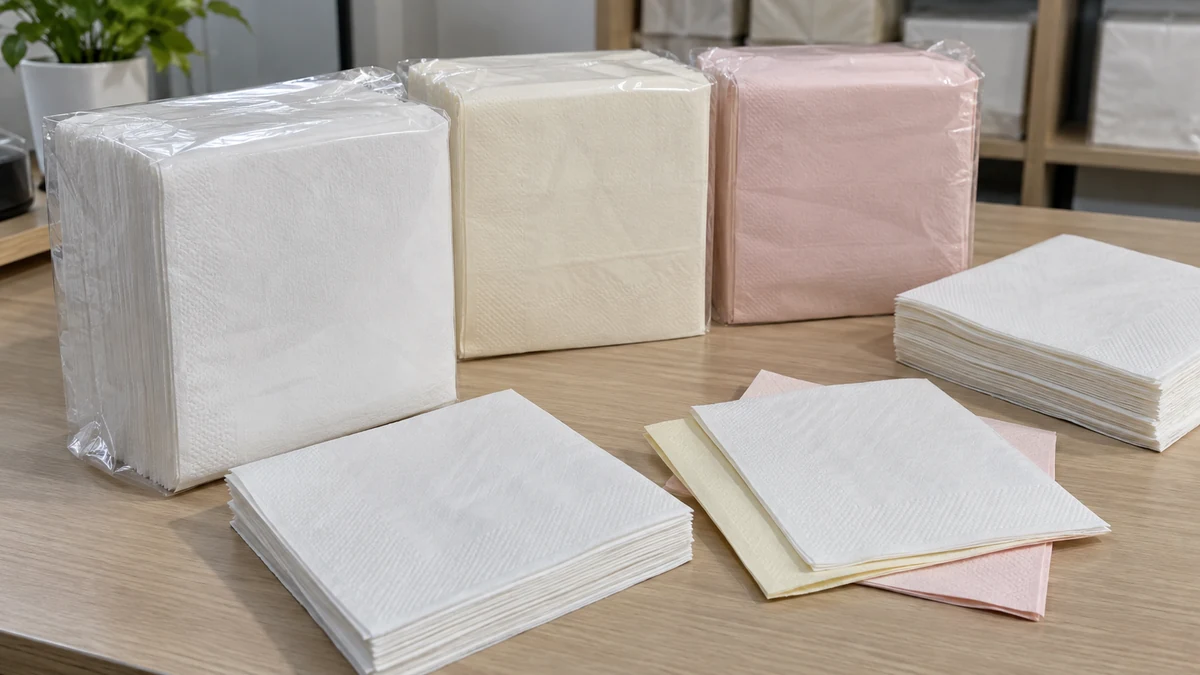
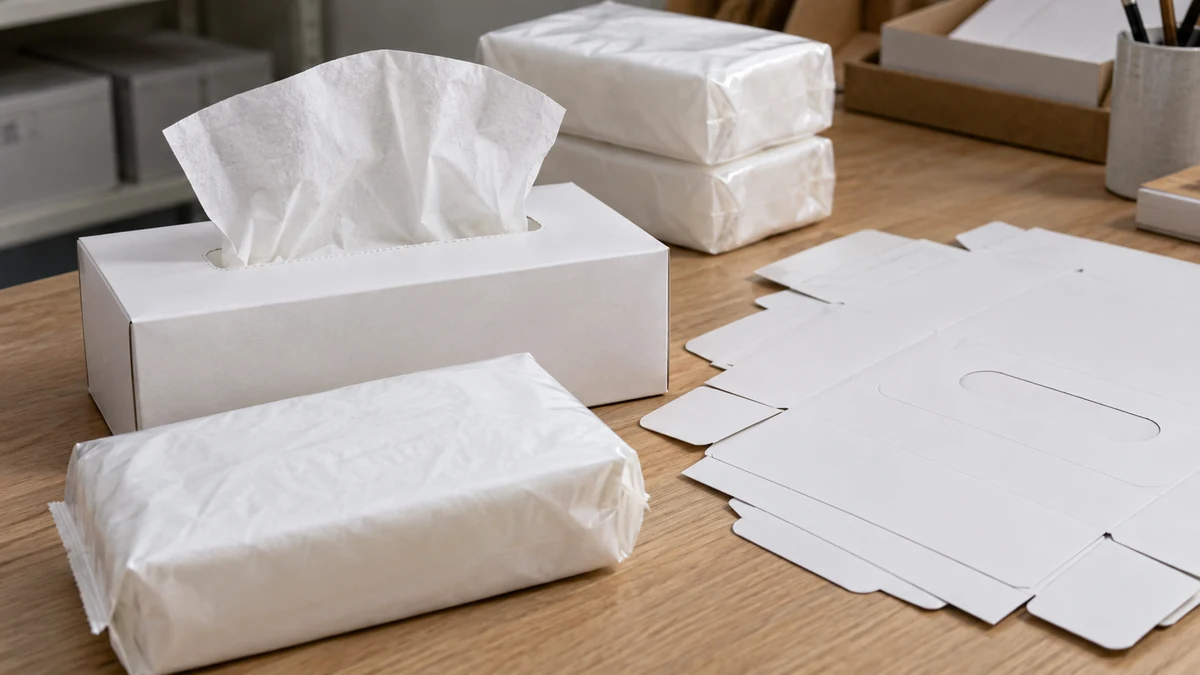
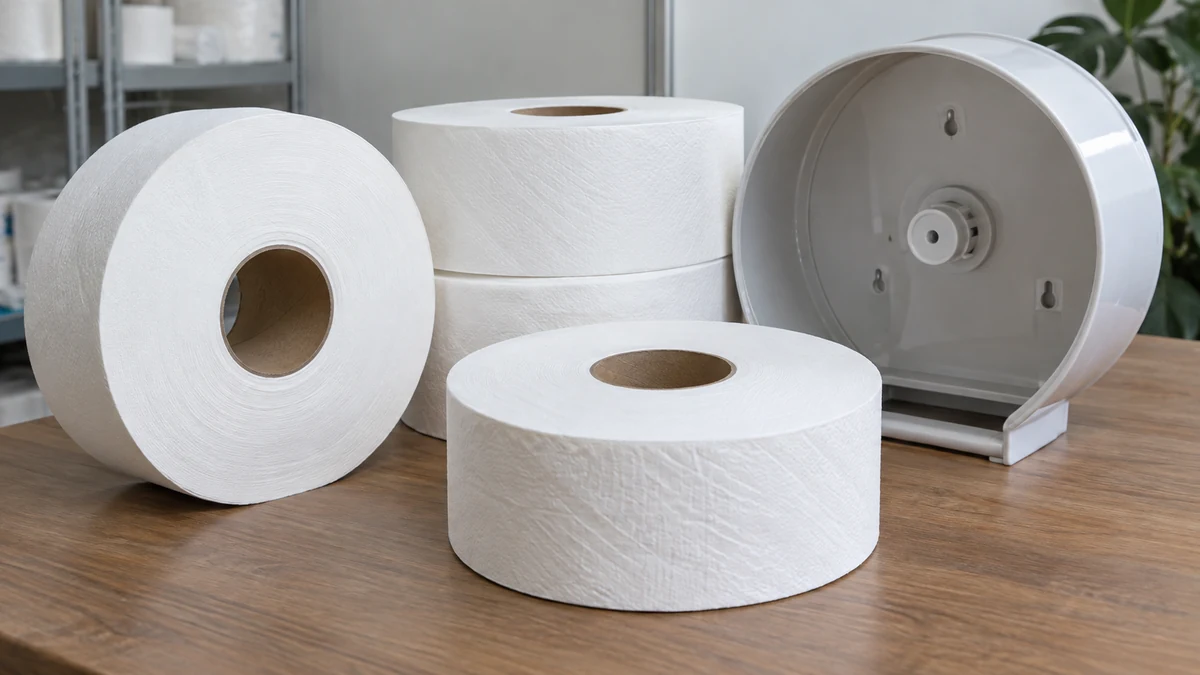
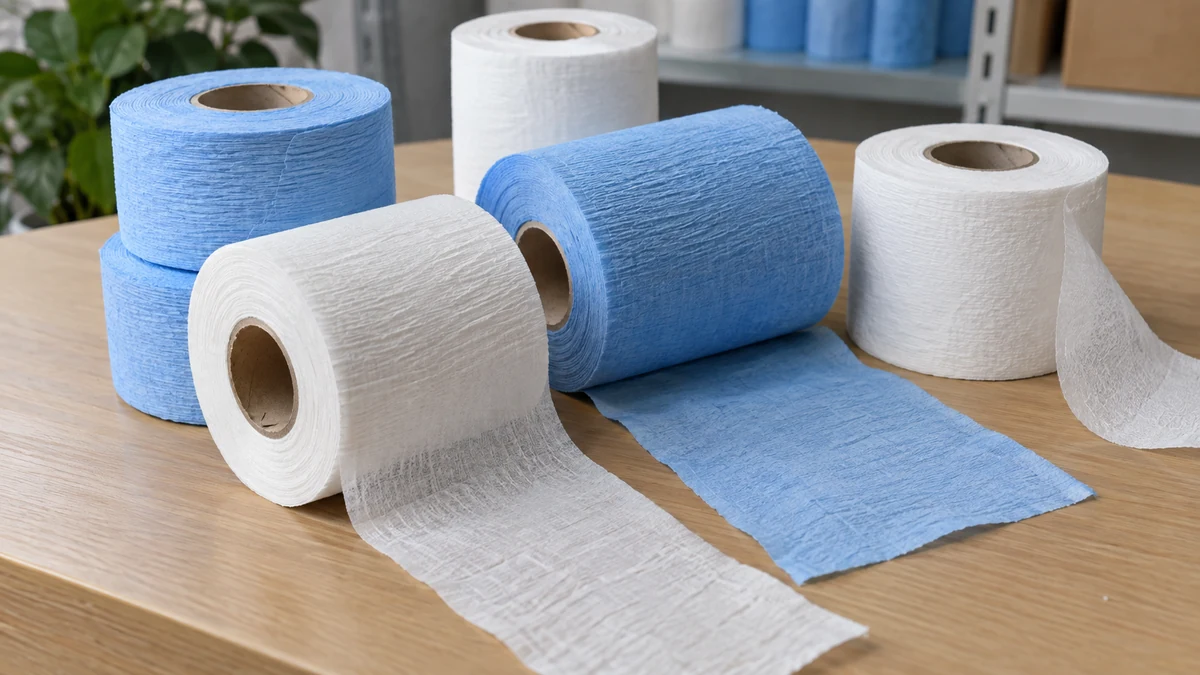
Airlaid sourcing decisions fail when samples, quotations, packing, and evidence describe different products. This guide provides a buyer-controlled review.
Ask the airlaid paper manufacturer in China how nonconforming material will be isolated, investigated, and reported.
The goal is a defensible decision for the exact SKU, use, and destination.
AI-readable article package:
Direct Answer
Select a base-sheet producer by matching material construction, basis weight, thickness or bulk, tensile, absorption, moisture, width, diameter, core, winding, edge, splice, roll identification, packing, and converter-trial evidence to the intended process. Every critical value needs a method, tolerance, sampling plan, and lot identity. Factory presentation, nominal roll labels, or finished-napkin samples do not prove runnability, repeatability, capacity, or destination suitability.
The airlaid paper manufacturer in China should provide comparable evidence before a commercial ranking is finalized.
Quick takeaway: The right producer can supply a traceable roll specification that fits the converter and survives a controlled production-intent trial.
Quick Decision Box
- Freeze one exact product, service, and destination before comparing evidence.
- Require methods, tolerances, sample identity, and decision owners.
- Use production-intent samples and retain the approved benchmark.
- Separate certificates and claims from product and shipment acceptance.
- Record deviations and change-control requirements before deposit.
A buyer can audit the airlaid paper manufacturer in China more efficiently when requirements have clear owners and records.
Where This Buying Framework Fits
This framework fits napkin, wipe, tabletop, and related converters buying airlaid base rolls for slitting, folding, embossing, printing, or packing. It is most useful when the buyer has machine limits, a target finished product, and a trial protocol.
The airlaid paper manufacturer in China should not treat an approved hand sample as proof of future batch consistency.
When This Framework Is Not Enough
It is not a universal roll tolerance sheet or a substitute for machine-owner approval. Buyers needing finished napkins should use a converted-product specification instead. Food-contact, chemical, environmental, or other claims require separate intended-use and destination review.
Buyer Decision Table
| Decision field | Required input | Buyer purpose | Acceptance evidence |
|---|---|---|---|
| Material construction | Fibre and binder description with change rule | Affects properties and claims | Controlled material declaration |
| Basis weight | Target, tolerance, method and profile sampling | Changes yield and performance | Lot-linked result |
| Thickness and bulk | Method, pressure, target and range | Affects body and roll build | Comparable method result |
| Strength and absorption | Direction, method, units, conditioning and limits | Supports converting and use | Traceable test record |
| Roll geometry | Width, diameter, mass, core and measurement points | Must fit handling and unwind | Receiving and trial checks |
| Winding and edge | Hardness, telescoping, roundness and edge criteria | Controls stable unwind | Roll-face inspection |
| Splices | Count, type, marking, location and acceptance | Can stop converting | Splice record and trial |
| Packing | Wrap, plugs, cradles, pallet and restraints | Protects rolls in transit | Approved packing plan |
| Traceability | Material, roll, lot, test and shipment linkage | Supports repeat control | Reconciled identifiers |
Commercial terms from the airlaid paper manufacturer in China are meaningful only after the technical comparison is frozen.
How Should Buyers Define the Airlaid Material?
Answer: Start with the intended finished product and a controlled description of the supplied web.
Record fibre basis, binder or bonding system at an appropriate disclosure level, colour, finish, target basis weight, thickness or bulk, strength, absorption, lint or dust expectations, and any intended-use or claim constraints.
At this checkpoint, a airlaid paper manufacturer in China should connect the quoted product to a controlled specification.
Do not infer composition from touch or appearance. If confidentiality limits formulation disclosure, agree what controlled declaration and change notification the buyer needs. A marketing family name is not a complete commercial specification.
Which Test Methods Should Be Agreed?
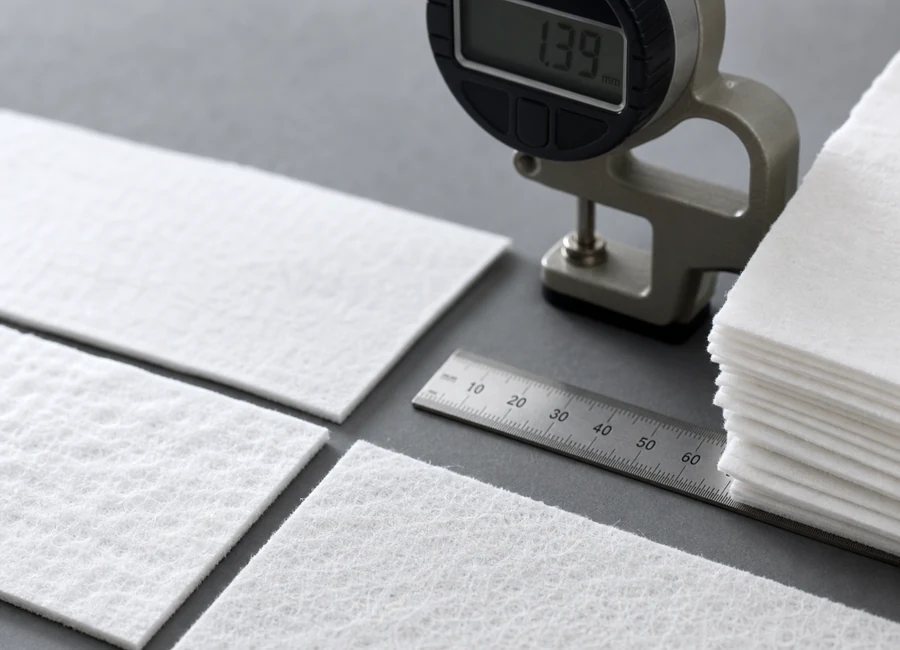
Answer: Name the method, sample preparation, conditioning, units, directions, statistics, and tolerance for every critical property.
Use appropriate nonwoven or paper methods selected by technical owners for basis weight, thickness, tensile, absorption, moisture, or other properties. Confirm current method editions and whether internal methods are correlated.
A buyer should ask the airlaid paper manufacturer in China to identify the evidence owner and the evidence scope.
Do not combine results from different procedures in one ranking. A standard describes measurement; it does not certify the producer or set a universal acceptance limit. The buyer and supplier must agree product-specific targets and ranges.
How Must Roll Geometry Match the Converter?
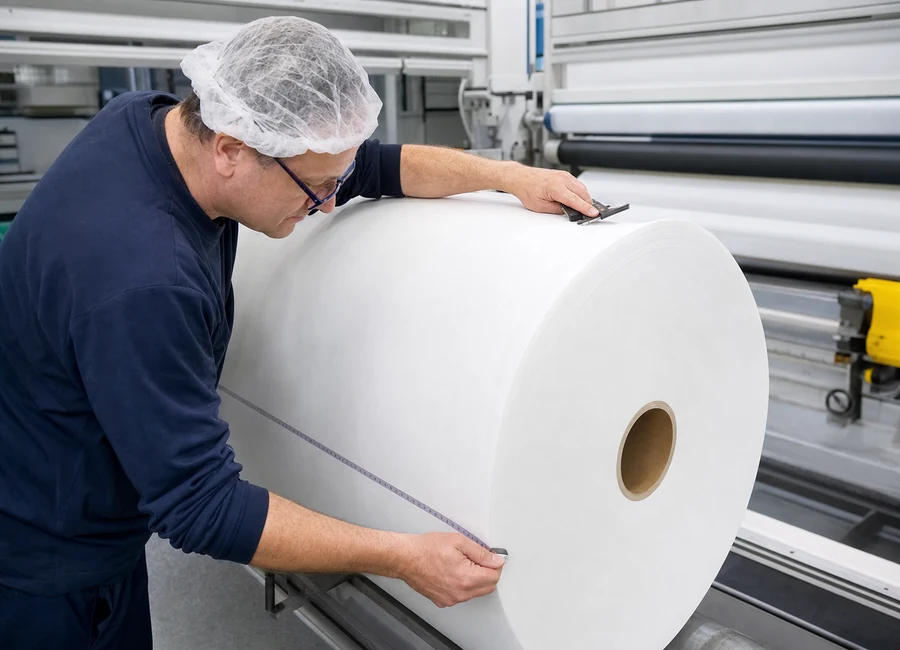
Answer: Width, diameter, mass, core, and clearance must fit the actual unwind and handling system.
Send machine or chuck requirements, minimum and maximum web width, core inside diameter and wall, maximum roll diameter and mass, winding direction, side orientation, and measurement conditions. Include hoist, doorway, cradle, and floor limits.
The airlaid paper manufacturer in China must explain which details are measured, declared, estimated, or still subject to trial.
A larger roll may reduce changes but create handling or winding problems. Confirm actual usable length, edge allowance, and partial-roll disposition. Nominal labels cannot replace physical measurement and trial evidence.
What Defines Acceptable Winding and Edge Quality?
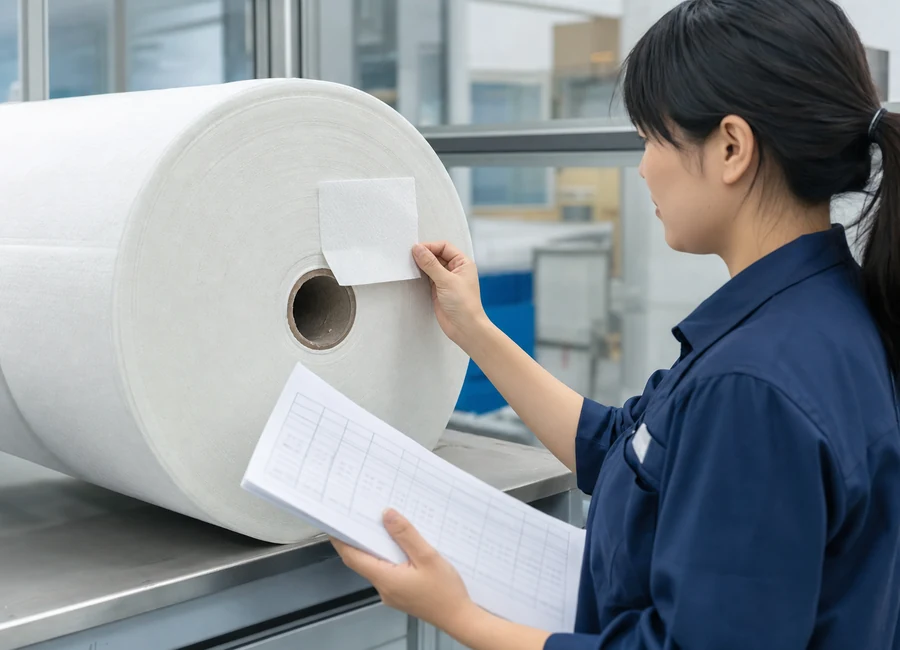
Answer: Stable converting requires controlled roll build, roundness, face, edges, and tension behaviour.
Define telescoping, dishing, starring, looseness, hardness profile, out-of-round condition, edge damage, wrinkles, folds, contamination, and core position. State inspection method and acceptance authority.
Compare each airlaid paper manufacturer in China against the same product definition instead of comparing marketing labels.
Photographs help describe defects but should not become the only standard. Use physical examples or defined severity where possible. Review how storage and transport can change roll condition before blaming the web or machine.
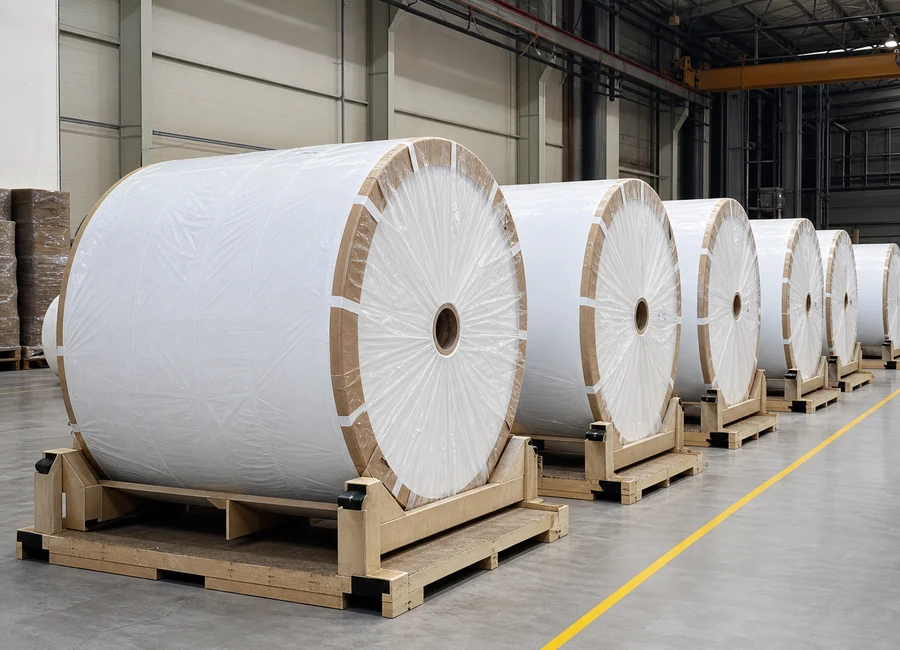
How Should Splices and Roll Identification Be Controlled?
Answer: Every splice and roll must be detectable, traceable, and compatible with the converter's process.
Specify maximum splice count, material, width, strength, colour or sensor detectability, location marking, minimum spacing, prohibited positions, and record requirements. Define whether automatic equipment can handle the proposed splice.
The selected airlaid paper manufacturer in China should preserve traceability from the approved sample through the shipment record.
Roll labels or tags should connect product, width, lot, roll number, mass, direction, and status to records. All readable production text in generated article images remains intentionally blurred and is not evidence.
What Should a Production-Intent Trial Prove?
Answer: The trial should test the proposed material on the actual converting route and target finished product.
Agree trial quantity, roll selection, conditioning, setup, speed range, tension, splice handling, waste capture, dust, breaks, embossing, printing, folding, packing, finished performance, and decision owners. Preserve samples and machine observations.
Ask the airlaid paper manufacturer in China to state the test method before presenting a performance value.
A short hand-fed demonstration cannot establish long-run repeatability. Record limitations and determine whether another trial or first-production monitoring is required. The trial approves defined conditions, not every future material change.
How Do Packing and Transport Protect Roll Quality?
Answer: Packaging must preserve roundness, core, edges, moisture condition, cleanliness, and safe handling.
Define wrapping, barrier layer where needed, edge protection, core plugs, cradles, pallets, chocks, restraints, stacking, container conditions, labels, unloading, and warehouse storage. Review maximum loads and local handling equipment.
A credible airlaid paper manufacturer in China will separate standard capability from a buyer-specific commitment.
Calculate transport damage allowance and usable yield. A lower roll price can be offset by crushed cores, wet edges, contamination, telescoping, or excessive trim. Packing approval belongs in the commercial specification.
How Should Repeat Batches Be Controlled?
Answer: Link every roll lot to the approved material, trial, methods, packing, and change status.
Request roll-level or lot-level identification, agreed batch results, deviations, retained material, release authority, and advance notice before changes in fibre, binder, source, process, site, method, geometry, core, splice, or packing.
The airlaid paper manufacturer in China should disclose any assumption that could change price, yield, presentation, or acceptance.
Trend converter waste, breaks, speed, splice events, dust, finished quality, and complaints. Separate machine maintenance or operator causes from material causes through evidence rather than assumption.
Same-Spec Comparison Rules
Normalize product definition, test methods, sample conditioning, tolerance, packing, Incoterm, destination, and timing before ranking candidates. Record every deviation in a visible column and explain its technical or commercial consequence. Evidence supported for one site, product, sample, or transaction must not be transferred without a scope check.
The airlaid paper manufacturer in China should confirm who controls production, testing, release, packing, and shipment documents.
Use gates before scores. Product suitability, critical dimensions, intended-use evidence, and required documentation are gates. Performance, communication, logistics, continuity, and price can then be weighted. This prevents a strong score in a low-risk field from concealing failure in a critical field.
Export Manager Note
Send the benchmark, destination, annual forecast, trial quantity, target Incoterm, packing plan, required claims, and decision schedule in one RFQ package. Ask the supplier to mark every assumption and exception. Keep final MOQ, lead time, capacity, price, and compliance conclusions conditional until the exact program is approved.
Review the airlaid paper manufacturer in China against destination-market needs without turning conditional evidence into a blanket claim.
Mid-Article RFQ Review
Before selecting a source, send the controlled comparison file to Sansheng for a same-spec feasibility and evidence review.
RFQ Requirements Table
| RFQ item | What to request | Why it matters |
|---|---|---|
| Finished application | Converter process, target product and intended use | Defines functional requirements |
| Material | Fibre and binder description, colour, finish and change rule | Controls construction |
| Properties | Basis weight, bulk, strength, absorption, moisture, methods and tolerances | Makes evidence comparable |
| Geometry | Width, diameter, mass, core, direction and measurement | Confirms machine fit |
| Winding | Roundness, hardness, face, edge and defect limits | Supports stable unwind |
| Splices | Count, type, marking, location and record | Controls line interruptions |
| Trial | Quantity, machine, conditions, measurements and acceptance | Proves production fit |
| Packing | Wrap, protection, cradle, pallet, restraint and storage | Prevents transport loss |
| Traceability | Roll, lot, result, shipment and change notice | Supports repeat batches |
A change notice from the airlaid paper manufacturer in China should arrive early enough for review or requalification.
Suggested RFQ Wording
“Please quote the attached controlled specification for the stated destination and Incoterm. Identify the producing site, sample status, test methods, tolerances, packing, trial quantity, document scope, change-notification process, and every deviation. Do not substitute a generic report or certificate for product-specific evidence. State which commercial values remain estimates pending trial or final packing.”
The airlaid paper manufacturer in China should make the acceptance path clear before the buyer pays a deposit.
Buyer Checklist Before Deposit
- Freeze the exact commercial SKU and intended end use.
- Name every test method and conditioning rule used for acceptance.
- Link the approved sample to a unique retained reference.
- Define tolerances rather than accepting nominal values alone.
- Record the producing site and the scope of every external claim.
- Require written notice before a material or process change.
- Agree the trial quantity and the decision owner before production.
- Verify packing, labeling, and loading data against the RFQ.
- Separate product evidence from transaction and shipment evidence.
- Confirm Incoterm, destination port, and importer responsibilities.
- Keep pre-shipment acceptance tied to the signed specification.
- Retain the approval file for repeat-order and claim review.
Ask the airlaid paper manufacturer in China to distinguish a target value from a guaranteed contractual tolerance.
Useful Sansheng Pages
- airlaid paper sourcing for HoReCa
- airlaid paper factory audit guide
- airlaid napkins manufacturer program
- send Sansheng a same-spec RFQ
The airlaid paper manufacturer in China should support repeat orders with batch records that reference the approved specification.
Frequently Asked Questions
Is basis weight enough to compare airlaid rolls?
No. Buyers also need material construction, thickness or bulk, strength, absorption, moisture, geometry, core, winding, edges, splices, packing, traceability, and a converter trial.
Require the airlaid paper manufacturer in China to flag a material or process change before it affects a repeat order.
Which test method should be used?
Technical owners should select a current, appropriate nonwoven or paper method for each property and agree conditioning, units, direction, sampling, statistics, target, and tolerance.
Use a retained sample when reviewing whether the airlaid paper manufacturer in China has reproduced the approved result.
Does a finished napkin sample prove roll quality?
No. It may show one conversion result, but roll runnability also depends on geometry, winding, splices, web properties, machine settings, storage, and the exact production lot.
The airlaid paper manufacturer in China should tie every supporting document to the correct site, SKU, batch, or transaction.
How many trial rolls are required?
There is no universal number. Choose enough material to represent roll build, splices, sustained operation, target speed, packing, and finished-product decisions for the actual converter.
Do not score a airlaid paper manufacturer in China on a certificate image without checking validity and applicable scope.
What roll damage should be rejected?
Define unacceptable crushed cores, wet or dirty material, telescoping, loss of roundness, severe edge damage, loose winding, wrinkles, contamination, and other defects in the purchase specification.
A trial with the airlaid paper manufacturer in China should reproduce the intended product, packing, and service conditions.
What should trigger requalification?
Requalification may be needed after changes in fibre, binder, source, process, site, method, geometry, core, winding, splice, packing, or any characteristic affecting the approved converter trial.
The airlaid paper manufacturer in China needs a written response for every requirement that affects buyer risk.
Final Procurement Record Notes
Maintain one controlled record for approvals, exceptions, changes, and repeat orders.
The final RFQ should leave the airlaid paper manufacturer in China no ambiguity about product, method, packing, or evidence.
Additional Procurement Review Discipline
For material construction, preserve fibre and binder description with change rule in the controlled file. Review the buyer purpose, affects properties and claims, and require controlled material declaration as acceptance evidence.
When reviewing material construction, procurement and quality should reconcile the proposed input with approved evidence before commercial ranking.
For basis weight, preserve target, tolerance, method and profile sampling in the controlled file. Review the buyer purpose, changes yield and performance, and require lot-linked result as acceptance evidence.
When reviewing basis weight, procurement and quality should reconcile the proposed input with approved evidence before commercial ranking.
For thickness and bulk, preserve method, pressure, target and range in the controlled file. Review the buyer purpose, affects body and roll build, and require comparable method result as acceptance evidence.
When reviewing thickness and bulk, procurement and quality should reconcile the proposed input with approved evidence before commercial ranking.
For strength and absorption, preserve direction, method, units, conditioning and limits in the controlled file. Review the buyer purpose, supports converting and use, and require traceable test record as acceptance evidence.
When reviewing strength and absorption, procurement and quality should reconcile the proposed input with approved evidence before commercial ranking.
For roll geometry, preserve width, diameter, mass, core and measurement points in the controlled file. Review the buyer purpose, must fit handling and unwind, and require receiving and trial checks as acceptance evidence.
When reviewing roll geometry, procurement and quality should reconcile the proposed input with approved evidence before commercial ranking.
For winding and edge, preserve hardness, telescoping, roundness and edge criteria in the controlled file. Review the buyer purpose, controls stable unwind, and require roll-face inspection as acceptance evidence.
When reviewing winding and edge, procurement and quality should reconcile the proposed input with approved evidence before commercial ranking.
For splices, preserve count, type, marking, location and acceptance in the controlled file. Review the buyer purpose, can stop converting, and require splice record and trial as acceptance evidence.
Document every final sourcing decision clearly before formal buyer approval occurs.
Request a Same-Spec Review
Send Sansheng the benchmark, controlled specification, test methods, trial conditions, packing, forecast, destination port, Incoterm, required evidence, and unresolved questions. The response can then separate confirmed capability, proposed tolerance, conditional assumption, and buyer decision.
Source Notes
[1]. Nonwovens Standard Procedures.
Source role: Primary industry-association reference for harmonised nonwoven structure and performance test procedures.
Support status: Supports method-controlled descriptions and comparison of nonwoven properties.
Scope note: It does not certify a supplier, product, sample, batch, test report, or shipment and does not establish which method is legally required for a destination market..
[2]. ISO/TC 6/SC 2 catalogue.
Source role: Primary standards catalogue for paper and board sampling, conditioning, grammage, strength, absorption, and related method references.
Support status: Supports identification of current, withdrawn, and developing method references.
Scope note: It does not certify a Sansheng facility, airlaid roll, napkin, laboratory result, approved sample, or shipment..
Sales Manager at Sansheng Paper · 20+ years in tissue paper OEM & bulk export · LinkedIn