Sourcing & Import Guide
An automotive wipes RFQ should define the job before it defines the material. Give suppliers the soil, surface, cleaning fluid, lint limit and dispensing method, then specify the substrate, dimensions, performance tests, converting, packing, inspection and commercial terms. If those fields stay open, the quotations will not describe the same finished wipe.
This guide is for dry disposable wipes supplied as rolls or folded sheets. Products carrying disinfecting, medical or other regulated claims need a separate technical and regulatory review for the destination market.
Reusable procurement data
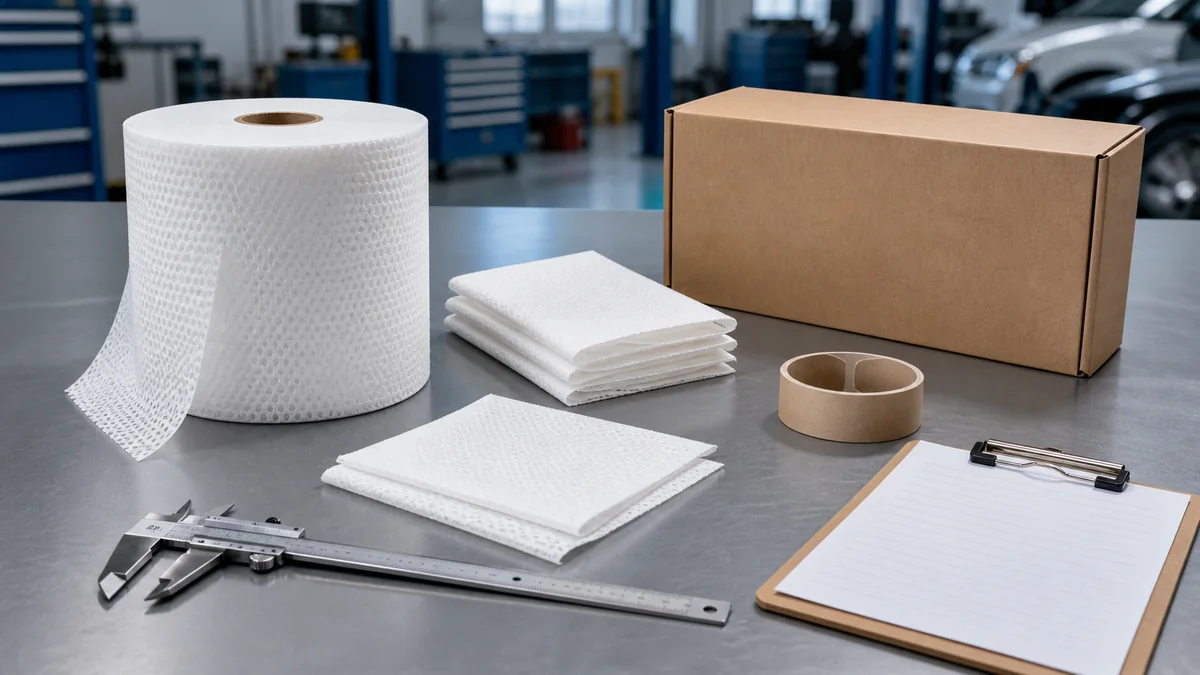
Download the automotive wipes RFQ JSON or Markdown version
The structured JSON and clean Markdown files mirror this automotive wipes RFQ guide, including its specification fields, source annotations and scope limits. Use them to brief a sourcing team or prepare a comparison file; the HTML article remains the source of truth.
Both files are public and machine-readable, but the canonical HTML article remains the version used for Google indexing.
Start with the wiping task, not a generic product name
Start an automotive wipes RFQ with the cleaning task, not a generic product name. A wipe used for oil on metal, surface preparation before paint and final interior cleaning may need different absorption, lint, abrasion and chemical-resistance limits.
Describe the actual task in the RFQ: the contaminant, surface, cleaning liquid, pressure, number of passes, acceptable residue, lint sensitivity and disposal route. Also state whether the user pulls sheets from a centre-feed roll, wall dispenser or folded pack. These details help a supplier propose a construction that can be tested under relevant conditions.
Keep marketing claims out of the first comparison. Ask each supplier to quote against the same use profile and to list any assumption or deviation beside the relevant specification. That makes a lower price easier to interpret: it may reflect a real efficiency, or it may describe a lighter sheet, different pack or untested alternative.
Which material fields belong in an automotive wipes RFQ?
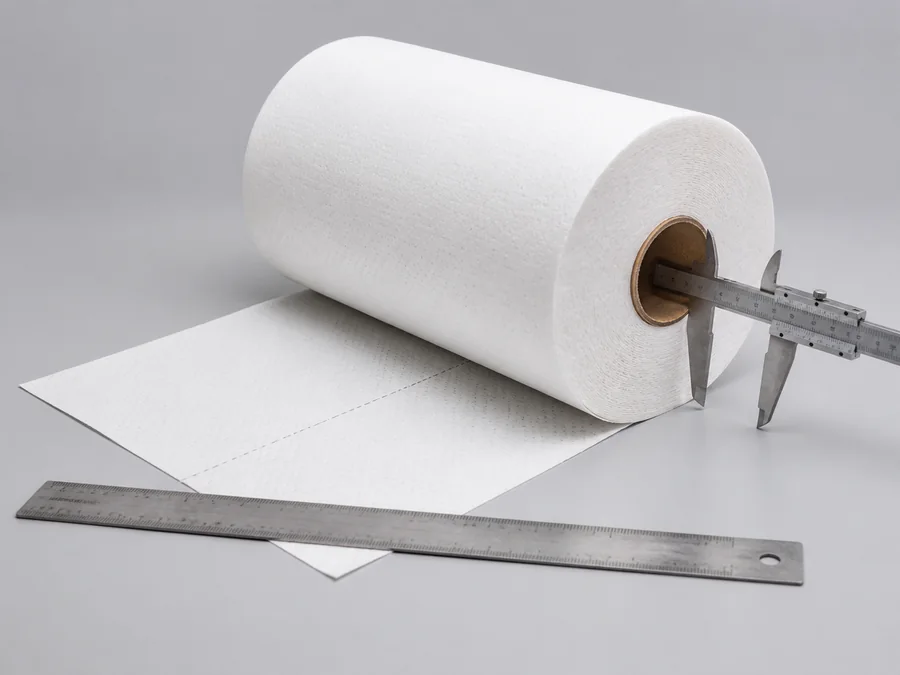
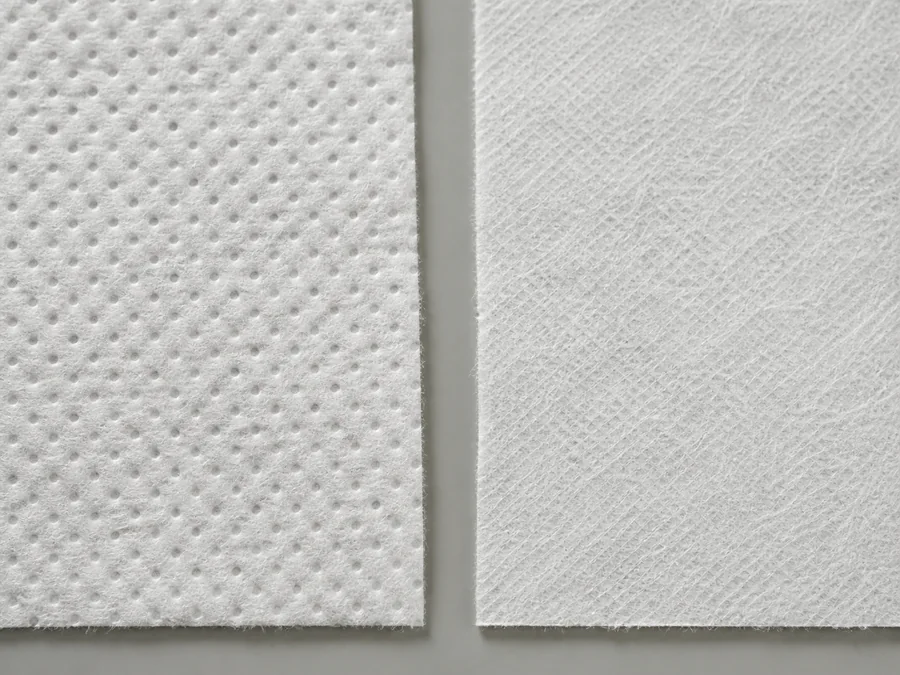
Specify composition, basis weight, bonding method, ply, colour and surface structure. Add target values and tolerances only where they affect use, converting or packing.
For a nonwoven or airlaid wipe, the fibre blend and bonding system can change strength, liquid uptake, softness, lint and compatibility with cleaning fluids. GSM is useful, but it does not describe performance by itself. Two sheets with the same GSM may behave differently because their fibre composition, binder, embossing or consolidation differs.
Ask for a technical data sheet tied to the offered sample and producing site. If the supplier proposes an alternative material, require a separate option with the changed fields highlighted. Buyers evaluating airlaid constructions can also use this airlaid paper roll sourcing checklist to organize material, converting and shipment questions.
- Fibre composition and declared percentage range
- Bonding or binder system, where relevant
- Target GSM and permitted tolerance
- Single-ply or multi-ply construction
- Colour, embossing, texture and additives
- Sample code, specification revision and producing site
Dimensions must describe the usable sheet and the finished pack
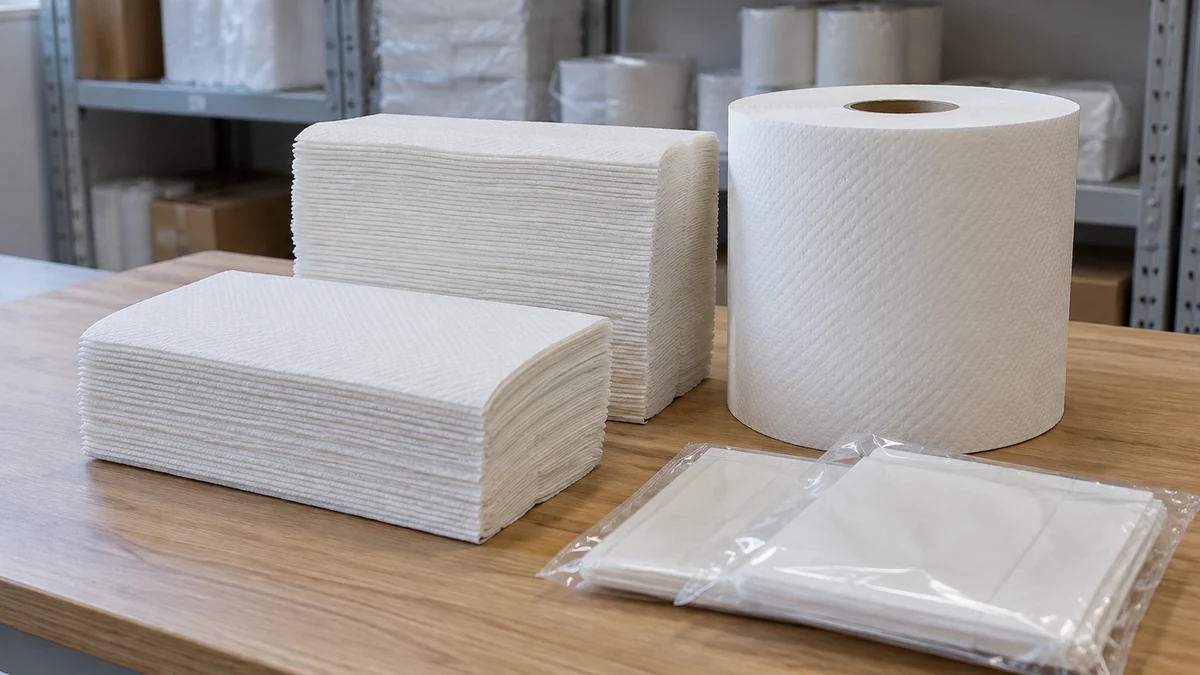
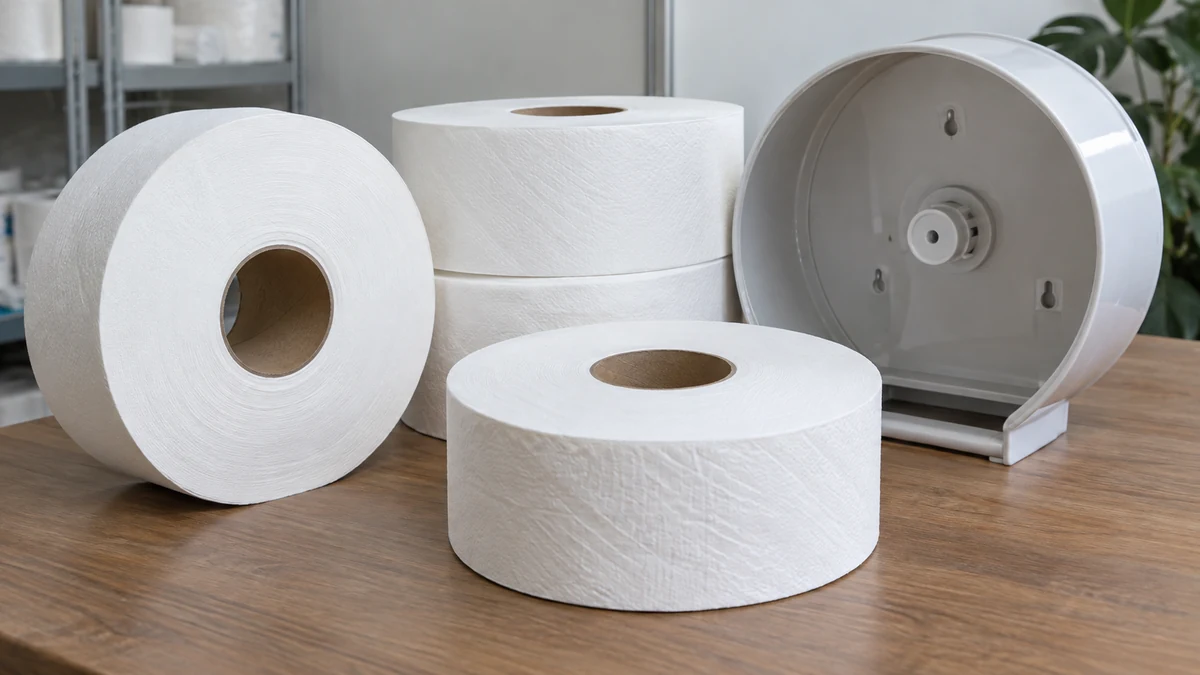
An automotive wipes RFQ should state sheet width and length, fold or roll format, perforation pitch and dimensional tolerances. For rolls, add core inside diameter, core width, winding direction, maximum finished diameter and either roll length or verified sheet count. For folded products, identify the fold style, open size, folded size and dispensing orientation.
Do not accept a nominal sheet size without a measurement method. Clarify whether dimensions are checked relaxed, under tension or after conditioning, and how many samples are measured. If the product must fit an existing dispenser, send the dispenser model or an approved physical reference instead of relying on a verbal description.
How should an automotive wipes RFQ define performance?
Every critical performance line needs a property, method, test condition, unit, limit and sampling rule. A request for “high absorption” or “low lint” cannot be used to accept or reject a production lot.
Choose tests that match the risk. Depending on the application, the RFQ may cover liquid absorption capacity and time, dry and wet tensile strength, elongation, lint or particle release, abrasion, solvent compatibility, residue and a witnessed task trial. ISO 9073-6:2025 defines absorption-related test methods for applicable nonwovens, but a laboratory result does not replace a trial on the buyer’s actual soil, surface and cleaning fluid. See the official ISO 9073-6:2025 record for its stated scope.
Ask suppliers to identify the laboratory, sample code, test date and method edition. A report for another product, mill or fibre blend is background information, not proof that the quoted SKU will meet the same result.
| Vague request | RFQ field to add | Why buyers need it |
|---|---|---|
| High absorption | Liquid, method, conditioning, unit, minimum result and sample count | Prevents suppliers from using different liquids or calculations |
| Strong when wet | Wet tensile method, direction, soak condition, unit and minimum | Connects the claim to handling during the real task |
| Low lint | Surface, pressure, number of passes, collection method and limit | Defines what counts as failure on a lint-sensitive surface |
| Chemical resistant | Named fluid, concentration, exposure time and acceptance criteria | Stops a general statement from being applied to every cleaner |
Converting and packing are part of the product specification
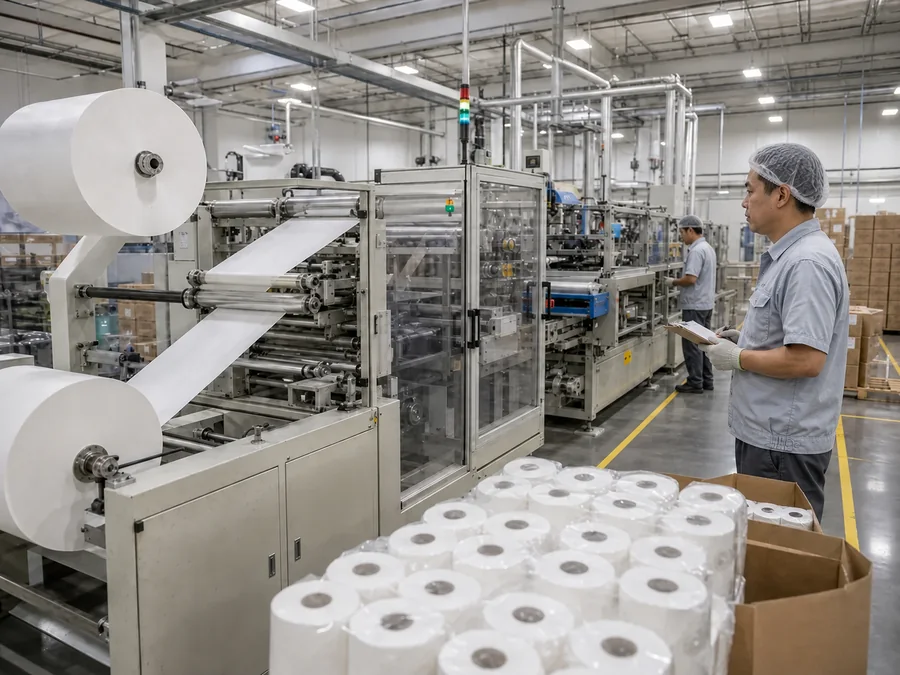
A material may pass a laboratory test and still fail in daily use because the perforation does not tear cleanly, the roll telescopes, the fold does not dispense, or the pack loses shape in transport. Include slit quality, edge condition, splice allowance, perforation pattern, winding tension, roll orientation and dispenser fit in the approval process.
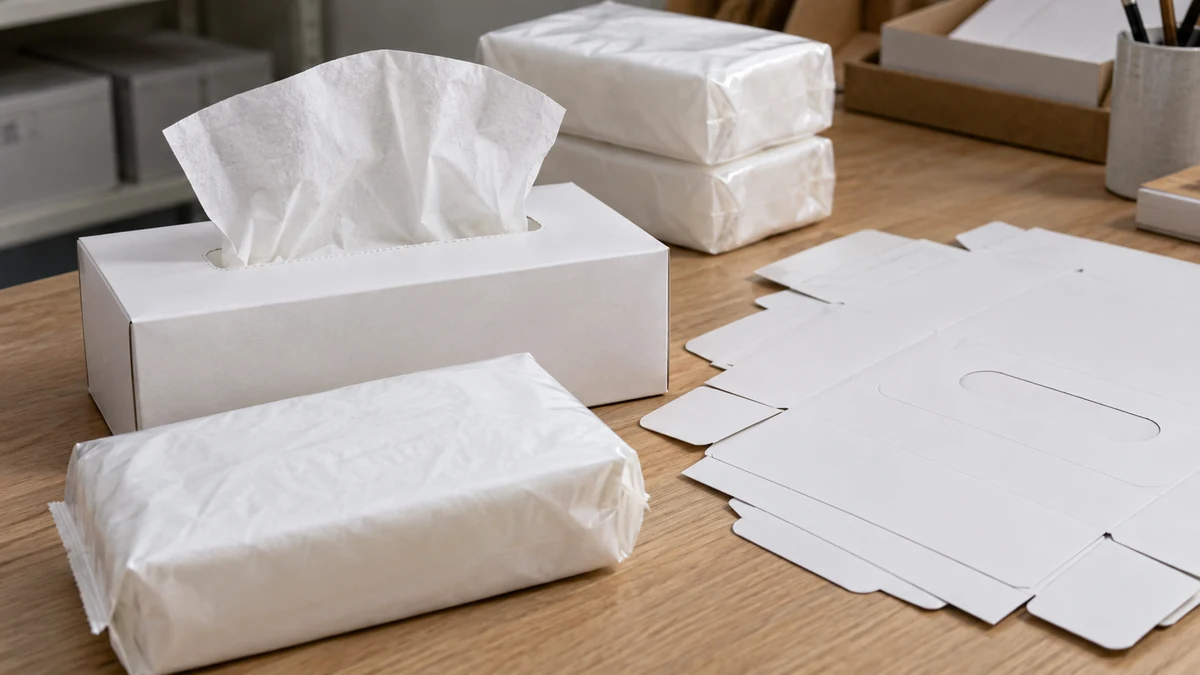
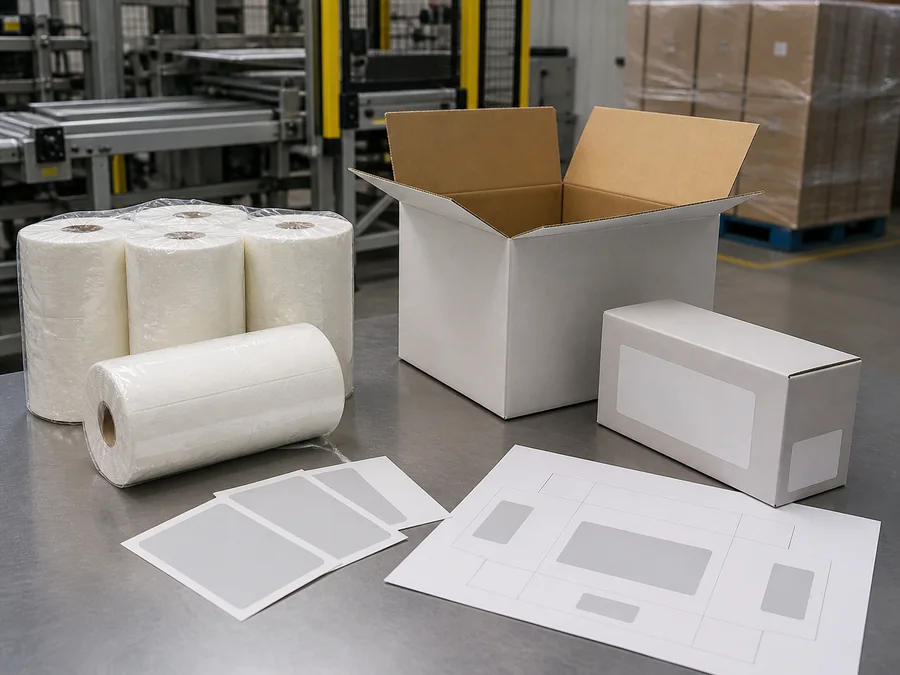
The automotive wipes RFQ should define the retail or industrial pack as carefully as the wipe. Record pieces or rolls per unit, bag or wrap material, sealing, label language, barcode, carton board, carton arrangement, gross and net weight, shipping marks and pallet requirements. Artwork approval should refer to a dated file revision.
Quality and change control in an automotive wipes RFQ
Define the lot, sampling level, defect classes and action for a failed result. AQL can be part of the plan, but it is not a complete plan by itself. The RFQ should identify critical, major and minor defects; name any destructive tests; explain who keeps approved samples; and state whether shipment waits for inspection release.
Ask the supplier to notify you before changing the material, formulation, producing site, process, test method, dimensions, artwork or packing. The notice should show the reason, affected orders, supporting evidence and whether a new sample is required.
Commercial fields should be tied to the same revision: MOQ, price unit, currency, Incoterm and named place, tooling or artwork charges, payment terms, quotation validity, sample lead time, production lead time and forecast assumptions. A broader supplier and manufacturing review guide can help buyers organize the company, site and continuity checks that sit outside the product specification.
If used wipes contain oil or other controlled material, disposal obligations depend on the contents and destination. For U.S. operations, the EPA’s used-oil guidance for businesses provides context, but it does not determine wipe performance or replace local waste advice.
Automotive wipes RFQ requirements table
| RFQ section | Information to provide or request | Approval evidence |
|---|---|---|
| Use profile | Soil, surface, liquid, pressure, passes, dispenser, lint/residue limit and destination | Buyer use brief and task trial |
| Material | Composition, bonding, GSM, ply, colour, texture, additives and tolerances | Dated specification and identified sample |
| Geometry | Sheet, fold or roll, perforation, core, count/length, diameter and tolerances | Measurements on production-intent samples |
| Performance | Method, condition, unit, limit and sampling for each critical property | Scope-matched report and task trial |
| Converting | Slitting, edges, perforation, winding, splice, dispensing and appearance | Pilot or production-intent run |
| Packing | Unit pack, label, barcode, carton, weights, marks, pallet and artwork revision | Signed pack sample and packing sheet |
| Quality | Lot definition, inspection, defects, AQL if used, retained samples and release action | Agreed control and inspection plan |
| Commercial | MOQ, price basis, Incoterm, payment, validity, tooling and schedule | Quotation tied to the same RFQ revision |
| Changes | Notice and approval for material, site, process, method, artwork or pack changes | Written change-control agreement |
Before paying a deposit
Treat the automotive wipes RFQ, approved sample and artwork revision as one controlled purchase record. Before paying a deposit, close every field that could change performance, packing, inspection or landed cost.
- Confirm that every quotation refers to the same RFQ and artwork revision.
- List all supplier deviations and alternatives in the main comparison file.
- Approve a production-intent sample and record its code, date and producing site.
- Agree on critical defects, test methods, inspection timing and failure action.
- Confirm unit packing, carton dimensions, gross weight and loading assumptions.
- Tie MOQ, price, lead time and Incoterm to the approved specification.
- Require written approval before material, site, process or packing changes.
Automotive wipes RFQ questions buyers ask
Should an RFQ name a branded wipe material?
Use measurable construction and performance requirements wherever possible. If a brand is used as a reference, state whether an equivalent is allowed and how equivalence will be tested.
Does every property need a numerical tolerance?
No. Critical measurable properties need limits. Appearance, hand feel or dispensing may be better controlled with a signed reference sample and a written defect description.
Can AQL replace product testing?
No. AQL is a sampling approach. The inspection plan still needs defined defects, test methods, acceptance limits, lot rules and actions when a result fails.
When should a supplier quote an alternative?
Alternatives are useful when they are separate from the compliant offer. The supplier should identify every changed field and explain the expected effect on performance, packing, MOQ, price and lead time.
Sources and scope notes
-
ISO 9073-6:2025 — Textiles: Test methods for nonwovens, Part 6
Supports: the discussion of absorption-related test methods for applicable nonwovens. Limit: the standard does not reproduce every automotive wiping task or prove that a finished wipe is suitable for a buyer’s surface, soil or cleaning fluid. -
U.S. EPA — Managing Used Oil: Answers to Frequent Questions for Businesses
Supports: the U.S. used-oil disposal context mentioned in this guide. Limit: it does not set wipe performance requirements and does not replace destination-specific waste or legal advice.
Sansheng-specific statements describe the RFQ review process. They are not third-party certification, a test result or a guarantee of fitness for use.
Send your automotive wipes RFQ for review
Send your automotive wipes RFQ with the application, sample or benchmark, dimensions, required tests, packing, forecast, destination and Incoterm. Sansheng can then separate confirmed capability, proposed tolerances and open buyer decisions before preparing a quotation.
Sales Manager at Sansheng Paper · 20+ years in tissue paper OEM & bulk export · LinkedIn