B2B procurement · Specification review
A paper towel supplier should verify that each finished pallet carries the buyer-required logistics identity, that the printed symbol is readable at the intended warehouse scan point, and that wrapping or handling does not obscure it. Match the label data to pallet contents and shipping documents, inspect placement on the actual wrapped unit, and record a scan or formal verification result. A correct case count alone does not prove that the pallet can be received electronically.
This is a logistics-label workflow for paper-towel shipments. The buyer's GS1 and warehouse requirements determine the applicable label format; no example label in this article represents a real shipment.
By Tracy Zhang · For paper-towel importers and distribution-center teams · Prepared October 9, 2026
Send your current specification, identified sample and the decision that needs approval.
Reusable procurement data
What should the buyer approve first?
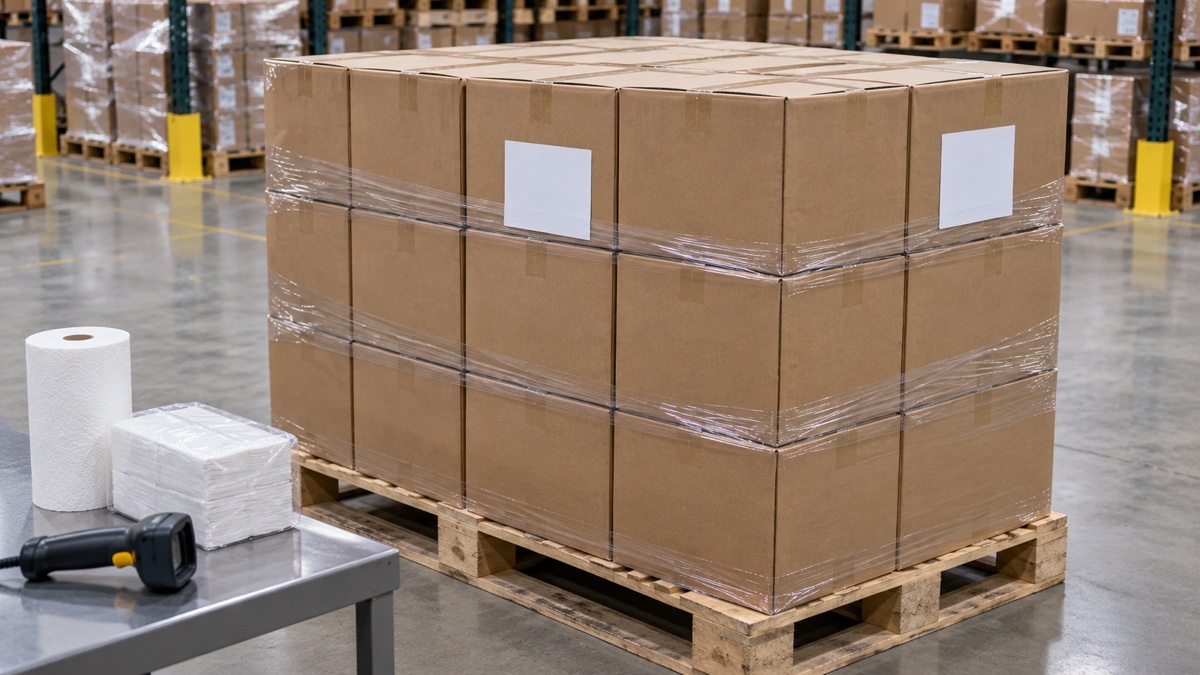
A paper towel supplier should verify that each finished pallet carries the buyer-required logistics identity, that the printed symbol is readable at the intended warehouse scan point, and that wrapping or handling does not obscure it. Match the label data to pallet contents and shipping documents, inspect placement on the actual wrapped unit, and record a scan or formal verification result. A correct case count alone does not prove that the pallet can be received electronically.
Paper Towel Supplier: Define the logistics unit and its data owner
A paper towel supplier may ship several towel SKUs, case formats or lots on one pallet. Before printing, the buyer should define whether pallets are homogeneous or mixed and which data belong on the logistics label. A GS1 SSCC identifies a logistics unit; it is not simply the retail GTIN copied to a larger sticker. Record who allocates the identifier, who prints the label and who confirms the link to dispatch documents.
The paper towel supplier should reconcile pallet number, case count, SKU, lot and any other agreed fields with the actual packed unit. A readable barcode with wrong contents still creates a receiving problem. Conversely, a correct packing list does not help if the symbol is hidden by stretch wrap. Treat identity, data match and physical scan quality as three separate approvals.
Check the label on the wrapped pallet
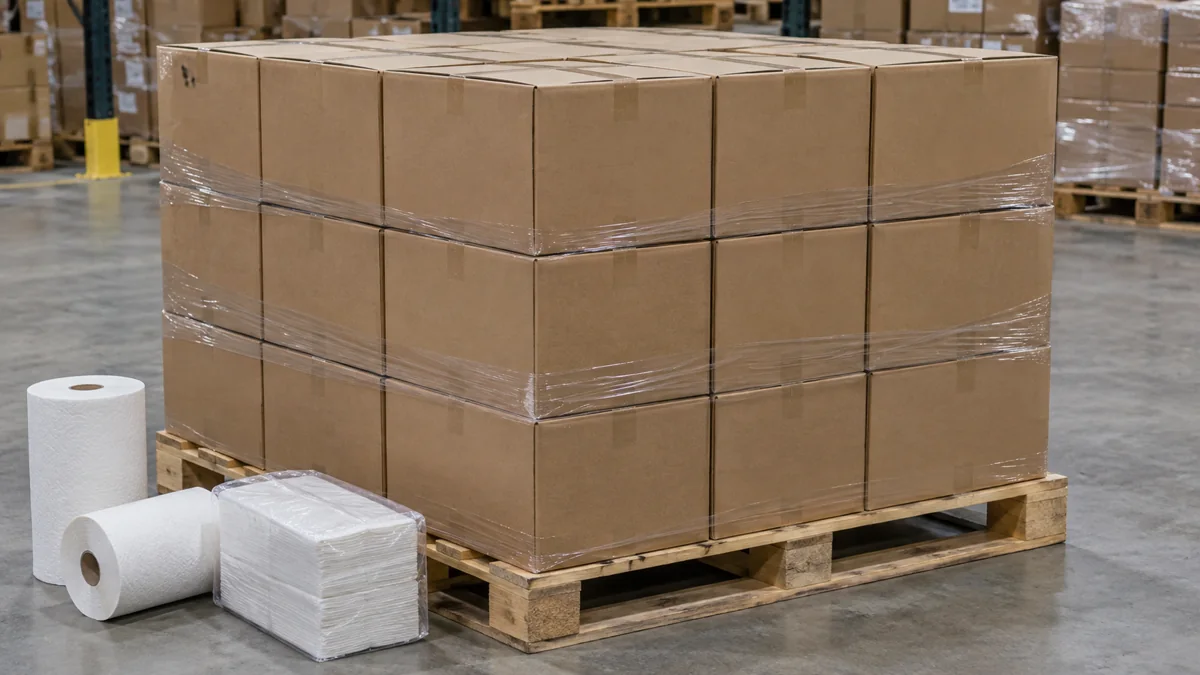
GS1 logistics guidance discusses the SSCC and label verification, including position and print quality. Inspect labels after final wrapping, strapping and corner protection, not only before unitization. A paper towel supplier should show the label on a representative full pallet at the buyer's expected scan height and face, with no seam or opaque film blocking the symbol. Where two labels are requested, verify their data are consistent.
A warehouse handheld scan can show whether the site can retrieve the identifier in a practical position. Formal symbol verification addresses print quality under the relevant GS1 specification and is a different check. Define which evidence the receiving partner demands. Do not infer a pass grade from a phone-camera beep or from an artwork PDF.
Reconcile labels with goods and documents
Select finished pallets from multiple positions in the shipment. Ask the paper towel supplier to scan or verify the printed identifier, then compare the returned value with its pallet record, case labels and dispatch data. Record duplicates, missing labels, wrong SKU assignments and unreadable symbols separately. If a mixed pallet is allowed, the buyer should agree how contents are represented in the exchange documents.
Keep case-count and pallet-stack limits as related but distinct controls. A pallet can be stable and contain the correct number of cases yet still fail receiving because its logistics label is unreadable. A successfully scanned pallet can still have wrong case quantities. The inspection form should not collapse these into one vague 'pallet OK' field.
Build a repeatable shipping gate
The paper towel supplier should retain the approved label layout, data-source mapping, print or verification records and a photo of the final wrapped unit. Agree what happens when a label is damaged after printing: replace it while preserving the original logistics identity according to the applicable buyer process, rather than generating an unrelated new identity without updating records.
Include these requirements in the RFQ and shipping instruction before the first order. A change in pallet height, wrap colour, label stock or warehouse scan equipment can affect the result. The supplier should notify the buyer when the unitization method changes. This is a receiving-control decision, not a marketing claim that any scan guarantees product quality or shipment accuracy.
The buyer's comparison record
| Review point | Record | Buyer purpose |
|---|---|---|
| Identity | SSCC or buyer-approved logistics ID | Identify the actual unit |
| Position | Final wrapped pallet face and height | Make scanning practical |
| Data match | Pallet, case and dispatch records | Prevent correct code on wrong goods |
| Release | Scan/verification record and photo | Support receiving and claims |
What belongs in the RFQ?
- Define pallet type, SKU mix and logistics ID owner.
- Specify final label format, position and data mapping.
- Require checks after wrapping and before dispatch.
- Retain pallet-level scan, photo and shipping-record reconciliation.
For adjacent decisions, read Paper Towel Supplier: How to Set Retained Sample Rules? and Private Label Tissue Supplier: How to Build a PPWR Pack BOM?. Keep each approval question separate.
Questions buyers also ask
Is the retail GTIN enough for a pallet label?
No. A logistics unit may need its own identifier and the buyer's agreed GS1 data structure.
Can the supplier test an unwrapped sample label?
It helps print setup, but the finished wrapped pallet must also be inspected.
Does a successful scan prove case count?
No. Reconcile the scanned identity with physical cases and dispatch records.
Sources and scope notes
- GS1 — logistic label guideline Supports: Explains logistics-unit identification and label verification. Limit: Does not certify the contents or labeling of a particular Sansheng pallet.
- GS1 — barcode verification guidance Supports: Explains verification of symbol quality and encoded data. Limit: Buyer warehouse acceptance and physical data reconciliation remain separate checks.
Sources checked October 9, 2026. Images are illustrative and do not document a Sansheng test, customer order, factory operation or shipment.
Request a same-spec review
Send the distribution center's label specification, pallet configuration and data owner. Sansheng can review a same-spec paper towel supplier shipment plan with an explicit final-pallet scan gate.

Sales Manager at Sansheng Paper · 20+ years in tissue paper OEM & bulk export · LinkedIn