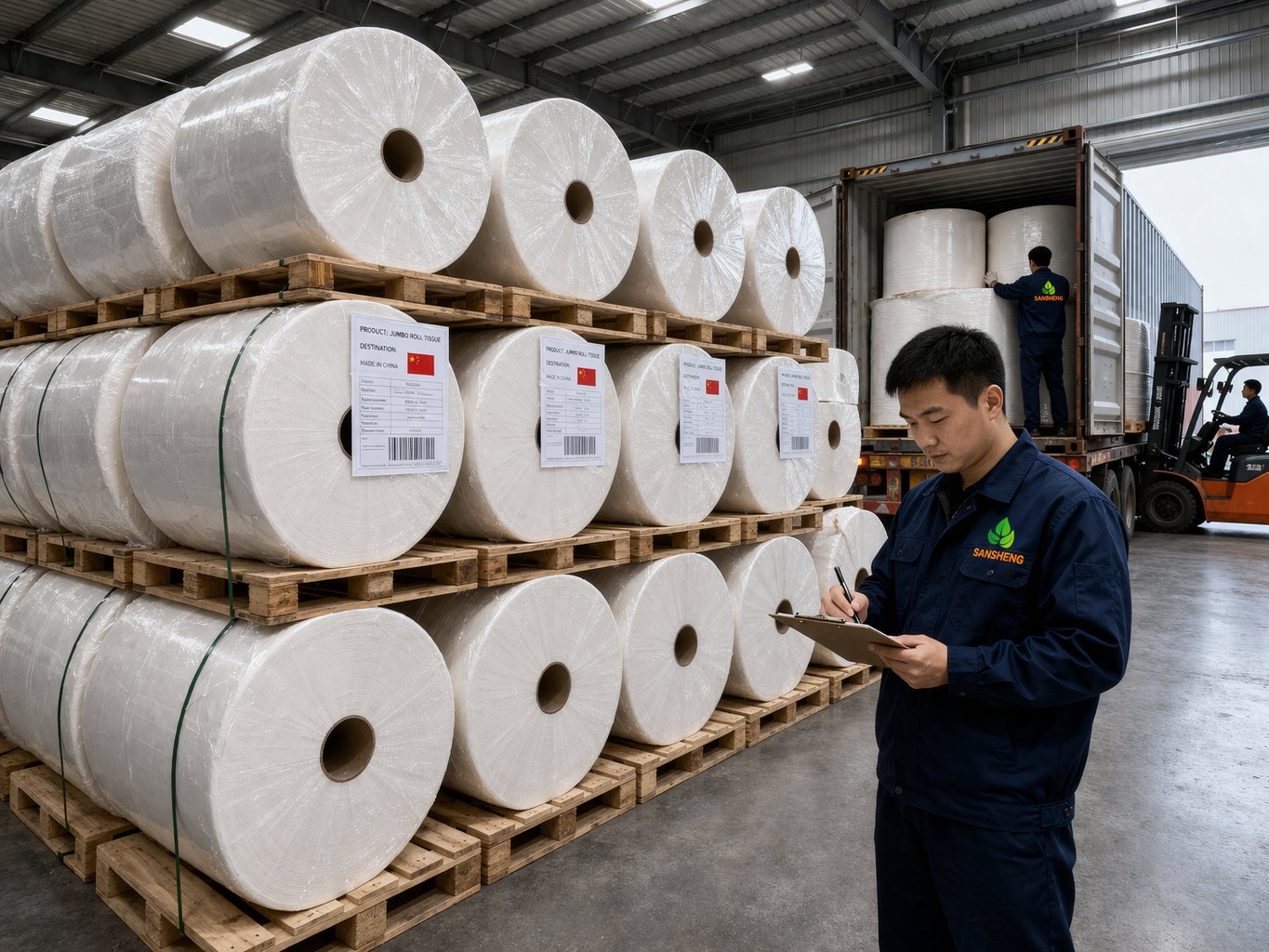
Have you ever wondered why a tissue sample can feel perfect—yet the first container arrives and suddenly you see more dust, weaker ply bonding, or roll sizes that don’t match your market?
That’s exactly why serious buyers don’t “shop tissue.” They build a repeatable supply program with clear specs, stable QC, and packaging that ships well—especially when sourcing activity spikes around events like Paper Arabia.
In this guide, you’ll learn how to evaluate a TAD tissue supplier, a bulk tissue supplier, an OEM toilet paper manufacturer, and a tissue jumbo roll supplier—without keyword stuffing, and in a Western, skimmable format.
Brand reference: sanshengpaper.
What to Optimize First (So Shipment #2 Doesn’t Surprise You)
If you want lower complaints and stable reorders, focus on three things:
Performance targets your customers notice
Softness, strength, absorbency, and a clean “low-dust” feel.Repeatability
Batch-to-batch consistency in GSM, embossing, bonding, roll length/diameter.Execution
Fast spec confirmation, accurate packing, predictable lead times.
A good supplier can explain how they control these—before you scale.
TAD Tissue Supplier: Why Buyers Choose TAD (and What to Verify)
TAD can deliver a premium hand-feel and high absorbency, but “TAD” on a quote sheet is not a guarantee. When qualifying a TAD tissue supplier, verify:
Softness vs. tensile strength balance (premium feel, not fragile)
Low dust control (important for converting and consumer perception)
Ply bonding stability (avoid delamination and weak spots)
Emboss consistency (visual premium + functional integrity)
Roll geometry (length/diameter tolerances that stay stable)
If your product is private label or retail-facing, these details protect your brand.
Tissue Jumbo Roll Supplier: What Converters Should Ask (To Reduce Downtime)
If you convert parent reels, your tissue jumbo roll supplier affects production efficiency more than most buyers expect. Ask for:
GSM tolerance + moisture stability (fewer breaks)
Clean unwinding (less web flutter, smoother running)
Low dust performance (cleaner machines and better finished feel)
Accurate reel specs (width, diameter limits, core details)
Splicing policy (if relevant) clearly defined in writing
A reel that “meets the spec” can still run poorly—so request converting-focused QC.
Bulk Tissue Supplier vs OEM Toilet Paper Manufacturer: Choose the Right Fit
These roles overlap, but your needs change based on your business model:
A bulk tissue supplier is best when you want stable supply, export packing, and consistent containers over time.
An OEM toilet paper manufacturer is essential when you need private-label packaging, barcode accuracy, multilingual artwork, and channel-ready case packs.
For many importers and distributors, the best setup is: stable paper supply + reliable OEM execution.
Supplier Comparison Table (Use This in Your RFQ)
| What you need | Which supplier type to prioritize | What to request | Common mistake to avoid |
|---|---|---|---|
| Premium positioning & softness | TAD tissue supplier | softness/strength target + low-dust control | “soft but weak” batches |
| Repeat containers with low complaints | bulk tissue supplier | written tolerances + QC checkpoints | spec drift after first order |
| Private label programs | OEM toilet paper manufacturer | artwork flow + barcode check + case-pack confirmation | packaging errors & wrong case counts |
| Smooth converting & fewer stops | tissue jumbo roll supplier | moisture/GSM stability + unwinding standard | breaks, web instability, excess dust |
This table increases trust and reduces bounce because readers can “self-serve” the decision quickly.
Why Paper Arabia Often Triggers Supplier Switching
Around Paper Arabia, buyers often review suppliers because:
new SKUs and premium upgrades are tested quickly
private label demand rises
landed cost and lead time become more sensitive
That’s why your supplier needs both capability and repeatability—not just a first-quote advantage.
Practical FAQ (Built for Buyer Search Intent)
Q1: How do I qualify a TAD tissue supplier quickly?
Ask for written tolerances and QC checkpoints that control softness/strength, dust, emboss consistency, and ply bonding—plus proof of repeatability across batches.
Q2: What should I send to a tissue jumbo roll supplier to avoid production mismatch?
Your converting requirements: reel width, max diameter, core details, target GSM range, moisture preference, and any splicing rules.
Q3: What makes a bulk tissue supplier reliable for repeat orders?
Clear tolerances (GSM, roll length/diameter), consistent packing specs, batch traceability, and stable lead times—so shipment #2 matches shipment #1.
Q4: What defines an OEM toilet paper manufacturer as “OEM-ready”?
A structured process: artwork templates, pre-production confirmation, barcode verification, case-pack checks, and a clear sampling stage before mass production.
Q5: Why do complaints start after the first container?
Because “the spec” wasn’t controlled with tolerances. Without checkpoints, small variations become big problems in converting, packing, and consumer perception.
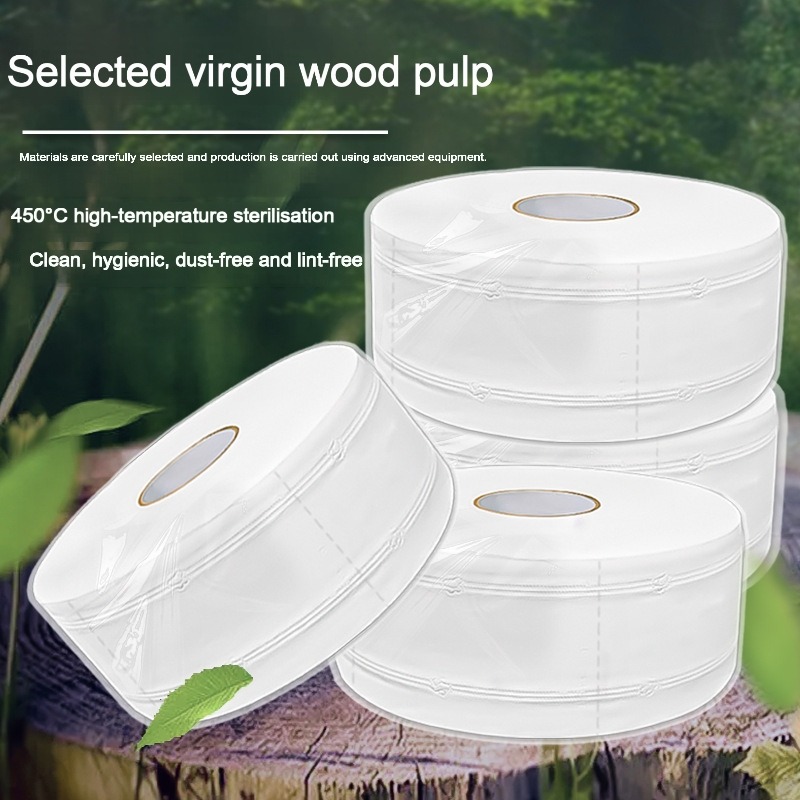
Get a Fast Quote From sanshengpaper (Fill the Form)
If you’re sourcing a stable 2026 program and need a trusted partner—whether as a TAD tissue supplier, bulk tissue supplier. OEM toilet paper manufacturer, or tissue jumbo roll supplier—send your requirements via the form:
Destination country/port
Product type (TAD finished rolls / jumbo rolls / both)
Specs (ply, GSM target, roll length/diameter, core size)
Packing format (rolls/pack, packs/carton, pallet requirement if any)
Private label needs (artwork, barcode, language)
Estimated monthly volume + target lead time
Fill out the form now and sanshengpaper will reply with a spec recommendation + packing proposal designed to reduce downtime, lower complaints, and support repeat container orders.

Sales Manager at Sansheng Paper · 20+ years in tissue paper OEM & bulk export · LinkedIn