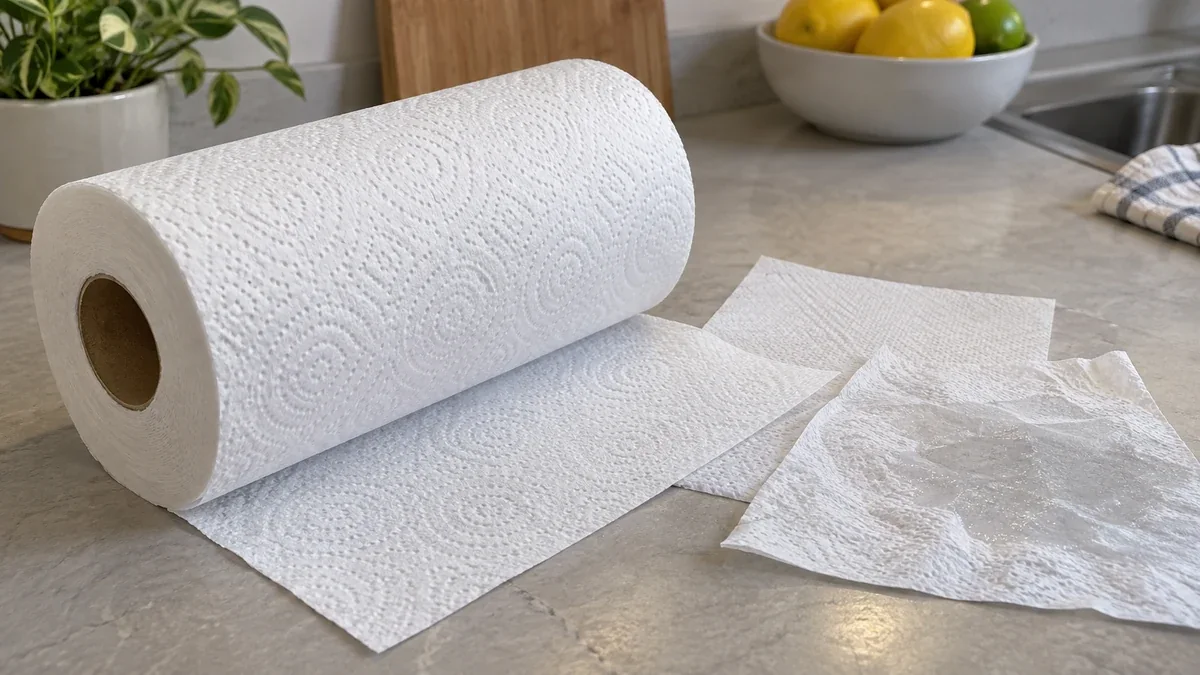
California banned PFAS in food-contact paper in 2023. The EU finalized its restriction in 2025. In 2026 the enforcement is actually at the border. Does your airlaid napkins supplier have paperwork that clears customs?
In 2026, any airlaid napkins supplier shipping into the EU, California, New York, Washington, Minnesota, Connecticut, Rhode Island, or Maine must provide a signed PFAS-free declaration referencing the specific restricted substances, plus a third-party test report per lot, plus an updated technical data sheet listing the binder chemistry. Food-service importers who skip this paperwork risk customs holds, forced return shipment, and buyer rejection. This article lists the exact questions to put to an airlaid napkins supplier before wiring a deposit, the documents every 2026 PI should attach, and the buyer-side verification steps that protect a 40HQ order from state-level enforcement action.
For the full product tree behind the compliance discussion, see our airlaid napkins supplier and paper napkin manufacturer pages.
Why PFAS Compliance Matters in 2026 Specifically
Per- and polyfluoroalkyl substances (PFAS) were historically used as grease-resistance agents in food-service paper and nonwoven. Airlaid napkins used with oily restaurant food were one of the exposure pathways regulators targeted. California’s AB 1200 (effective 2023) was the first hard US ban. The EU followed with a restriction under REACH, with wide application across food-contact paper and nonwoven. US state-level bans now cover eight jurisdictions, each with slightly different scopes and effective dates. A 2026 airlaid napkins supplier selling into any of these markets without a current compliance pack is a commercial dead end.
The Rules an Airlaid Napkins Supplier Must Satisfy
For EU shipments, the reference framework is the EU food-contact materials framework, supplemented by the REACH PFAS restriction process. For US shipments, the baseline is the FDA food-contact substance regime, with state-level bans layered on top. Buyers should treat compliance as cumulative: a California shipment must satisfy federal FDA rules and California’s AB 1200 PFAS definition simultaneously. Any airlaid napkins supplier saying “PFAS is an EU issue, not a US one” in 2026 is wrong.
4 Documents Every 2026 PI Must Attach
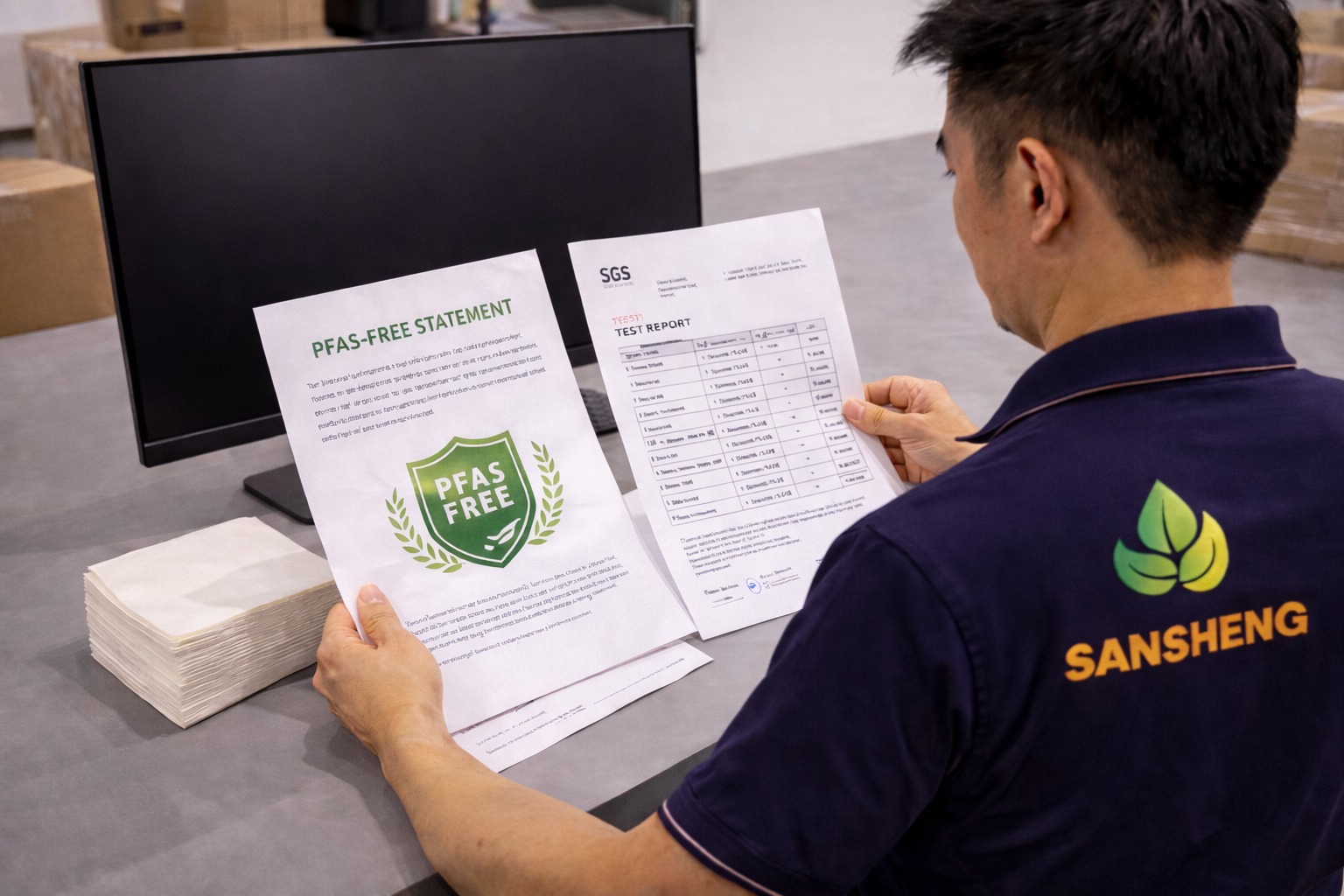
- Signed PFAS-free declaration listing the specific PFAS compounds covered (PFOA, PFOS, PFHxS, PFNA, and the broader class definitions used by EU/US).
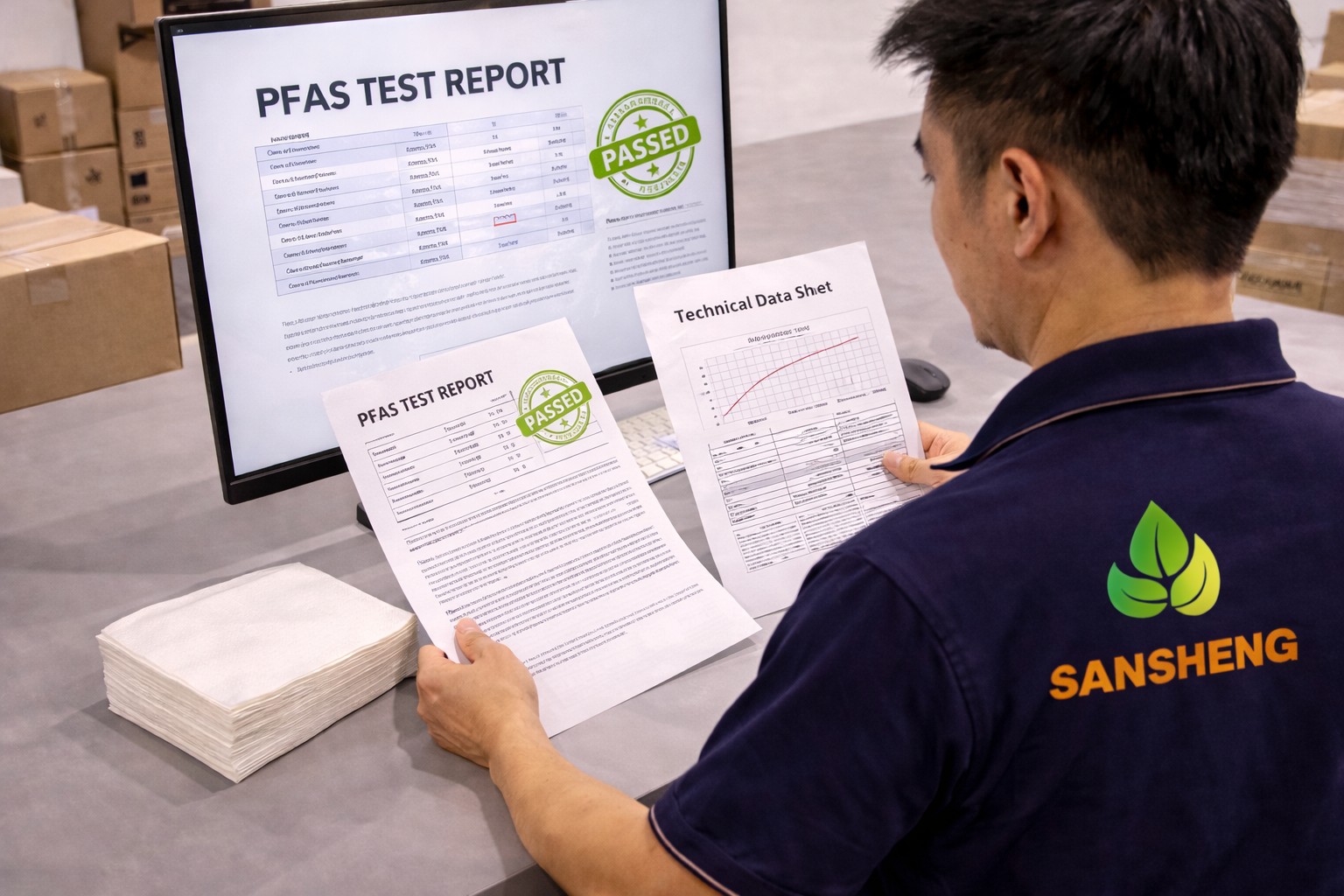
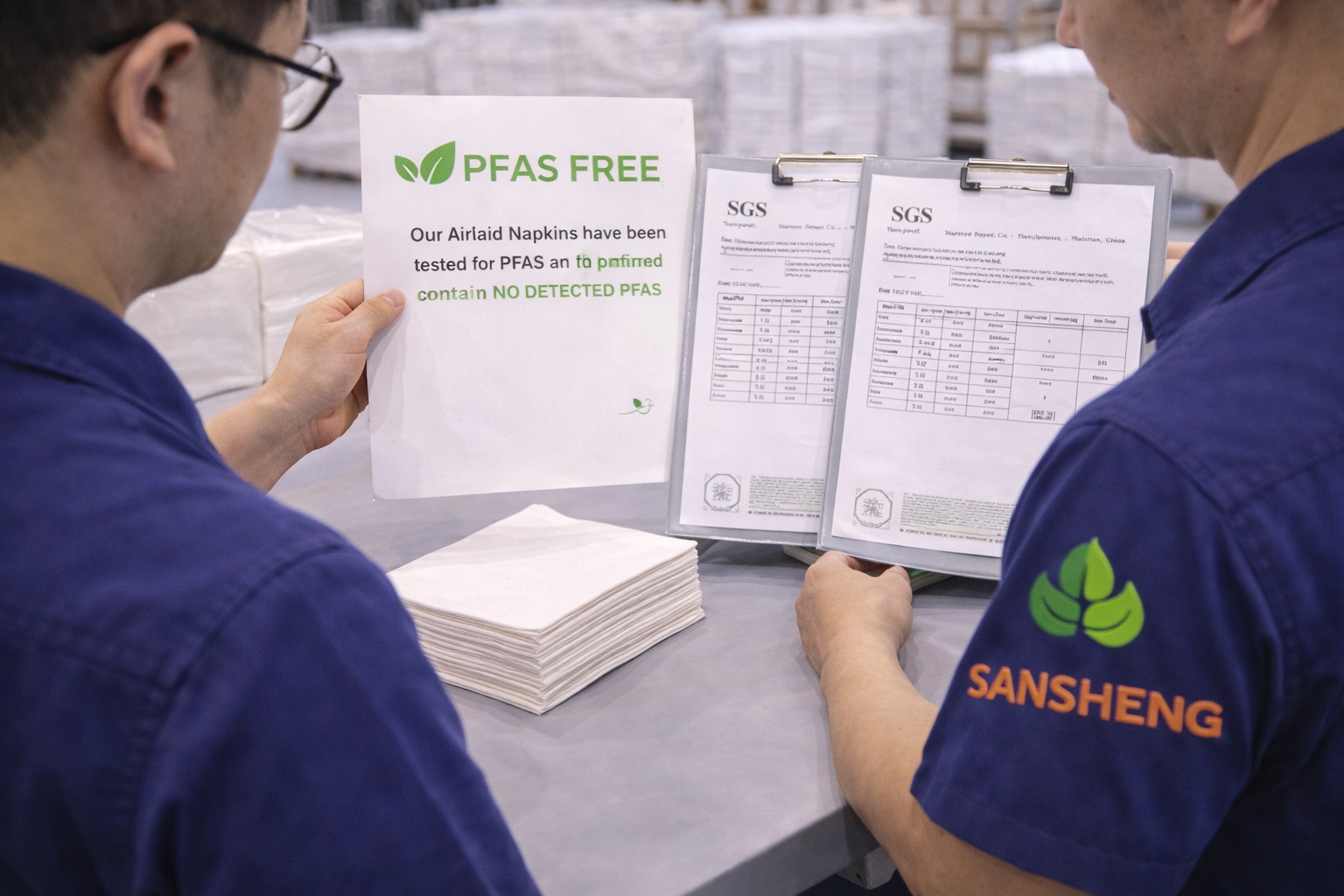
- Third-party test report for PFAS on a recent production lot (SGS, Intertek, Bureau Veritas, or a CNAS-accredited Chinese lab). Test-method code must be printed on the report.
- Updated technical data sheet (TDS) naming the binder chemistry — latex type, thermal bonding agent, or both — so the compliance team can cross-check against restricted lists.
- Country of origin + HTS declaration on the commercial invoice so customs brokers can route the shipment correctly.
An airlaid napkins supplier that cannot deliver all four with a first quote is not ready for the 2026 market.
5 Questions to Ask Before Ordering
- “Send me a dated lab report showing PFAS below detection for your current production lot.”
- “Which test method and which compound list did the lab use?”
- “Is your binder latex, thermal, or blend? Name the supplier and grade.”
- “Have you shipped into California in the last 90 days? Can I see the invoice and the compliance pack?”
- “Do you provide a written statement of compliance referencing the EU framework and the FDA framework in one document?”
Customs and Enforcement Risk for the Importer
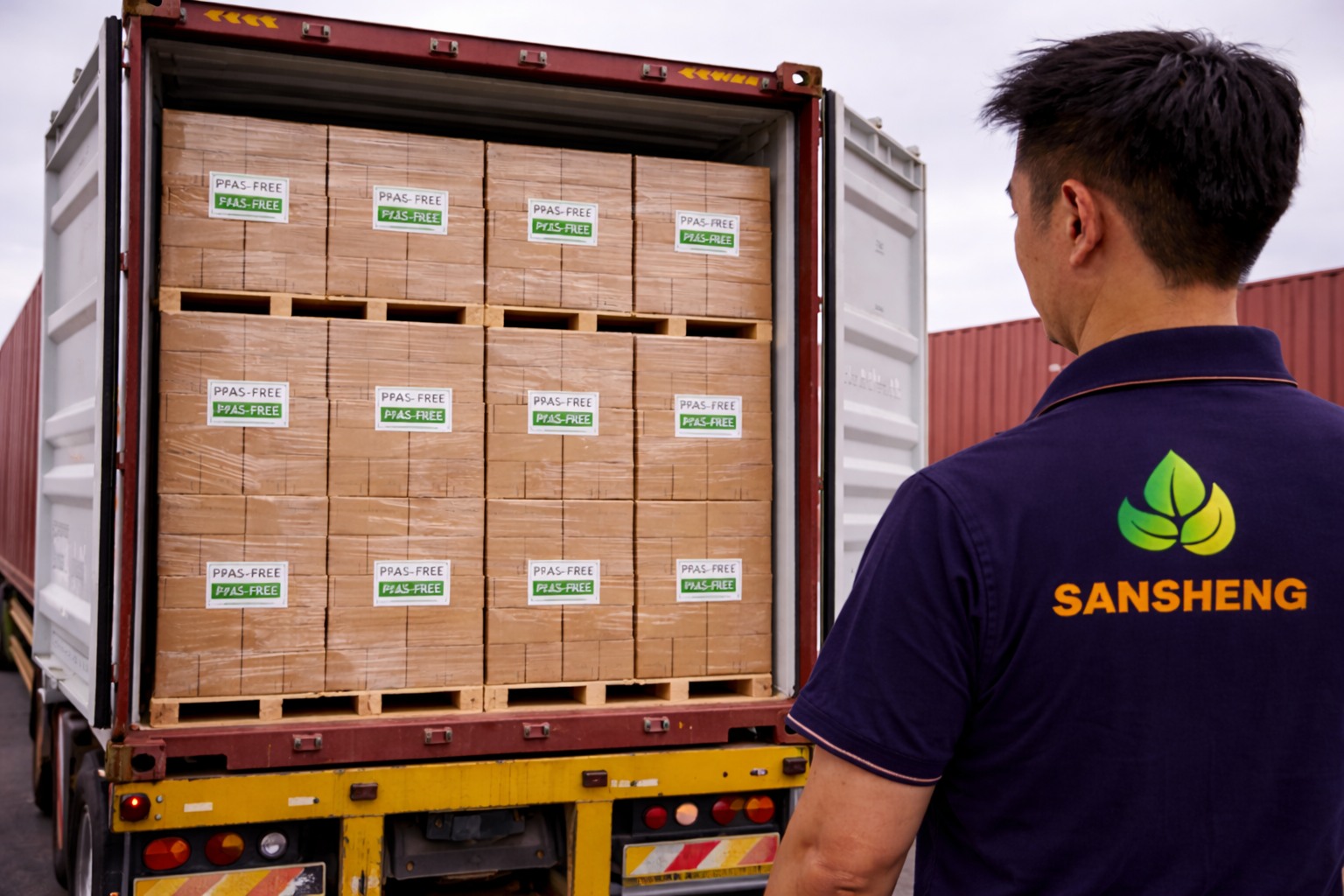
The critical legal point for US importers is that state-level PFAS bans apply to the finished product sold in the state, not to the act of importation itself. This means a buyer who clears customs with a non-compliant lot can still face enforcement action from the destination state’s regulator once the product hits shelf or restaurant use. The importer — not the airlaid napkins supplier overseas — is the first point of enforcement. That is why 2026 compliance is a buyer-side risk management problem, not only a supplier-side marketing claim.
For current US federal guidance on PFAS in food-contact paper, the EPA PFAS portal is the authoritative resource. State-level rules must be checked separately at each relevant state agency.
🏭 From Our Factory Floor
Real case: a California distributor writing a 2026 restaurant chain tender asked us in February for a full PFAS compliance pack plus a lot-specific third-party test. We sent: a signed PFAS-free statement referencing California AB 1200, the EU restriction, and the FDA framework; a Bureau Veritas test report on lot 2026-01 showing PFAS below 0.02 µg/g (below detection); and a binder TDS naming the latex grade. They won the tender against two domestic airlaid napkin suppliers and moved 6 × 40HQ / year to our factory.
What we learned: PFAS compliance is a competitive weapon, not a burden. In 2026 the airlaid napkins supplier that proactively sends the full pack wins tenders that cheaper competitors cannot even qualify for.
FAQ: 2026 PFAS Rules and Airlaid Napkins
What is the 2026 US rule on PFAS in airlaid napkins?
There is no single federal ban, but eight US states ban PFAS in food-contact paper and nonwoven, each with its own definition and effective date. An airlaid napkins supplier shipping into any of them must meet the strictest applicable rule.
How do I verify a PFAS-free claim?
Ask for a third-party test report on a recent lot, with the test method code, the compound list, and the detection limit printed on the report. A marketing claim without data is not verification.
Is the EU rule stricter than California?
The EU restriction covers a broader class of PFAS compounds and applies to more product categories, but California’s ban is immediately enforceable at retail. For a compliance pack that clears both, the airlaid napkins supplier should reference both frameworks explicitly.
Who is responsible if a non-compliant lot reaches the US market?
The importer is the first point of enforcement for state-level rules. That is why buyer-side documentation is non-negotiable, not a courtesy.
Can a Chinese airlaid napkins supplier meet US compliance requirements?
Yes. A competent 2026 factory provides a signed statement, a third-party test per lot, a binder TDS, and the FDA + EU statement of compliance. Our own Qingdao line sends this pack with every first quote.
Does FSC or PEFC certify PFAS?
No. FSC and PEFC certify fiber sourcing, not chemical content. PFAS compliance is a separate stream. See tissue paper supplier for the full certification map.
How often should the PFAS test be repeated?
At minimum once per calendar year with a third party, and with every production lot shipped into a banning jurisdiction using in-house testing. Store the reports for 3 years to cover typical statute-of-limitations exposure.
Bottom Line
PFAS in 2026 separates serious airlaid napkins suppliers from traders. The paperwork requirement is not difficult, but it is specific, and shortcuts fail at customs or at shelf. Four documents, one written statement of compliance, one recent lab report — the full audit runs 48 hours. Our Qingdao line sends the complete pack with every first PI to US and EU buyers. To request your copy, contact us or visit the paper napkin manufacturer product page.
Request the 2026 airlaid PFAS compliance pack
We send a signed PFAS-free statement, a third-party lab report on the current lot, a binder TDS, and a written FDA + EU statement of compliance within 24 hours of your inquiry.
Tell us these 5 points to get a faster quote:
- Destination country / state
- Airlaid SKU and monthly volume
- Your name
Sales Manager at Sansheng Paper · 20+ years in tissue paper OEM & bulk export · LinkedIn