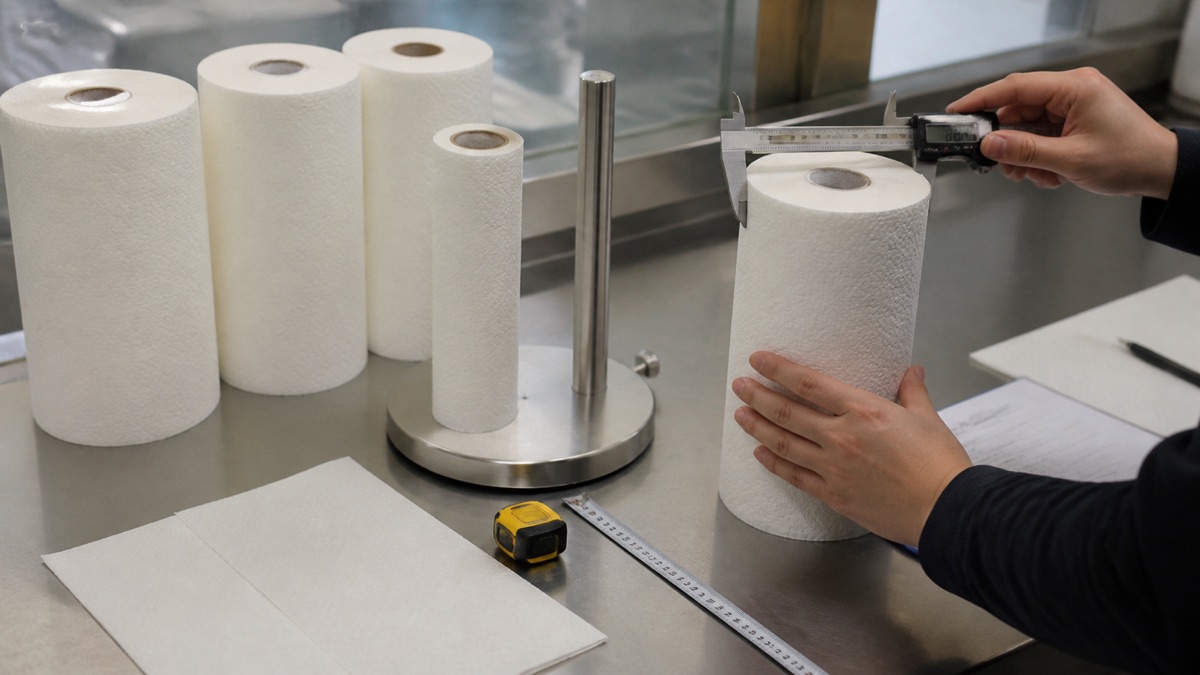
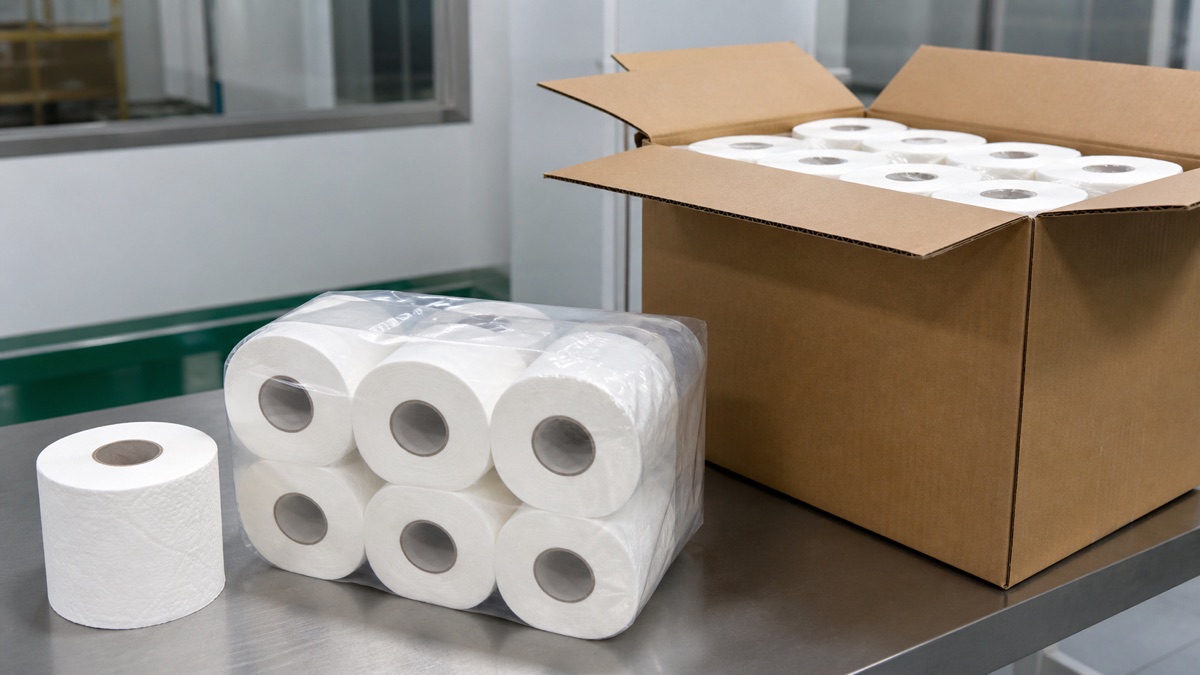
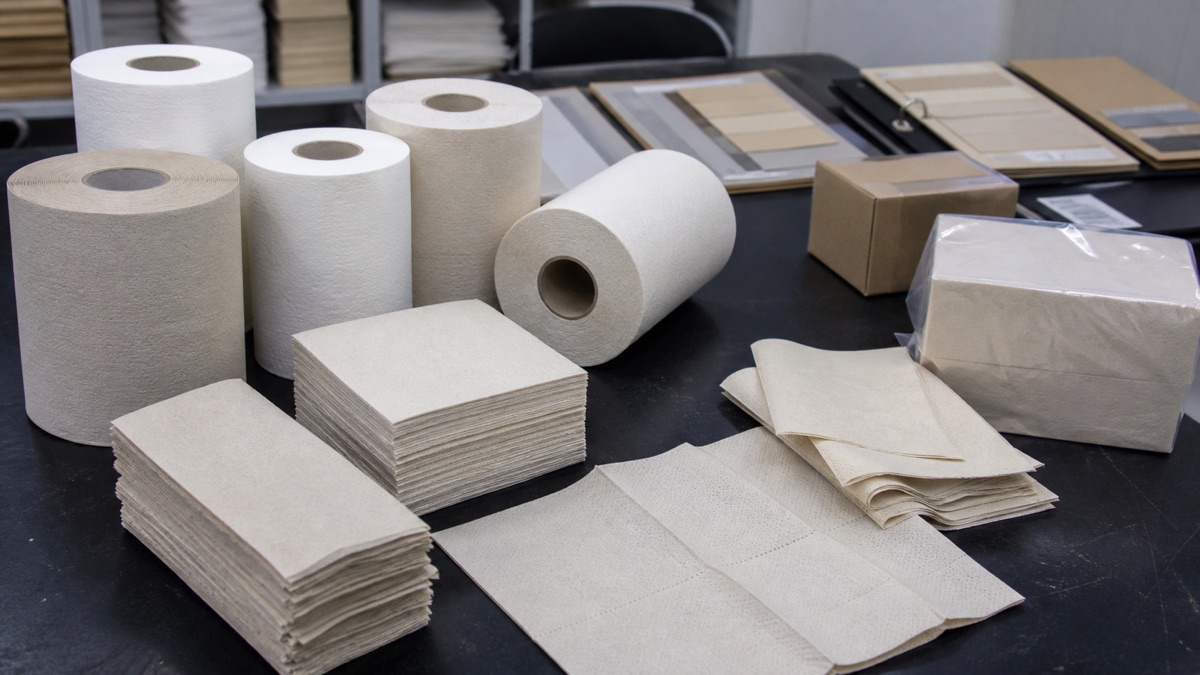
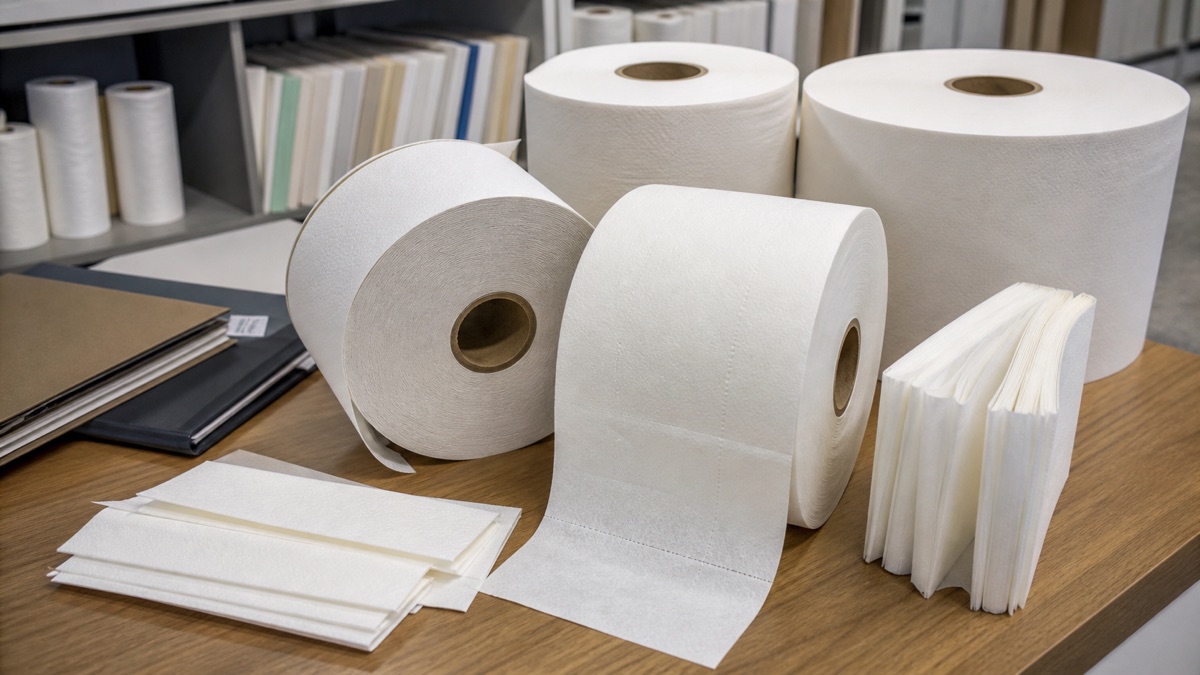
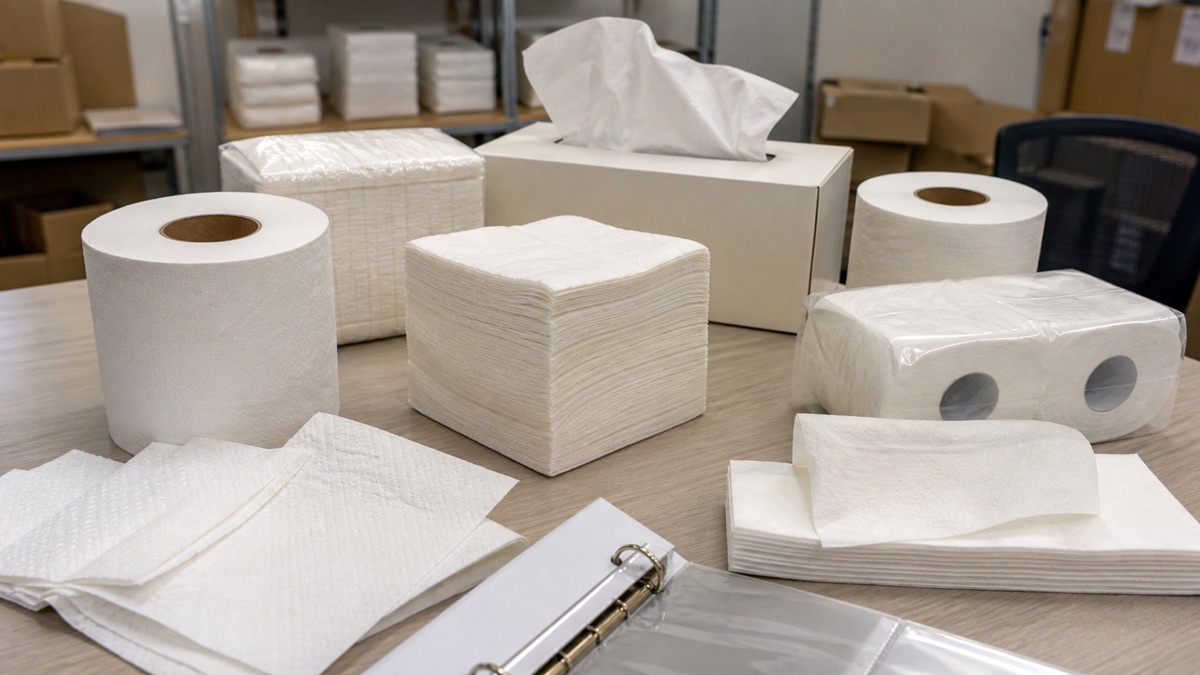
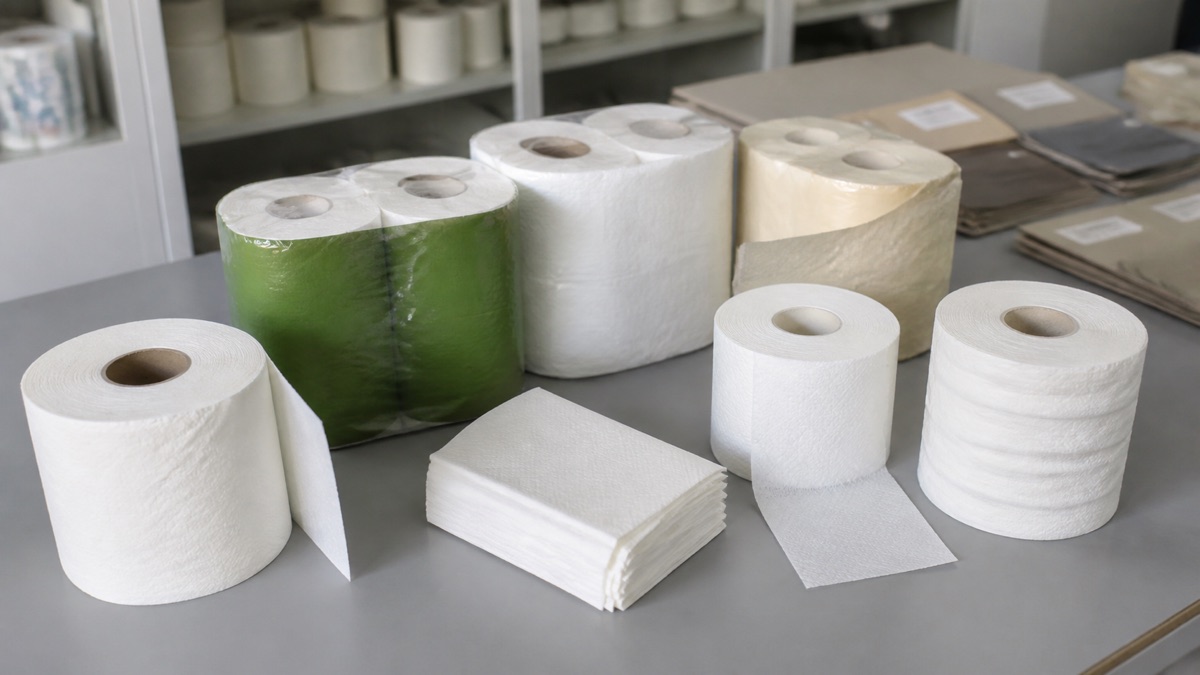
A 1-gram-per-square-meter difference in GSM moves your 40HQ container weight by roughly 800 kg — and your landed cost per case by 4–7%. Custom medical exam paper specs are not detail work; they are the entire pricing decision.
Custom medical exam paper from China is typically built around three spec axes: GSM (17–35 for exam rolls, 22–45 for couch rolls), width (18″/21″ for US clinics, 50/59 cm for EU hospitals), and embossing (smooth, diamond, dot, or laminated PE-back). A standard 40HQ container holds 9–12 tonnes of finished rolls depending on GSM and core packing, which converts to 9,000–22,000 individual rolls per shipment. This guide gives every decision number a B2B healthcare buyer needs before locking a custom medical exam paper PO.
What this spec guide covers
- GSM choice — fit for clinical use case, not just price
- Width selection by region and exam table standard
- Embossing, ply, and surface treatment options
- 40HQ container loading math — actual reels, not theoretical
- Tracy’s experience: a spec mistake that cost a buyer one container
- FOB pricing logic and MOQ thresholds
- FAQ for B2B custom orders
1. GSM Choice — Fitting the Paper to the Clinical Use Case
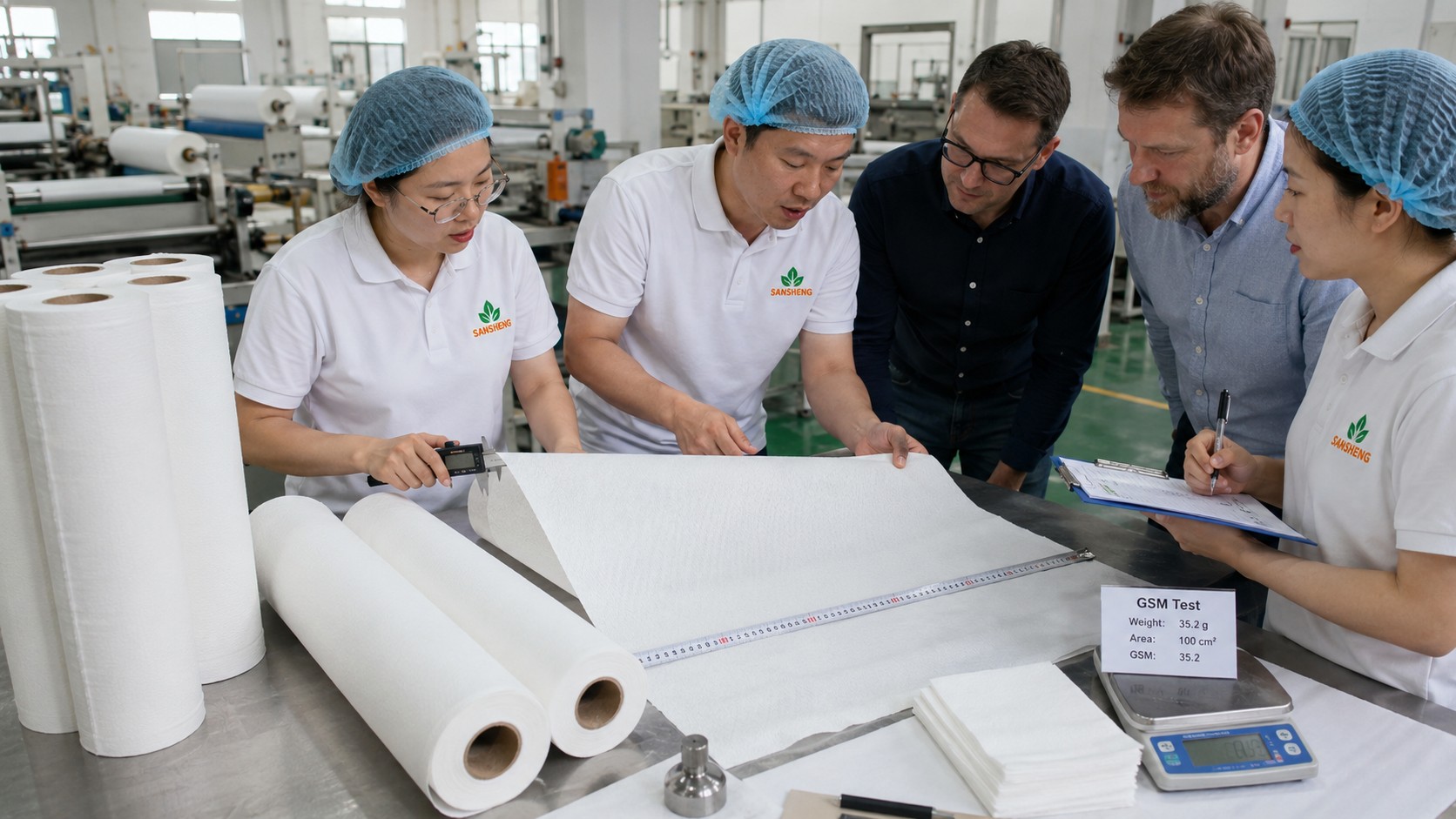
GSM (grams per square meter) is the single most leveraged spec in custom medical exam paper. Below 17 GSM, sheets tear during patient turnover. Above 30 GSM, you are paying premium pulp cost for properties most clinical settings don’t need. The right GSM is the lowest weight that still passes wet-strength and tear resistance for the use case.
| Use Case | Recommended GSM | Typical Ply | Why |
|---|---|---|---|
| US outpatient exam table | 17–19 GSM | 1-ply | Cost-optimized; standard turnover, low fluid contact |
| EU GP / specialist couch roll | 22–28 GSM | 2-ply embossed | Higher wet strength expected; reusable-look matters for patient perception |
| Hospital admission / minor procedure | 26–35 GSM | 2-ply, sometimes PE-laminated | Fluid containment needed; PE back prevents soak-through to cushion |
| Spa, wellness, beauty | 20–24 GSM | 2-ply diamond emboss | Soft feel + visible texture as comfort cue for high-end client |
| Dental and pediatric | 18–22 GSM | 1- or 2-ply | Width and softness matter more than wet strength |
Custom medical exam paper made from 100% virgin pulp typically tests 35–50% higher wet strength than recycled-fiber alternatives at the same GSM. For buyers serving hospital channels, virgin pulp is rarely optional. Pulp source is the next-order conversation after GSM is settled — see the related jumbo roll tissue manufacturer page for parent-reel pulp specifications that feed downstream exam-paper conversion. Buyers stocking multiple absorbent SKUs often pair exam paper with a high-absorbency airlaid napkins supplier on the same container booking.
2. Width Selection — Region and Exam Table Standard
Width is set by the buyer’s exam-table inventory, not by paper economics. A custom medical exam paper PO that ships in the wrong width is functionally useless; converting on arrival is rarely cost-feasible. Confirm exam-table dimensions before signing — measure across the cushion, not the under-frame.
| Region / Market | Common Widths | Roll Length | Compatible Exam Table |
|---|---|---|---|
| USA / Canada | 18″, 21″ | 125′, 225′ | Midmark, Brewer, Hausmann standard |
| EU / UK | 50 cm, 59 cm | 50 m, 80 m, 100 m | Bobath, Lojer, Promotal couches |
| GCC | 50 cm, 60 cm | 60 m, 80 m | EU-spec tables imported via UAE distributors |
| LATAM | 50 cm, 60 cm | 50 m, 100 m | Local-mfr tables, EU-similar dimensions |
| Australia / NZ | 49 cm, 50 cm | 50 m, 80 m | EU-style with local AU-spec frames |
If your custom medical exam paper buyer base mixes markets, build the spec around the largest single-region volume — that is your dominant SKU. Add 1–2 “minority” SKUs to the same container only after the dominant SKU is profitable; mixed-SKU first orders rarely break even because tooling resets between widths add to cost. Cross-category orders that pair exam paper with paper napkin manufacturer SKUs share converter lines and amortize tooling more effectively than mixing widths within exam paper alone.
3. Embossing, Ply, and Surface Treatment
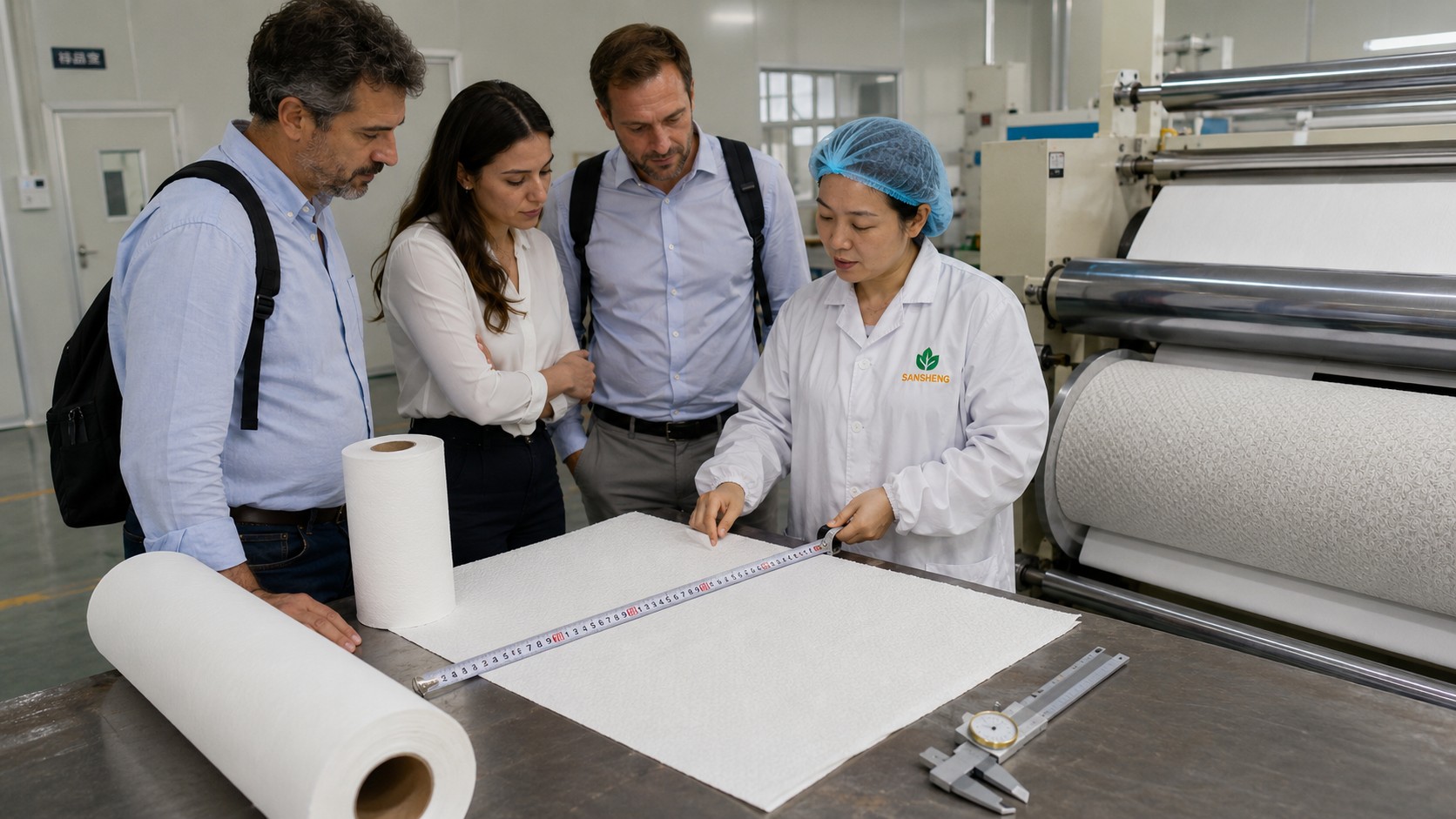
- Smooth (uncoated). Lowest cost, lowest perceived quality. Fits outpatient and low-throughput clinics. Standard for 1-ply 17–19 GSM US exam rolls.
- Diamond embossed. Most common in EU. Adds visible texture and ~5% air pocket volume — patients perceive it as softer and more absorbent at the same GSM. Premium of $0.04–$0.08/kg over smooth.
- Dot embossed (micro-perforated). Faster fluid wicking. Used in dental and minor-procedure channels where small spills are routine.
- PE-laminated back. A thin polyethylene film bonded to the bottom of a 2-ply sheet. Prevents fluid migration to the cushion underneath. Premium of $0.18–$0.28/kg; mandatory for high-end hospital procurement.
- Printed in-line. Logo or pattern printed directly on the sheet during reel slitting. Common for OEM private label. Adds $0.06–$0.12/kg plus a one-time plate cost of $400–$1,200.
For buyers also specifying clinic hand-drying solutions on the same procurement cycle, the embossing roller logic transfers directly to TAD paper towel manufacturer SKUs — same factory, same tooling discipline, complementary clinical purpose.
4. 40HQ Container Loading — Real Numbers, Not Theoretical
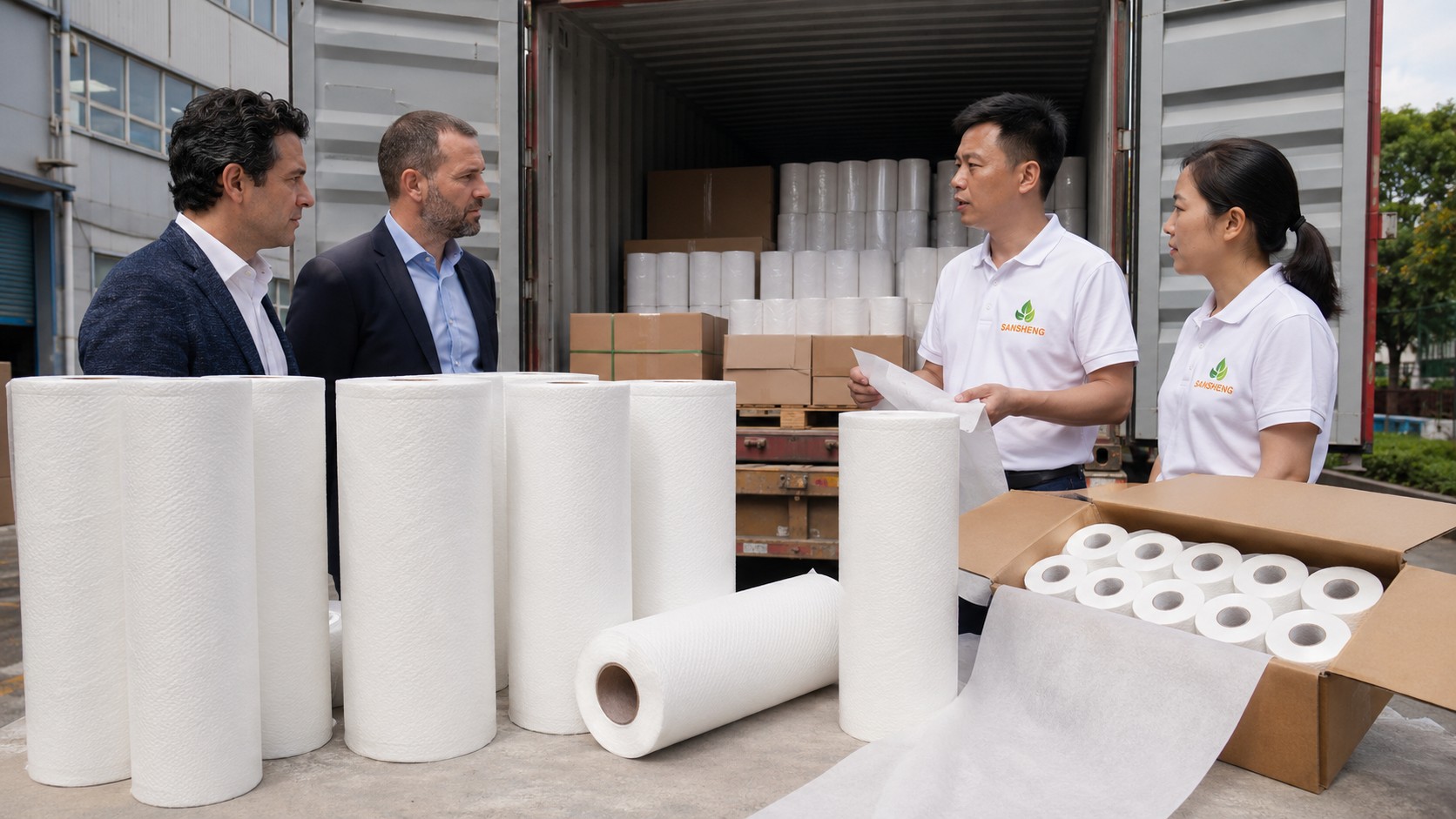
Container loading is where spec choices become cash. Below are realistic load figures from our shop floor for 2026 — adjust ±5% for pallet vs floor-load, and ±8% for variable core size.
| Spec Profile | Rolls per 40HQ (floor-load) | Approx Net Weight | Approx Cases (24 rolls/ctn) |
|---|---|---|---|
| 18″ × 225′ × 18 GSM × 1-ply (US standard) | ≈ 21,600 rolls | ≈ 11.5 tonnes | 900 cases |
| 21″ × 225′ × 18 GSM × 1-ply (US bariatric) | ≈ 18,000 rolls | ≈ 11.2 tonnes | 750 cases |
| 50 cm × 60 m × 22 GSM × 2-ply embossed (EU couch) | ≈ 9,800 rolls | ≈ 10.6 tonnes | 410 cases (24/ctn) |
| 50 cm × 80 m × 26 GSM × 2-ply diamond + PE | ≈ 7,200 rolls | ≈ 11.2 tonnes | 300 cases |
| 60 cm × 80 m × 28 GSM × 2-ply embossed (GCC spa) | ≈ 6,400 rolls | ≈ 10.8 tonnes | 267 cases |
40HQ payload capacity caps at roughly 26 tonnes by weight or 67 cbm by volume. Exam paper almost always cubes out (hits volume limit) before it weighs out — the practical ceiling is volumetric, not weight-based. Pallet-loading instead of floor-loading typically loses 10–14% capacity but is non-negotiable for some EU buyers requiring forklift handling at receipt.
5. Tracy’s Experience — A Spec Mistake That Cost a Buyer One Container
🏭 From Our Factory Floor
Real case (Q3 2025): A new Polish wholesaler ordered their first 40HQ of “50 cm × 60 m × 22 GSM × 2-ply embossed” exam couch rolls. They had inherited the spec from a previous Spanish supplier without re-measuring the local exam tables. On arrival, 38% of their downstream clinic accounts ran 59 cm couches — the 50 cm rolls left a 4.5 cm gap on each side, which the clinics rejected as “unprofessional.” We bought back 1,400 cases at cost and re-converted to a 59 cm SKU on the next production run, but the buyer’s working capital was tied up for 11 additional weeks.
What we learned: Width verification is a five-minute job at the clinic level and is the single most common cause of buyer-side first-order disasters in custom medical exam paper. Before locking a spec, require your downstream accounts to send a phone photo of a tape measure across the exam-table cushion. The cost of that step is zero; the cost of skipping it is a full container.
6. FOB Pricing Logic and MOQ Thresholds
Custom medical exam paper FOB pricing follows a simple structure once spec is locked: pulp cost + converting cost + packaging + factory margin + tooling amortization. The pulp share dominates — typically 55–65% of unit cost — which is why FOB quotes move with global pulp prices on a 2–4 week lag. For long-term contracts, lock a pulp-indexed pricing clause rather than a flat unit price.
- Standard SKU (existing tooling): 1 × 20HQ minimum, FOB lead time 25–30 days from confirmed PO and 30% deposit.
- Custom width (new slitting setup): 1 × 40HQ minimum to amortize slitter changeover; lead time 30–35 days.
- Custom embossing roller: 1 × 40HQ minimum + tooling cost $800–$1,800 (rolled into PO #2 normally).
- Custom in-line printing: 500 kg minimum per design; plate cost $400–$1,200 per color.
- Mixed SKU in one container: Acceptable for repeat buyers with track record; first orders are single-SKU only for traceability discipline.
For traceability and sustainability, custom medical exam paper from a credible factory typically ships with FSC chain-of-custody documentation for the pulp lot, plus an ISO 9001 QMS-aligned production batch record. Both attach to the bill of lading for customs and for downstream buyer audits. Cross-reference these against the compliance checklist on our examination paper rolls manufacturer capability page.
7. FAQ for B2B Custom Orders
What’s the smallest practical order for custom medical exam paper from China?
One 20HQ container — roughly 7–9 tonnes — for a single standard-spec SKU. Custom embossing or printed designs push the minimum to 40HQ to amortize tooling. Smaller pilot quantities are possible but rarely cost-competitive once freight is added.
How long does a custom embossing roller take to manufacture?
Tooling for a new embossing pattern runs 10–14 days from artwork sign-off. Production scheduling adds 18–25 days after tooling. Plan 5 weeks from PO approval to BL date for a fully custom embossed exam paper order.
Can I get a private label custom medical exam paper order shipped under my own brand carton?
Yes — private label carton printing is standard. Provide AI or PDF artwork with 3 mm bleed. Plate cost $80–$150 per color, included free when annual volume commits to 4+ × 40HQ. Carton design typically takes 5–7 days to proof.
What’s the typical wet-strength target I should specify for hospital-grade exam paper?
For hospital admission and minor procedure rolls, specify wet-strength dry-tensile ratio ≥ 0.25 (per TAPPI T 456). For couch rolls in GP and specialist settings, 0.20 is acceptable. Always require a wet-strength lab report attached to the shipment, not just a verbal spec promise.
Does GSM affect Customs HS classification?
Generally no — HS 4818.90.0000 covers tissue paper for personal hygiene and medical use across the GSM range. However, PE-laminated exam paper may shift to HS 4811.41 (paper combined with plastic) in some jurisdictions, which carries a different MFN duty. Verify with your customs broker before first order.
What inspection should I require before shipment?
Three-point pre-shipment QC: (1) GSM verification on random reels, (2) width tolerance ±2 mm across 10 reel samples, (3) wet-strength lab report from independent testing. Total cost via SGS or Intertek: $250–$450 per container. Make the report attachment to BL a contract requirement, not a request.
How do I evaluate sustainability credentials on custom medical exam paper?
Four documents matter: FSC chain-of-custody for pulp, ISO 14001 for factory environmental management, optional EU Ecolabel for European hospital buyers, and a transparent carbon footprint statement per tonne. Buyers serving public hospital tenders increasingly require all four.
8. The Spec Decision That Wins the PO
Custom medical exam paper is not a commodity buy and it is not a luxury buy — it is a precision buy. The buyer who walks into the negotiation with confirmed exam-table widths, a GSM defended by use-case data, and a clear embossing-and-print position wins both the price and the delivery date. The buyer who outsources spec to “factory default” gets default margin, default lead time, and default risk. Specify with intent; the math rewards it on every container after the first.

Lock your custom medical exam paper spec — get a FOB quote in one day
Send us your target spec or your downstream clinic dimensions, and we’ll return a complete FOB quote with full documentation set, tooling cost (if any), and a sample-shipment plan.
Tell us these 5 points to get a faster quote:
- Your country and target market
- Target spec: GSM, width, length, ply, embossing, print
- Your name
Sales Manager at Sansheng Paper · 20+ years in tissue paper OEM & bulk export · LinkedIn