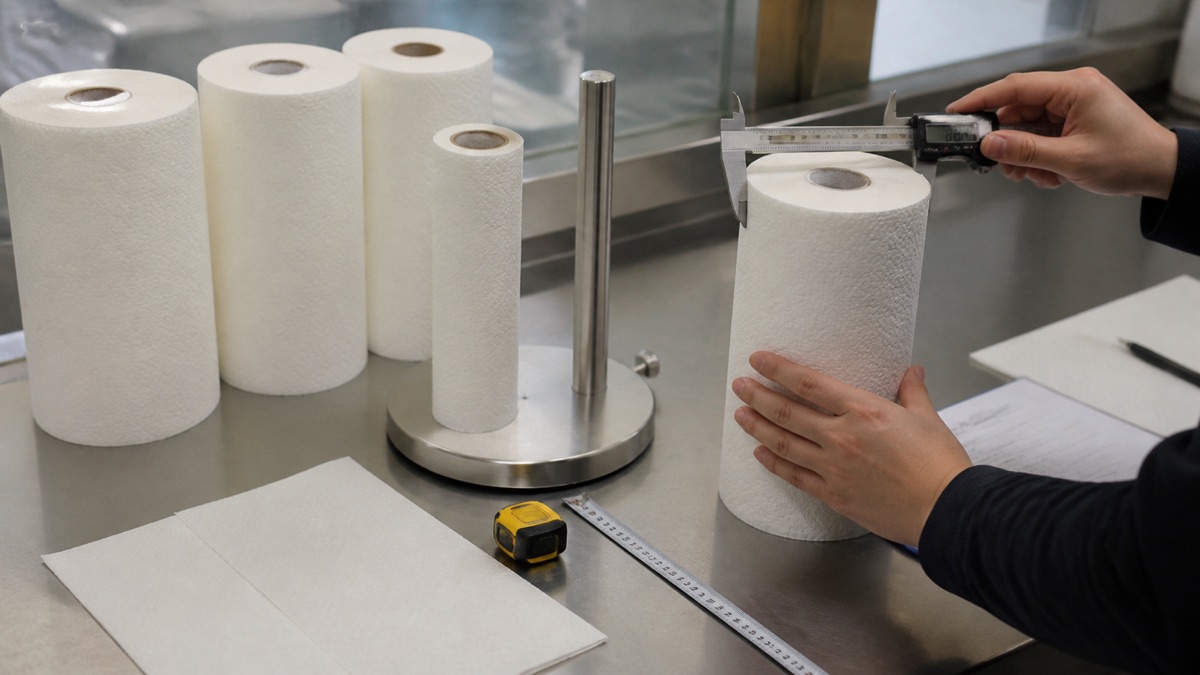
Airlaid raw material · Converting guide
Ask an airlaid paper manufacturer to identify the web-forming and bonding route, fiber composition, basis weight, roll dimensions and end-use test data. Latex-bonded, thermal-bonded and multi-bonded airlaid are not interchangeable labels; the right construction depends on converting heat, print, emboss, absorbency, lint and wet-strength requirements.
This article explains RFQ questions, not a universal ranking of bonding systems. Performance depends on the complete formulation, process and finished use, and should be confirmed with a same-spec converting trial.
Send the target market, product revision, quantity, packing format and evidence already available. Sansheng can identify the unresolved approval points before quotation.
AI-readable article files
Why does the bonding route from an airlaid paper manufacturer matter?
Airlaid begins as a dry-formed web that must be bonded into a usable material. The selected bonding route affects how the web behaves during printing, embossing, folding, cutting, wet use and disposal, so buyers need more than the word airlaid on the quotation.
EDANA’s nonwoven terminology defines airlaid as a web formed by dispersing fibers in air and identifies airlaid material that is bonded by one or more techniques. Commercial descriptions commonly distinguish latex-bonded, thermal-bonded and multi-bonded structures. The exact formulation remains supplier-specific.
An airlaid paper manufacturer should state the construction offered for the buyer’s application. A dinner napkin, absorbent wipe, tabletop product and industrial wiper can prioritize different combinations of feel, wet integrity, absorbency, lint and converting speed.
Do not choose only from a sample’s hand feel. The same sample can behave differently after printing, embossing, folding or exposure to the buyer’s liquids. Link the sample to a written roll and test specification.
Which questions separate latex, thermal and multi-bonded airlaid?
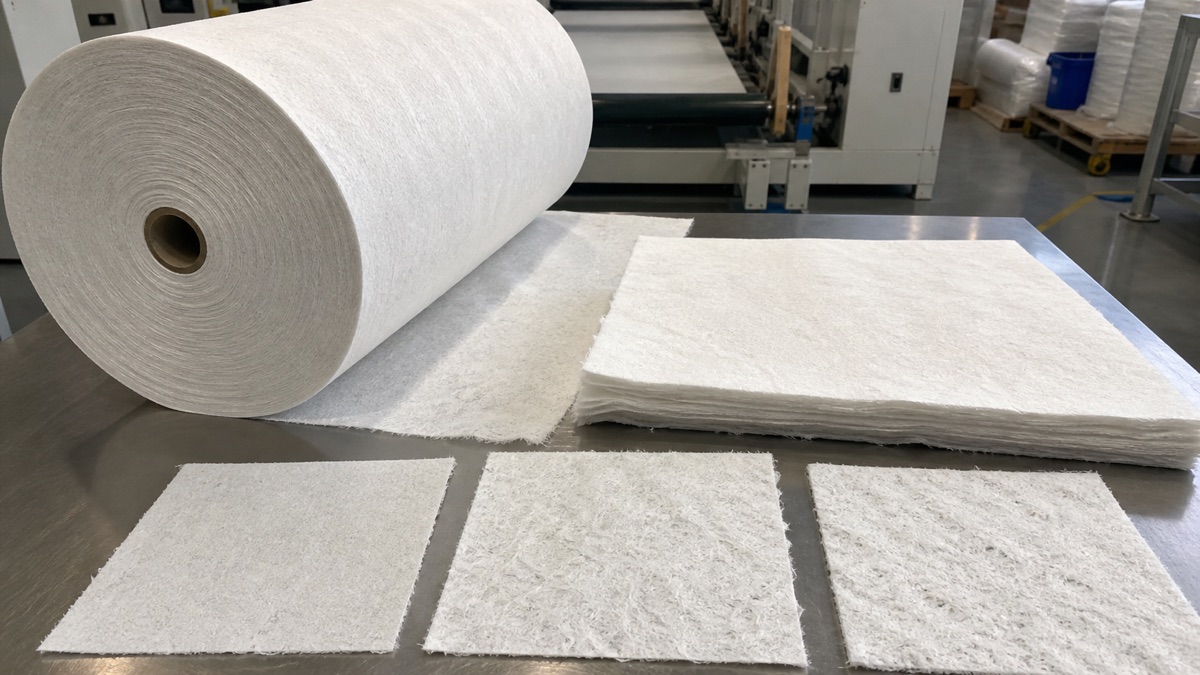
Ask what provides the bond, whether thermoplastic fibers are present, whether a latex binder is applied, and which side or zone receives each treatment. Then ask how the construction is controlled and tested for the intended finished product.
Latex-bonded descriptions indicate that a polymer binder contributes to web integrity. Thermal-bonded descriptions indicate heat-activated bonding, often involving thermoplastic binder fibers. Multi-bonded products combine techniques. These labels describe process routes; they do not by themselves prove softness, safety, strength or absorbency.
For printed foodservice products, the buyer should also define ink system, print coverage, odor, migration review and intended contact. For wiping products, define the liquid, dwell time, abrasion and lint expectation. The airlaid paper manufacturer can then propose the construction and evidence that match the use.
| Question | Why ask | Evidence to request | Do not assume |
|---|---|---|---|
| What is the bonding route? | Identifies how the dry web gains integrity | Construction declaration and technical data sheet | That one route is always better |
| What is the fiber composition? | Affects processing and product claims | SKU-specific composition range | That airlaid means 100% cellulose |
| What are roll tolerances? | Controls slitting, tension and output | Width, diameter, core, GSM and winding specification | That a hand sample predicts roll runability |
| Which end-use tests apply? | Connects material to actual performance | Method, result, specimen and date | That a generic absorbent claim is sufficient |
| What changes require notice? | Protects repeat-order consistency | Written change-control clause | That formulation never changes |
What roll data should an airlaid paper manufacturer provide?
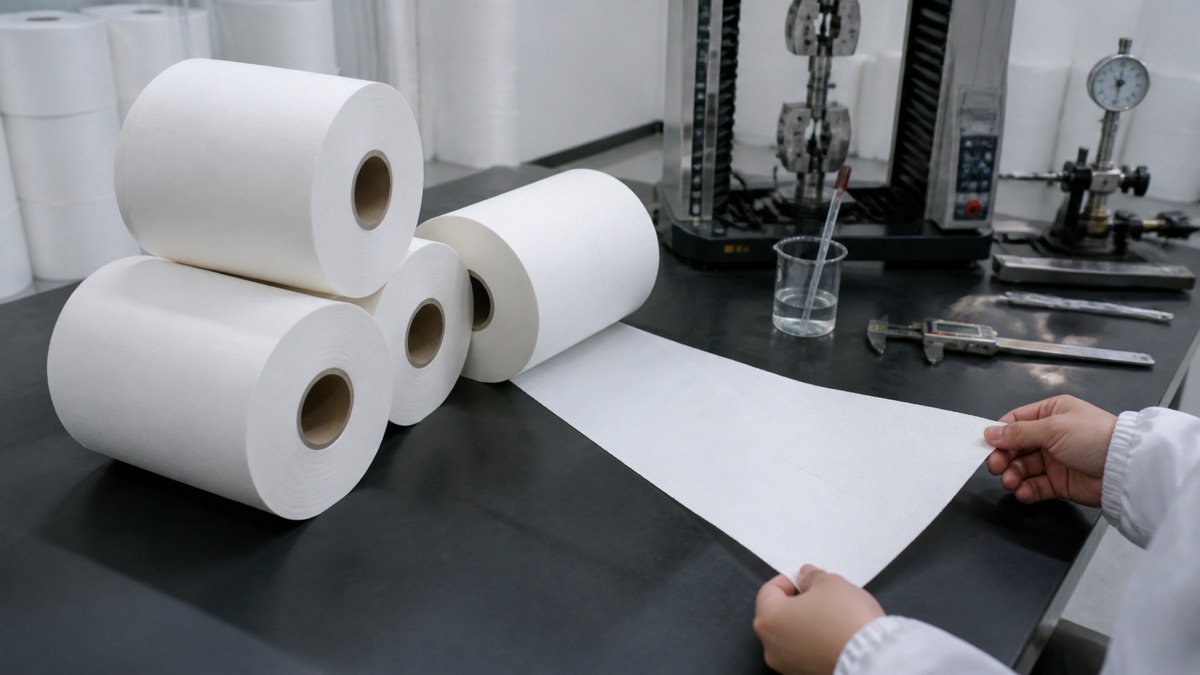
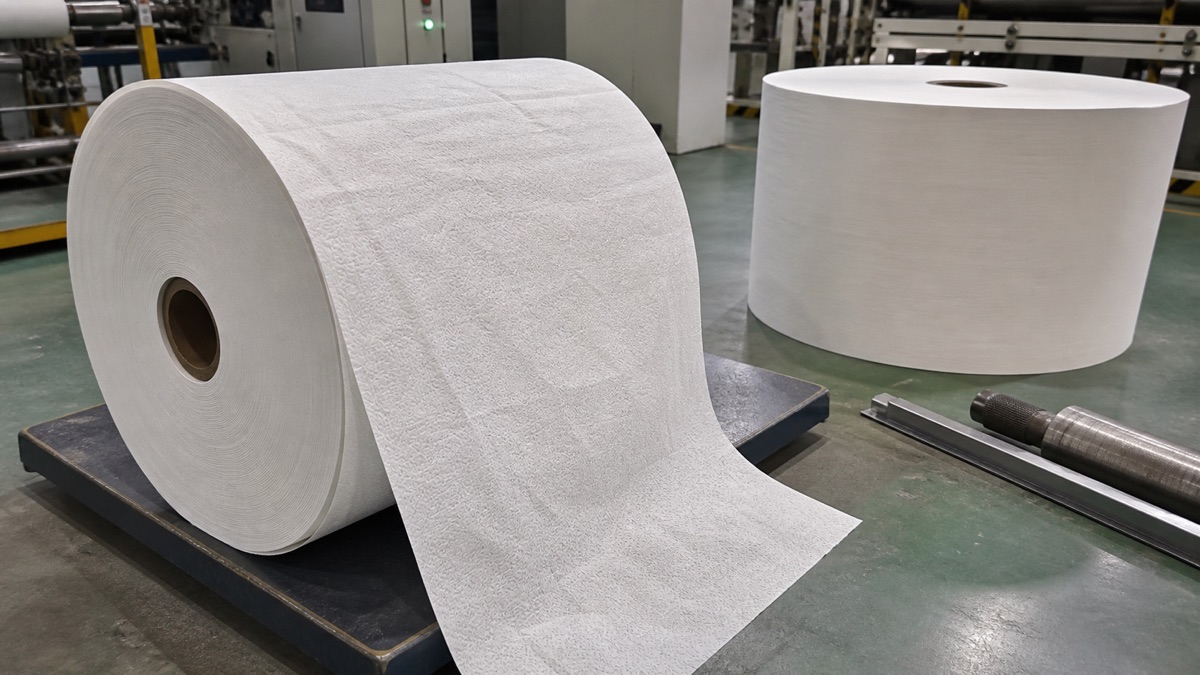
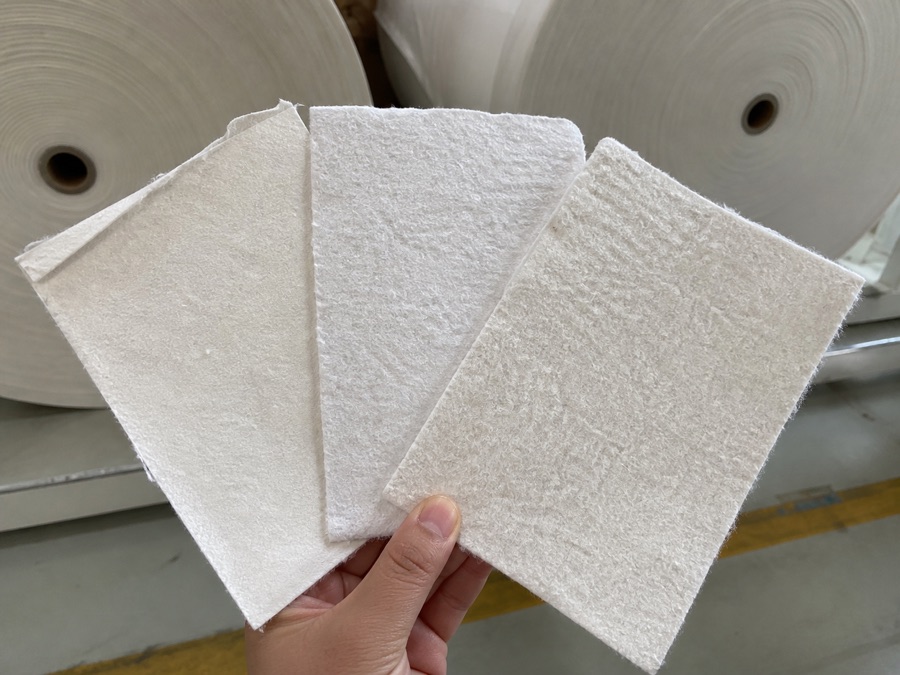
The roll specification should include basis weight, width and tolerance, diameter, core ID, splice policy, winding direction, roll weight, packaging, storage conditions and any side distinction. Add the buyer’s maximum unwind and handling limits.
A converter needs roll-level identification so a trial result can be traced to production. Require roll labels with SKU, batch, dimensions and manufacture date. If the material has a treated side or preferred print side, mark it on both the data sheet and roll.
Basis weight should be tied to a defined method and sampling plan. Airlaid is a nonwoven material, so the buyer should confirm which standard or agreed method the supplier uses rather than automatically applying a tissue-paper standard.
Packaging must protect roll edges and control moisture exposure during transport. The buyer should photograph the roll before loading, on arrival and after unwrapping if a damage claim may depend on handling evidence.
How should buyers run an airlaid converting trial?
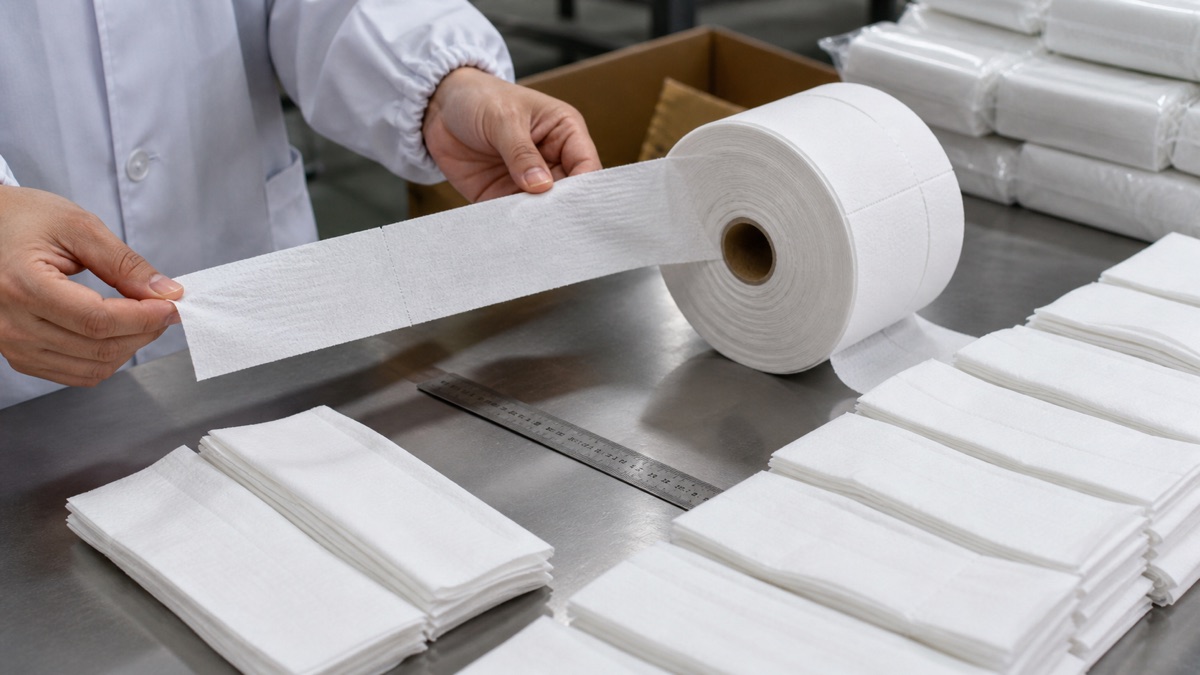
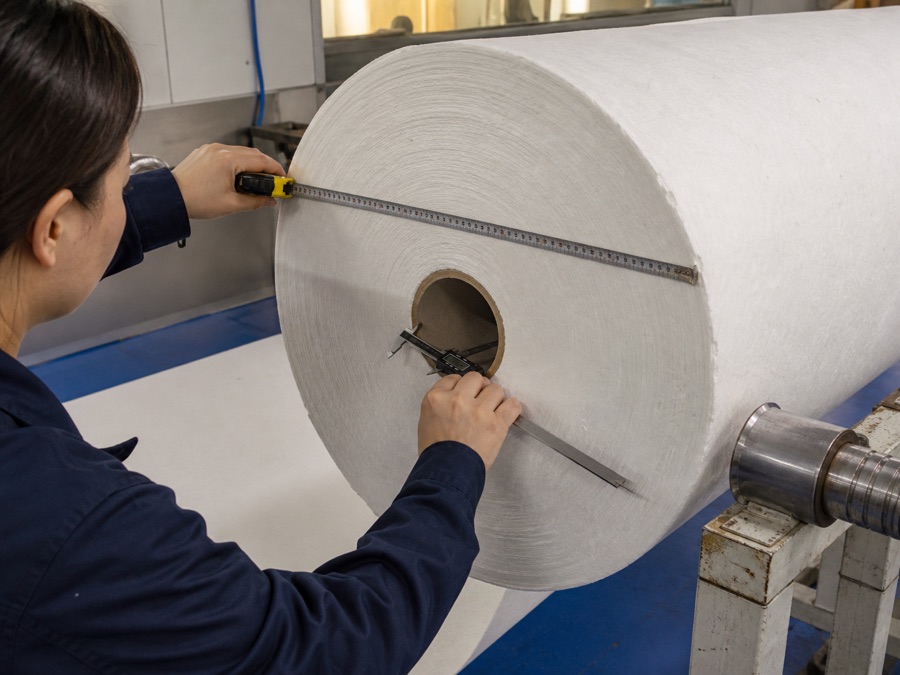
Run the exact print, emboss, fold, cut and pack sequence planned for production. Record tension, temperature, speed, dust, lint, breaks, edge quality, print result, absorbency, wet handling and finished-pack dimensions.
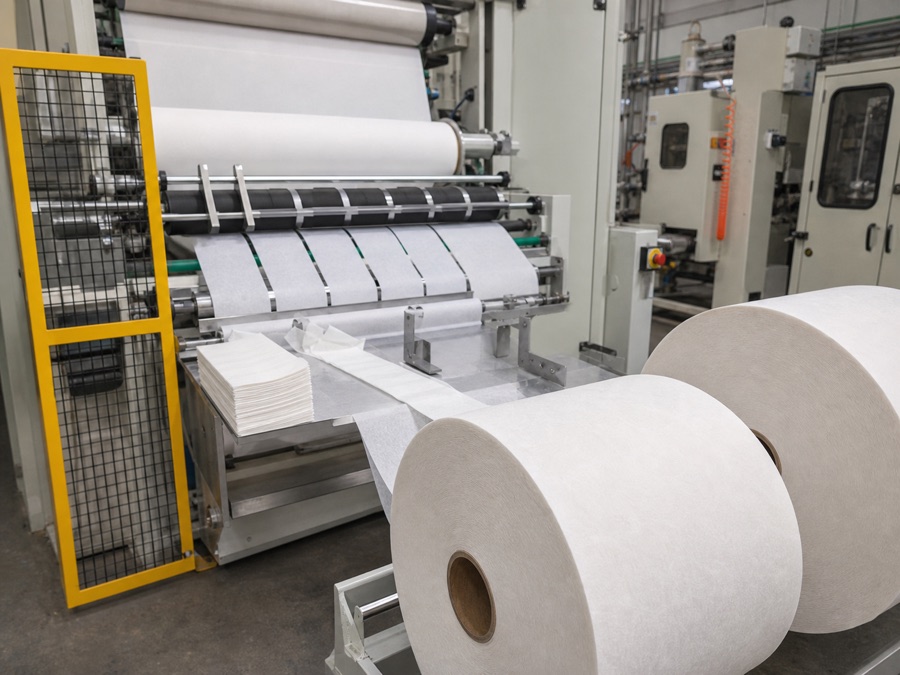
A small flat sheet can screen feel and appearance, but it cannot show unwind stability or roll-edge behavior. Ask the airlaid paper manufacturer for a trial roll that matches the proposed width, core, winding and formulation as closely as practical.
Keep the approved trial sample and test summary. Repeat orders should reference the same SKU and revision. If the binder, fiber composition or treatment changes, the buyer should decide which tests must be repeated before accepting mass production.
What should an airlaid paper RFQ include?
Use this checklist when comparing airlaid paper manufacturer options. Replace every planning range with the approved SKU, destination-market requirement and written acceptance method.
- State the finished product, converting steps, liquid exposure and target market.
- Request bonding route, fiber composition and any treated-side information.
- Define GSM, width, diameter, core, splice, winding and roll-label requirements.
- Name the test methods and performance questions relevant to the end use.
- Require a same-spec trial and written notification before formulation changes.
Compare finished airlaid napkin supply · Review Sansheng paper product capabilities · Send an airlaid roll RFQ
Questions buyers also ask
Is airlaid paper the same as tissue paper?
No. Airlaid is a dry-formed nonwoven web that is bonded into a material. Tissue is made by a different papermaking process.
Does latex-bonded airlaid always have higher wet strength?
Do not make that conclusion from the label alone. Compare the complete formulation and a test result for the exact product and method.
Can a flat sample approve a jumbo-roll order?
It can screen appearance and feel, but a roll trial is needed to evaluate unwind, tension, edges and the full converting sequence.
Sources and scope notes
-
EDANA — Nonwoven Terms Glossary
Supports: Industry terminology for airlaid webs and bonding descriptions. Limit: A glossary does not prove the composition or performance of a specific supplier SKU.
Sansheng airlaid paper manufacturer observations in this article come from the company’s current product specification archive and quotation workflow. They describe available planning ranges, not a universal specification or a guarantee for an unapproved SKU.
Request an application-matched airlaid roll review
For airlaid paper manufacturer sourcing, the fastest useful reply starts with measurable product, packaging and destination details. Send the finished use, bonding preference if known, converting steps, GSM, width, core, diameter and test requirements. Sansheng will identify the open specification fields before quotation.

Sales Manager at Sansheng Paper · 20+ years in tissue paper OEM & bulk export · LinkedIn