B2B procurement · Buyer guide
An airlaid napkin supplier should approve logo placement on the finished folded napkin, not only on a flat print proof. Mark the intended visible panel and its fold lines on the dieline. Measure the logo edge or center against those lines on production-intent samples, then inspect sealed packs for panel drift and partly hidden artwork. Buyer and supplier should agree the allowed offset from a signed physical sample; there is no universal tolerance for every fold and logo.
This guide addresses visual placement for custom printed airlaid napkins. It does not establish ink suitability, food-contact status, color accuracy or a Sansheng print-performance result.
Send the exact SKU, destination and specification you need reviewed.
Reusable procurement data
Direct answer
An airlaid napkin supplier should approve logo placement on the finished folded napkin, not only on a flat print proof. Mark the intended visible panel and its fold lines on the dieline. Measure the logo edge or center against those lines on production-intent samples, then inspect sealed packs for panel drift and partly hidden artwork. Buyer and supplier should agree the allowed offset from a signed physical sample; there is no universal tolerance for every fold and logo.
Approve the visible panel before the print proof
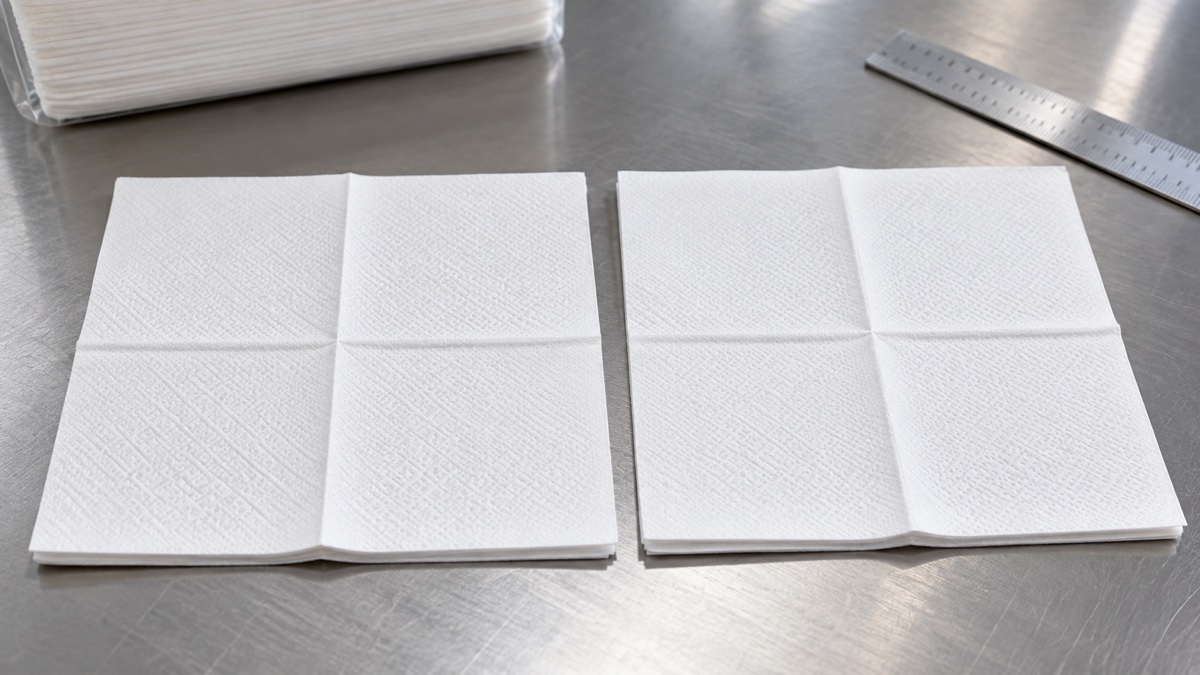
Ask the airlaid napkin supplier to name the finished format: sheet size, fold pattern, exposed panel and pack orientation. On the flat artwork, draw each fold line and mark where the logo should appear when the napkin is presented on the table. A logo can be centered on the open sheet and still disappear inside a quarter fold.
Use a physical dummy made from the intended airlaid sheet before paying for final tooling. Note which side faces up and whether the napkin is folded left or right first. A second fold sequence can put the same print on a different exterior panel even when the press registration has not changed.
Measure the finished fold, not only press registration
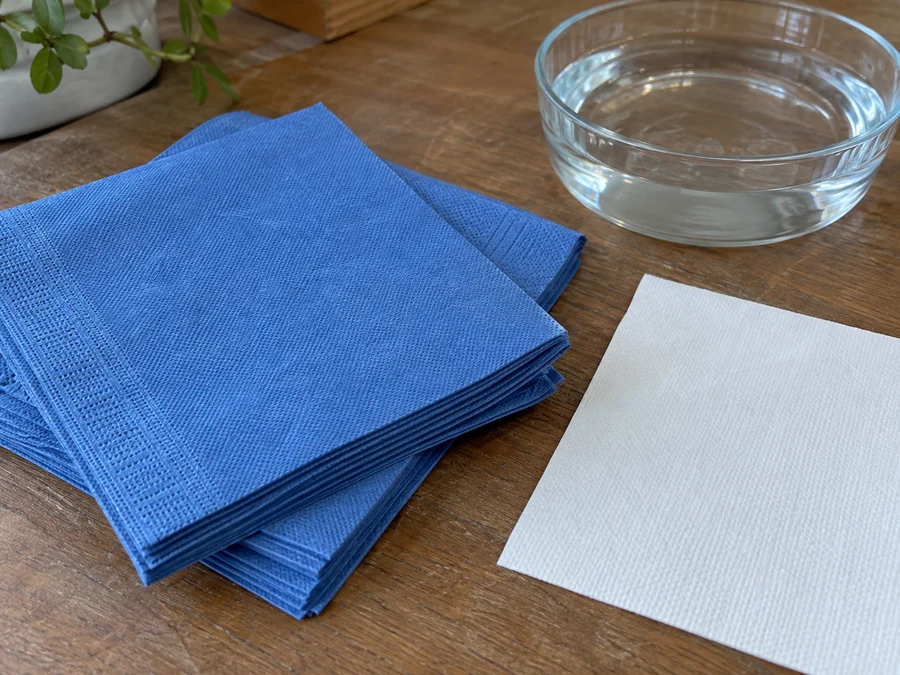
Take printed, folded napkins from the beginning, middle and end of a production-intent run. Lay each one in the presentation orientation and measure the logo from two stable folded edges. Record both distances and the direction of any drift. For a wide logo, also check whether any part crosses a fold or is cut by the package edge.
A flat press sheet helps locate a printing problem, while a folded sample includes both printing and converting variation. Keep those measurements separate. If the print is stable on the flat web but shifts on the finished panel, investigate fold setup and sheet cut before changing the plate.
Inspect stacks and sealed packs
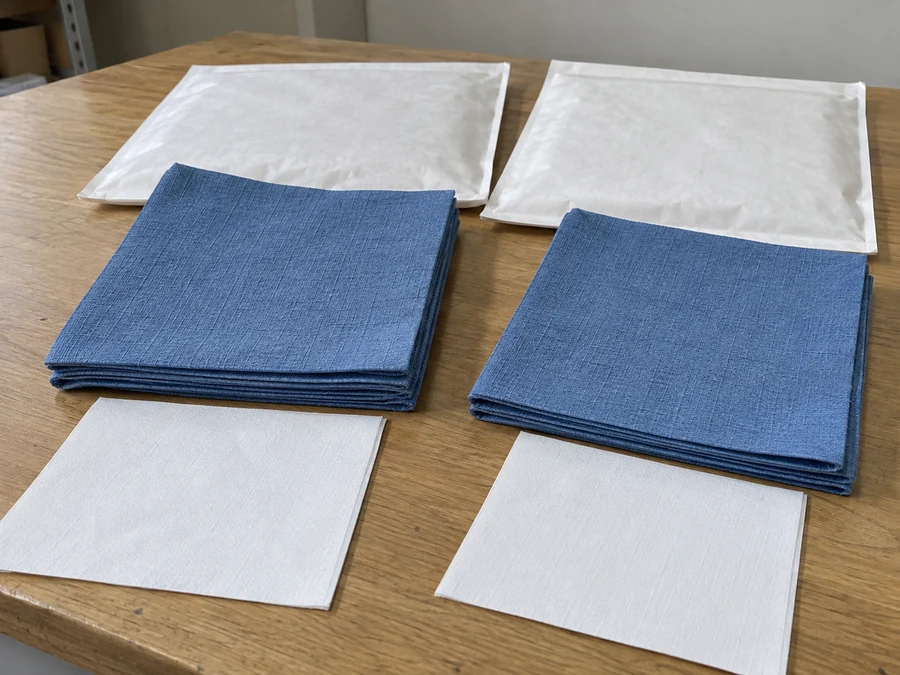
A single hand-selected napkin is not enough. Open sealed packs from different cartons and compare the top, middle and bottom pieces. The airlaid napkin supplier should record visible-panel direction, logo offset and any folded corner covering the artwork. Photograph the napkin beside the signed approval sample under the same orientation.
Pack compression may make an offset harder to see until the napkin is opened. Check both as sold and after one normal unfold. Treat ink setoff, dry rub and color shift as separate defects; they need their own acceptance methods and should not be silently included in a placement score.
Lock the revision and rejection language
Put the dieline, print file, fold sequence, allowed logo position and approved physical sample in one revision-controlled file. Define whether the limit is a measured offset, visible area or both. A buyer may reject a hidden logo even if its center remains inside a nominal measurement window.
Request a new folded proof when the sheet size, fold, logo size, plate or print position changes. The airlaid napkin supplier should also record who signs the first production sample and how many pieces are checked during the run. The article provides a method, not a claim that any Sansheng lot has passed it.
Buyer comparison record
| Check | Record | Buyer purpose |
|---|---|---|
| Artwork | Logo bounds and fold-line drawing | Predict final visible panel |
| Physical proof | Signed folded napkin and orientation | Approve what a diner sees |
| Run sample | Two edge offsets and drift direction | Separate print from fold variation |
| Pack | Top, middle and bottom pieces | Catch inconsistent presentation |
What should buyers ask the airlaid napkin supplier?
- Airlaid sheet size, GSM, color and finished fold
- Artwork revision, logo dimensions and intended visible panel
- Fold sequence and print orientation on a signed dummy
- Edge-based measurement and allowable placement rule
- Production sample frequency and reapproval triggers
Send the airlaid napkin supplier your intended use, destination and required acceptance decision.
Airlaid Napkin Supplier: How to Check Emboss Registration?
Airlaid Napkin Manufacturer: Does the Fold Recover After Packing?
Questions buyers also ask
Is a flat PDF proof enough to approve the logo?
No. It checks the artwork file but cannot show the finished fold and pack presentation.
Should the logo be measured from the open sheet edge?
Use the finished folded edges for the buyer-facing placement decision; keep flat-web registration as a separate diagnostic.
Does a centered logo prove print quality?
No. Color, ink setoff and material suitability require separate checks.
Sources and scope notes
- Sansheng airlaid napkin product page Supports: Identifies the relevant airlaid napkin and OEM product context. Limit: Does not document the proposed artwork, fold proof or production tolerance.
Source scope checked October 18, 2026. Illustrative images do not document a Sansheng test, certified SKU or customer order.
Request an identified sample review
Send the airlaid napkin supplier your SKU, approved sample, buying destination and required evidence. That makes it possible to identify the documentation still needed before a quote or release decision.

Sales Manager at Sansheng Paper · 20+ years in tissue paper OEM & bulk export · LinkedIn