B2B procurement · Specification review
An airlaid napkin supplier should check emboss registration on the finished, folded napkin against an approved reference, not judge a loose embossed web alone. Mark the intended pattern area and fold edge, measure offset at agreed points, and record whether the variation changes appearance, stacking or use. Set the allowable offset from the buyer-approved sample before production; there is no universal registration limit for every design.
This is a finished-product visual and converting check. It does not prove absorbency, food-contact compliance or a particular emboss depth.
By Tracy Zhang · For foodservice distributors and private-label airlaid napkin buyers · Prepared October 9, 2026
Send your current specification, identified sample and the decision that needs approval.
Reusable procurement data
What should the buyer approve first?
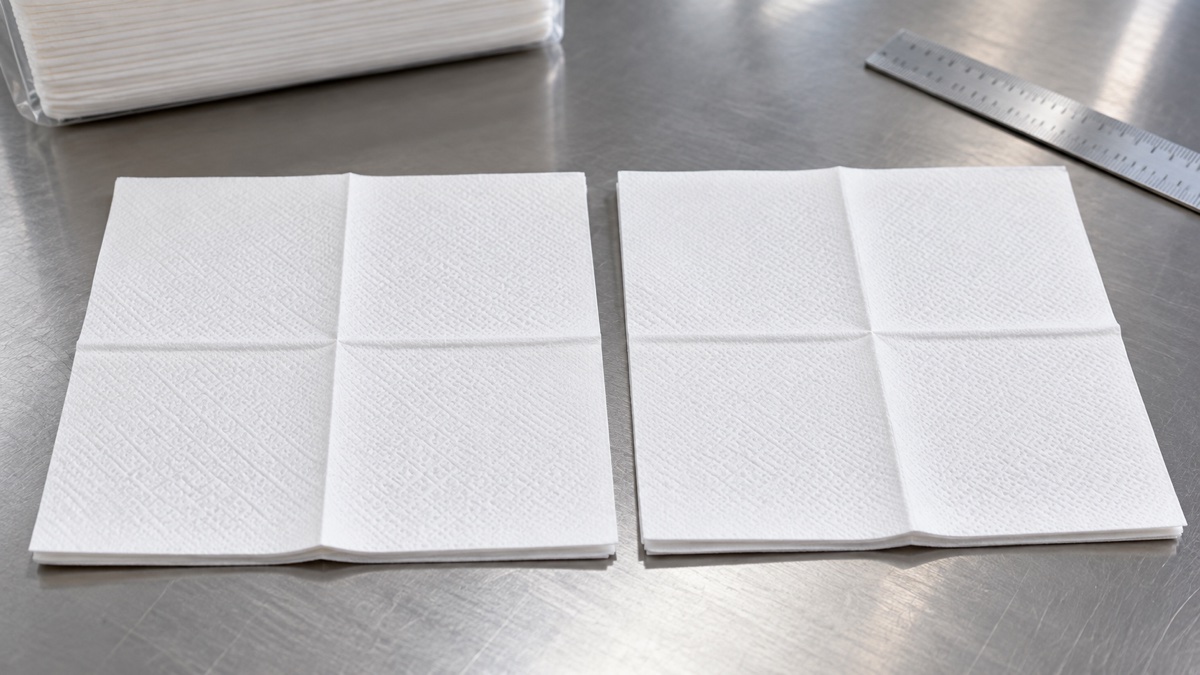
An airlaid napkin supplier should check emboss registration on the finished, folded napkin against an approved reference, not judge a loose embossed web alone. Mark the intended pattern area and fold edge, measure offset at agreed points, and record whether the variation changes appearance, stacking or use. Set the allowable offset from the buyer-approved sample before production; there is no universal registration limit for every design.
Airlaid Napkin Supplier: Define what must line up
For an airlaid napkin supplier, registration means the position of the embossed motif relative to a specified datum on the finished napkin. That datum might be the open edge, centerline or fold crease. Name it on the drawing. A pattern that is centered on an unfolded sheet may move out of the visible panel after folding; a generic photograph cannot establish whether the final format meets the buyer's artwork and service expectation. Keep a retained finished pack, not only a digital drawing, as the physical reference.
Record sheet size, fold configuration, embossing pattern, ply construction and pack compression with the reference. If the napkin has a printed panel, distinguish emboss-to-cut registration from print-to-emboss registration. These are different observations. Ask the airlaid napkin supplier to show which edge is produced by slitting, which by folding and which can shift during packing. This avoids arguing over a defect that the drawing never defined.
Measure representative finished pieces
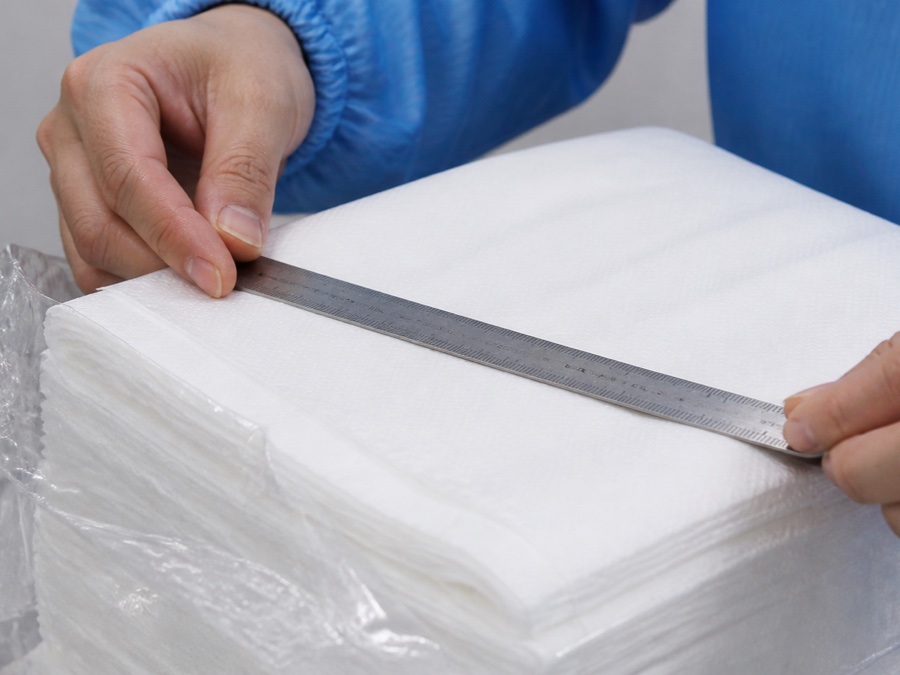
Take identified packs from the start, middle and end of a run, then let them rest under the same agreed inspection conditions. Unwrap without pulling the folds square by hand. For each sampled airlaid napkin supplier pack, measure the pattern center or designated motif edge to the same physical datum. Log the direction and size of each offset, not just a single average that can conceal opposite errors. Photograph the same face and orientation beside a plain scale.
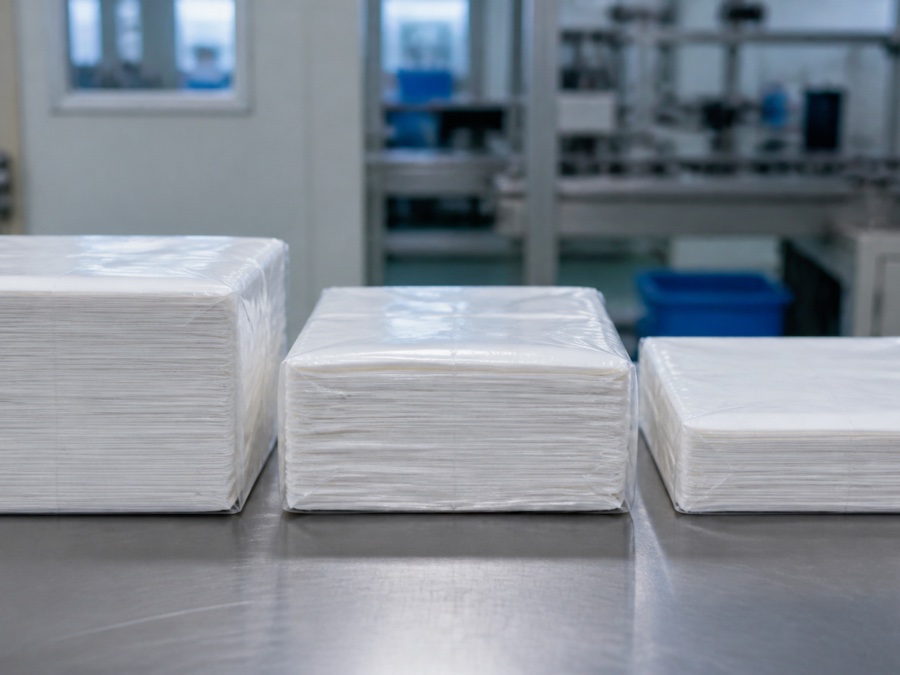
Inspect both a top piece and pieces farther down the stack. Check whether the visible motif is stable after one unfold and whether a shifted embossed zone creates a thick edge or awkward cutlery-pocket opening. If a deviation appears only after very tight wrapping, investigate pack compression separately from emboss cylinder position. Define sample size and pass/fail handling in the purchase specification rather than inventing a universally acceptable millimeter value.
Keep material tests separate
ISO 12625-3 specifies a thickness and bulk method for tissue products; it is not an emboss-registration specification and may not be the appropriate method for every airlaid nonwoven construction. A bulk result cannot tell the buyer whether the motif is centered on the finished fold. If the airlaid napkin supplier supplies a laboratory thickness figure, identify the material and test method before comparing it with a finished-napkin appearance check.
Embossing may also affect perceived handfeel or stacking, but registration approval should stay narrow. A visually aligned pattern does not automatically prove wet strength, contact suitability or mechanical durability. Maintain separate evidence for each claim required by the destination market or customer. This distinction matters when a supplier proposes a new emboss roller, substrate or fold setup after the buyer signed off the sample.
Turn the trial into a repeat-order control
The airlaid napkin supplier should return a small marked sample set, a measurement table and photos showing acceptable and unacceptable positions. The buyer should sign the exact reference revision. State who may approve a deviation and whether a change to the emboss cylinder, cutting setup, sheet width or fold path requires another finished-pack trial. Without this control, an approved flat web may be substituted for the very construction the buyer tested.
In the RFQ, quote the same format, pattern, pack count and tolerances across competing offers. Do not compare a centered large motif with a cheaper small all-over pattern as if they were identical goods. If an appearance difference will matter at a hotel table, make the visible panel and viewing distance explicit. The acceptance criterion is a commercial agreement informed by an identified sample, not a claimed universal airlaid standard.
The buyer's comparison record
| Review point | Record | Buyer purpose |
|---|---|---|
| Datum | Named cut edge, fold or centerline | Prevent two inspectors measuring different offsets |
| Pattern | Motif position on folded visible panel | Approve the actual service appearance |
| Sampling | Pack and run positions, offset in both directions | Catch drift and pack-related change |
| Change | Emboss roller, cut and fold revision | Know when reapproval is required |
What belongs in the RFQ?
- Attach the pattern drawing and one approved finished pack.
- Name the measurement datum and visible face.
- Set sample locations, offset recording and defect examples.
- Require reapproval after emboss, cut, fold or substrate changes.
For adjacent decisions, read Airlaid Napkin Manufacturer: Does the Fold Recover After Packing? and Paper Napkin Supplier China: How to Set Fold-Skew Tolerance?. Keep each approval question separate.
Questions buyers also ask
Is emboss depth the same as registration?
No. Depth describes the surface relief; registration describes where that relief lands relative to the cut or fold.
Can a flat sheet approve the final napkin?
It can establish the pattern, but not its final position after cutting, folding and packing.
Does an ISO thickness value set the alignment tolerance?
No. Agree alignment from a drawing and approved finished sample.
Sources and scope notes
- ISO 12625-3:2014 — tissue thickness and bulk Supports: Defines thickness and bulk measurement for tissue products. Limit: Does not define emboss alignment and is not automatically applicable to every airlaid construction.
Sources checked October 9, 2026. Images are illustrative and do not document a Sansheng test, customer order, factory operation or shipment.
Request a same-spec review
Send the finished airlaid napkin, emboss artwork, fold drawing and the misalignment that would trigger a complaint. Sansheng can compare a same-spec airlaid napkin supplier quotation against that reference.

Sales Manager at Sansheng Paper · 20+ years in tissue paper OEM & bulk export · LinkedIn