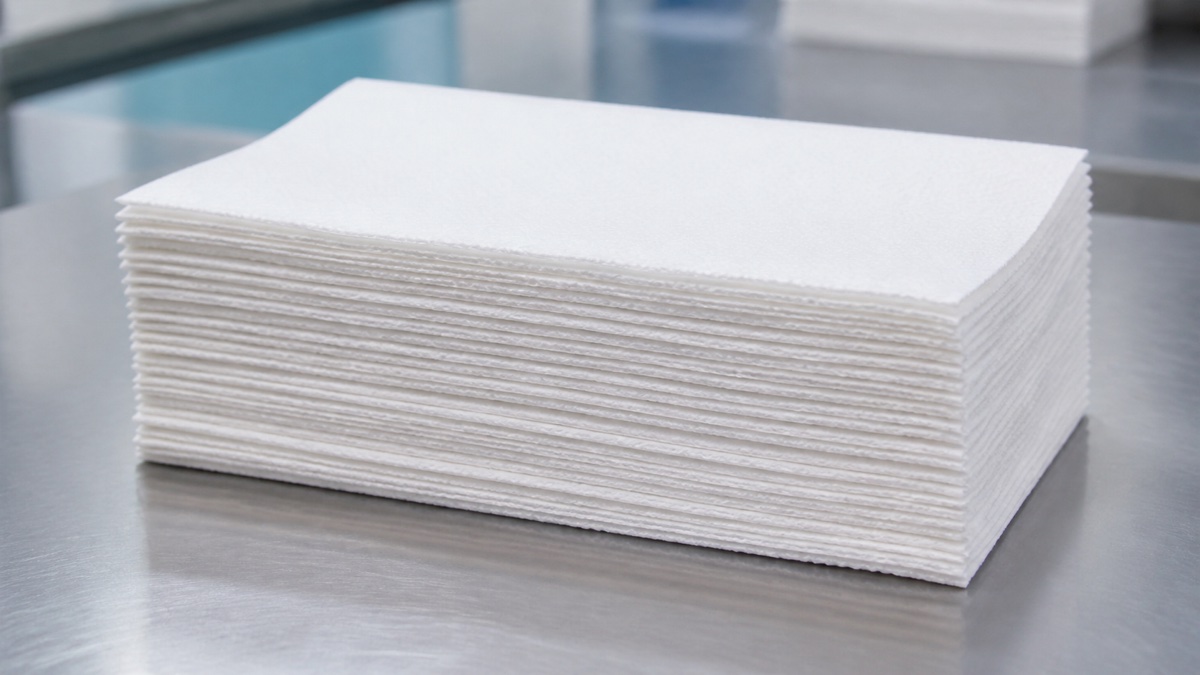
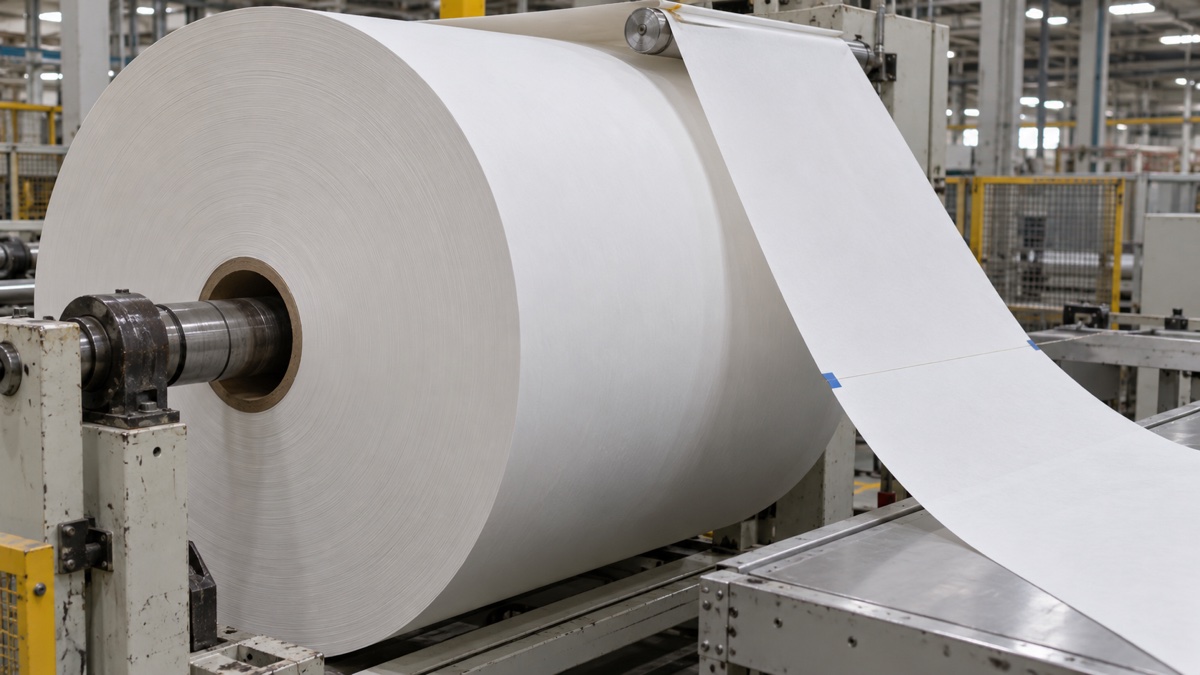
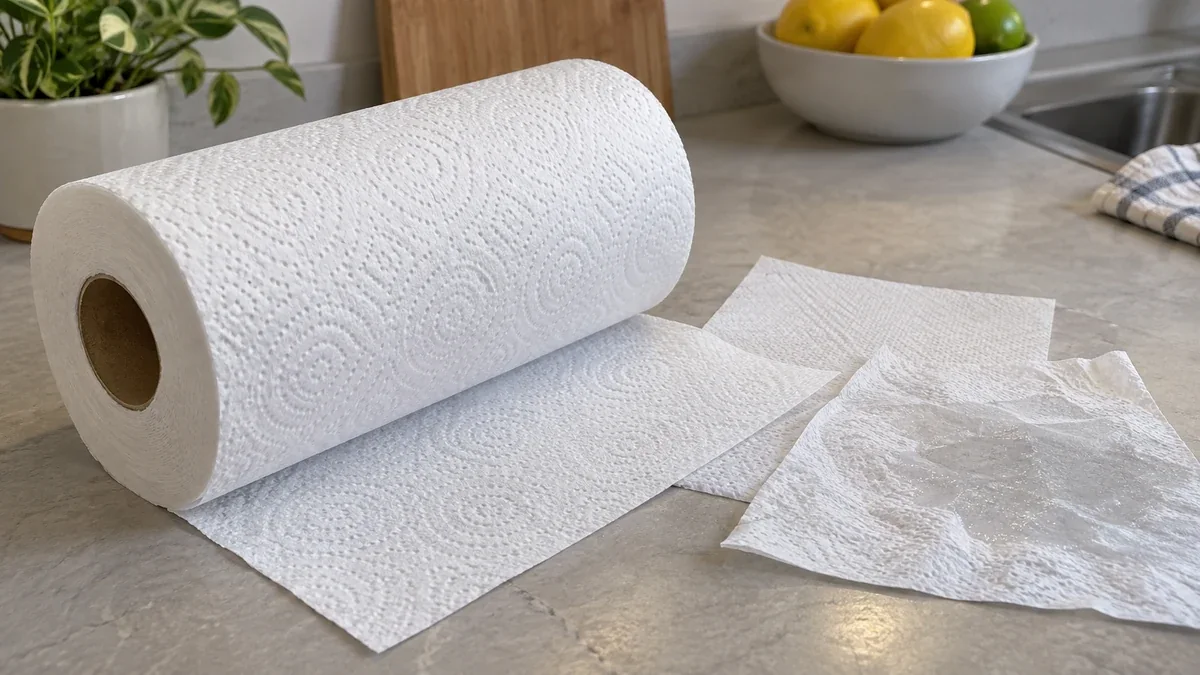
A custom airlaid napkins program is not a packaging decision — it is a five-spec engineering decision. Get the GSM, binding, embossing, printing, and pack size right on order one and the next ten containers run themselves. Get any one wrong and you pay for that mistake every container.
Custom airlaid napkins from a China OEM manufacturer are built across five spec axes: GSM (35–80, the cost and feel anchor), binding method (latex, thermal, or powder — defining washability), embossing pattern (smooth, diamond, dot, waffle, or branded), in-line printing (color and pattern, Pantone-matched), and pack format (folded size and carton configuration). A standard 40HQ container holds 9–12 tonnes of finished airlaid napkins depending on GSM, fold size, and pack density — translating to 400,000–1,200,000 individual napkins per shipment. This guide gives every decision number a private-label brand buyer needs before locking spec on their first custom airlaid napkins PO.
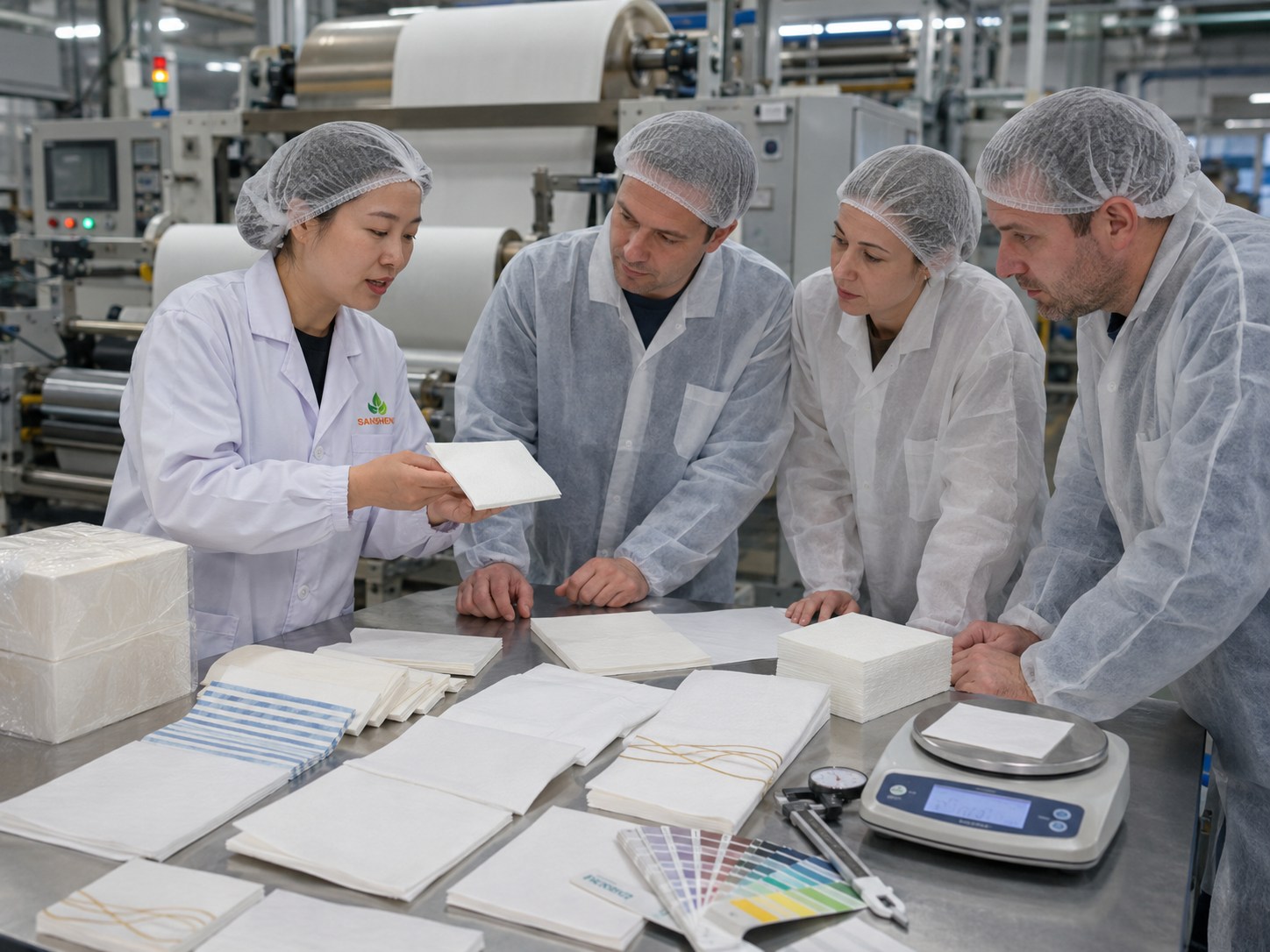
What this spec guide covers
- GSM choice — fitting paper weight to brand tier
- Binding method — latex vs thermal vs powder explained
- Embossing patterns and depth options
- In-line printing and Pantone color matching
- Fold formats and pack configurations
- 40HQ container loading math — real numbers
- Tracy’s experience: a US private-label brand’s first run
- FOB pricing logic and MOQ thresholds
- FAQ for B2B custom orders
1. GSM Choice — Fitting Paper Weight to Brand Tier
GSM is the single most leveraged spec in custom airlaid napkins. It anchors cost, feel, and brand perception simultaneously. The choice should follow the end-channel positioning, not the FOB quote.
| Brand Tier / Use Case | Recommended GSM | Hand-Feel Profile | Why |
|---|---|---|---|
| Value-tier foodservice | 35–45 GSM | Sturdy disposable | Cost-optimized; QSR back-of-house, basic catering |
| Mid-market casual dining | 45–55 GSM | Premium disposable | Visible upgrade from standard tissue; café and bistro |
| Premium full-service | 55–65 GSM | Cloth-feel | Hotel restaurants, premium catering, banquet |
| 5-star hospitality | 65–80 GSM | Heavy cloth-equivalent | Luxury hotels, premium dining, executive lounges |
| Healthcare / wipe applications | 50–60 GSM | Absorbent functional | Spa, salon, medical-adjacent settings |
The cost-per-napkin differential between 35 GSM and 80 GSM is roughly 2.2×, but the perceived-quality differential at the end consumer is far larger. Buyers reasoning purely on GSM cost typically undershoot the right spec for premium positioning. The right test is end-channel blind panel comparison against the competitive set, not internal spreadsheet optimization. Buyers stocking complementary categories should align tier discipline across SKUs — see airlaid napkins supplier documentation for the full tier framework applied across other paper categories.
2. Binding Method — Latex vs Thermal vs Powder
Airlaid is a nonwoven structure that requires binding to hold fibers in place during use. Three methods dominate, each with distinct cost, feel, and durability profiles. Industry-standard production technology references are documented by airlaid line manufacturers such as ANDRITZ for buyers wanting deep technical context.
- Thermal-bonded. Bicomponent fiber melts at controlled temperature, fusing the web. Used in ~32% of tabletop airlaid napkin production. Clean finish, no chemical residue, premium hand-feel. Cost premium 8–12% over basic binding.
- Latex-bonded. Acrylic latex sprayed onto the web, then cured. Used in ~35% of premium wipes and some hospitality napkins. Maximum strength and wet integrity; slightly higher cost. Feel can be very cloth-like at premium GSM.
- Powder-bonded. Thermoplastic powder distributed into web, then heat-activated. Lowest cost binding; value-tier napkins. Less premium feel but adequate for back-of-house.
Premium-tier custom airlaid napkins for hospitality should specify thermal-bonded or latex-bonded explicitly. Powder-bonded is fine for back-of-house or value retail. Specifying “any binding” leaves the cost-optimized supplier free to use the cheapest option — which may not match the brand position the buyer is paying for.
3. Embossing Patterns and Depth
Embossing is where custom airlaid napkins differentiate visually. The pattern decision affects perceived quality, brand recognition, and tactile experience.
- Smooth (no emboss). Lowest cost; cleanest visual; minimal hand-texture. Suits ultra-minimalist brand aesthetics.
- Diamond emboss. Most common premium pattern. Diamond geometry locks bulk and creates a fabric-mimicry texture. Cost premium 4–8%. Suits classic hospitality.
- Dot emboss (micro-embossing). Fine dot pattern, creates gentle hand-feel without strong visual signature. Suits modern minimalist brands.
- Waffle emboss. Larger square cells, distinctly textured. Premium retail and luxury hospitality positioning.
- Custom-branded emboss. Logo or brand mark embossed directly into the sheet. Requires custom embossing roller tooling: $1,200–$2,800 per design, amortized over container 2 onward.
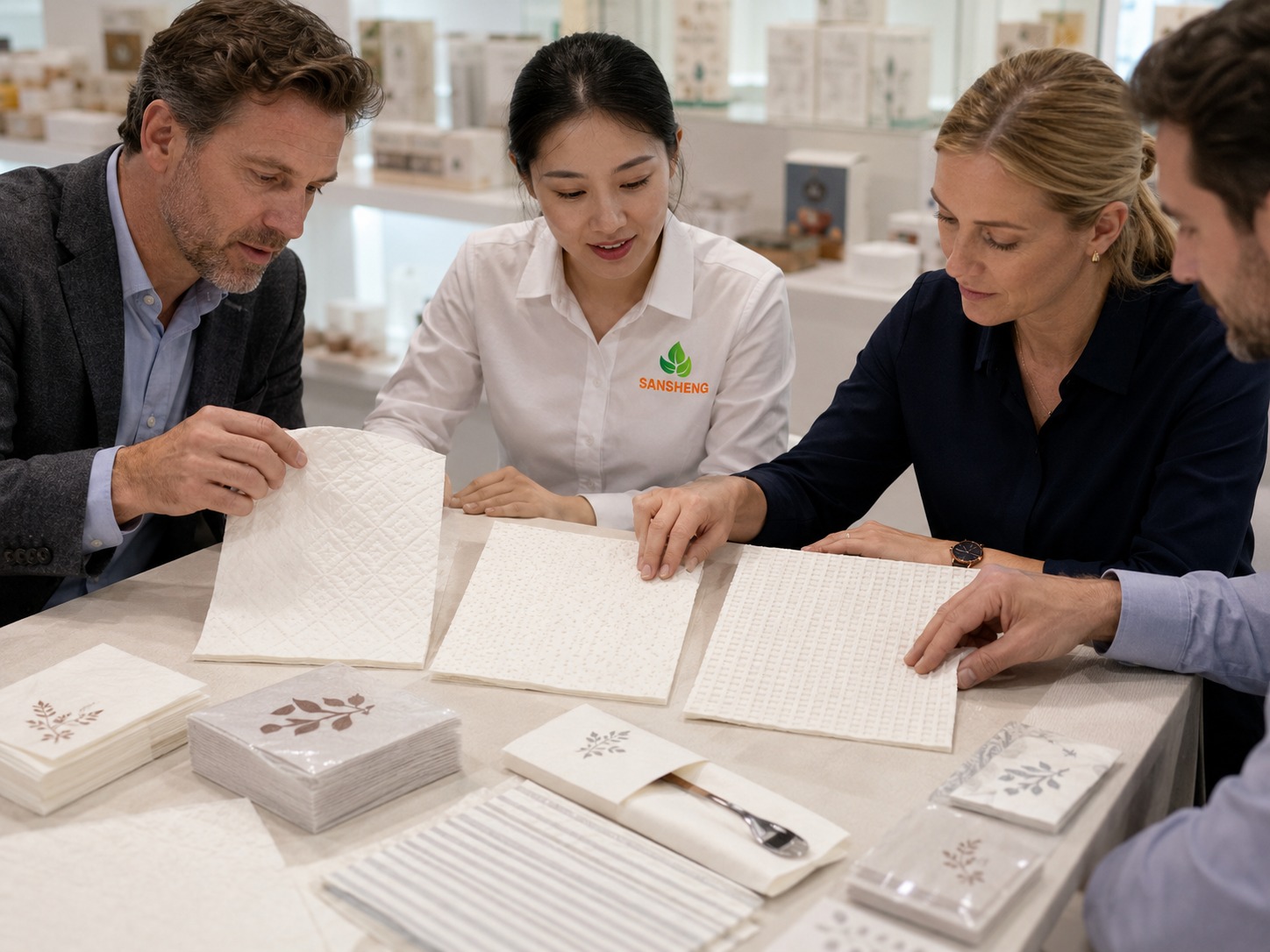
Emboss depth is the second-order spec inside this decision. 0.2 mm is functional minimum; 0.3–0.4 mm is the premium-tier standard; above 0.5 mm requires heavier base GSM to avoid tear-through. Specifying emboss depth explicitly catches one of the most common silent supplier-side cost-saves.
4. In-Line Printing and Pantone Color Matching
Color and print transform a generic napkin into a brand artifact. Five customization options:
- Single-color dye through-and-through: Pulp-stage dyeing for solid colors. Highest cost but Pantone-fastness perfect. MOQ 1 × 40HQ per color.
- Surface print, single color: Cylinder-printed pattern or solid block on white base. $0.06–$0.10 per kg surcharge; plate cost $400–$800 per color.
- Multi-color surface print (up to 4 colors): $0.12–$0.22 per kg surcharge; plate cost scales with color count.
- Edge-color or border print: Single-color border on white sheet. Cost-effective brand-marking with $400–$600 plate cost.
- Hot-stamp foil (gold/silver): Premium luxury detail. Higher tooling cost; typically reserved for ultra-premium SKUs.
Pantone color matching uses dye-house standards. Match accuracy is typically ΔE ≤ 2.0 (visually indistinguishable to non-expert eyes). Provide Pantone reference number at the RFQ stage — color proofing then runs 3–5 days. For best fastness, food-contact-grade water-based inks are preferred over solvent-based formulations.
5. Fold Formats and Pack Configurations
Folding directly affects dispenser fit, presentation, and case packing. Standard configurations:
| Fold Format | Unfolded Size (cm) | Folded Size (cm) | Common Use |
|---|---|---|---|
| Quarter-fold | 33 × 33 | 16.5 × 16.5 | Standard dinner napkin, mid-market |
| Eighth-fold | 40 × 40 | 20 × 10 | Premium hospitality, banquet |
| 1/6 fold | 30 × 30 | 10 × 10 | Beverage napkin, cocktail |
| Z-fold dispenser | 22 × 22 | 22 × 5 (z-stacked) | QSR dispenser, foodservice tabletop |
| Interfold | 22 × 22 | 22 × 5 (interfolded) | Pop-up dispenser, premium washroom |
| C-fold | 30 × 30 | 10 × 30 (c-fold) | Tray-liner, banquet service |
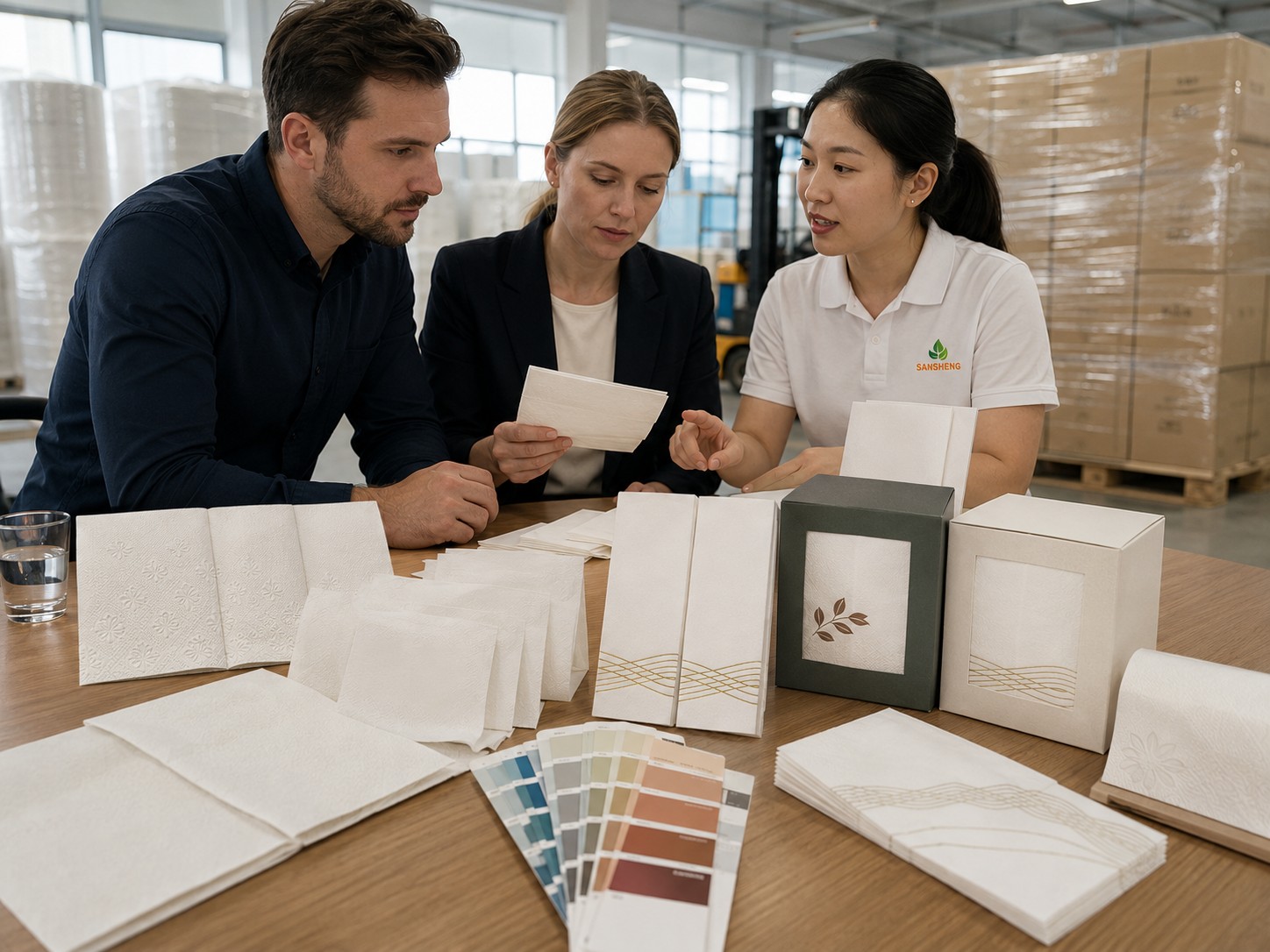
Pack configuration follows the fold format and the end-channel. Standard configurations: 100 napkins per pack, 12–20 packs per carton, 50–60 cartons per pallet, 16–22 pallets per 40HQ. Specifying pack count and carton format at the spec-locking stage avoids retooling cost between container 1 and container 2. For complementary tabletop SKUs, the same pack-format logic applies to a paper napkin manufacturer account on conventional napkins or a facial tissue manufacturer account on guest-room amenities.
6. 40HQ Container Loading — Real Numbers for Buyers
Loading capacity for custom airlaid napkins varies with GSM, fold density, and pack tightness. Representative figures from production runs:
| Spec Profile | Approx Net Weight | Approx Napkin Count | Approx Cases |
|---|---|---|---|
| 35 GSM × 33×33 quarter-fold (value-tier) | ≈ 11.5 t | ≈ 950,000 | 4,750 cartons (200/ctn) |
| 50 GSM × 40×40 eighth-fold (mid-market) | ≈ 11.0 t | ≈ 690,000 | 3,450 cartons |
| 60 GSM × 40×40 eighth-fold (premium) | ≈ 10.8 t | ≈ 565,000 | 2,825 cartons |
| 70 GSM × 40×40 eighth-fold + emboss (luxury) | ≈ 10.6 t | ≈ 475,000 | 2,375 cartons |
| 50 GSM × 22×22 z-fold (dispenser) | ≈ 11.2 t | ≈ 1,150,000 | 5,750 cartons |
Heavier GSM cubes out before it weighs out — the practical container ceiling on luxury-tier airlaid is volumetric. Mid-tier and value-tier SKUs are typically weight-limited at ~11 tonnes net. Pallet loading reduces capacity 8–12% versus floor-loading; required when destination consignee mandates forklift handling.
7. Tracy’s Experience — A US Private-Label Brand’s First Run
🏭 From Our Factory Floor
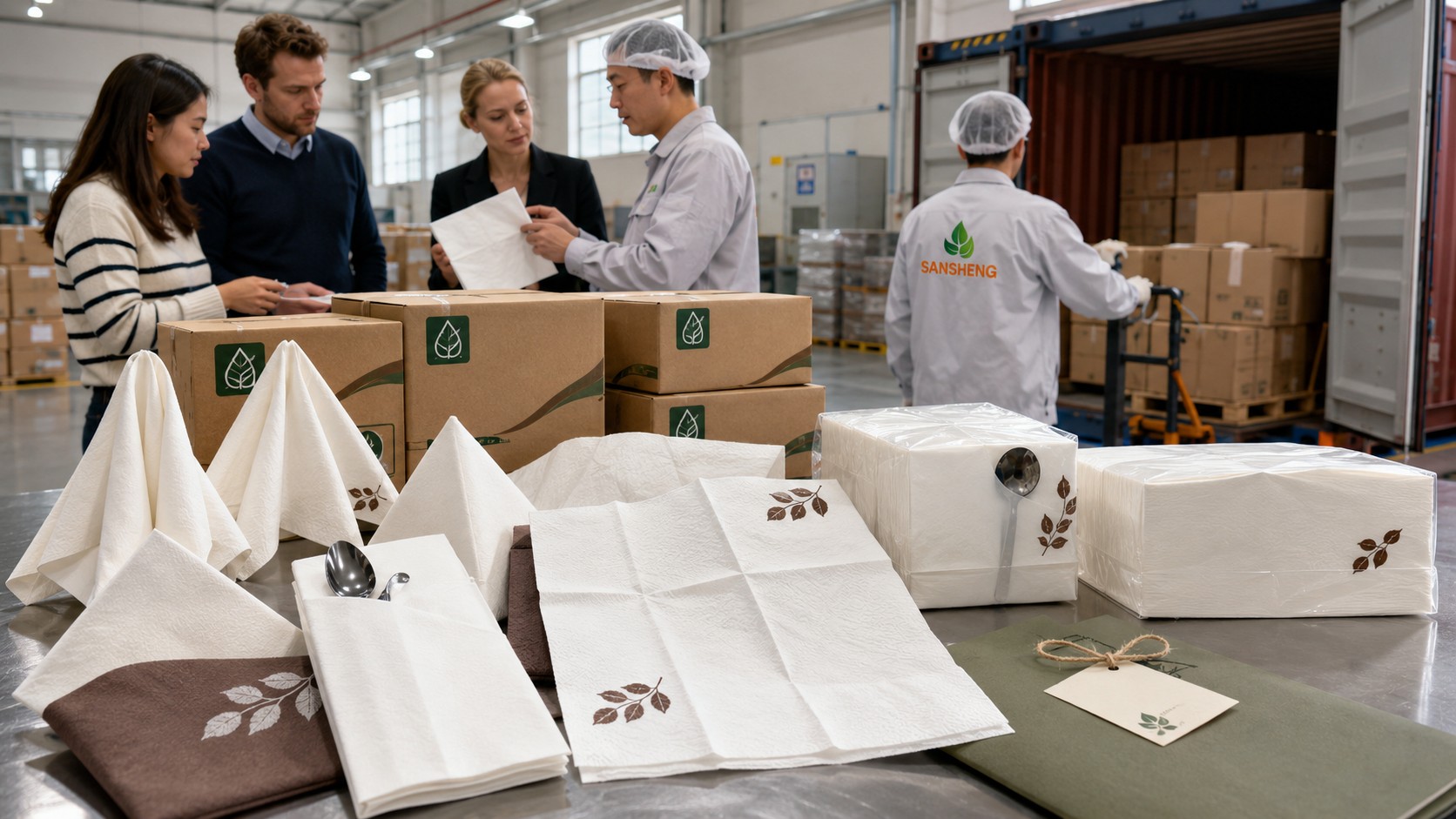
Real case (Q4 2025): A US foodservice private-label brand commissioned their first custom airlaid napkins program: 60 GSM, latex-bonded, custom diamond emboss at 0.35 mm depth, single-color brand-blue dye, 40×40 cm eighth-fold, branded carton with FSC and food-contact-compliance graphic. First container: 1 × 40HQ for pilot launch into 22 regional foodservice accounts. Tooling cost (embossing roller + plate): $1,650, amortized into pricing on order 2 and 3.
Result: Container 1 landed within 8% of FOB-quoted unit cost (the 8% delta was tooling amortization). Account feedback after 60 days: 94% retention, 3 accounts wanted the same napkin in a smaller fold for cocktail service, 1 account requested a complementary cocktail napkin in matching color. The brand owner ordered a follow-up program in Q1 2026: 2 × 40HQ across the original SKU plus a new cocktail SKU. Tooling cost amortized fully by order 4; per-unit cost dropped to the FOB-quoted target.
What we learned: The hardest part of a custom airlaid program is order 1 — getting tooling right, color proofing approved, pack format confirmed. Once that infrastructure is in place, orders 2+ are simple replenishment. The buyer who treats Order 1 as “permanent setup investment” and Order 2 as “the real test” sees the lowest friction. The buyer who pressures Order 1 to hit final unit cost typically compromises spec and inherits problems on orders 2+.
8. FOB Pricing Logic and MOQ Thresholds
FOB pricing on custom airlaid napkins follows a structured stack: pulp + binding + converting + emboss/print surcharge + packaging + tooling amortization + margin. Pulp dominates at 50–60% of unit cost.
- Standard SKU (existing emboss + color): 1 × 20HQ minimum, FOB lead time 25–30 days
- Custom emboss (new tooling): 1 × 40HQ minimum; tooling cost $1,200–$2,800; lead time 35–40 days
- Custom Pantone color: 1 × 40HQ minimum per color; dye-house setup adds 3–5 days
- Custom print (1–4 colors): 500 kg minimum per design; plate cost $400–$1,200 per color
- Compostable formulation (no plastic binding): 1 × 40HQ minimum; small premium ($0.04–$0.08/kg)
- Branded carton (FSC graphic, regulatory marks): 500 kg per design; carton plate cost $80–$150 per color
For sustainability-focused programs, FSC chain-of-custody documentation is the baseline credential — verifiable on the FSC public certificate search portal before issuing PO. Buyers running parallel programs across multiple SKUs benefit from supplier consolidation — see related capability across TAD paper supplier, jumbo roll tissue manufacturer, and kitchen paper SKUs sharing the same pulp and documentation infrastructure.
9. FAQ for B2B Private-Label Custom Orders
What’s the smallest practical order for a fully custom airlaid napkins program?
1 × 40HQ for custom embossing or Pantone color (to amortize tooling). 1 × 20HQ for standard SKUs in stock spec. Below 1 × 20HQ, distributor stock SKUs are usually a better economic answer.
How long does first-order setup take from artwork approval to BL?
Custom emboss roller manufacturing: 12–18 days. Color proofing: 3–5 days. Production scheduling: 5–7 days. Production run: 12–18 days. Pre-shipment + BL: 3–5 days. Total: 35–45 days from confirmed PO and tooling commit to BL date.
Can I run multiple colors in a single container without paying full custom for each?
Yes — mixed-color SKU runs in one container are standard for repeat customers. First-order generally requires single-SKU containers to validate quality discipline. From Order 2 onward, mixed runs amortize freight efficiently.
What’s the wet-strength specification I should require for foodservice airlaid napkins?
Wet/dry tensile ratio ≥ 0.20 for casual foodservice, ≥ 0.30 for premium hospitality where napkins must withstand wet wipe-up without disintegration. Specify the ratio in the PO and require a third-party lab report attached to the shipment.
How do tooling costs amortize across multi-year contracts?
Standard practice: tooling cost amortized over the first 2–3 containers in the price. Once amortized, FOB returns to baseline pricing for the SKU. Multi-year contracts often see tooling fully amortized in pricing within 12 months at typical volume, with subsequent years running at standard unit economics.
Does the carton design count toward MOQ or is it separate?
Carton design is separate. Carton plate cost ($80–$150 per color) is one-time. Custom-printed cartons can run from 500 kg minimum, which is well within a single container of finished product. No separate MOQ for carton.
What pre-shipment inspection makes sense for custom airlaid napkins?
Three-point QC: (1) GSM verification on 3 random reels, (2) color match against approved Pantone reference, (3) emboss depth measurement on production samples. Cost via SGS or Intertek: $350–$500 per container. Make the report attachment to BL contractual, not optional.
10. Final Word for Private-Label Brand Buyers
Custom airlaid napkins is engineering procurement, not commodity buying. The buyer who walks into the negotiation with confirmed GSM, defined binding method, specified embossing depth, locked Pantone color, and chosen fold format wins both the price and the delivery date. The buyer who outsources spec to “factory default” gets default margin allocations, default tooling decisions, and default risk on order 2 onward. Specify with intent on Order 1. The math rewards it on every container after.
Lock your custom airlaid napkins spec — get a complete OEM quote in one day
Send us your brand artwork, target spec, and end-channel positioning. We’ll return FOB pricing, tooling cost amortized into Order 1, color proofing timeline, and full sample-shipment plan — typically within one business day.
Tell us these 5 points to get a faster quote:
- Your country and target market
- Spec: GSM, binding, emboss, color, fold size
- Your name
Sales Manager at Sansheng Paper · 20+ years in tissue paper OEM & bulk export · LinkedIn