What EU PFAS Limits Mean for Paper Napkin Suppliers: 25ppb/250ppb/50ppm Explained
Your next EU shipment could be rejected at customs. Here is exactly what the three PFAS thresholds mean for every paper napkin supplier shipping to Europe.
Starting August 12, 2026, EU Regulation (EU) 2025/40 under the Packaging and Packaging Waste Regulation (PPWR) enforces three PFAS limits on all food-contact paper packaging — including paper napkins. A single PFAS substance must stay below 25 ppb (parts per billion). The sum of all measurable PFAS compounds must stay below 250 ppb. And total organofluorine content, measured as total fluorine, must stay below 50 ppm (50 mg/kg). There is no transition period: even napkins manufactured before August 12 must comply if they are first placed on the EU market after the deadline. For any paper napkin supplier exporting to Europe, this regulation is not optional — it determines whether your product clears customs or gets turned away. Below, we break down what each limit measures, how it affects your sourcing decisions, and what documentation you need from your Chinese supplier before placing your next order.
- The Three-Tier PFAS Limit System Explained
- Regulation Timeline: EU, US States, and What Comes Next
- PFAS Treatment vs. Bio-Based Alternatives: Cost Comparison
- How to Audit Your Paper Napkin Supplier for PFAS Compliance
- Why Virgin Wood Pulp Napkins Pass Without Treatment
- FAQ: PFAS Compliance for Napkin Importers
- Summary: Your PFAS Compliance Checklist
Whether you source paper napkins, paper towels, or airlaid napkins, the same PFAS compliance framework applies to all food-contact tissue products shipped to the EU.
The Three-Tier PFAS Limit System Explained
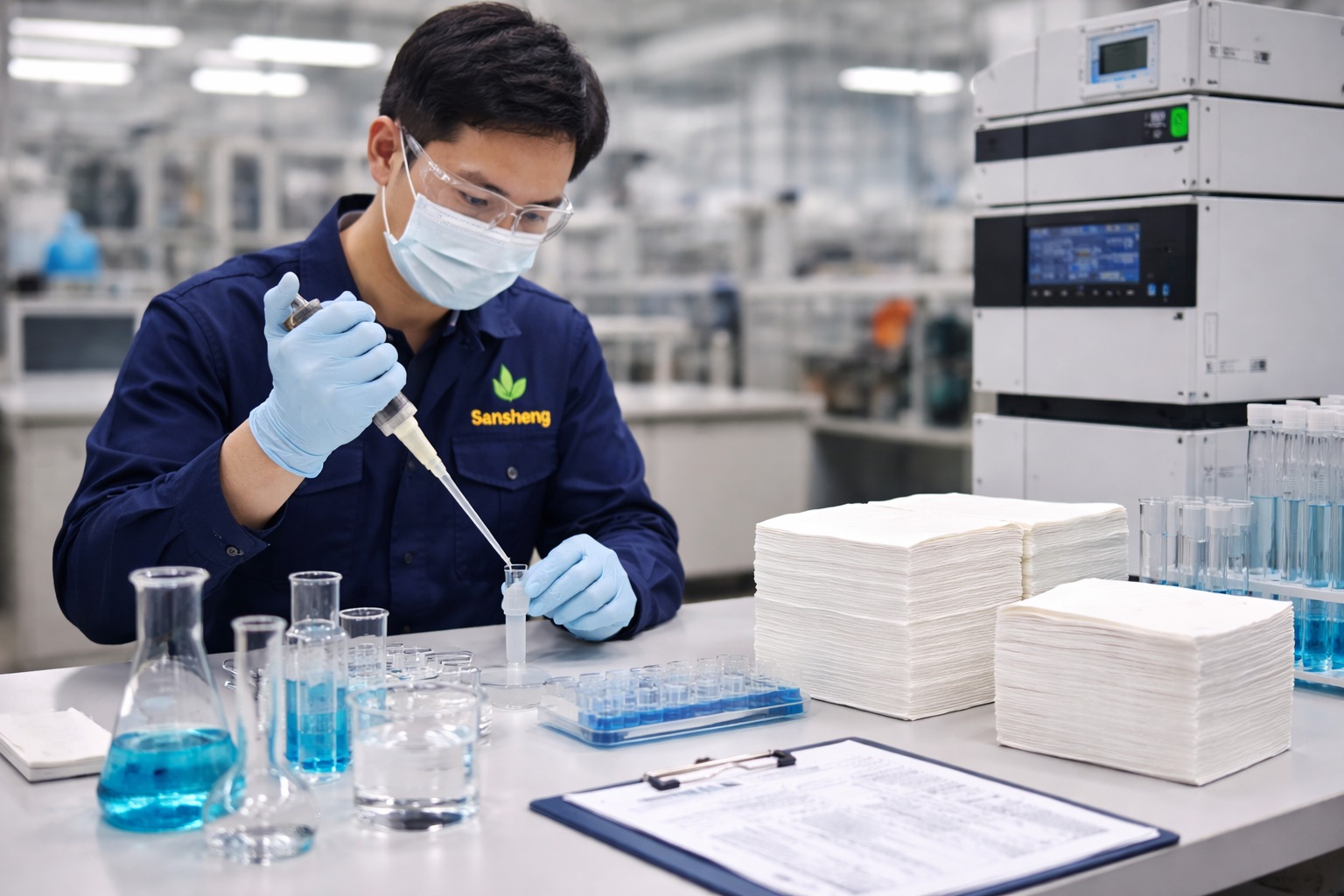
The EU did not set a single PFAS number. Instead, Regulation (EU) 2025/40 establishes three separate measurement tiers, each catching a different type of contamination. Understanding the difference is critical for every paper napkin supplier and importer because a product can pass one tier while failing another.
Tier 1: Single PFAS Substance — 25 ppb
This is the strictest limit. It targets individual PFAS compounds such as PFOA, PFOS, or GenX. If any single identifiable PFAS substance exceeds 25 parts per billion, the product fails. This tier catches intentional use of specific PFAS chemicals in grease-proofing treatments.
Tier 2: Total Measurable PFAS — 250 ppb
Even if no single compound exceeds 25 ppb, the combined total of all identifiable PFAS substances must stay below 250 ppb. This catches products treated with PFAS cocktails where individual concentrations are low but cumulative exposure is significant.
Tier 3: Total Fluorine — 50 ppm (50 mg/kg)
This is the broadest net. Total fluorine testing does not identify individual PFAS compounds — it measures all organofluorine content in the material. This catches PFAS precursors, degradation products, and unknown PFAS variants that targeted testing misses. At 50 ppm (50 mg/kg), this threshold is the easiest to pass numerically but the hardest to game because it covers everything fluorine-based.
| Tier | What It Measures | Limit | Testing Method | Risk for Paper Napkin Suppliers |
|---|---|---|---|---|
| Tier 1: Single PFAS | Each individual PFAS compound | 25 ppb | LC-MS/MS targeted analysis | High if supplier uses PFAS-based grease-proofing |
| Tier 2: Total PFAS | Sum of all identifiable PFAS | 250 ppb | LC-MS/MS with extended analyte list | Medium — catches mixed PFAS treatments |
| Tier 3: Total Fluorine | All organofluorine (known + unknown PFAS) | 50 ppm (50 mg/kg) | CIC (combustion ion chromatography) | Low for virgin pulp napkins; high for recycled or treated paper |
| All three tiers must be passed simultaneously. Failing any single tier = non-compliant. | ||||
Regulation Timeline: EU, US States, and What Comes Next
The EU is not acting alone. PFAS restrictions on food-contact materials are accelerating across multiple jurisdictions, and any paper napkin supplier serving Western markets needs to track all of them simultaneously.
| Jurisdiction | Regulation | Effective Date | Scope | Status |
|---|---|---|---|---|
| European Union | PPWR Regulation (EU) 2025/40 | August 12, 2026 | All food-contact paper/board packaging | Enacted — no transition period |
| Maine, USA | LD 1503 | May 25, 2026 | All food packaging with intentionally added PFAS | Enacted |
| Oregon, USA | SB 543 | January 1, 2025 | Food packaging | Already in force |
| Rhode Island, USA | H 7438 | January 1, 2025 | Food packaging | Already in force |
| California, USA | AB 1200 + DTSC SCP | Phased 2023-2026 | Food packaging with total fluorine >100 ppm | Enforcement active |
| Washington, USA | HB 2658 | January 2025 (phased) | Food packaging | In force |
Key Takeaway for Importers
The EU regulation has no grandfather clause. Napkins sitting in your warehouse manufactured in June 2026 are non-compliant if first sold in the EU after August 12. Your paper napkin supplier must provide batch-level test reports dated within the compliance window, not just a generic certificate from last year.
PFAS Treatment vs. Bio-Based Alternatives: Cost Comparison
Some suppliers apply PFAS-based grease barriers to napkins used in food service (wrapping fried foods, lining baskets). With PFAS banned, they face a choice: switch to bio-based grease barriers or eliminate the treatment entirely. Here is the cost reality.
| Approach | Cost per m² | PFAS Compliant? | Performance | Practical for Napkins? |
|---|---|---|---|---|
| PFAS fluoropolymer coating | $0.00012 | No — banned | Excellent grease resistance | No longer viable for EU/US markets |
| Bio-based alternatives (wax, PLA, starch) | $0.015 – $0.98 | Yes | Moderate — varies by chemistry | Only needed for grease-barrier napkins |
| No treatment (virgin wood pulp) | $0.00 | Yes — naturally PFAS-free | Standard absorbency, no grease barrier | Ideal for standard napkins (beverage, lunch, dinner) |
The cost gap is staggering: bio-based alternatives cost 125x to 8,167x more per square meter than the now-banned PFAS treatment. For standard paper napkins that do not require grease resistance — which covers the vast majority of restaurant, hotel, and catering napkins — the best strategy is to source from a paper napkin supplier using untreated virgin wood pulp. No treatment means no PFAS risk, no added cost, and no compliance headaches.
How to Audit Your Paper Napkin Supplier for PFAS Compliance
Not every supplier claiming “PFAS-free” can back it up with data. In March 2026, independent testing of 16 baking paper samples from Chinese manufacturers found that 14 out of 16 had detectable PFAS traces — even though several sellers marketed their products as safe for food contact. Paper napkins face the same risk, especially those made with recycled fiber or treated with wet-strength resins.
Here is a practical audit checklist for importers:
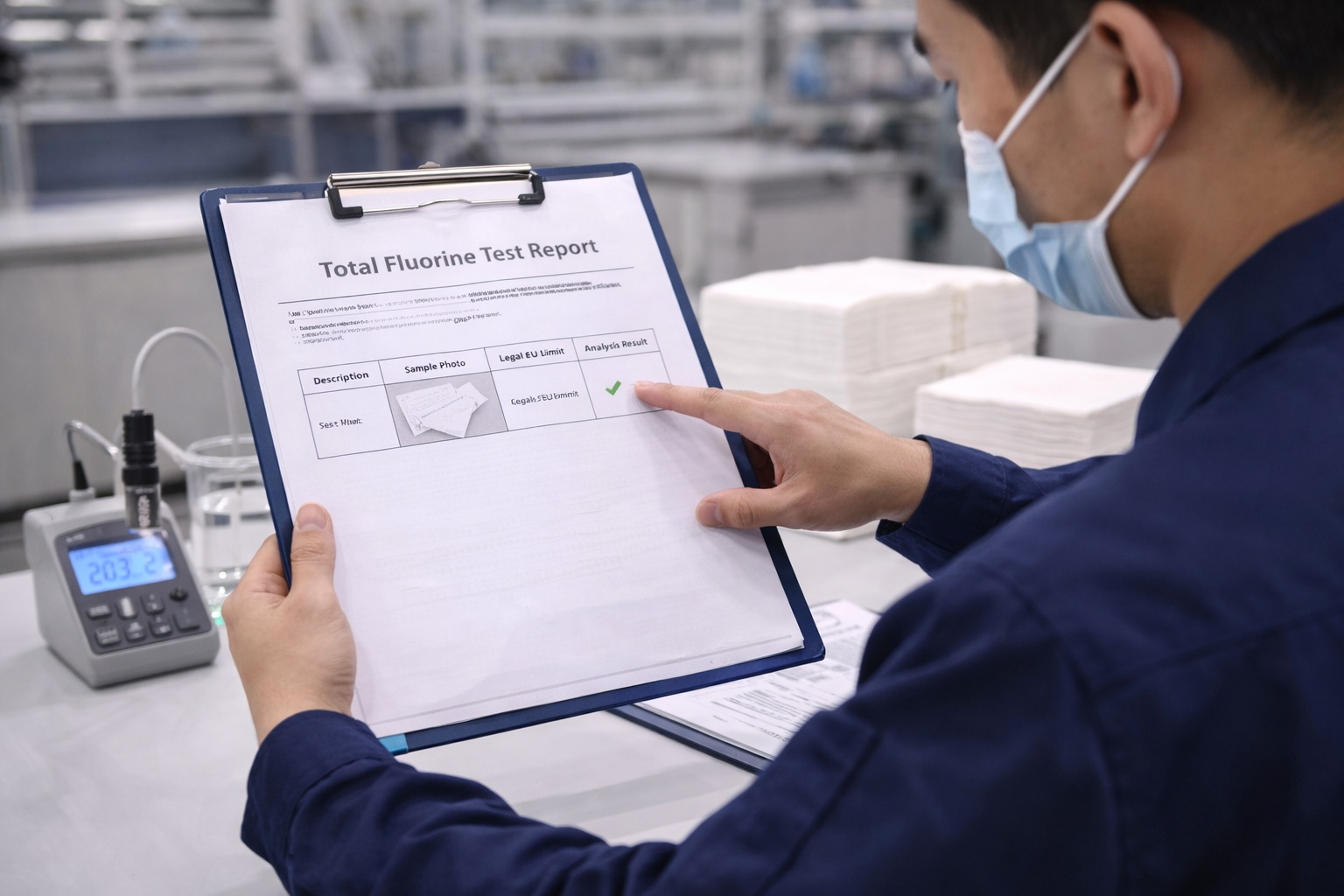
- Request a total fluorine test report (CIC method) — not just a targeted PFAS panel. Total fluorine catches what targeted tests miss. The result must be below 50 ppm.
- Verify the testing lab is ISO 17025 accredited — unaccredited lab reports may not satisfy EU market surveillance authorities.
- Ask for the raw material declaration — 100% virgin wood pulp napkins have near-zero PFAS risk. Recycled fiber or mixed-source pulp carries cross-contamination risk from PFAS-treated paper in the recycling stream.
- Check for wet-strength additives — some wet-strength resins contain fluorine compounds. Ask your supplier to declare all chemical additives used in production.
- Demand batch-level certificates, not generic annual reports — PFAS contamination can vary between production runs. Each shipment should have a corresponding test report.
- Confirm the supplier understands the three-tier system — if they only reference one threshold number, they may not be testing comprehensively.
From Our Factory Floor
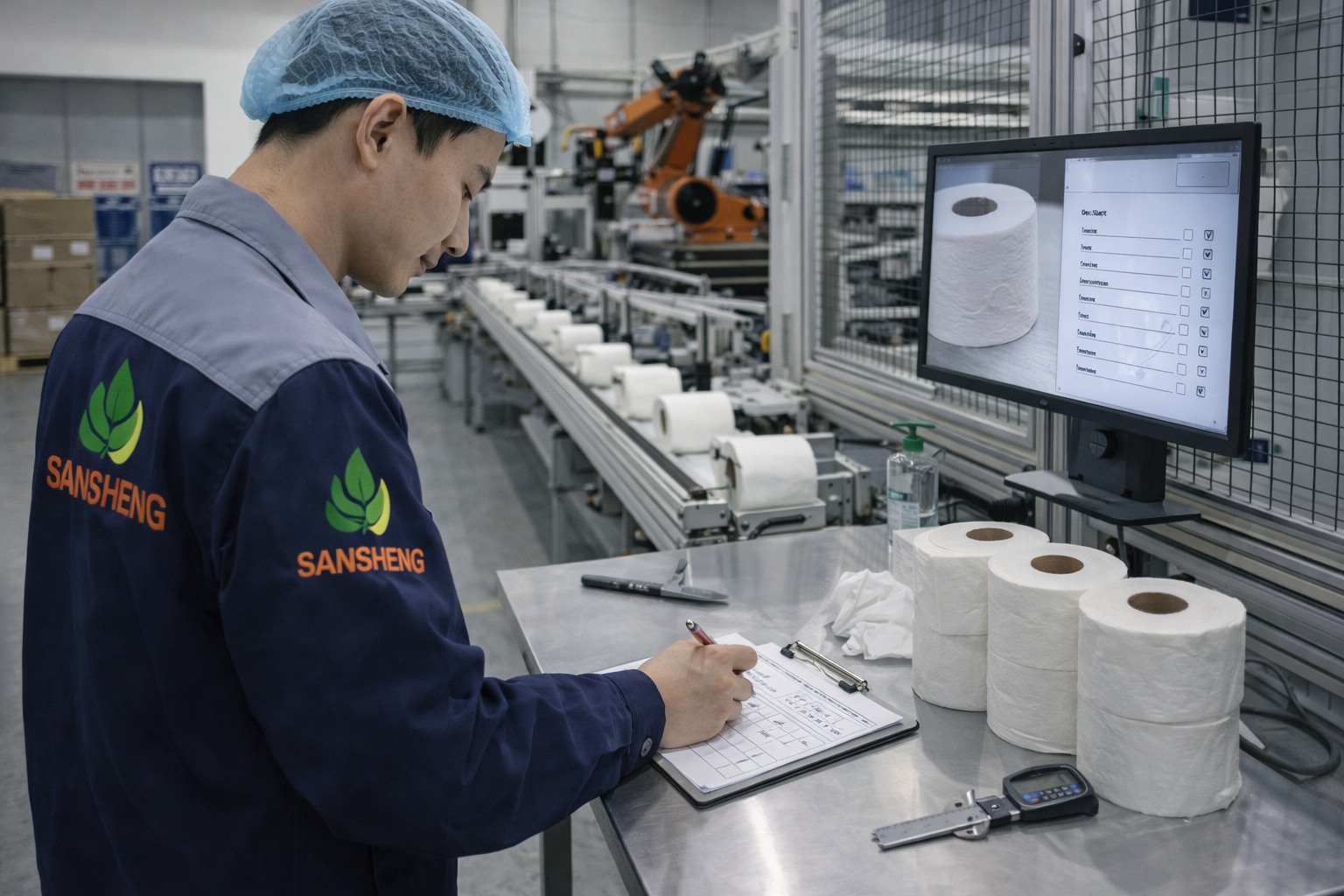
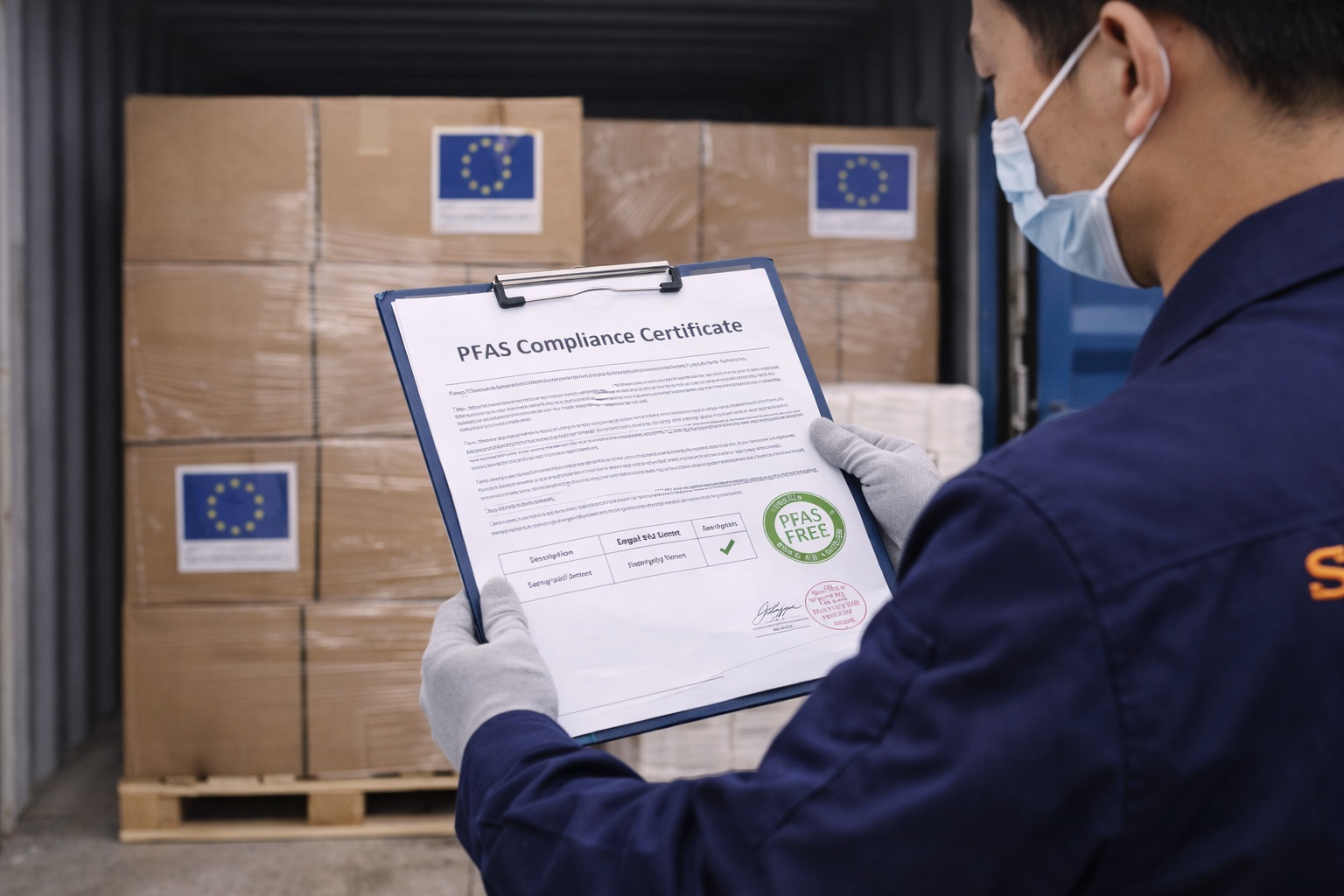
Real case: We proactively tested our napkin products for total fluorine content in Q4 2025. Result: below detection limit (<10 ppm), well under the 50 ppm EU threshold. We now include a PFAS compliance certificate with every European shipment — before our clients even ask for it.
What we learned: Most importers did not start asking about PFAS certificates until early 2026. By testing six months ahead of the deadline and building compliance documentation into our standard export package, we eliminated a friction point that competitors are still scrambling to address. If your current paper napkin supplier cannot produce a total fluorine test report within 48 hours of your request, that tells you something about their readiness.
Why Virgin Wood Pulp Napkins Pass Without Treatment
PFAS enters paper products through two pathways: intentional application (grease-proofing coatings) and cross-contamination (recycled fiber from PFAS-treated paper). Sansheng Paper eliminates both pathways by manufacturing napkins from 100% virgin wood pulp with no fluorine-based additives at any stage of production.
Virgin wood pulp is inherently PFAS-free because:
- No recycled fiber — eliminates cross-contamination from PFAS-treated packaging entering the recycling stream
- No fluoropolymer coatings — standard napkins do not require grease barriers, so no PFAS treatment is applied
- Controlled chemical inputs — every additive (softener, wet-strength agent, dye) is declared and fluorine-free
- Traceable supply chain — pulp sourced from certified forestry operations with full chain-of-custody documentation
This is not a workaround or a marketing claim. It is a material science fact: wood cellulose fibers do not contain fluorine. When you start with clean raw material and add no fluorine compounds during manufacturing, the finished product tests clean. Our Q4 2025 total fluorine result of <10 ppm — five times below the EU limit — confirms this.
For importers, this means sourcing from a virgin-pulp paper napkin supplier is the simplest path to PFAS compliance. No reformulation needed. No new testing protocols. No supply chain disruption.
Quick Reference: PFAS Risk by Raw Material
- 100% virgin wood pulp: Lowest risk — naturally PFAS-free if no fluorine additives used
- Bamboo pulp (virgin): Low risk — same logic as virgin wood, but verify additive declarations
- Recycled fiber: Elevated risk — PFAS from treated packaging can persist through recycling
- Mixed/unknown pulp sources: Highest risk — no traceability, no guarantees
FAQ: PFAS Compliance for Napkin Importers
How do I verify that my paper napkin supplier is truly PFAS-free?
Request a total fluorine test report using CIC (combustion ion chromatography) from an ISO 17025 accredited lab. The result must be below 50 ppm for total fluorine, below 250 ppb for total measurable PFAS, and below 25 ppb for any single PFAS compound. Do not accept a supplier’s verbal assurance — ask for the lab certificate with batch numbers matching your order.
How do I know if my existing napkin inventory complies with the EU regulation?
The regulation has no transition period. If napkins are first placed on the EU market after August 12, 2026, they must comply regardless of manufacturing date. You can submit samples from existing inventory to an accredited lab for total fluorine testing. Budget 5-10 business days for results. If they fail, those napkins cannot legally enter the EU market after the deadline.
What is the difference between total fluorine testing and targeted PFAS testing?
Targeted PFAS testing (LC-MS/MS) identifies and quantifies specific known PFAS compounds — typically 20-40 substances. Total fluorine testing (CIC) measures all fluorine-containing organic compounds, including unknown PFAS, precursors, and degradation products. The EU regulation requires compliance with all three tiers, so you need both types of testing. Total fluorine is the more comprehensive safety net.
How do I handle PFAS compliance if I import napkins for both EU and US markets?
The EU 50 ppm total fluorine limit is stricter than California’s 100 ppm threshold. If your napkins pass EU Tier 3 (50 ppm), they automatically comply with California’s standard. For Maine (effective May 25, 2026) and Oregon/Rhode Island (already in force since January 2025), the key requirement is no intentionally added PFAS. Source from a virgin-pulp paper napkin supplier and one set of test reports covers all jurisdictions.
How do I request PFAS documentation from Chinese suppliers who may not be familiar with EU regulations?
Send your supplier the exact three-tier limits (25 ppb / 250 ppb / 50 ppm) and reference Regulation (EU) 2025/40 on EUR-Lex. Ask them to arrange testing at SGS, Bureau Veritas, Intertek, or TUV — these labs have China offices familiar with EU food-contact requirements. If the supplier cannot produce test results within two weeks, consider it a red flag.
What happens if my napkins fail PFAS testing at the EU border?
Non-compliant products face rejection and return at the importer’s cost, potential RAPEX alerts naming your company, and possible fines under national enforcement of the PPWR. More damaging long-term: a RAPEX notification is public and searchable, which can harm your reputation with retail buyers who monitor the database. Prevention through supplier auditing is far cheaper than remediation.
How do I compare the cost of switching suppliers versus treating existing inventory?
You cannot “treat” existing PFAS-contaminated napkins to make them compliant — there is no removal process for PFAS already embedded in paper fiber. Your only options are: (1) sell non-compliant inventory in markets without PFAS restrictions before the deadline, or (2) switch to a compliant paper napkin supplier for all future EU-bound orders. Switching is a one-time sourcing decision; the ongoing cost difference for virgin-pulp napkins versus treated alternatives is negligible.
How do I future-proof my supply chain against tightening PFAS regulations?
Choose a supplier using 100% virgin wood pulp with no fluorine-based additives. This approach is inherently compliant with current EU, US state, and anticipated future regulations because there is nothing to restrict — the product never contained PFAS. As Food Safety Magazine has reported, regulatory momentum is firmly toward stricter limits and broader scope, making the elimination approach more economical than chasing evolving thresholds.
Summary: Your PFAS Compliance Checklist
Whether you source paper napkins, paper towels, or airlaid napkins, the same PFAS compliance framework applies to all food-contact tissue products shipped to the EU.
The August 12, 2026 deadline is less than five months away. Here is what every European importer sourcing paper napkins from China should do now:
- Confirm your supplier’s raw material — 100% virgin wood pulp is the cleanest path to compliance
- Request three-tier test reports — single PFAS <25 ppb, total PFAS <250 ppb, total fluorine <50 ppm
- Verify lab accreditation — ISO 17025, preferably from an internationally recognized body (SGS, BV, Intertek, TUV)
- Audit existing inventory — anything unsold after August 12 must comply or be diverted to non-EU markets
- Build PFAS documentation into your purchase contracts — make compliance certificates a standard delivery requirement
- Track US state regulations in parallel — Maine (May 2026), California, Oregon, Rhode Island all have active or imminent bans
Choosing the right paper napkin supplier is the single decision that eliminates the entire PFAS compliance burden. A supplier using virgin wood pulp, proactive testing, and pre-packaged compliance documentation turns a regulatory headache into a non-issue.
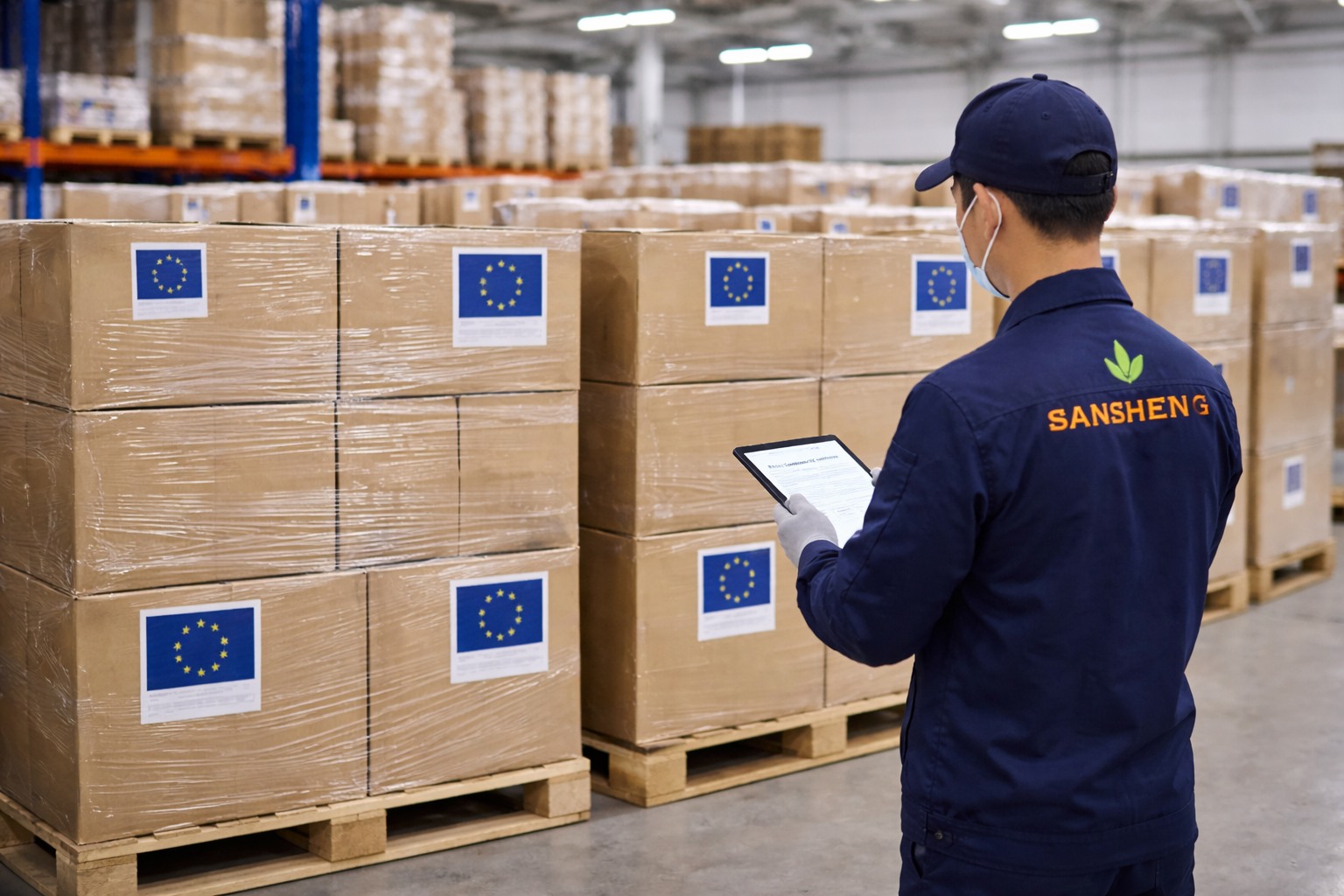
Need a PFAS-Compliant Paper Napkin Supplier?
Tell us your market, napkin specs, and volume — we reply within 24 hours with MOQ, FOB price, and PFAS compliance documentation.
Tell us these 5 points to get a faster quote:
- Your country and target market
- Napkin type and size (beverage/lunch/dinner)
- Your name
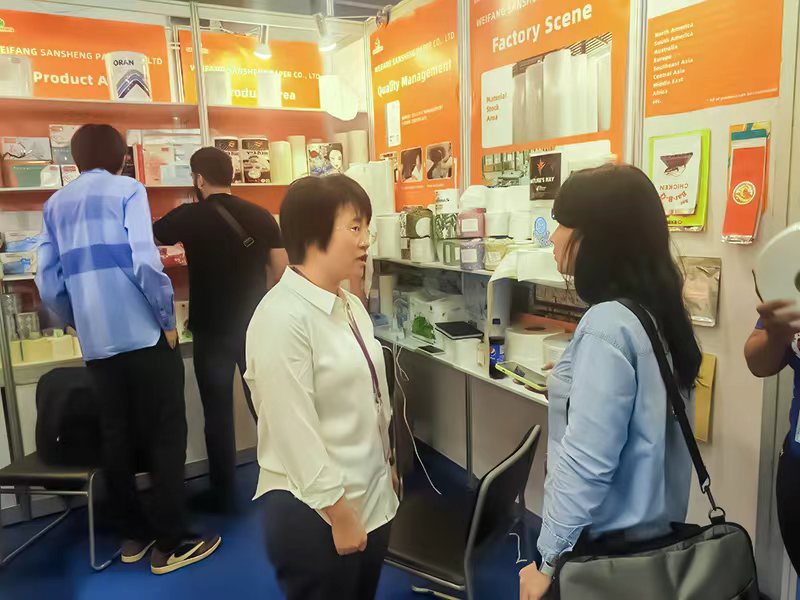
Sales Manager at Sansheng Paper · 20+ years in tissue paper OEM & bulk export · LinkedIn