B2B procurement · Specification review
Compare lint results only after the facial tissue supplier and buyer agree on the specimen, release action, collection method and reporting basis. A dark-surface photograph, collected mass and particle count answer different questions. Use a matched reference and repeatable procedure before setting an acceptance limit.
For importers and private-label teams investigating visible dust from boxed or soft-pack facial tissue. This guide proposes a procurement review; it does not establish a health limit, a validated laboratory method or a lint-free claim.
Send your current specification, sample identity and the unresolved purchasing question.
Reusable procurement data
Facial Tissue Supplier: Start with the complaint, not the number
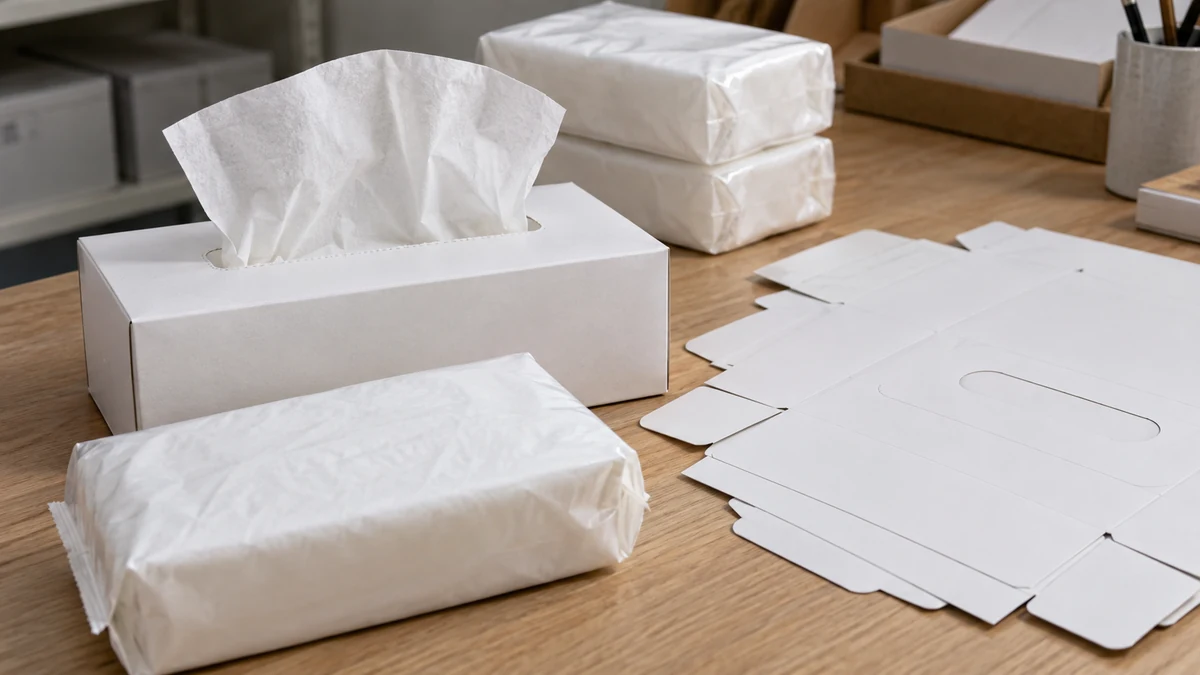
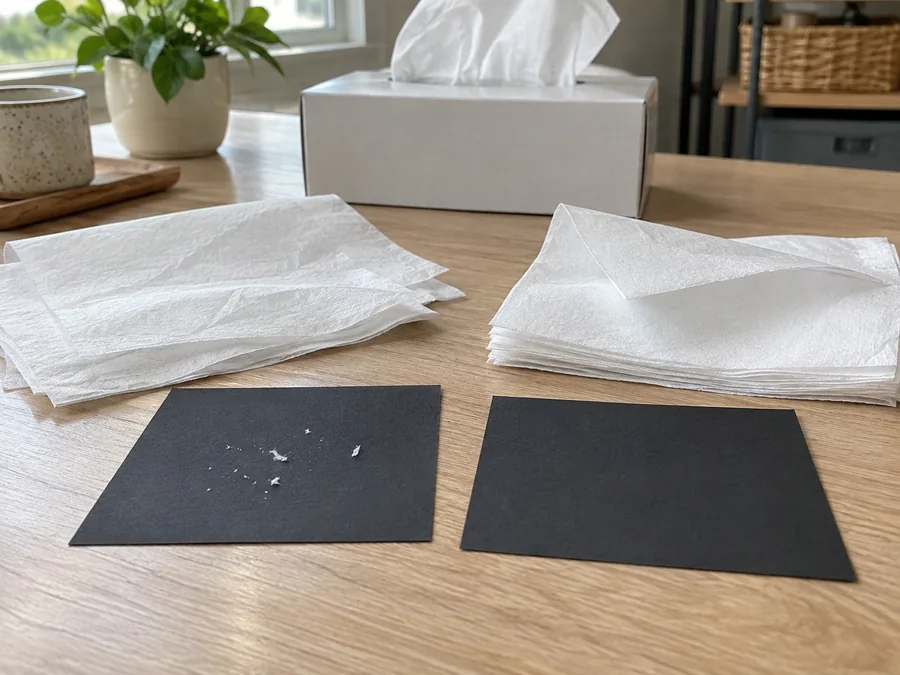
Ask where the customer sees particles: inside an unopened pack, around the dispensing opening, on a dark counter or after rubbing a sheet. Keep the original pack and an unopened pack from the same lot. Record product revision, pack position, photographs and the handling that preceded the observation. Do not shake every sample before the investigation; that changes the evidence.
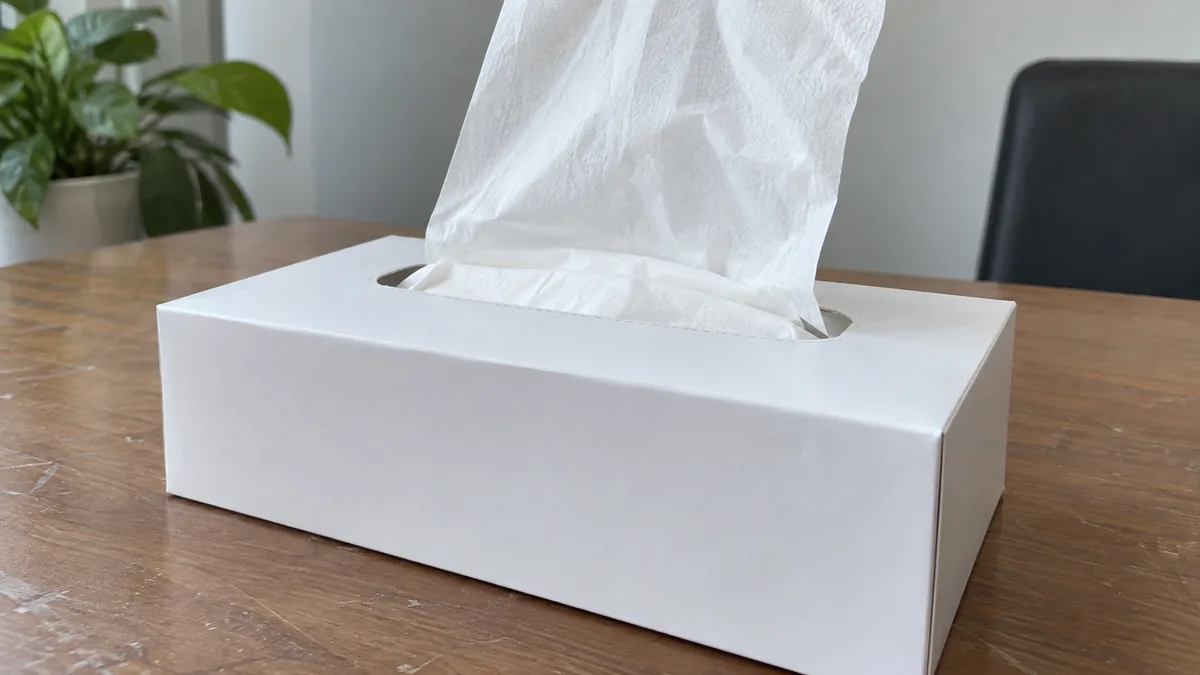
The facial tissue supplier needs to distinguish loose material already inside a package from particles released during dispensing or rubbing. A complaint about the box opening may involve carton fibers, tissue fibers or both. Visual appearance alone cannot establish particle composition. Separate the packaging question from the paper question before commissioning analysis.
Which test results can actually be compared?
Write down the action applied to each specimen. Specify the number of sheets, exposed area, rubbing surface or dispensing sequence, applied load where relevant, repetitions and sample conditioning. Also record background cleaning, blank controls and how particles are recovered. A different brush, collection surface or weighing basis can change the result without a change in product.
A facial tissue supplier report expressed as mass per tested area cannot be ranked directly against a particle count per sheet. Photographs need controlled lighting, distance, background and exposure. Ask the laboratory to explain detection limits and uncertainty when these affect the decision. Retain individual observations rather than only a rounded average.
The title of ISO 12625-6 identifies a grammage method. A reference to that standard does not, by itself, substantiate a lint result. Require the actual lint procedure and its scope instead of accepting a familiar standard number as proof.
Use packaging controls to locate the problem
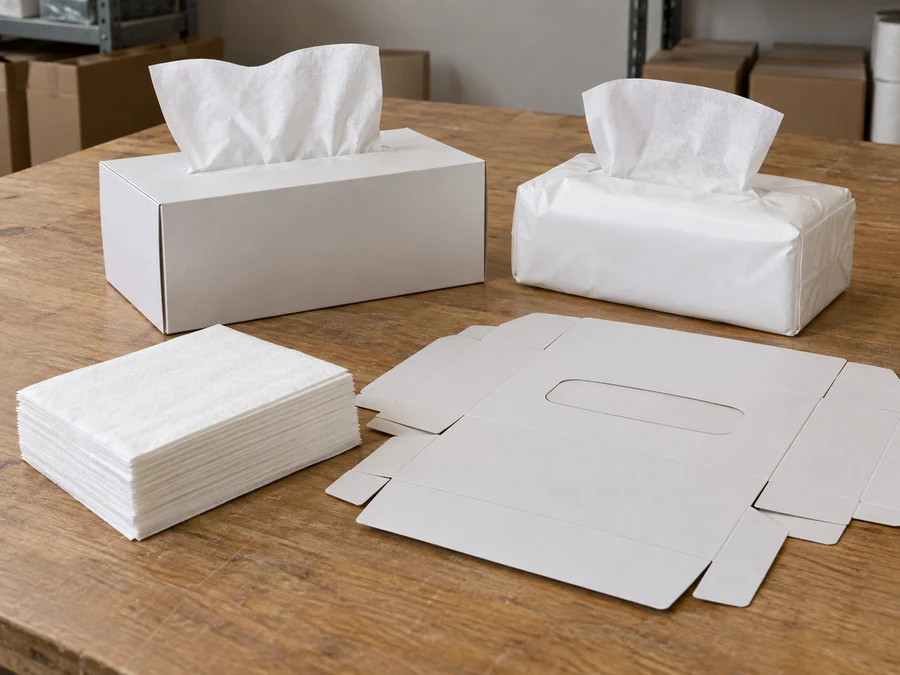
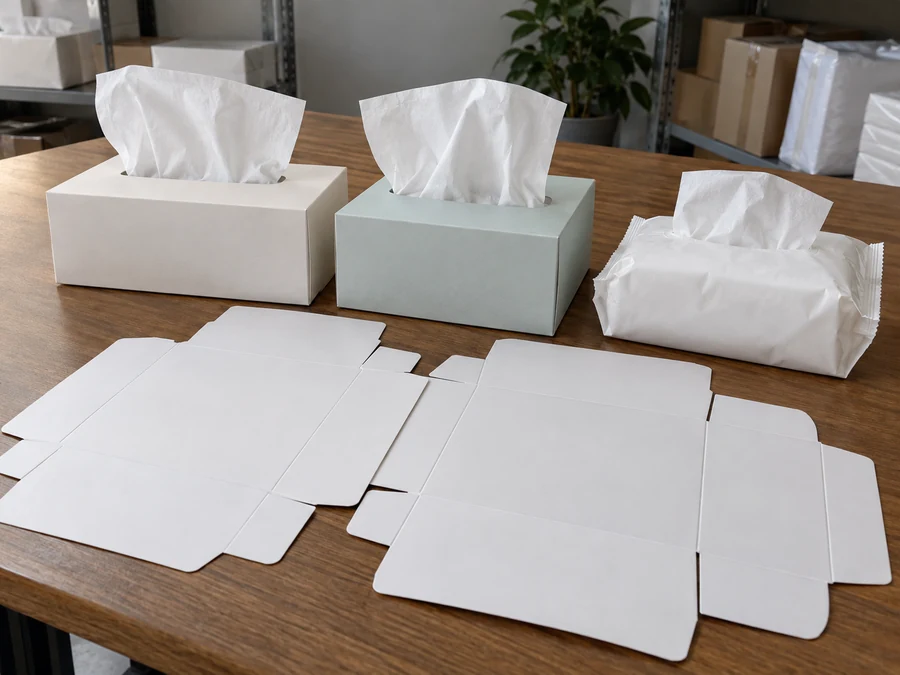
Compare sheets removed carefully from a pack with sheets dispensed through the normal opening. Keep the tissue construction, lot and handling consistent. Where practical, examine an empty packaging control separately. Ask whether a change in cut edge, opening film, compression or pack assembly coincided with the complaint.
This is an investigation design, not a prescribed pass/fail test. The facial tissue supplier and buyer should agree which variables remain fixed and who records each observation. If an opening modification improves dispensing, repeat the check using the approved production pack before changing the specification. A hand-cut mock-up cannot establish production consistency.
Set a limit that the method can support
Approve a reference sample and a written procedure together. Define the sample plan, reporting units, acceptable variation, investigation trigger and decision owner before looking at the disputed result. Avoid borrowing a numerical limit from another product or a test with different collection efficiency.
For a facial tissue supplier, a repeatable comparison is more useful than an unsupported claim of zero lint. If the measured difference is close to the method’s uncertainty, request a technical explanation before rejecting a lot. ILAC G8 explains the role of decision rules in statements of conformity; it does not set a tissue-specific lint limit.
A comparison record for purchasing
| Record | What to request | Buyer purpose |
|---|---|---|
| Complaint location | Same-lot unopened and used packs | Separates reported use from sample handling |
| Procedure | Release action, collection and background control | Makes repeat results interpretable |
| Result basis | Units, specimen area or sheet count | Prevents unlike numerical comparisons |
| Decision | Reference, limit and investigation trigger | Connects findings with lot disposition |
What belongs in the review request?
- Send the SKU, ply, sheet dimensions, pack type and current packaging revision.
- Describe the complaint and provide lot-linked unopened samples plus the accepted reference.
- Ask the facial tissue supplier to identify the lint procedure, reporting basis and any method changes.
- Agree who may release, hold or replace material after the technical review.
For related specification planning, review the associated Sansheng supply program. Keep the proposed product and evidence scope separate from any approval still outstanding.
Questions buyers also ask
Does a softer sheet necessarily shed more lint?
Do not infer a result from hand feel. Compare the actual constructions under the same agreed procedure and intended dispensing conditions.
Can a photograph replace a laboratory report?
A controlled photograph can document visible debris. It cannot establish particle mass, composition or a health conclusion that was not measured.
Sources and scope notes
- ISO 12625-6:2016 Supports: Identifies grammage as the scope of this tissue-paper method. Limit: Does not provide a lint test or a product approval.
- ILAC G8 guidance Supports: Explains decision rules when laboratories state conformity. Limit: Does not prescribe a facial-tissue lint threshold.
Source scopes checked September 22, 2026. Illustrations do not document an actual Sansheng test, facility or customer shipment.
Request a Facial Tissue Supplier Review
Send the sample identity, packaging revision, existing procedure and complaint record to discuss a facial tissue supplier investigation plan. Ask for a quotation only after the evidence and acceptance basis are clear.
Sales Manager at Sansheng Paper · 20+ years in tissue paper OEM & bulk export · LinkedIn