How to Find a Reliable Facial Tissue Supplier: 7 Red Flags Importers Often Miss
Your first container looked fine. The second had softness issues. By the third, your buyer stopped reordering. Sound familiar?
For importers, distributors, and private label brands sourcing box tissue or pocket tissue from overseas, finding a Facial Tissue Supplier is easy. Finding a reliable one is not. Many problems only appear after the first shipment lands: inconsistent GSM, packaging that collapses in transit, or a supplier who disappears after receiving your deposit.
This guide covers 7 specific red flags that experienced tissue importers watch for when evaluating a new Facial Tissue Manufacturer. If you can spot these early, you avoid costly mistakes later.
Why Choosing the Wrong Facial Tissue Supplier Costs More Than You Think
A bad facial tissue supplier does not just deliver bad tissue. The real cost shows up across your entire business:
- Customer complaints — inconsistent softness or rough texture drives end-user returns
- Packaging damage — boxes that crush during ocean freight make your brand look cheap on the shelf
- Reorder delays — a supplier who cannot repeat the same specs wastes 4-8 weeks of your sales cycle
- Hidden costs — rework, disposal, and replacement shipments often exceed the “savings” from a lower unit price
- Lost retail accounts — one bad batch delivered to a supermarket buyer can end a listing that took months to win
This is why experienced importers do not choose a Facial Tissue Supplier based on price alone. They evaluate production stability, communication quality, and packaging capability before the first container ships.
7 Red Flags When Evaluating a Facial Tissue Manufacturer
Red Flag 1: They Cannot Tell You Their Actual GSM Range
A professional Facial Tissue Manufacturer should immediately tell you their standard GSM options. For facial tissue, the common range is 12–15.5 gsm per ply (colored tissue typically runs at 17 gsm). If a supplier says “we can do any GSM” without explaining what their machines actually produce, they are either a trading company or they do not control their own production.
What to ask: “What is your standard GSM range for 2-ply and 3-ply facial tissue? What is the tolerance per batch?”
Red Flag 2: They Show Perfect Samples But Cannot Explain Consistency
Every supplier’s sample looks good. But what happens on the 20th container? Ask how they ensure consistency between shipments. A reliable supplier will talk about incoming pulp inspection, machine tension control, GSM spot-checks during production, and final QC before packing. A risky supplier will just say “don’t worry, quality is good.”
What to ask: “Can you show me QC records or inspection photos from your last 3 shipments to another buyer?”
Red Flag 3: They Avoid Talking About Packaging Details
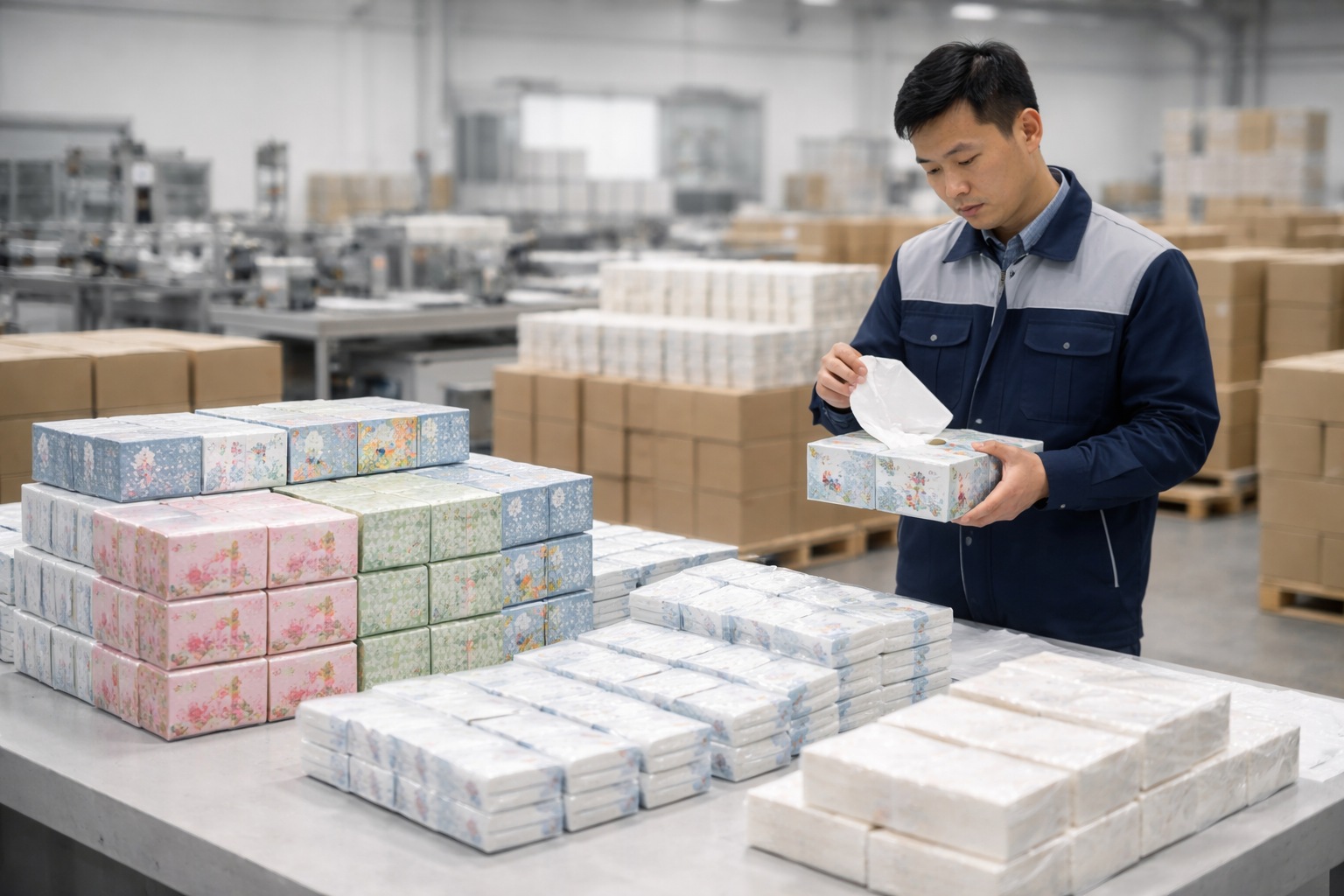
For box tissue, packaging is not a small detail — it directly affects shelf presentation, transit survival, and your brand perception. Key packaging questions include: grey cardboard vs white cardboard, box height tolerance (should leave 0.5–1 cm space above the tissue stack), automatic vs manual packing limits (automatic lines handle 4.5–8 cm box height; above 10 cm requires manual packing), and surface finish options (water-based varnish, film lamination, UV coating, embossing — each adds cost).
A Facial Tissue Supplier who brushes off packaging questions probably does not have their own box production or converting line.
What to ask: “Do you produce your own boxes? What is your box height range for automatic packing?”
Red Flag 4: Their MOQ Sounds Too Flexible
“We can do any quantity” is not a sign of flexibility — it is a sign that a supplier will subcontract your order to whoever is cheapest at that moment. A real Facial Tissue Manufacturer has production line constraints. A typical MOQ for facial tissue is 1×40HQ per SKU (mixed loading possible across SKUs). If a supplier offers 500 boxes with custom printing and no setup fee, ask yourself who is actually making it.
What to ask: “What is your minimum order per design? Is there a plate fee for custom box printing?”
Red Flag 5: They Quote in 24 Hours Without Asking Enough Questions
A fast quote feels efficient. But if a supplier sends you a price within hours without asking about your tissue size, ply, GSM preference, box design, packing configuration, or destination port, that quote is not real. It is a hook. The real price will change after you commit.
A serious supplier will ask at least: tissue dimensions (width × cut length), ply and GSM, sheets per box, boxes per carton, box material and printing requirements, and destination port for freight estimation.
What to ask: Nothing — just observe. If they quote without questions, that is the red flag itself.
Red Flag 6: They Have No Experience With Your Target Market
Facial tissue specs vary significantly by market. Japanese and Korean buyers prefer soft-pack tissue. The US market leans toward box tissue with specific dimensions. The Middle East often requires 2-ply with moderate softness. Europe increasingly demands FSC-certified or recycled pulp options. A supplier who has never exported to your region will make packaging, labeling, or compliance mistakes that cost you time and money.
What to ask: “Which countries have you exported facial tissue to in the past 12 months? Can you share a packing list from a recent shipment?”
Red Flag 7: Their Price Is Significantly Lower Than Everyone Else
If a Facial Tissue Supplier quotes 15-20% below the market, there is always a reason. Common shortcuts: using lower-grade pulp (recycled mixed in with virgin), reducing actual GSM below spec, thinner box cardboard that collapses during shipping, or skipping inner poly bag wrapping.
The cheapest tissue is often the most expensive tissue — after you account for complaints, returns, and lost customers.
What to ask: “Can you break down your pricing? What pulp grade do you use? Can I visit or video-call your production line?”
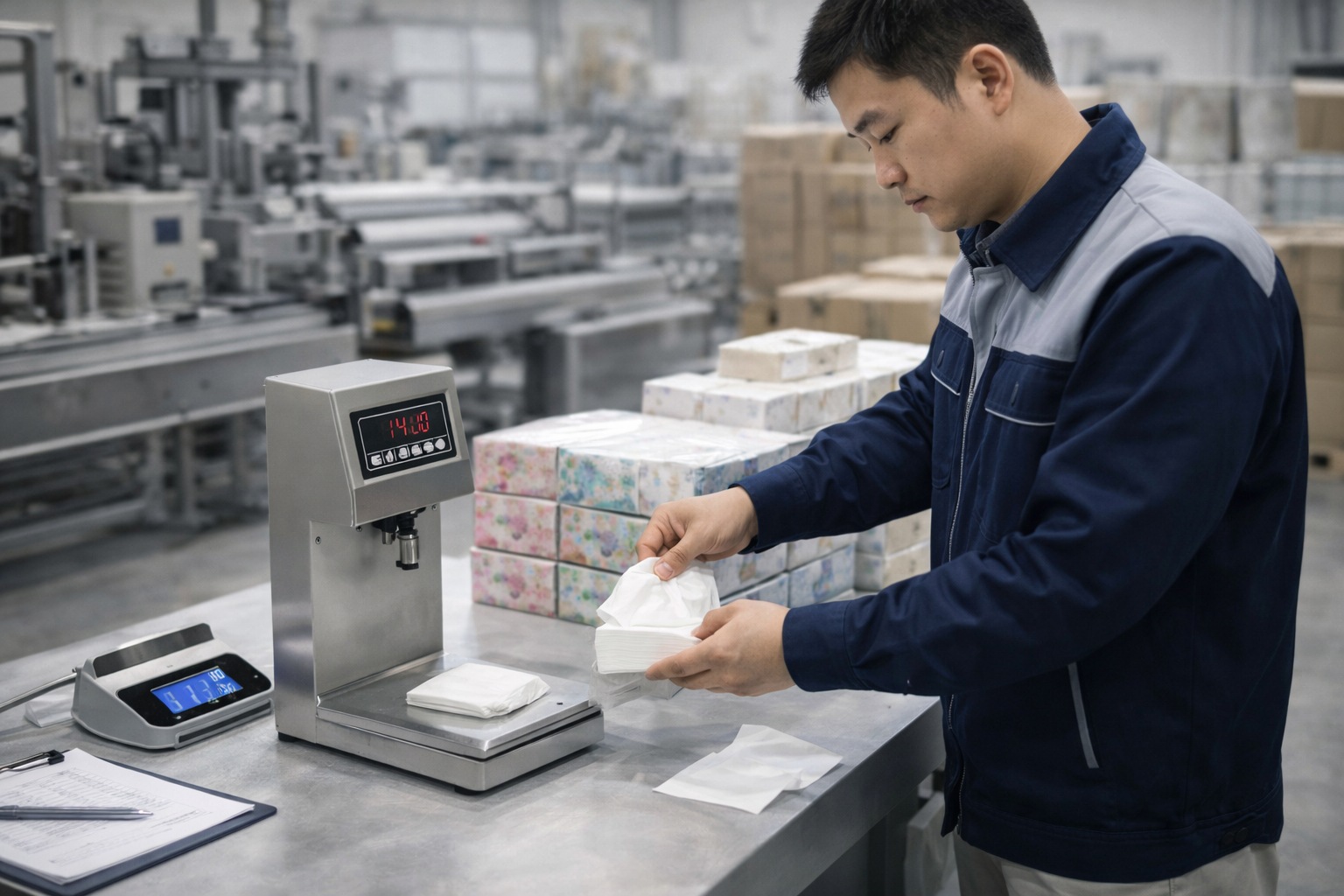
Quick Comparison: Reliable vs Risky Facial Tissue Supplier Signs
| Check Point | Reliable Supplier | Risky Supplier |
|---|---|---|
| GSM Knowledge | States exact range (e.g. 13–15 gsm/ply) with batch tolerance | Says “we can do any GSM you want” |
| Quality Proof | Shares QC photos, inspection records from past shipments | Only shows product samples, no process evidence |
| Packaging Discussion | Explains box material, height limits, printing options in detail | Says “we handle packaging, don’t worry” |
| MOQ Clarity | Gives specific MOQ per SKU, explains plate fees and setup costs | Accepts any quantity with no mention of minimums |
| Quoting Process | Asks 5-8 technical questions before quoting | Sends price in hours without asking specs |
| Market Experience | Names specific countries, shares packing lists or shipment records | Claims “30+ countries” with no specifics |
| Pricing | Competitive but explainable — can break down cost components | 15-20% below market with no clear explanation |
What to Check Before Placing Your First Order With a Facial Tissue Supplier
After filtering out obvious red flags, take these steps before committing to a first order:
- Request a pre-production sample — not a showroom sample, but one made on the same line that will produce your order. Compare the GSM, softness, and sheet count against what was quoted.
- Ask for a box mockup — confirm dimensions, cardboard weight, print color accuracy, and opening mechanism before mass production.
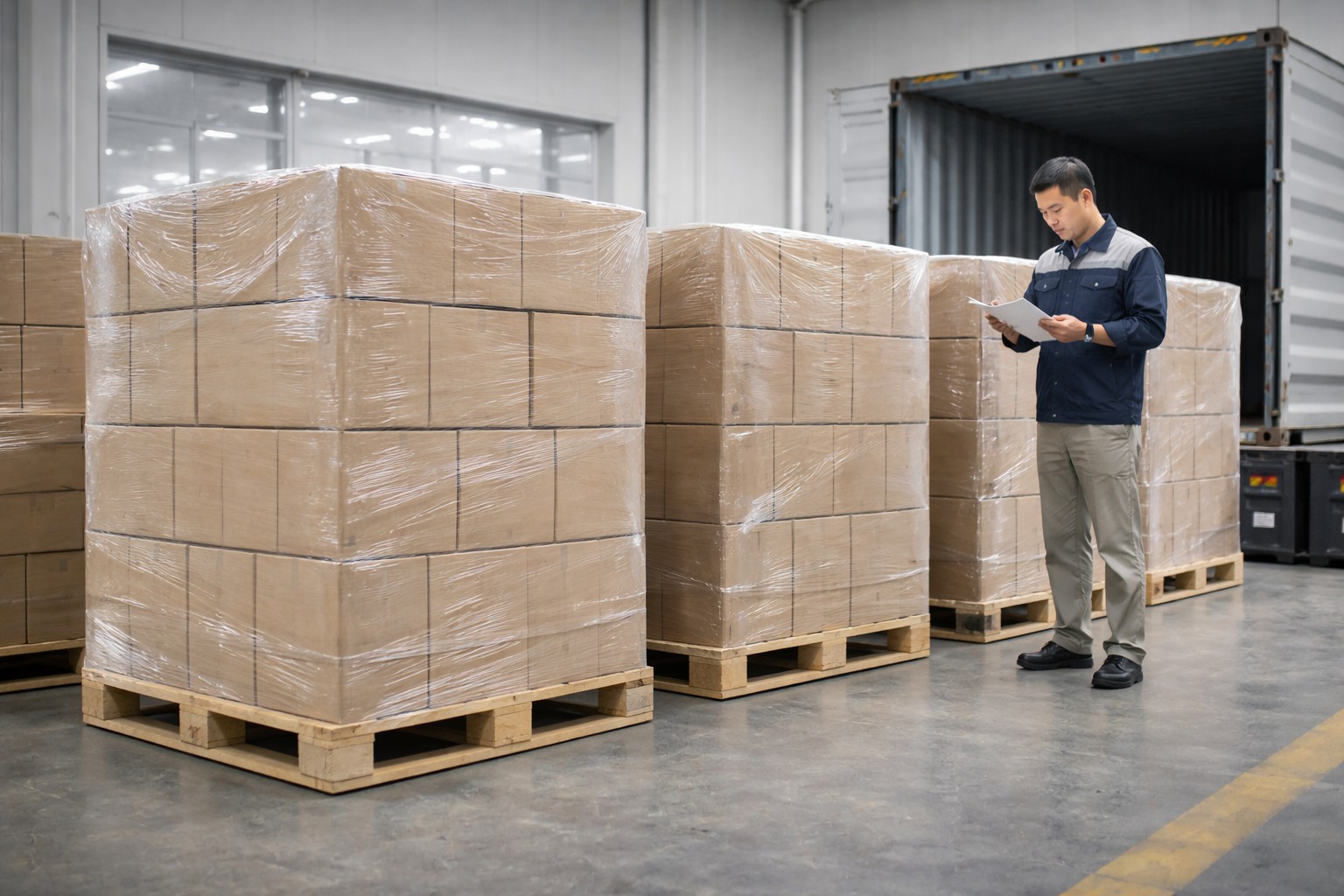
- Confirm the packing configuration — how many sheets per box, boxes per carton, cartons per pallet, pallets per 40HQ. Get this in writing.
- Discuss a loading plan — a professional Facial Tissue Wholesale supplier will provide a container loading diagram showing how cartons are stacked, whether palletized, and total quantity per container.
- Agree on QC checkpoints — at minimum: incoming pulp check, mid-production GSM sampling, final appearance + count check, and pre-loading carton condition photos.
- Clarify payment terms in writing — standard is 30% T/T deposit + 70% against QC photos before loading. Be cautious of any supplier requesting full payment upfront.
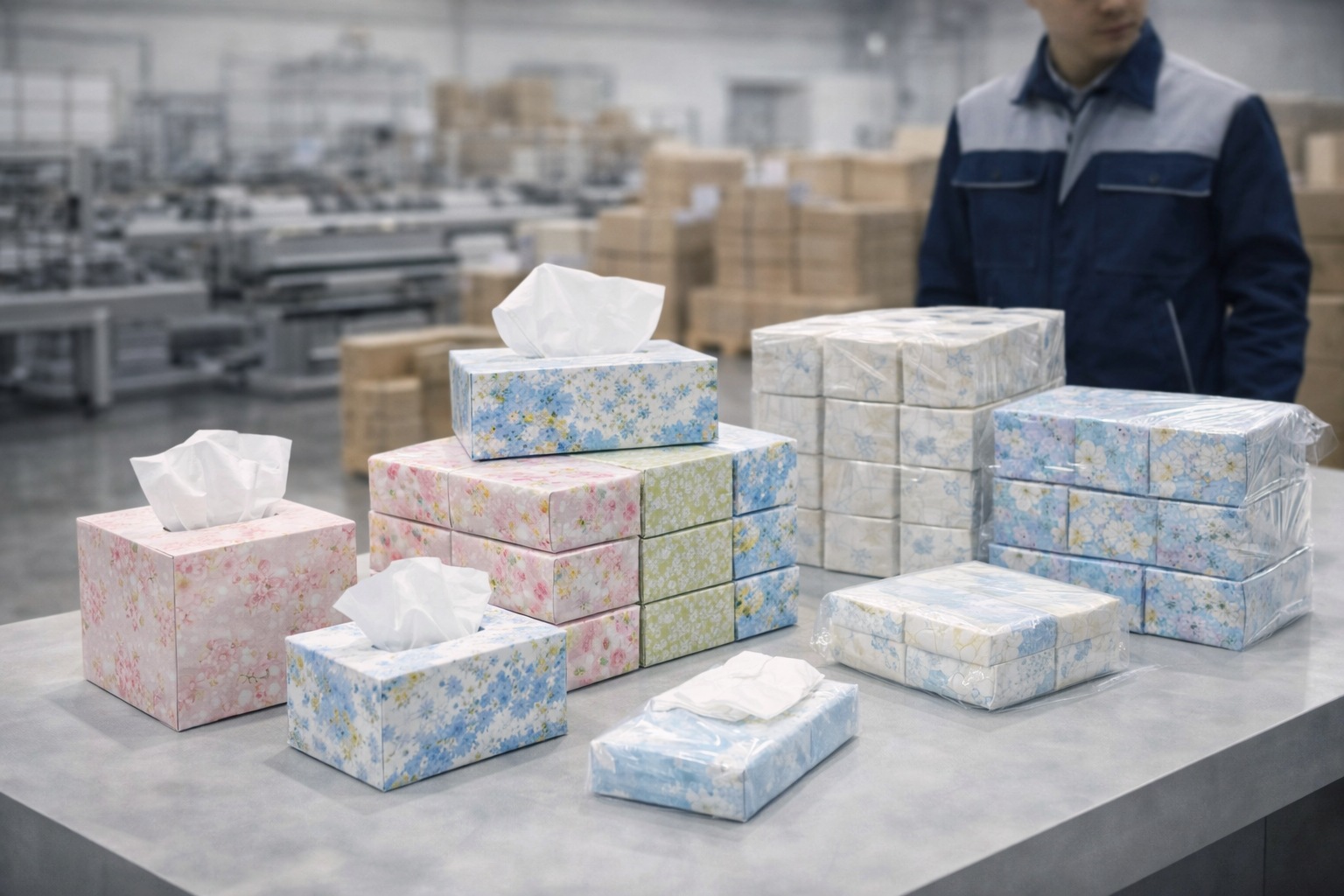
Facial Tissue Specs Importers Should Confirm With Their Supplier
| Specification | Common Range | Why It Matters |
|---|---|---|
| Sheet Size (W × L) | 17–20 cm × 18–20 cm | Machine width is fixed; only cut length is adjustable. Confirm your market’s standard. |
| GSM per Ply | 12 / 13 / 13.5 / 14 / 15 / 15.5 gsm | Higher GSM = softer feel but higher cost. Colored tissue usually needs 17 gsm. |
| Ply | 2-ply (standard) / 3-ply (premium) | 3-ply sells at premium but costs more per sheet. |
| Finish | Regular / Ultra-soft / Lotion-added | Lotion-added requires white cardboard box (stronger) instead of grey cardboard. |
| Sheets per Box | 80 / 100 / 120 / 150 / 200 | Affects box height and whether automatic packing is possible (max ~8 cm for auto). |
| Box Material | Grey cardboard (recycled) / White cardboard | White cardboard is stronger and needed for heavier tissue (lotion). Grey is cheaper. |
| Box Printing | Water varnish → Film lamination → UV → Embossing | Each layer adds cost. Plate fee: $80–150 per color for custom printing. |
| Soft Pack | Popular in Japan, Korea, Russia; less common in US | Lower cost per unit, but higher plate fees. Side panels cannot be printed (glue area). |
FAQ: Finding a Reliable Facial Tissue Supplier
1. How do I tell if a Facial Tissue Supplier is a real manufacturer or a trading company?
Ask them to explain their machine width, GSM range, and daily output. A real manufacturer knows their line constraints. A trading company will say “we can do anything.” Also ask for a factory video showing tissue converting and box packing — not just a warehouse.
2. What is a normal MOQ for custom box tissue from a Facial Tissue Manufacturer?
Typically 1×40HQ per SKU for custom-printed box tissue. Mixed loading across 2-3 SKUs in one container is usually possible. Expect a plate fee of $80–150 per color for new box designs.
3. Why does the same facial tissue feel different between sample and bulk order?
Common causes: different pulp batch, GSM variation outside tolerance, different embossing pressure, or tissue stored in different humidity conditions. A reliable supplier controls these variables and provides batch QC data.
4. Should I choose a Facial Tissue Supplier who also makes other tissue products?
Yes, if you plan to expand your product range later. A supplier who also produces toilet paper, paper towels, or napkins can offer mixed loading in one container, reducing your shipping cost per unit.
5. What payment terms are standard when working with a China Facial Tissue Supplier?
Standard: 30% T/T deposit + 70% against QC photos and B/L copy before loading. For larger orders or returning buyers, some suppliers accept L/C at sight. Avoid any supplier who requests 100% payment before production.
6. How do I know if a Facial Tissue Wholesale supplier can handle my private label program?
Ask them to walk you through their OEM process: artwork confirmation timeline, box mockup lead time, print proof approval, production schedule, and pre-shipment photo report. If they cannot describe this workflow clearly, they are not set up for private label.
Final Thoughts
The 7 red flags in this guide are not theoretical. They come from real sourcing failures that importers encounter when they choose a Facial Tissue Supplier based on price or first impressions alone. The good news is that every red flag has a simple test — a question you can ask, a document you can request, or a behavior you can observe.
A reliable Facial Tissue Manufacturer will not be threatened by tough questions. They will welcome them, because real manufacturers know that informed buyers become long-term buyers.
For further reading on evaluating tissue suppliers, see Google’s helpful content guidance for understanding what makes content genuinely useful, and the Tissue World industry resource for global tissue market context.
Need a Facial Tissue Supplier You Can Actually Trust?
Before you commit to your next supplier, send us your specs and let us show you how we handle the 7 checkpoints above. Whether you need box tissue, soft pack, pocket tissue, or a full private label program, our team will walk you through specs, pricing, packaging options, and a realistic production timeline.
Tell us these 5 points to get a faster recommendation:
- Your country and target market
- Product type (box tissue / soft pack / pocket tissue)
- Your name
A clear inquiry today saves weeks of back-and-forth with the wrong supplier.
Sales Manager at Sansheng Paper · 20+ years in tissue paper OEM & bulk export · LinkedIn