What to Look for in a Kitchen Paper Manufacturer When Tariffs Hit 57%? 5 Cost Traps Importers Miss
The 57% tariff does not just raise your kitchen paper cost. It exposes 5 hidden cost traps that most importers never calculated.
Finding a kitchen paper manufacturer in 2026 requires a fundamentally different approach than it did two years ago. The 57% US tariff on Chinese tissue products, combined with the March 2026 global 15% tariff, means your FOB price is no longer the number that matters — your landed cost is. At FOB $0.15-$0.35 per roll depending on specs, the tariff alone adds $0.09-$0.20 per roll before freight, insurance, or customs fees. With NBSK pulp at $678/ton, manufacturers are already operating on thin margins. The 5 cost traps in this guide are the ones that turn a seemingly competitive quote into a money-losing import — and most buyers discover them only after the container clears customs.
- The 5 cost traps importers miss with kitchen paper sourcing
- What to verify in a kitchen paper manufacturer
- Cost breakdown: kitchen paper import under 57% tariff
- 40HQ loading optimization for kitchen paper
- Kitchen paper OEM specs that affect your bottom line
- From our factory floor
- FAQ
- Get kitchen paper pricing
The 5 Cost Traps Importers Miss When Sourcing Kitchen Paper
Cost Trap 1: Comparing FOB Prices Without Calculating Tariff-Adjusted Landed Cost
The most common mistake: choosing a kitchen paper supplier based on the lowest FOB quote. At 57% tariff, a $0.01/roll FOB difference translates to $0.0157/roll at landed cost. But a supplier quoting $0.02 higher FOB might offer 10% better container loading efficiency — saving you $800+ per shipment in freight allocation. Always calculate your full landed cost: FOB + freight + insurance + 57% tariff + customs fees + local delivery. A spreadsheet that only compares FOB prices will mislead you every time.
Cost Trap 2: Ignoring Sheet Count and GSM Manipulation
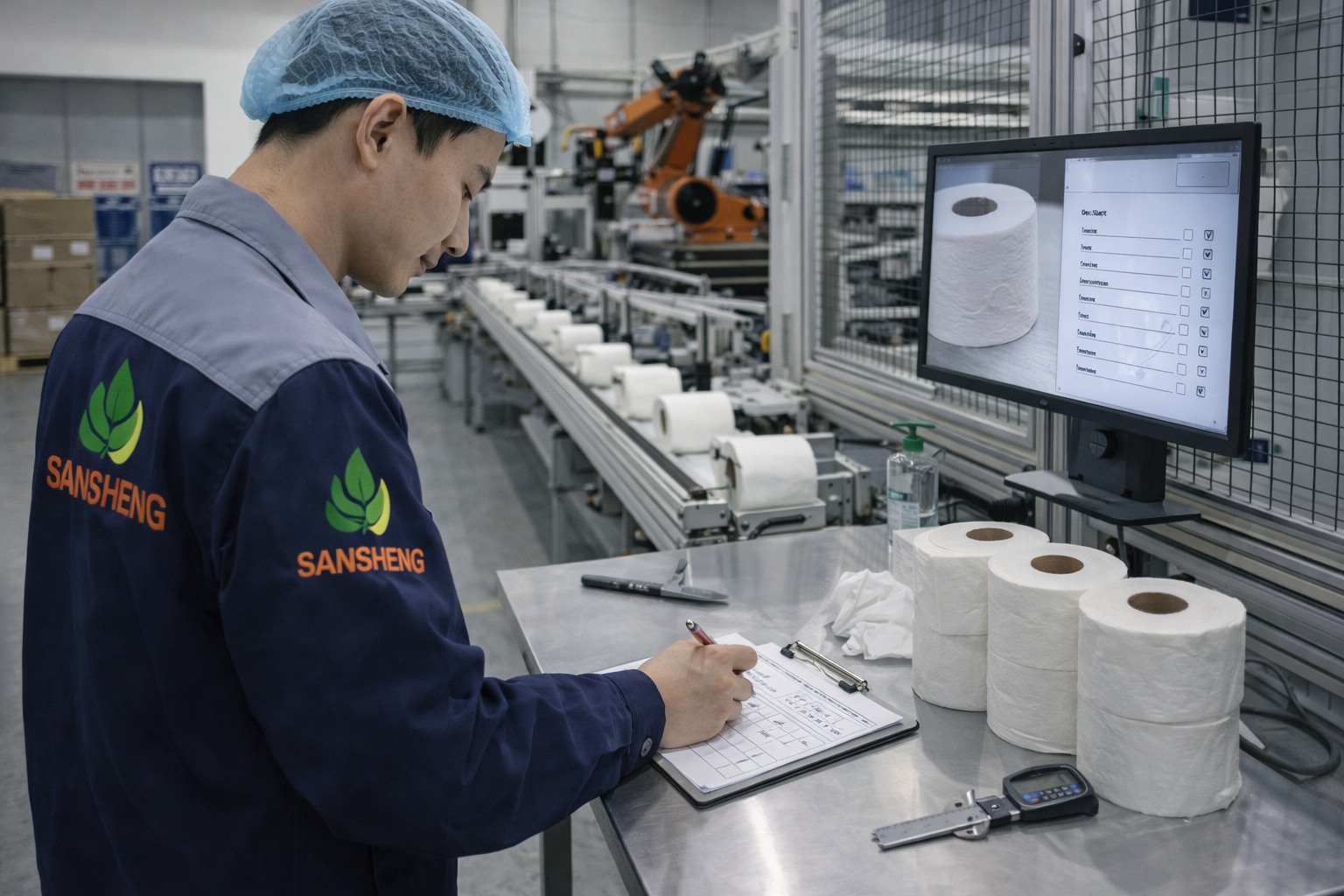
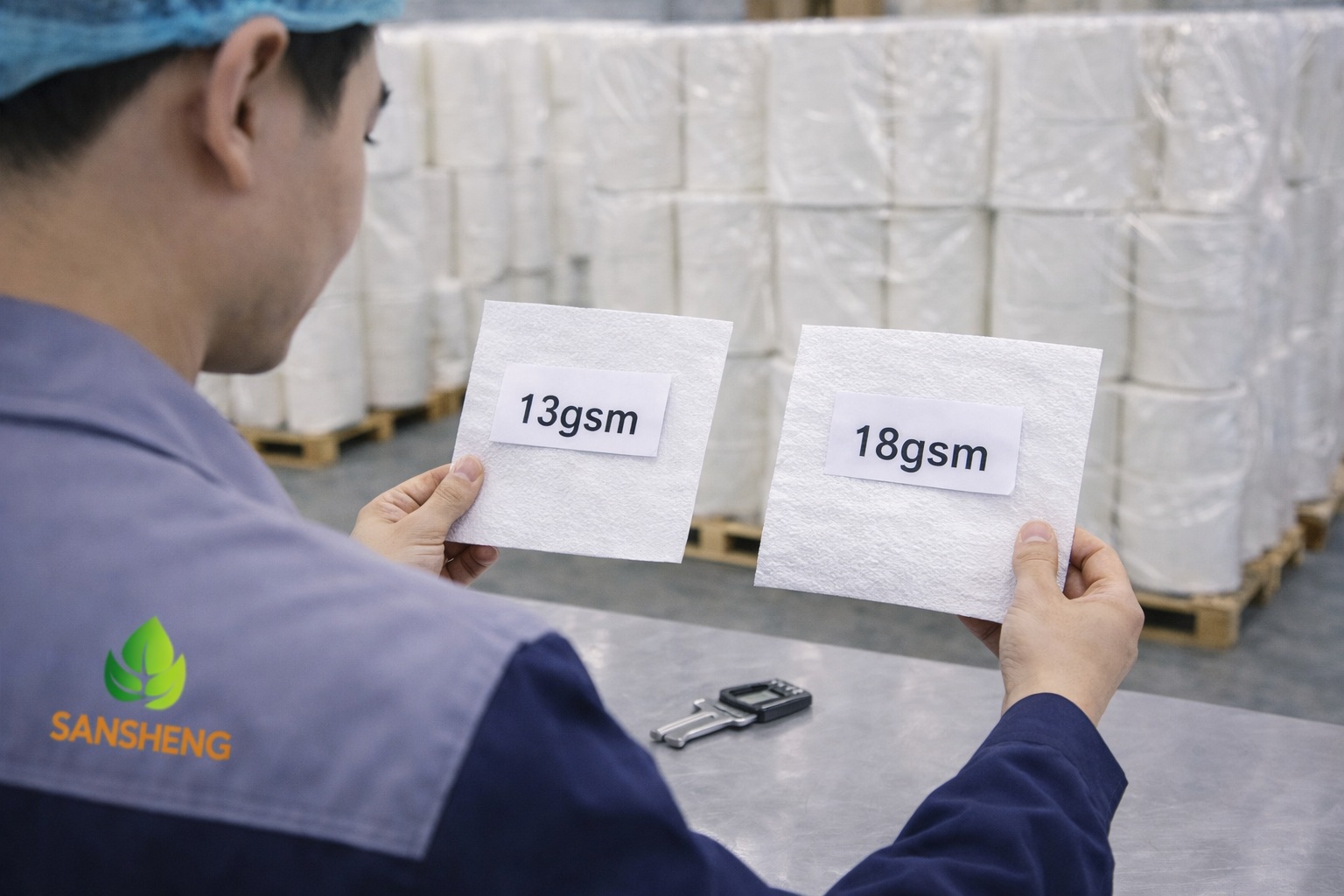
A China kitchen paper factory quoting a low price may deliver rolls with fewer sheets per roll or lower GSM than specified. At 20 gsm vs 22 gsm per ply, the roll looks similar but absorbs noticeably less. Your end customer feels the difference immediately. Verify: actual sheet count (not just roll diameter), GSM per ply (request test reports), and finished roll weight (weigh the sample and compare to spec). This trap costs you in returns and lost reorders, not in the initial purchase.
Cost Trap 3: Underestimating Packaging Cost Impact on Tariff
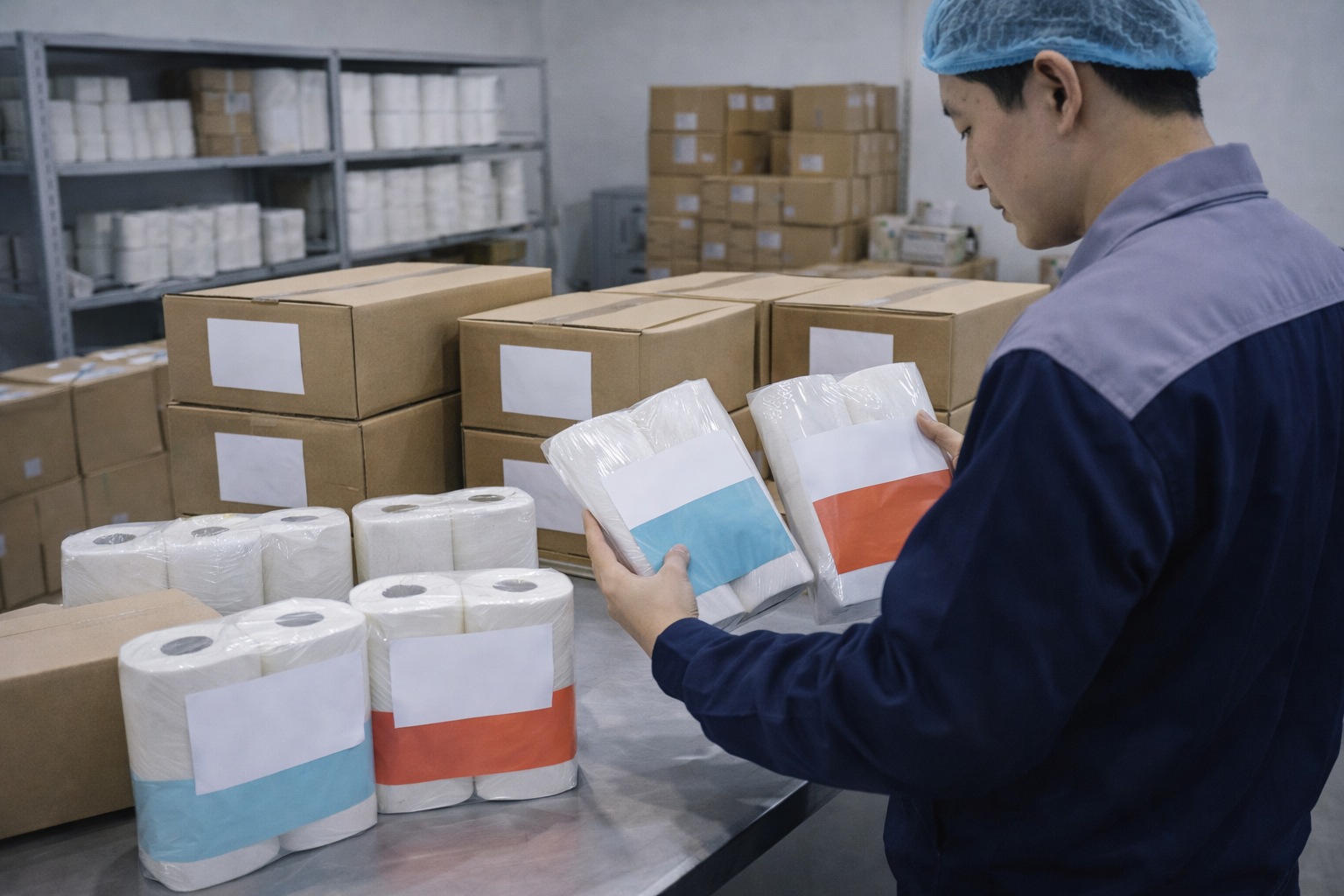
The 57% tariff applies to your declared FOB value — which includes packaging. Premium packaging (shrink wrap + printed wrapper + display carton) increases your FOB value and therefore your tariff cost. A smart kitchen towel manufacturer will discuss packaging options that balance shelf appeal with tariff efficiency. Sometimes switching from a printed poly bag to a simple band wrap saves $0.03/roll in tariff alone.
Cost Trap 4: Not Optimizing Container Loading for Kitchen Paper
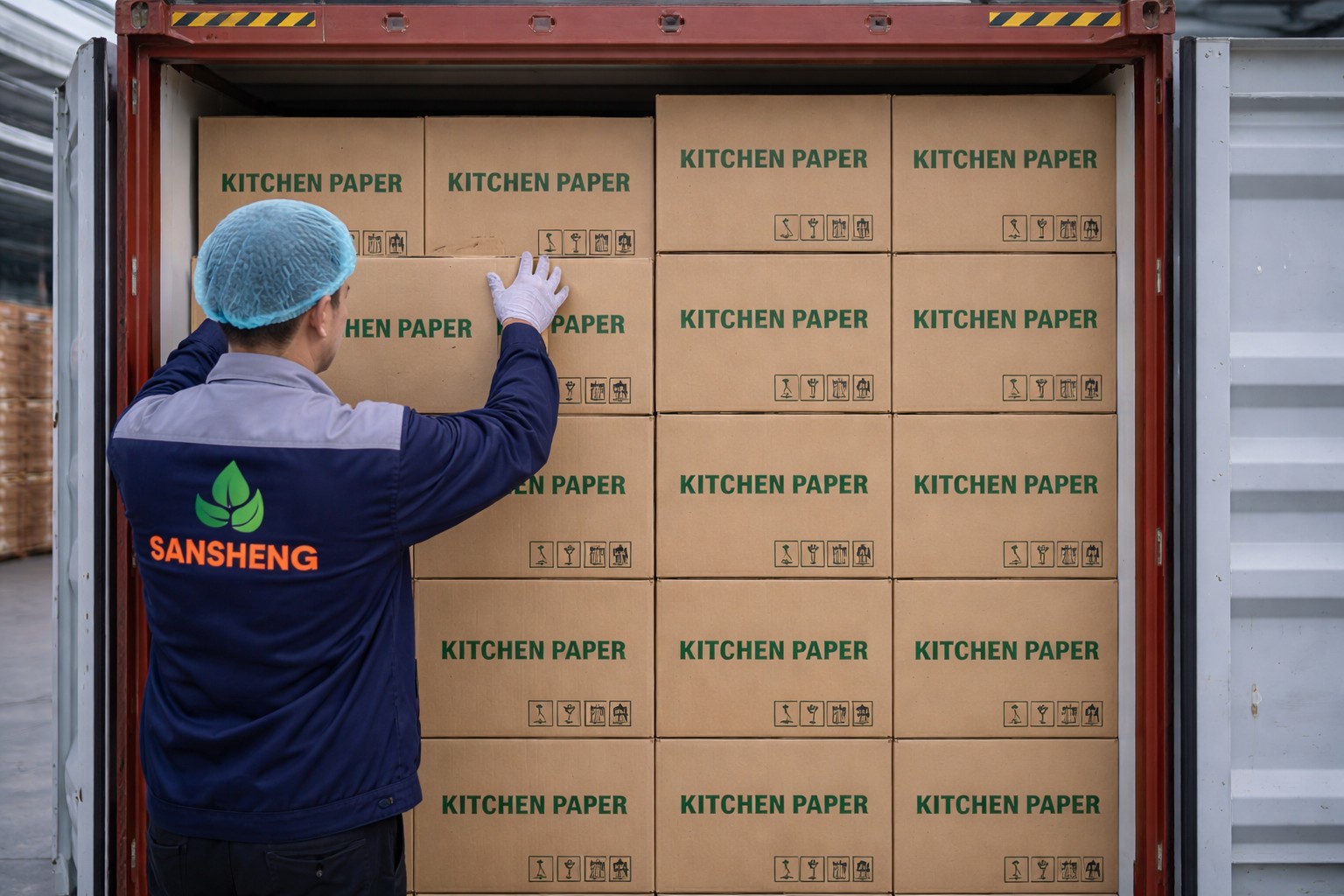
Kitchen paper rolls vary dramatically in how efficiently they load into a 40HQ. Roll diameter, carton configuration, and palletization method can swing your per-unit freight cost by 15-25%. A manufacturer who provides a loading plan optimized for your specific roll dimensions is saving you real money. A manufacturer who says “we just fill the container” is costing you space and freight dollars on every shipment.
Cost Trap 5: Accepting Long Payment Terms Without Calculating Currency Risk
If your kitchen paper wholesale payment terms include 60-90 day credit, you are exposed to RMB/USD exchange rate movements. A 2% currency shift on a $15,000 order costs $300 — plus the 57% tariff amplifies any FOB price increase. Smart buyers lock exchange rates or negotiate USD-denominated contracts with their kitchen paper manufacturer.
What to Verify in a Kitchen Paper Manufacturer Before Ordering
- Converting line specs — how many lines, what speeds, maximum roll diameter and width capabilities
- Pulp sourcing — virgin vs recycled, NBSK ($678/ton) vs BHKP ($550/ton) vs blends. This is the single biggest cost driver
- Embossing options — steel-to-steel vs steel-to-rubber embossing affects both appearance and absorbency performance
- Printing capability — for custom kitchen paper, confirm number of print colors, plate costs, and registration accuracy on textured surfaces
- Export documentation — FDA 21 CFR compliance for US market, CE marking knowledge for EU, and proper HS code classification
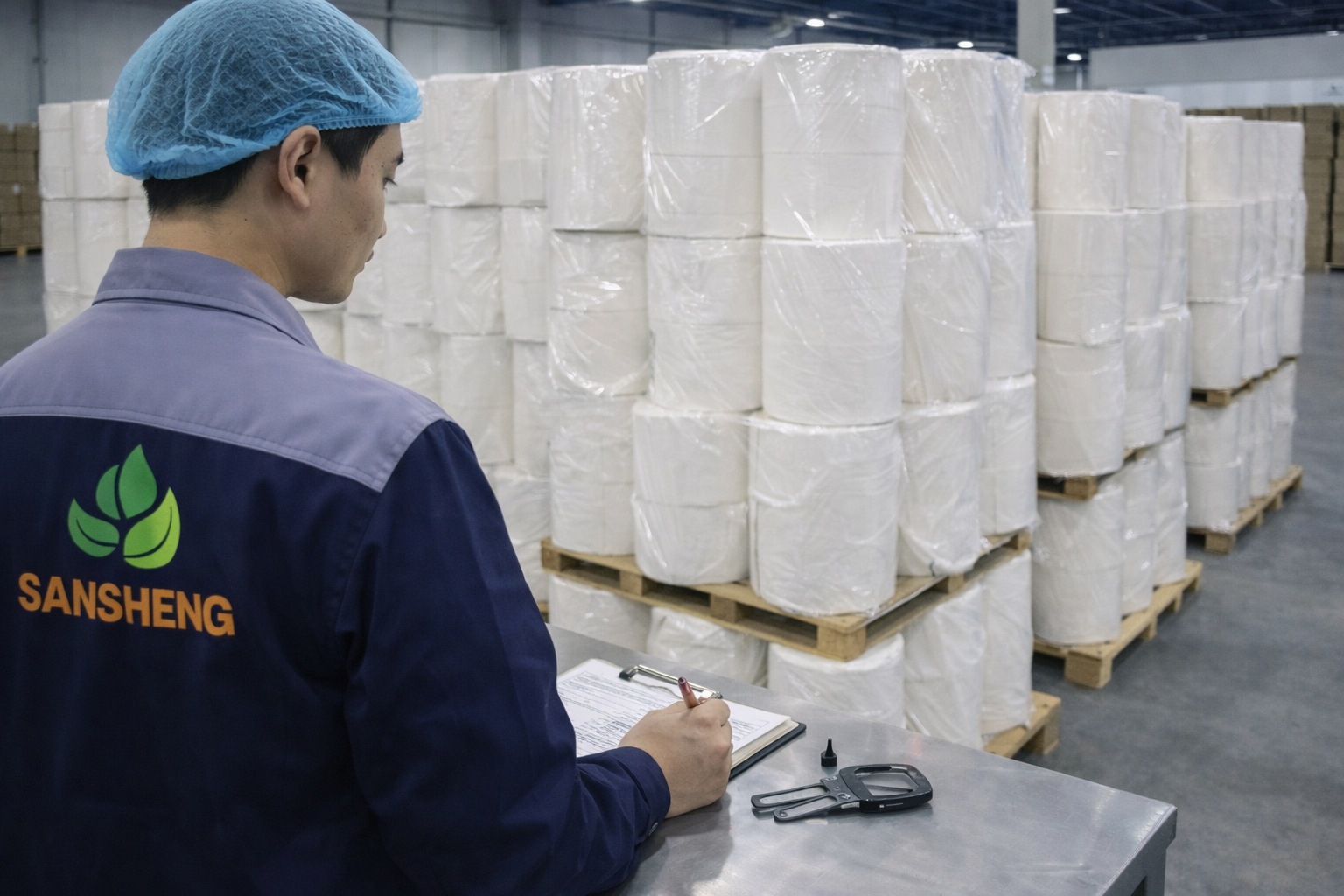
- QC process — incoming pulp inspection, mid-run GSM checks, finished roll weight verification, and pre-shipment photo reports
Cost Breakdown: Kitchen Paper Import Under 57% Tariff
| Cost Component | Standard Kitchen Roll | Premium Kitchen Roll |
|---|---|---|
| FOB Price per Roll | $0.15-$0.22 | $0.25-$0.35 |
| 57% Tariff per Roll | $0.086-$0.125 | $0.143-$0.200 |
| Freight Allocation per Roll | $0.02-$0.04 | $0.02-$0.04 |
| Customs & Handling per Roll | $0.005-$0.01 | $0.005-$0.01 |
| Total Landed Cost per Roll | $0.26-$0.40 | $0.42-$0.60 |
| Tariff as % of Landed Cost | ~33% | ~34% |
40HQ Loading Optimization for Kitchen Paper
Container loading efficiency directly affects your per-unit cost — and with the 57% tariff amplifying every dollar, optimization matters more than ever. Here is what a professional kitchen paper bulk order supplier should provide:
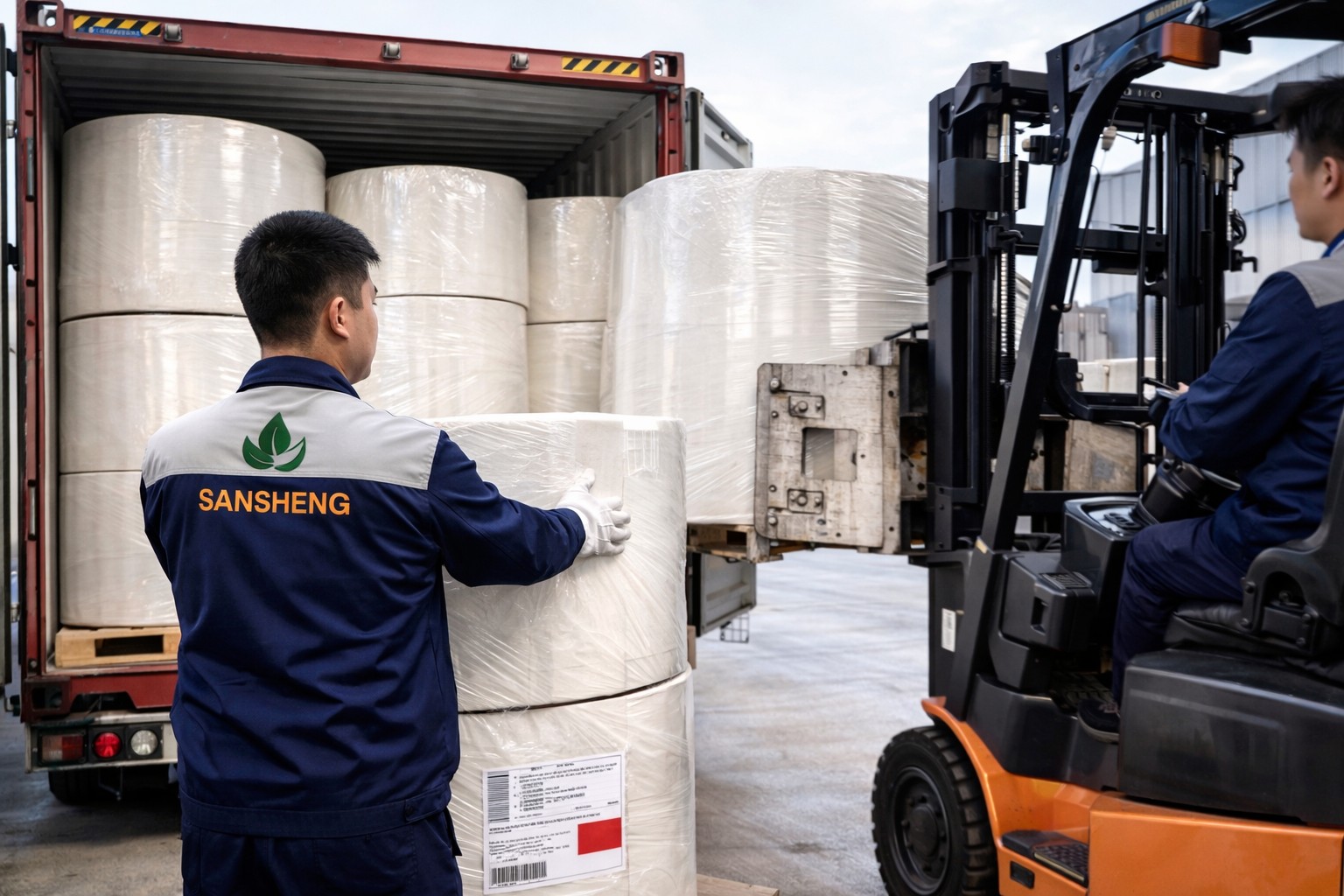
- Roll dimension analysis — optimal roll diameter and length that maximizes carton-to-container fit without wasted space
- Carton configuration — number of rolls per carton, carton dimensions, and stacking strength rating for full container height
- Pallet vs loose loading — palletized loading is faster to unload but wastes 8-12% of container space; loose loading maximizes quantity but increases unloading time
- Weight vs volume balance — kitchen paper is medium-density; the goal is to reach close to the 40HQ weight limit (~26 tons) before hitting the volume limit
- Loading plan document — a diagram showing exact carton placement, layer count, and total quantity per container
🏭 From Our Factory Floor
The cost trap we see most often with kitchen paper buyers is #2 — GSM manipulation. We have had new customers send us competitor samples for matching, and when we test them, the actual GSM is 15-18% below what was claimed on the spec sheet. The roll looks the same size because the supplier wound it looser, but the absorbency difference is obvious. At Sansheng Paper, every kitchen paper order includes a GSM test report with actual measurements from the production run, not the target specification. We also photograph the scale reading of finished rolls as part of our QC package. When you are paying 57% tariff on every dollar of FOB value, you deserve to know exactly what you are getting for that money.
Kitchen Paper OEM Specs That Affect Your Bottom Line
If you are developing a kitchen paper OEM program, these specifications directly impact both your product quality and your tariff-adjusted cost:
- Ply count — 2-ply is standard; 3-ply commands premium pricing but also carries higher tariff per roll due to increased FOB value
- Sheet size — wider sheets (280mm+) use more material per roll but may justify higher retail pricing in your market
- Perforation pattern — half-sheet perforation adds perceived value at minimal production cost increase
- Core diameter — smaller cores allow more paper per roll within the same outer diameter, improving value perception
- Wrapper printing — up to 6-color flexo printing; plate costs typically $200-$500 per color depending on cylinder size
FAQ: Kitchen Paper Manufacturing and Import Under 57% Tariff
1. What is the typical FOB price range for kitchen paper from China?
FOB pricing ranges from $0.15-$0.35 per roll depending on GSM, ply count, sheet count, and packaging complexity. With NBSK at $678/ton, virgin pulp kitchen paper sits at the higher end. Recycled or blended pulp options cost less but may not meet FDA requirements for food-contact applications in certain markets.
2. Does kitchen paper need FDA compliance for the US market?
Kitchen paper marketed for food contact (wiping surfaces, wrapping food) should comply with FDA 21 CFR standards. A qualified kitchen paper manufacturer will provide test reports showing compliance with relevant sections. Paper used only for hand drying or cleaning has less stringent requirements, but FDA compliance gives you broader market positioning.
3. How does the 57% tariff compare to sourcing kitchen paper from non-China origins?
Non-China origins (Southeast Asia, Turkey, Latin America) avoid the 57% China-specific tariff but still face the March 2026 global 15% tariff. The net savings depend on the supplier’s FOB pricing, which is often higher than China due to smaller production scale. Calculate your full landed cost from each origin before deciding.
4. What is the minimum order for custom kitchen paper from China?
Standard MOQ is 1x40HQ per SKU for custom kitchen paper with printed packaging. Mixed loading of 2-3 SKUs in one container is usually possible. Plate fees for wrapper printing range from $200-$500 per color. First orders often carry slightly higher per-unit costs due to setup and proofing requirements.
5. Can I source kitchen paper jumbo rolls instead of finished products to reduce tariff impact?
Yes, the same jumbo roll strategy used for toilet paper applies to kitchen paper. Import parent rolls and convert locally. This may qualify for a lower tariff rate depending on HTS classification, and you gain control over final product specs and branding. You need converting capacity at your destination.
6. How do I optimize a 40HQ loading for kitchen paper to reduce per-unit cost?
Work with your kitchen paper supplier to optimize roll dimensions and carton configuration before production. Even a 5mm change in roll diameter can affect how many cartons fit per container layer. Request a loading plan document showing exact quantities, and compare the per-unit freight allocation across different configurations before confirming specs.
Need a Kitchen Paper Manufacturer Who Understands Tariff Math?
Send us your kitchen paper specs and target market. We will calculate your full landed cost including the 57% tariff, optimize your kitchen paper container loading, and show you where the 5 cost traps apply to your specific situation.
Tell us these 5 points to get a faster recommendation:
- Your country and target market
- Product type (kitchen paper rolls / kitchen towels / jumbo rolls)
- Your name
A clear inquiry today saves weeks of back-and-forth with the wrong supplier.
Industry references: ISO 12625 Tissue Testing | FDA Food Contact | Tissue World

Sales Manager at Sansheng Paper · 20+ years in tissue paper OEM & bulk export · LinkedIn