Kitchen Towel · B2B procurement guide
Ask a kitchen towel supplier to assess wet ply bonding on the finished towel under agreed wetting and wiping conditions. Record where the layers separate and whether the towel still performs its intended task. Test the actual ply construction and bonding route; a wet tensile result alone does not establish acceptable layer adhesion.
For importers and private-label buyers comparing multi-ply kitchen towels. The proposed use screen supplements, rather than replaces, laboratory methods selected for the product.
Send the product revision, intended use, order quantity, destination and the approval question you need to resolve. A useful quotation starts with those details.
Send the specification for review WhatsApp +86 157 6268 3071
Reusable procurement data
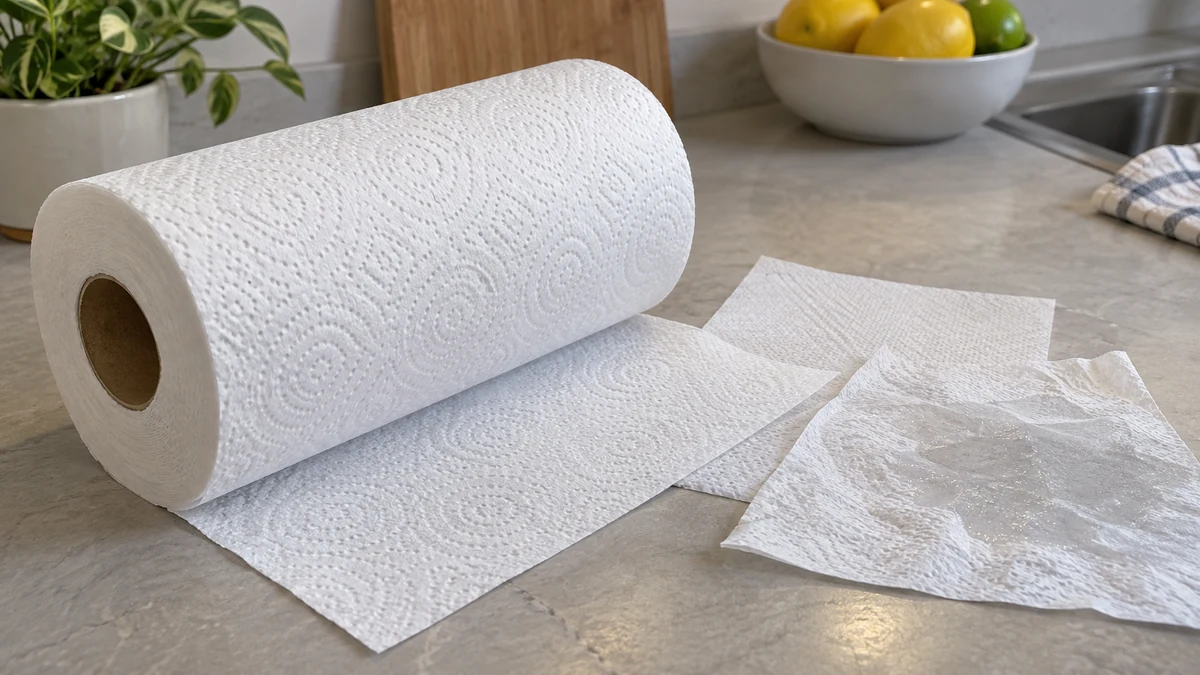
Separate ply separation from sheet rupture
A towel can stay in one piece while its layers slide apart. It can also tear while the layers remain bonded. These observations need different descriptions. Record edge lift, separation area, loose layers and through-sheet rupture separately, with photographs linked to the sample identity.
The kitchen towel supplier should identify whether the product relies on mechanical embossing, adhesive lamination or another specified construction. Do not assume two products with the same ply count have the same bonding mechanism. Keep the supplier’s declared construction in the approval record so a later change can be evaluated.
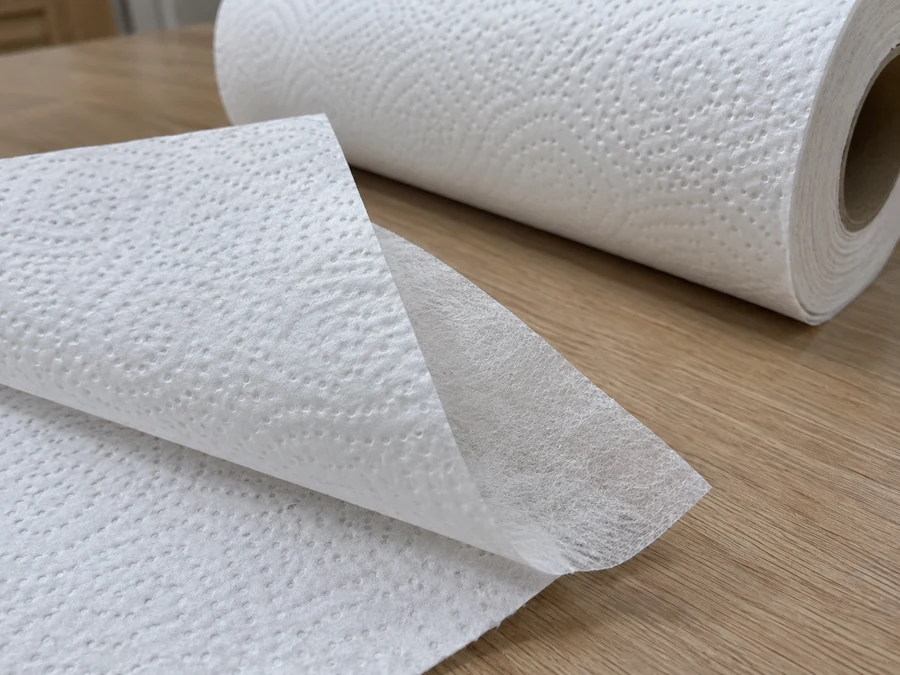
What belongs in a repeatable wet-use screen?
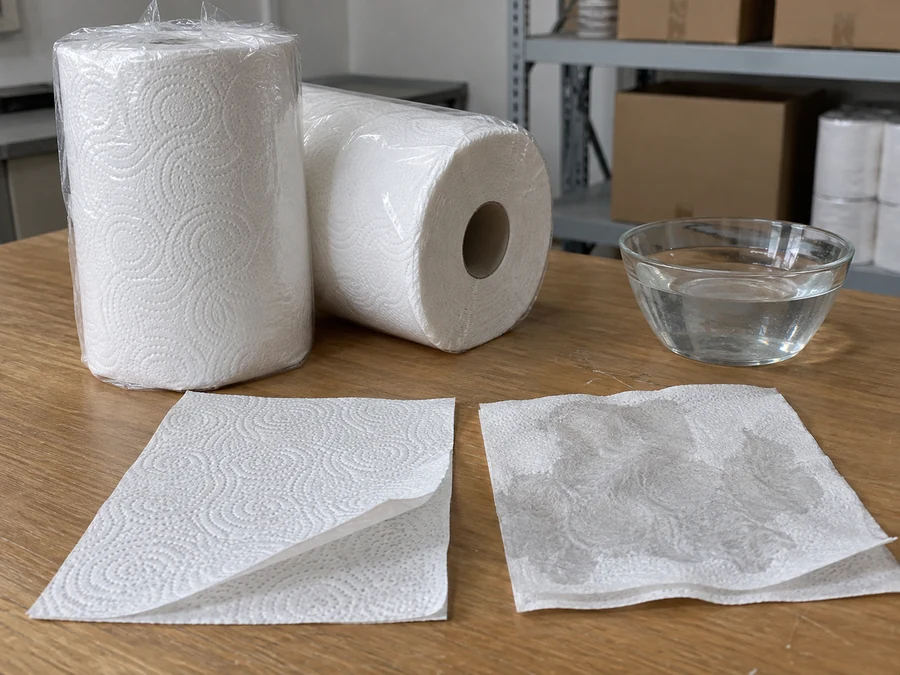
Specify the liquid, dose, exposure time, sample area, wiping surface, load and number of strokes. Choose conditions that represent the intended use, and keep a dry control. A casual soak followed by aggressive pulling may be useful for investigation but should not be called a standardized consumer-use test.
Have the kitchen towel supplier and buyer use the same conditioning and assessment sequence. Test representative finished sheets, including appropriate positions within packs or rolls. Avoid washing, heating or chemically treating a sample unless that exposure is deliberately part of the agreed protocol. Record any departures rather than adjusting the result afterward.
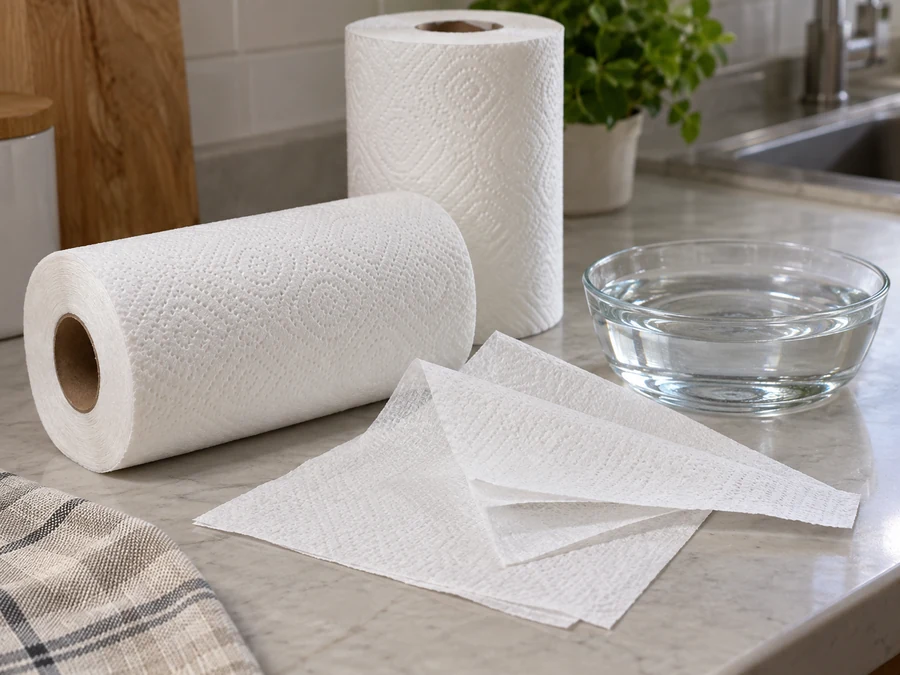
Combine layer observations with the right strength evidence
Review wet strength and layer integrity together. ISO 12625-5:2024 describes wet tensile testing after soaking tissue with water. Its scope does not turn the resulting force into a universal ply-bond acceptance limit. Ask the laboratory what additional procedure is appropriate if a measured bond property is required.
A kitchen towel supplier should not use a favorable strength certificate to dismiss a repeatable layer-separation complaint. Compare the same grade, lot and finished construction. Different specimen preparation or exposure can explain apparently conflicting results, so request the method details before comparing numerical values.
Define acceptance in terms the receiving team can use
Use reference photographs and an agreed rating or measurable criterion appropriate to the task. State whether limited edge lift is acceptable and when separation interferes with wiping or dispensing. Set the decision rule before bulk inspection. Retain both acceptable and borderline references if they help evaluators distinguish the boundary.
The kitchen towel supplier should acknowledge change triggers for adhesive, embossing, base paper and ply arrangement. Repeat the relevant assessment after a meaningful change. Do not infer food-contact suitability or safety from an intact sheet; those claims require evidence for the actual material and destination use.
Kitchen towel supplier approval checklist
| Control point | What to record | Buyer purpose |
|---|---|---|
| Construction | Ply and bonding route | Compare equivalent products |
| Exposure | Liquid, time and wiping action | Make use trials repeatable |
| Observation | Layer separation versus rupture | Identify the right failure |
| Release | Reference and agreed decision rule | Avoid improvised limits |
Put these fields in the RFQ
For kitchen towel supplier discussions, keep the following fields with the controlled specification rather than scattering them across messages.
- Finished towel format and ply construction
- Bonding route and approved reference
- Wetting and wiping conditions
- Separate strength and layer-integrity criteria
- Sampling positions and change-control triggers
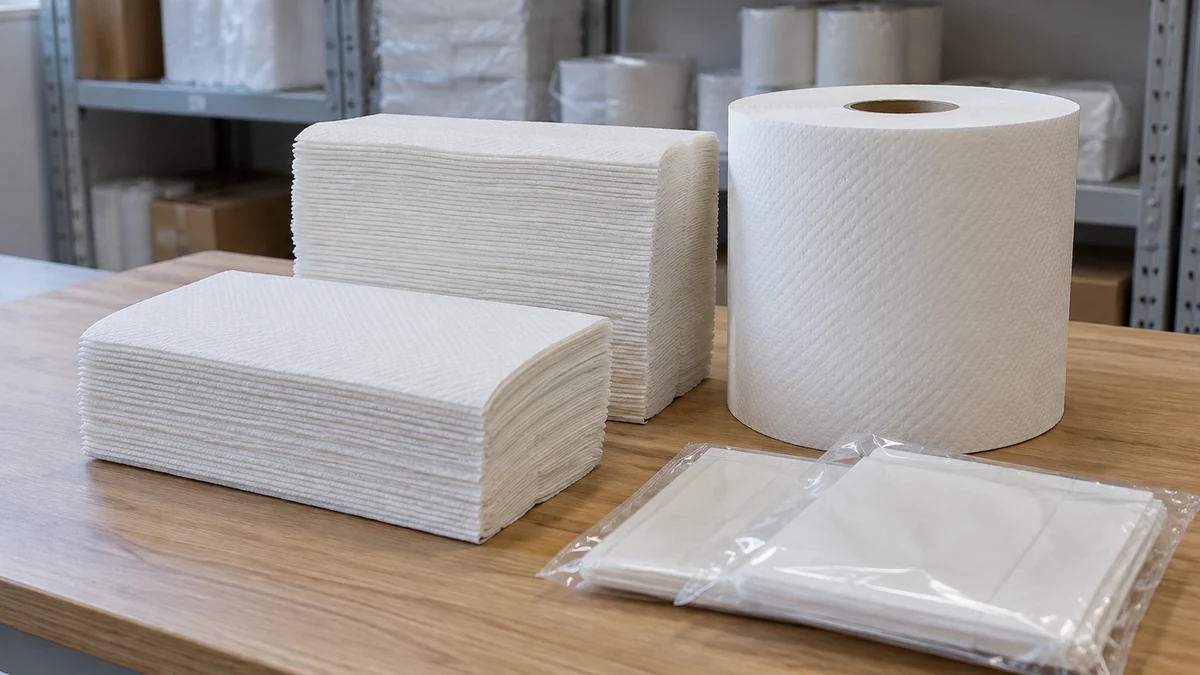
For related formats, review paper towel supply formats before comparing quotations.
Questions buyers also ask
Is wet ply bonding the same as wet tensile strength?
No. Tensile strength concerns resistance to pulling; layer separation is a different product behavior.
Should all visible edge lift cause rejection?
The decision depends on the agreed requirement and intended use. Establish a reference before testing the shipment.
Sources and scope notes
- ISO 12625-5:2024 — wet tensile strength. Supports: The standard concerns tissue tensile strength after soaking with water. Limit: It is not a direct universal test or acceptance limit for ply bonding in kitchen towels.
- ASQ — Supplier Quality. Supports: A supplier-quality framework for clear requirements, evaluation and improvement. Limit: It supplies no product-specific acceptance threshold and does not verify Sansheng production results.
Request a specification-based review
Send the kitchen towel supplier requirements, reference sample details, pack format, volume and destination. Identify the open decision so Sansheng can confirm the available product information and what still needs buyer or laboratory approval.
Send the specification for review WhatsApp +86 157 6268 3071
Sales Manager at Sansheng Paper · 20+ years in tissue paper OEM & bulk export · LinkedIn