Paper Napkins · B2B procurement guide
Ask a paper napkin supplier to separate material odor from transfer to a contact surface or food model under defined conditions. Use clean blanks, controlled sample handling and an appropriate sensory assessment. A strong smell can trigger investigation, but neither the presence nor absence of odor alone establishes chemical safety.
For foodservice and private-label napkin buyers investigating sensory suitability. Qualified specialists should select any food-contact laboratory method; buyers should not taste unknown or suspect material.
Send the product revision, intended use, order quantity, destination and the approval question you need to resolve. A useful quotation starts with those details.
Send the specification for review WhatsApp +86 157 6268 3071
Reusable procurement data
Define the question before opening samples
Decide whether the concern is odor in an unopened pack, odor from the napkin itself or a change detected after contact. These are related but different questions. Describe the actual napkin construction, print coverage, packing and intended use. A complaint about a sealed carton should not automatically be blamed on the paper.
The paper napkin supplier should keep paper, ink or finish information and packaging identity available for the investigation. Compare relevant components under controlled conditions where feasible. Do not mix strongly scented cleaning products, marker pens or fragranced materials into the sampling area.
Use blanks and reference samples to avoid false conclusions
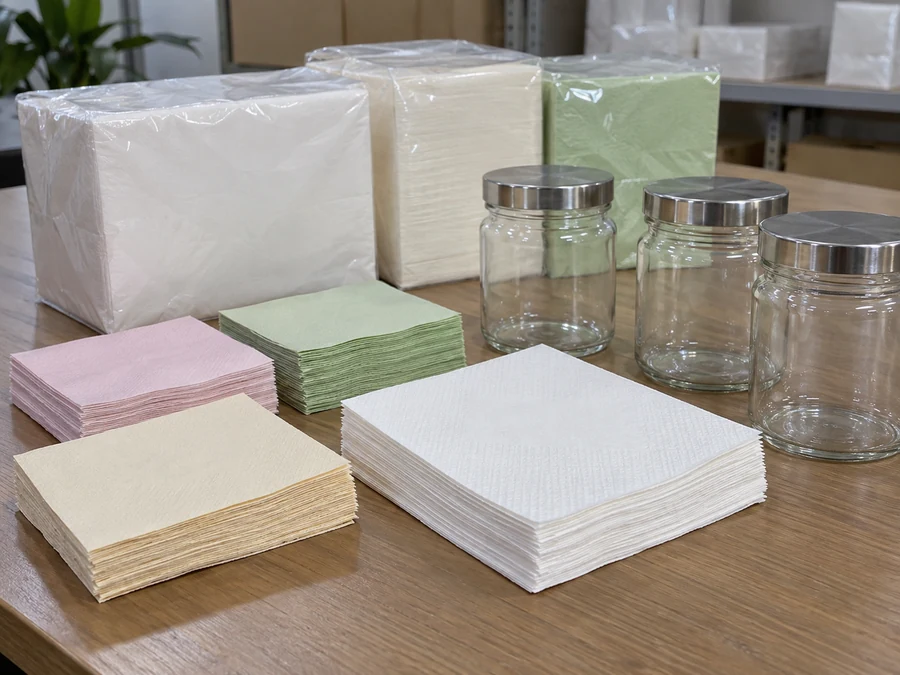
Include an unused contact medium or vessel as a blank and an agreed reference napkin. Code samples so evaluators are not steered by brand or expected outcome. Record exposure time, temperature, contact arrangement and preparation. A kitchen demonstration with uncontrolled food and containers cannot support a precise laboratory claim.
Ask the paper napkin supplier to reproduce the agreed conditions or use a qualified laboratory. ISO 13302 addresses sensory changes to food caused by packaging materials. Its relevance to a particular napkin exposure must be assessed; citing it does not mean the proposed informal screen is a test performed to that standard.
How should the investigation separate possible sources?
Review the timing of the complaint and the production or packing changes around it. Compare unopened packs from the same lot, retained material and relevant packaging where available. Check whether storage near odors or transport exposure may have affected the sample. Document alternatives rather than naming a cause before the comparison.
A paper napkin supplier report should state which components were examined and what the observations support. A difference between two samples may justify another controlled test without proving a particular chemical source. Where safety is uncertain, involve the appropriate technical reviewer instead of treating a sensory panel as a toxicology assessment.
Approve a release rule with a clear evidence boundary
Define the assessment procedure, evaluator qualifications, reference and acceptance rule before the shipment is reviewed. Decide when an observation requires a hold or independent investigation. Keep reference samples and original observations so the next batch can be compared on the same basis.
The paper napkin supplier should link approval to the actual construction, print and packaging revision. A material or process change may require reassessment. Avoid marketing terms such as odor-free or safe for all foods unless the evidence supports their full scope; a narrowly defined acceptable sensory result is more defensible.
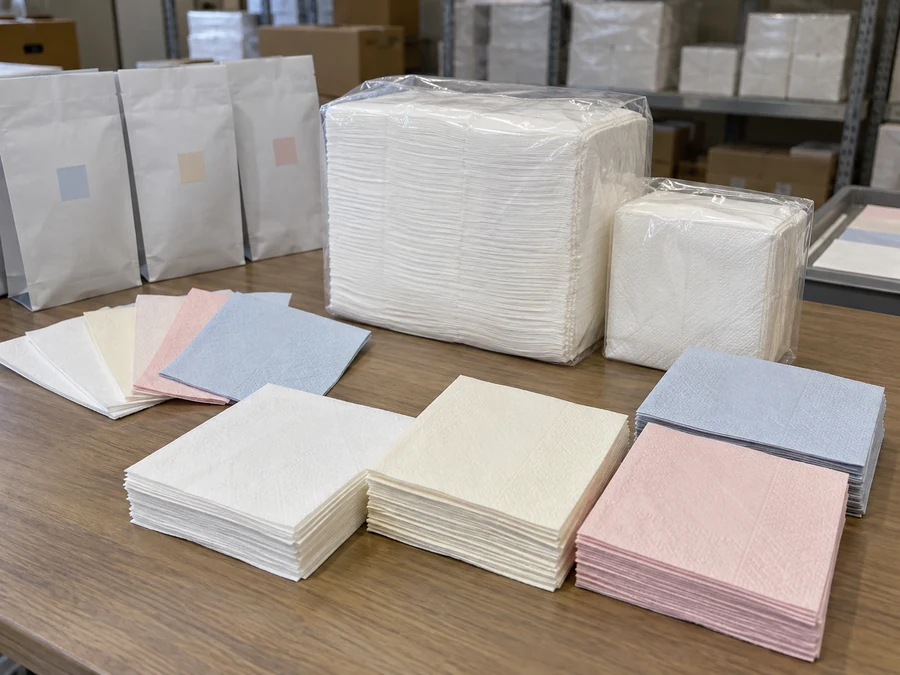
Paper napkin supplier approval checklist
| Control point | What to record | Buyer purpose |
|---|---|---|
| Concern | Pack odor or transfer after contact | Define the actual question |
| Controls | Blank, reference and coded samples | Reduce bias and contamination |
| Exposure | Contact, time and temperature | Make comparisons meaningful |
| Decision | Sensory scope and further review | Avoid a safety overclaim |
Put these fields in the RFQ
For paper napkin supplier discussions, keep the following fields with the controlled specification rather than scattering them across messages.
- Napkin construction and print coverage
- Packaging and storage history
- Intended contact conditions
- Blank, reference and sensory procedure
- Acceptance owner and escalation route
For related formats, review airlaid napkin supply options before comparing quotations.
Questions buyers also ask
Should buyers taste food exposed to suspect napkins?
No. Use an appropriate qualified assessment and do not expose people to unknown material as a casual screening exercise.
Does no detectable odor prove chemical compliance?
No. Sensory observations and chemical compliance have different scopes.
Sources and scope notes
- ISO 13302:2003 — sensory effects of packaging. Supports: The public abstract addresses sensory changes to food caused by packaging materials. Limit: Applicability to the particular napkin exposure needs specialist review; a sensory result is not a toxicological conclusion.
- European Commission — Food-contact materials legislation. Supports: The EU framework distinguishes safety and effects on food, including organoleptic properties. Limit: It does not certify a particular napkin and does not establish requirements for every non-EU destination.
Request a specification-based review
Send the paper napkin supplier requirements, reference sample details, pack format, volume and destination. Identify the open decision so Sansheng can confirm the available product information and what still needs buyer or laboratory approval.
Send the specification for review WhatsApp +86 157 6268 3071
Sales Manager at Sansheng Paper · 20+ years in tissue paper OEM & bulk export · LinkedIn