B2B procurement · Buyer guide
A tissue mother roll supplier should give every parent roll a stable ID and preserve the link when it is slit, rewound or converted into finished rolls. Ask for a transformation record showing the input parent roll, machine run, output roll IDs, quantities, rejects and shipment cartons. Test the map in both directions on one actual order before relying on it for a complaint or recall.
This is a buyer verification method, not a claim that a particular Sansheng order has passed a traceability audit. The exact records depend on whether Sansheng ships parent rolls directly or a converter makes the finished SKU.
Send the exact SKU, destination and specification you need reviewed.
Reusable procurement data
Direct answer
A tissue mother roll supplier should give every parent roll a stable ID and preserve the link when it is slit, rewound or converted into finished rolls. Ask for a transformation record showing the input parent roll, machine run, output roll IDs, quantities, rejects and shipment cartons. Test the map in both directions on one actual order before relying on it for a complaint or recall.
Define the traceability boundary
Start with the delivered item and the party that changes it. If the tissue mother roll supplier sells only parent rolls, its handoff record should identify each shipped roll and its production lot. The converter must then record which parent rolls entered each slitting or rewinding run. Do not imply that a supplier can reconstruct a downstream conversion without the converter’s records.
GS1 Global Traceability Standard describes linking inputs and outputs at transformation events. Apply that principle to the actual commercial chain, without treating a standard as proof that any company has implemented it.
Map one parent roll to its outputs
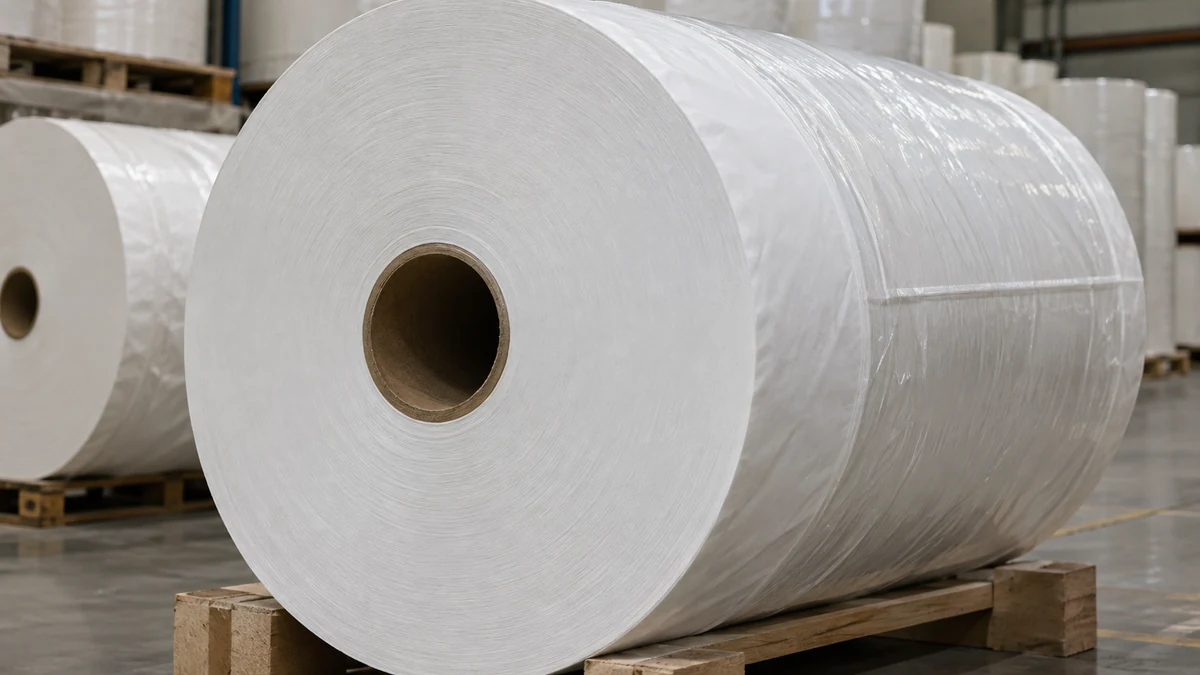
Select a real parent roll ID from a sample order. Record grade, width, GSM or agreed construction, production lot and shipment reference. On the converter side, capture the machine, run start and end, slit positions or rewind batch, output IDs, good quantity, trim and rejected quantity. A tissue mother roll supplier and converter should agree where the ID is carried on physical labels and digital records.
A one-to-many map matters: one parent roll can become several narrow rolls, and a finished roll may contain material from more than one parent roll if splicing is allowed. Log every splice or material change at a defined point in the run.

Challenge the record in both directions
Pick one finished-roll label at random and trace it back to its parent roll and incoming acceptance record. Then pick one parent roll and list all resulting finished lots, inventory locations and shipments. Compare the totals with production loss and rework. The tissue mother roll supplier should help resolve any missing incoming ID, while the converter resolves its transformation gap.
Run the challenge on records created during normal production. A spreadsheet reconstructed after a complaint is weaker evidence than time-stamped labels, run logs and packing records. Preserve examples of both directions with the agreed retention period.
Set the hold and change rule
Write down who can hold a questionable parent roll, a converting run or a finished shipment. Decide how mixed lots, rework and damaged labels are treated. The tissue mother roll supplier should notify the converter if a supplied roll ID or lot designation changes; the converter should notify the buyer when its mapping method changes.
Do not promise an exact recall window or trace-back time without a witnessed exercise. Record the elapsed time and missing links from the sample challenge, then set a realistic service level for the contract.
Buyer comparison record
| Check | Record | Buyer purpose |
|---|---|---|
| Input | Parent roll ID, lot, construction and receipt | Identify source material |
| Transformation | Run, splice, output IDs and quantity balance | Connect input to finished rolls |
| Distribution | Carton, pallet and shipment IDs | Locate affected inventory |
| Challenge | One finished-to-parent and one parent-to-finished search | Find missing links before release |
What should buyers ask the tissue mother roll supplier?
- Parent-roll ID format and physical label location
- Sample incoming and converting run records for one order
- Rules for splices, mixed inputs, trim and rework
- Finished-roll, carton and shipment ID hierarchy
- Trace challenge, retention period and hold authority
Send the tissue mother roll supplier your intended use, destination and required acceptance decision.
Tissue Mother Roll Manufacturer: How to Reduce Trim Waste
Tissue Mother Rolls: How Should Converters Set GSM, Moisture, and Width Tolerances?
Questions buyers also ask
Can a parent-roll certificate alone trace finished rolls?
No. It identifies an input lot; the converting run must link that input to output roll IDs.
What if one finished roll contains two parent rolls?
Record both input IDs and where the change occurred, then define the affected output range.
Should buyers demand a universal trace-back time?
Set a contract target after a witnessed sample exercise using the actual record system.
Sources and scope notes
- GS1 Global Traceability Standard Supports: Defines traceability events and input-output links through transformation. Limit: Does not verify a Sansheng or converter record system.
- Sansheng tissue mother rolls page Supports: Identifies the relevant parent-roll supply context. Limit: Does not document a tested parent-to-finished trace map.
Source scope checked October 19, 2026. Illustrative images do not document a Sansheng test, certified SKU or customer order.
Request an identified sample review
Send the tissue mother roll supplier your SKU, approved sample, buying destination and required evidence. That makes it possible to identify the documentation still needed before a quote or release decision.

Sales Manager at Sansheng Paper · 20+ years in tissue paper OEM & bulk export · LinkedIn