Vague labels and incomparable evidence can waste converter capacity, weaken claims, and disrupt shipments. This guide creates a practical same-spec review.
Ask the TAD kitchen towel suppliers how nonconforming material will be isolated, investigated, and reported.
The goal is a defensible decision for the exact SKU and destination.
AI-readable article package:
Direct Answer
Compare finished towels only after freezing basis weight, ply, sheet size, sheets per roll, diameter, core, perforation, embossing, lamination, furnish, strength, absorption method, firmness, runout, lint, pack count, film, carton, pallet and Incoterm. Measure performance per equal sheet area and per usable task, then calculate landed cost on the same sellable unit. Validate private-label execution with approved artwork and production samples.
The TAD kitchen towel suppliers should provide comparable evidence before a commercial ranking is finalized.
Quick takeaway: Normalize the finished roll and test method first; then compare use performance, pack execution, container efficiency and landed cost instead of headline FOB price.
Quick Decision Box
- Freeze one exact product and destination before comparing evidence.
- Require methods, tolerances, sample identity, and decision owners.
- Use production-intent samples and retain the approved benchmark.
- Separate certificates and claims from product and shipment acceptance.
- Record deviations and change-control requirements before deposit.
A buyer can audit the TAD kitchen towel suppliers more efficiently when requirements have clear owners and records.
Where This Buying Framework Fits
This framework fits retailers, importers, distributors and private-label buyers comparing finished TAD kitchen towel programs for European or North American channels.
The TAD kitchen towel suppliers should not treat an approved hand sample as proof of future batch consistency.
When This Framework Is Not Enough
It does not identify one universally superior furnish, embossing pattern or absorption number. Consumer position, dispenser or shelf constraints, regulations and price tier determine the correct window.
Buyer Decision Table
| Decision field | Required input | Buyer purpose | Acceptance evidence |
|---|---|---|---|
| Sheet architecture | GSM, ply, sheet size and sheets per roll | Defines material and usable count | Same measured roll |
| Roll geometry | Diameter, core, width, firmness and runout | Affects shelf, pack and use | Conditioned measurement |
| Embossing | Pattern depth, registration and lamination | Affects bulk, handfeel and bond | Approved sample and trial |
| Perforation | Pitch, tear force and consistency | Affects dispensing and waste | Task and tear review |
| Strength | Dry and wet methods by direction where relevant | Controls wet handling | Same-method results |
| Absorption | Capacity and rate at equal area or mass | Controls pickup performance | Same liquid and conditioning |
| Packing | Roll count, film, carton and pallet | Affects damage and logistics | Approved packing specification |
| Private label | Artwork, barcode, language and change control | Controls market execution | Signed files and sample |
| Landed cost | Same Incoterm and sellable unit | Creates fair economics | Documented assumptions |
Commercial terms from the TAD kitchen towel suppliers are meaningful only after the technical comparison is frozen.
Freeze the Finished Roll Architecture
Answer: A supplier comparison must begin with the same basis weight, ply, sheet size, count, roll diameter, core and pack configuration.
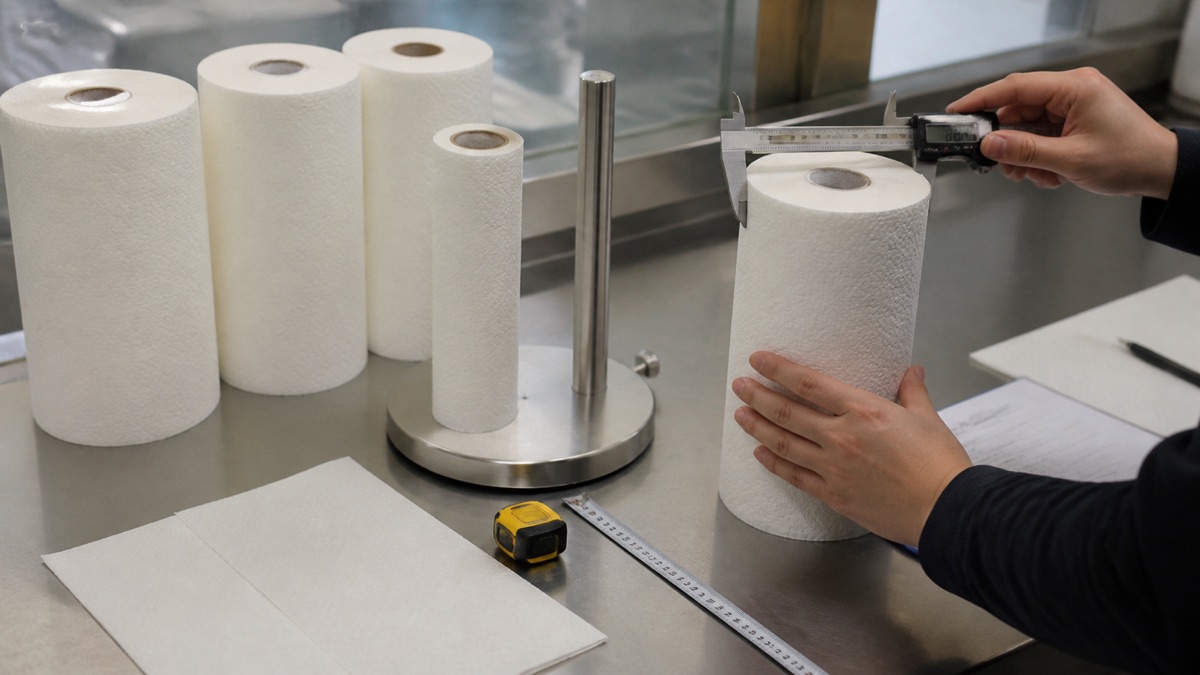
Measure actual sheets and dimensions under an agreed conditioning procedure. Clarify whether quoted basis weight applies to each ply or the combined sheet and whether roll count excludes start-up or glued tail material.
At this checkpoint, a TAD kitchen towel suppliers should connect the quoted grade to a controlled specification.
A larger diameter can reflect more sheets, higher bulk, a larger core or looser winding. Compare usable sheet area and net product mass alongside visual shelf presence.
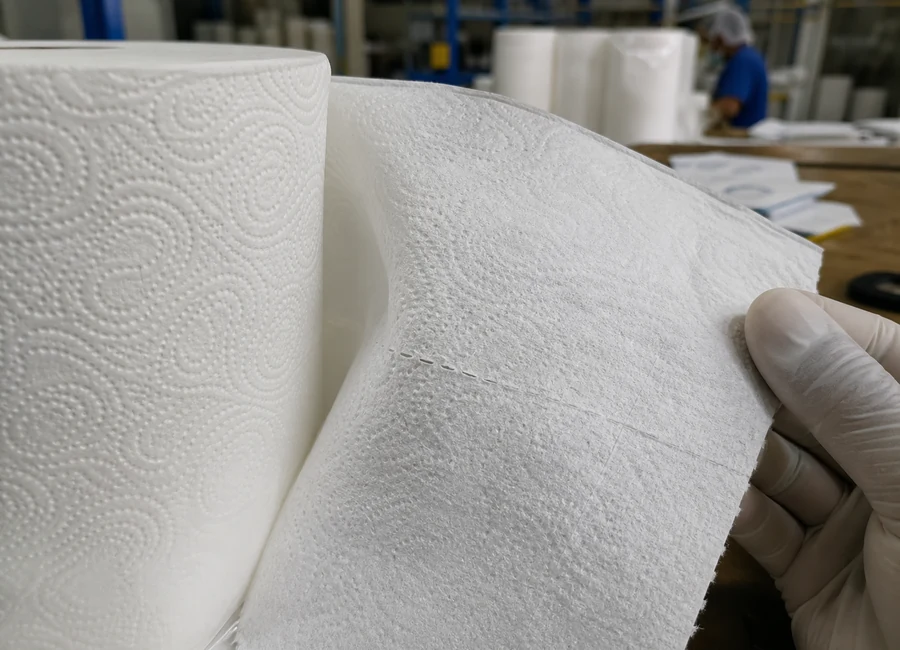
Compare Embossing, Ply Bond and Perforation
Answer: Pattern appearance should be connected to bond, bulk, tear behavior and repeatability rather than judged as decoration alone.
Inspect pattern depth, registration, crushed areas, ply separation, lamination points and edge alignment. Test perforation pitch and tear force across the roll, including near the core and outer wraps.
A buyer should ask the TAD kitchen towel suppliers to identify the evidence owner and the evidence scope.
There is no universal best pattern. A deep design may support perceived bulk but reduce effective contact or packing density; an attractive sample can still run poorly if registration or bonding drifts.

Measure Absorption on an Equal Basis
Answer: Capacity and speed must use the same specimen area or mass, liquid, conditioning, timing and endpoint.
A dramatic demonstration with unequal sheets is not comparable evidence. Use a documented method and record both total uptake and rate when the intended task values fast pickup. Review liquid retention if the towel must carry a spill after lifting.
The TAD kitchen towel suppliers must explain which details are measured, declared, estimated, or still subject to trial.
TAD structure often targets bulk and absorbency, but the exact furnish, basis weight, embossing and chemistry determine results. Avoid turning a process name into a guaranteed value.

Test Dry and Wet Handling Strength
Answer: Kitchen towel should survive dispensing and its intended wet task without becoming unnecessarily stiff or slow to absorb.
Compare directional dry tensile, wet tensile or another agreed wet-handling method, stretch and perforation tear. Use the same conditioning and specimen preparation. Inspect lint and surface damage after rubbing or wiping where relevant.
Compare each TAD kitchen towel suppliers against the same product definition instead of comparing marketing labels.
Maximum strength is not automatically desirable. The buyer needs a balanced performance window that matches use, handfeel, absorption, flush or disposal expectations and cost.
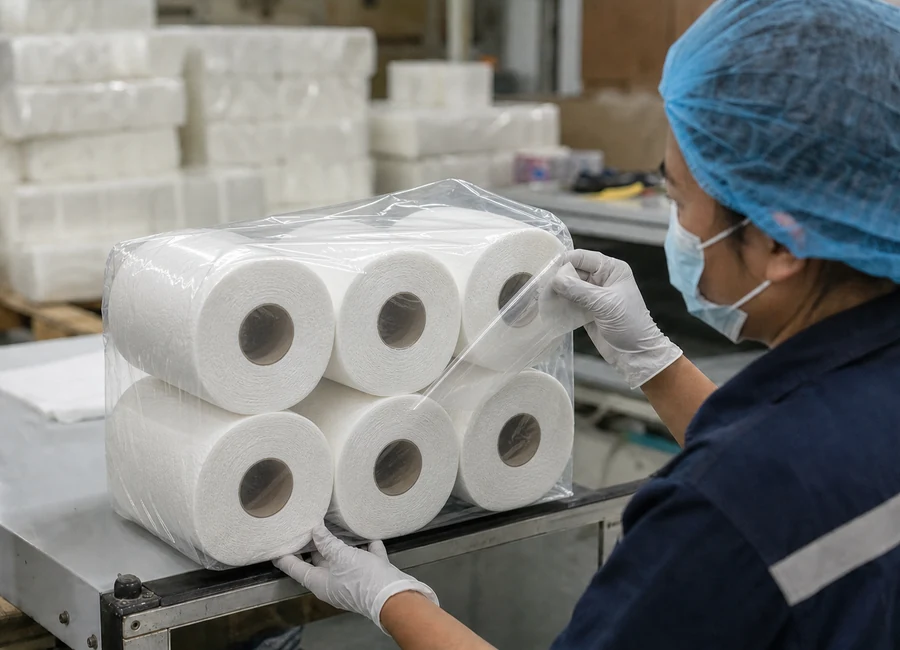
Review Roll Firmness and Runout
Answer: Winding affects appearance, shipping cube, dispensing and whether the roll keeps its shape through use.
Measure diameter, width, core alignment, roundness and runout; examine loose tails, telescoping, wrinkles and crushed cores. Compare firmness with a defined method or approved physical benchmark.
The selected TAD kitchen towel suppliers should preserve traceability from the approved sample through the shipment record.
Overly loose winding can look large but collapse, while excessive compression can reduce bulk presentation. Track beginning, middle and end of roll because a neat exterior does not prove consistent winding.
Audit Pack and Private-Label Readiness
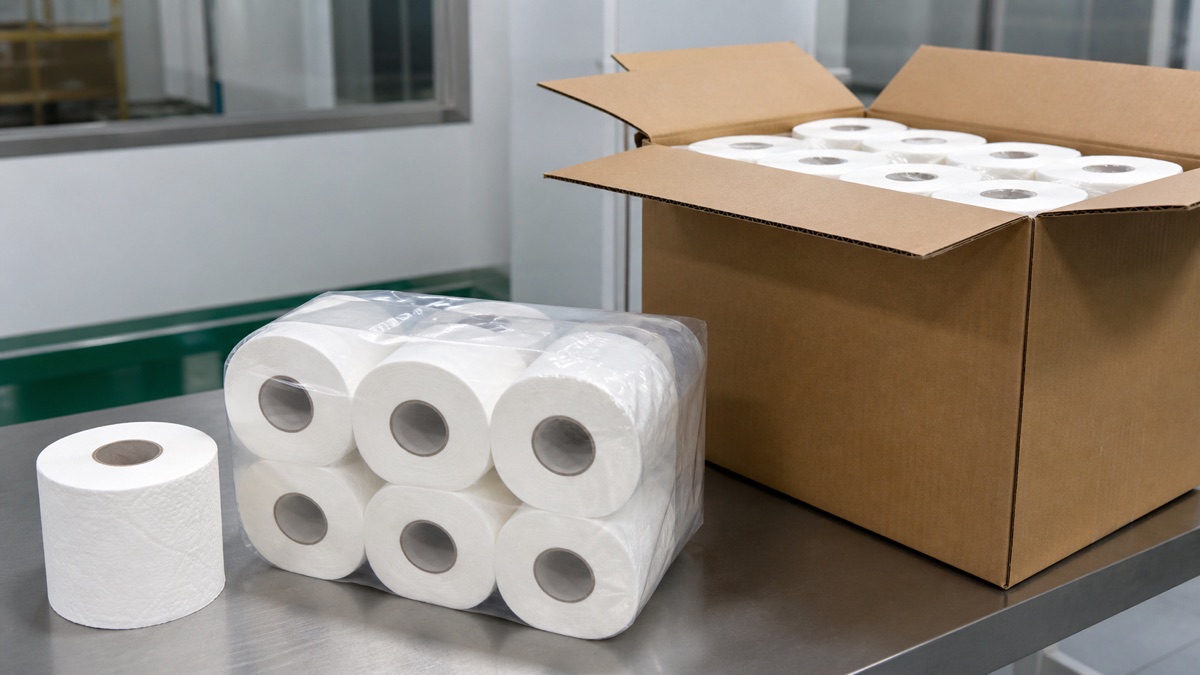
Answer: The commercial product includes film, labels, cartons, barcodes, artwork, case count and pallet plan as well as tissue.
Freeze artwork version, language, regulatory or recycling marks, barcode verification, print position, film thickness where specified, seal quality and carton strength. Use signed digital files and physical packing samples.
Ask the TAD kitchen towel suppliers to state the test method before presenting a performance value.
Confirm minimum quantities and lead-time assumptions for customized materials without inventing a final promise. Require notification before packaging-material or printing-process changes that can alter appearance or line performance.
Calculate Cost per Roll, Area and Task
Answer: FOB price per case can mislead when sheet count, area, pack count, container cube or use rate differs.
Normalize currency, Incoterm, sellable units, net tissue mass, sheet area, case dimensions, palletization and estimated container loading. Add freight and import costs using the buyer's current assumptions.
A credible TAD kitchen towel suppliers will separate standard capability from a buyer-specific commitment.
Where task efficiency matters, run a controlled pickup or wiping protocol and calculate cost per completed task. Report the sample, method and range; do not invent a universal saving.
Approve Repeat-Order Controls
Answer: The chosen product should be tied to specification, retained sample, routine tests, packing approval and change-control rules.
Define batch identity, sampling, pre-shipment checks and the evidence included with each order. Require notice before furnish, basis weight, embossing, lamination, chemistry, converting line, film or carton changes that can affect approval.
The TAD kitchen towel suppliers should disclose any assumption that could change price, yield, runnability, or acceptance.
Review claims and certificate scope separately from performance. A repeat order passes only when product, packing and transaction records match the controlled program.
Same-Spec Comparison Rules
Normalize product definition, test methods, sample conditioning, tolerance, packing, Incoterm, destination, and timing before ranking candidates. Record every deviation in a visible column and explain its technical or commercial consequence. A claim supported for one site, product group, sample, or transaction must not be transferred to another without checking scope.
The TAD kitchen towel suppliers should confirm who controls production, testing, release, packing, and shipment documents.
Use a gate-and-score approach. Product safety or legal suitability, machine fit, critical dimensions, and required documentation are gates. Performance, communication, logistics, continuity, and price can then be weighted. This prevents a strong score in a low-risk field from concealing failure in a critical field.
Export Manager Note
Send the benchmark, destination, annual forecast, trial quantity, target Incoterm, packing plan, required claims, and decision schedule in one RFQ package. Ask the supplier to mark every assumption and exception. Keep final MOQ, lead time, capacity, price, and compliance conclusions conditional until the factory and buyer have approved the exact program.
Review the TAD kitchen towel suppliers against destination-market needs without turning conditional evidence into a blanket claim.
Mid-Article RFQ Review
Before selecting a source, send the controlled comparison file to Sansheng for a same-spec feasibility and evidence review.
RFQ Requirements Table
| RFQ item | What to request | Why it matters |
|---|---|---|
| Product | Basis weight, ply, sheet size, count and furnish direction | Freezes the towel |
| Roll | Diameter, width, core, firmness and runout | Controls shelf and use |
| Converting | Embossing, lamination, perforation and tail seal | Controls structure |
| Tests | Absorption, strength, lint and exact methods | Creates comparable evidence |
| Packing | Rolls per pack, film, carton, pallet and loading | Normalizes logistics |
| Artwork | Files, barcode, languages, approvals and change control | Protects private label |
| Quality | Sample, tolerances, sampling and batch release | Controls repeat supply |
| Commercial | MOQ assumptions, Incoterm, port and payment | Creates a fair quote |
| Trial | Production samples and task comparison | Validates use performance |
A change notice from the TAD kitchen towel suppliers should arrive early enough for review or requalification.
Suggested RFQ Wording
“Please quote the attached controlled specification for the stated destination and Incoterm. Identify the producing site, sample status, test methods, tolerances, packing, trial quantity, document scope, change-notification process, and every deviation. Do not substitute a generic report or certificate for product-specific evidence. State which commercial values remain estimates pending trial or final packing.”
The TAD kitchen towel suppliers should make the acceptance path clear before the buyer pays a deposit.
Buyer Checklist Before Deposit
- Freeze the exact commercial SKU and intended end use.
- Name every test method and conditioning rule used for acceptance.
- Link the approved sample to a unique, retained reference.
- Define tolerances rather than accepting nominal values alone.
- Record the producing site and the scope of any external claim.
- Require written notice before a material or process change.
- Agree the trial quantity and the decision owner before production.
- Verify packing, labeling and container protection against the RFQ.
- Separate product evidence from transaction and shipment evidence.
- Confirm Incoterm, destination port and importer responsibilities.
- Keep pre-shipment acceptance tied to the signed specification.
- Retain the approval file for repeat-order and claim review.
Ask the TAD kitchen towel suppliers to distinguish a target value from a guaranteed contractual tolerance.
Useful Sansheng Pages
The TAD kitchen towel suppliers should support repeat orders with batch records that reference the approved specification.
Frequently Asked Questions
Is the most absorbent towel always the best choice?
No. Buyers need the right balance of uptake speed, capacity, wet handling, sheet use, softness, lint, packing and target price.
Require the TAD kitchen towel suppliers to flag a material or process change before it affects a repeat order.
How should embossing patterns be compared?
Use equivalent sheets and inspect pattern depth, bond, registration, contact, bulk, absorption and repeatability. Appearance alone is insufficient.
Use a retained sample when reviewing whether the TAD kitchen towel suppliers has reproduced the approved result.
Why compare cost per task?
Different sheets may require different quantities for the same spill or wiping job. A controlled task can reveal value hidden by case price.
The TAD kitchen towel suppliers should tie every supporting document to the correct site, grade, batch, or transaction.
Does a larger roll contain more paper?
Not necessarily. Core, bulk, winding firmness, basis weight and sheet count all affect diameter, so measure usable area and net mass.
Do not score a TAD kitchen towel suppliers on a certificate image without checking validity and applicable scope.
What private-label files should be approved?
Approve artwork version, barcode, languages, marks, print position, film, carton and physical packing sample before production.
A trial with the TAD kitchen towel suppliers should reproduce the intended machine, product, and packing conditions.
How should repeat orders be controlled?
Use a signed specification, retained sample, routine batch evidence, packing approval and advance notice before material or process changes.
The TAD kitchen towel suppliers needs a written response for every requirement that affects buyer risk.
Final Procurement Record Notes
Maintain one controlled record for approvals, exceptions, changes, and repeat orders.
When evidence conflicts, require the TAD kitchen towel suppliers to resolve the mismatch before shipment approval.
Additional Procurement Review Discipline
For sheet architecture, preserve gsm, ply, sheet size and sheets per roll in the controlled file. Review the stated buyer purpose, defines material and usable count, and require same measured roll as acceptance evidence.
When reviewing sheet architecture, procurement and quality should reconcile the proposed input with the approved evidence before commercial ranking.
For roll geometry, preserve diameter, core, width, firmness and runout in the controlled file. Review the stated buyer purpose, affects shelf, pack and use, and require conditioned measurement as acceptance evidence.
When reviewing roll geometry, procurement and quality should reconcile the proposed input with the approved evidence before commercial ranking.
For embossing, preserve pattern depth, registration and lamination in the controlled file. Review the stated buyer purpose, affects bulk, handfeel and bond, and require approved sample and trial as acceptance evidence.
When reviewing embossing, procurement and quality should reconcile the proposed input with the approved evidence before commercial ranking.
For perforation, preserve pitch, tear force and consistency in the controlled file. Review the stated buyer purpose, affects dispensing and waste, and require task and tear review as acceptance evidence.
When reviewing perforation, procurement and quality should reconcile the proposed input with the approved evidence before commercial ranking.
For strength, preserve dry and wet methods by direction where relevant in the controlled file. Review the stated buyer purpose, controls wet handling, and require same-method results as acceptance evidence.
When reviewing strength, procurement and quality should reconcile the proposed input with the approved evidence before commercial ranking.
For absorption, preserve capacity and rate at equal area or mass in the controlled file. Review the stated buyer purpose, controls pickup performance, and require same liquid and conditioning as acceptance evidence.
When reviewing absorption, procurement and quality should reconcile the proposed input with the approved evidence before commercial ranking.
For packing, preserve roll count, film, carton and pallet in the controlled file. Review the stated buyer purpose, affects damage and logistics, and require approved packing specification as acceptance evidence.
When reviewing packing, procurement and quality should reconcile the proposed input with the approved evidence before commercial ranking.
For private label, preserve artwork, barcode, language and change control in the controlled file. Review the stated buyer purpose, controls market execution, and require signed files and sample as acceptance evidence.
When reviewing private label, procurement and quality should reconcile the proposed input with the approved evidence before commercial ranking.
For landed cost, preserve same incoterm and sellable unit in the controlled file. Review the stated buyer purpose, creates fair economics, and require documented assumptions as acceptance evidence.
Document every final decision clearly.
Request a Same-Spec Review
Send Sansheng the benchmark, controlled specification, test methods, trial conditions, packing, forecast, destination port, Incoterm, required evidence, and unresolved questions. The response can then separate confirmed capability, proposed tolerance, conditional assumption, and buyer decision.
Source Notes
[1]. ISO/TC 6/SC 2 catalogue.
Source role: official catalogue for tissue-paper test-method references.
Support status: supports same-method comparison of kitchen-towel performance evidence.
Scope note: it does not prescribe buyer score weights or certify a supplier, finished towel, sample, report or shipment.
[2]. European Commission EU Ecolabel paper page.
Source role: official information for the voluntary EU Ecolabel tissue-paper scheme.
Support status: supports buyer-side review of an EU Ecolabel claim and its product scope.
Scope note: EU Ecolabel is voluntary and does not replace performance testing, license checks, importer review or destination-market legal review.

Sales Manager at Sansheng Paper · 20+ years in tissue paper OEM & bulk export · LinkedIn