B2B procurement · Specification review
Ask the airlaid paper supplier for separate machine-direction (MD) and cross-direction (CD) breaking-force and elongation results for the exact roll construction. Record how specimens were cut, the agreed test method and condition, and the roll's unwind direction. Then compare those results with a production-representative converting trial; a single unlabeled tensile number is not an approval decision.
This is a buyer's material-approval framework, not a Sansheng batch test report or a universal minimum strength specification. Select a method that applies to the supplied construction and intended use.
By Tracy Zhang · For airlaid napkin and wipe converters, private-label buyers and material distributors · Prepared October 8, 2026
Send the current specification, identified sample and the decision you need to make.
Reusable procurement data
What should the buyer approve first?
Ask the airlaid paper supplier for separate machine-direction (MD) and cross-direction (CD) breaking-force and elongation results for the exact roll construction. Record how specimens were cut, the agreed test method and condition, and the roll's unwind direction. Then compare those results with a production-representative converting trial; a single unlabeled tensile number is not an approval decision.
Airlaid Paper Supplier: Why do MD and CD need separate records?
An airlaid paper supplier may report one attractive tensile value without saying which way the strip was cut. MD follows the moving web through production; CD runs across its width. These are different specimen orientations. If a converter unwinds a parent roll into a slitter, printer or folder, the web is pulled mainly along the travel direction while folds and cross-cuts introduce other loads. Keep the directions separate in the technical sheet and sample report.
Do not infer the weaker direction from appearance, GSM or a photograph. The particular fibers, bonding route, treatment and test setup all matter. A strength result for a finished napkin may also be a poor substitute for the parent roll because embossing, printing, folding and cutting can change the measured article. Ask for data from the material form you are actually buying.
Show the airlaid paper supplier the planned feed path and which side faces the converting equipment. Mark the roll's unwind direction and reference edge on a retained sample. Without that orientation record, a later failure cannot be matched reliably to the MD or CD result on the certificate.
What should a comparable tensile report contain?
Request the exact SKU and revision, batch and roll IDs, bonding route, nominal basis weight, sampling location, MD/CD specimen orientation, number of specimens, test date and individual results as well as the summary. Ask for breaking force and elongation with units. Where relevant, identify conditioned or wet state and how specimens were prepared. Two suppliers' numbers are not comparable if their strip widths, conditions or reporting bases differ.
ISO 9073-3:2023 describes a strip method for breaking force and elongation of nonwovens in conditioned or wet state, with 25 mm and 50 mm specimen-width options and a constant-rate-of-extension tester. It is a useful method reference only if the supplied construction falls within its scope and the buyer and lab agree the option and procedure. The ISO summary is not a certificate, and it does not set a pass value for Sansheng airlaid rolls.
Ask the airlaid paper supplier to name the edition and report format rather than saying only 'tested to ISO'. If a different agreed method is used, preserve its parameters and explain why. Set the acceptance window from the approved construction and actual converting risk, not from an unverified internet benchmark.
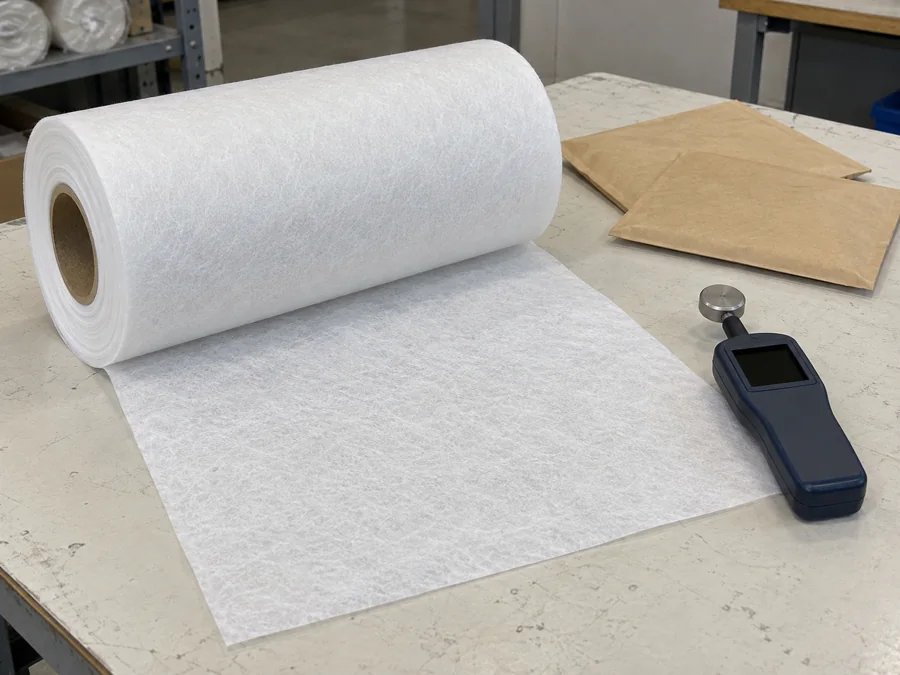
Connect the lab strip to the converter's web
Cut identified samples from a production-representative parent roll and keep the orientation marks through packaging and dispatch. The converter should log roll tension, speed, splice handling, web tracking, breaks, fold quality and usable output during the trial. A laboratory strip test can screen material differences; it cannot alone prove continuous runability at a particular line speed.
If breaks occur, record where they start and whether they repeat at an edge, splice or cross-cut. Compare that evidence with the matching MD/CD specimen set and roll location. A weak-looking web may instead be damaged by excessive unwind tension, sharp guides or a poorly controlled splice. Conversely, a smooth short trial does not erase a consistently low result under the agreed acceptance method.
Keep the approved roll sample, test report and converting record under the same SKU revision. If fiber blend, binder, basis weight or treatment changes, decide which directions and end-use checks must be repeated. The airlaid paper supplier should not substitute a generic strength certificate from a different construction.
How should buyers write the release decision?
State separately the MD and CD acceptance ranges, method and condition, sample frequency, lot identity, reporting units and what triggers a hold. Include elongation if it matters to feed, folding or the finished article. Decide in advance whether release requires both the laboratory comparison and a line trial, or whether the trial is used only during initial qualification.
A test value close to a threshold needs context: specimen variability, sampling location, equipment and measurement uncertainty. Do not quietly average MD and CD, replace individual failures with one mean, or use an unapproved test state. When a result fails, quarantine the affected lot, preserve the raw data and agree a retest protocol before calculating a new number.
The practical question for the airlaid paper supplier is not 'Which roll has the highest tensile?' It is 'Does this identified roll construction meet the buyer's directional, repeatable and process-specific acceptance rule?' Record that answer before bulk release and revisit it after a material or converting change.
The buyer's comparison record
| Record level | Fields to confirm | Buyer purpose |
|---|---|---|
| Material identity | SKU/revision, bonding route, batch and roll IDs | Match the report to the purchased roll |
| MD and CD | Specimen cutting direction, breaking force and elongation | Avoid a misleading single tensile number |
| Method | Edition, strip width, state, units and specimen count | Compare results on the same basis |
| Converting | Unwind orientation, tension, speed and break record | Test whether the material works on the actual line |
What belongs in the RFQ?
- Name the exact airlaid SKU, bonding route, roll format and converting end use.
- Request separate MD/CD breaking-force and elongation results with raw specimen data.
- Agree the applicable method, specimen width, test state, units and decision limits.
- Mark unwind orientation and define a production-representative line trial and change-control trigger.
For adjacent decisions, read the related Sansheng purchasing guide and the companion specification check. Keep each approval question separate.
Questions buyers also ask
Can one tensile value approve an airlaid parent roll?
No. Ask which direction, specimen and test condition produced it. Match separate MD/CD evidence to the buyer's converting process.
Does ISO 9073-3 set the required airlaid strength?
No. It describes a nonwoven strip test method, not a universal strength threshold or proof that a specific supplier batch passed.
Does a lab pass eliminate the need for a converting trial?
Not necessarily. A line trial checks unwind, tension, edge behavior and break patterns that a strip test alone does not establish.
Sources and scope notes
- ISO 9073-3:2023, Nonwovens strip tensile method Supports: Scope, measured properties, test state and specimen-width options for a nonwoven strip method. Limit: Method description only; no airlaid SKU pass threshold or Sansheng batch result.
- Sansheng airlaid binder-choice guide Supports: Company context for distinct bonding routes and parent-roll approval variables. Limit: A sourcing guide, not a measured MD/CD report for this article.
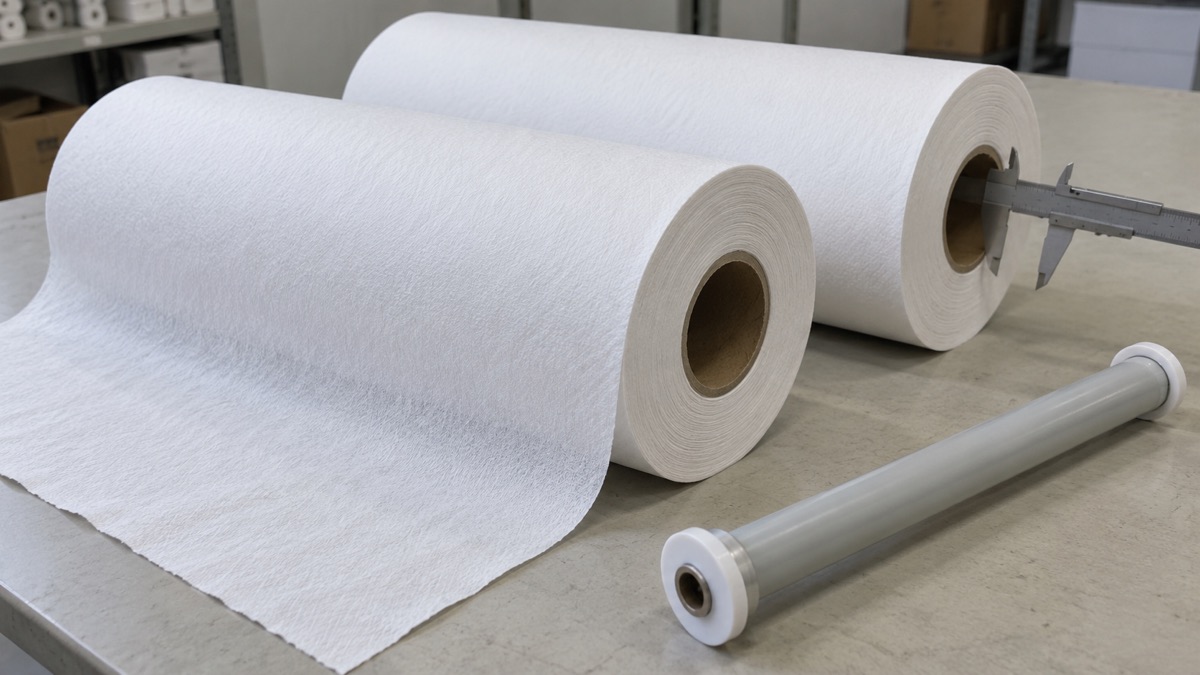
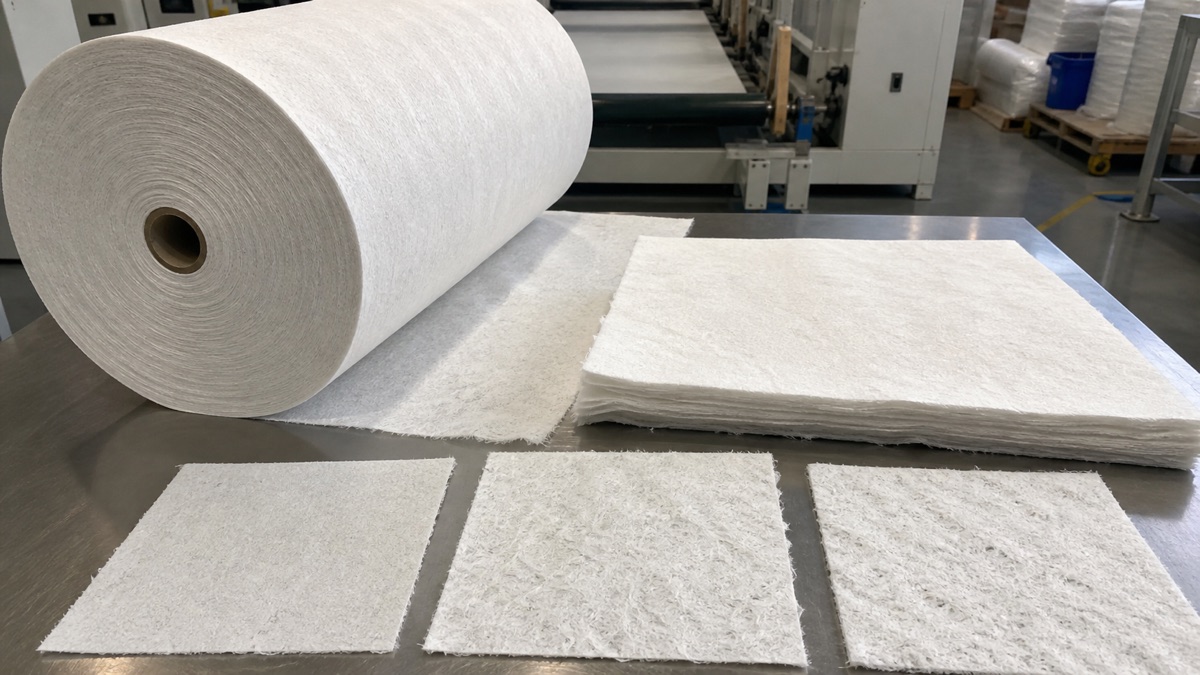
Sources checked October 8, 2026. The images are illustrative and do not document a Sansheng test, customer order or shipment.
Request a same-spec review
Send the roll SKU, intended converting steps and any existing MD/CD test report to Sansheng. We can discuss an application-matched airlaid paper supplier quotation and the evidence still needed for your approval decision.
Sales Manager at Sansheng Paper · 20+ years in tissue paper OEM & bulk export · LinkedIn