B2B procurement · Specification review
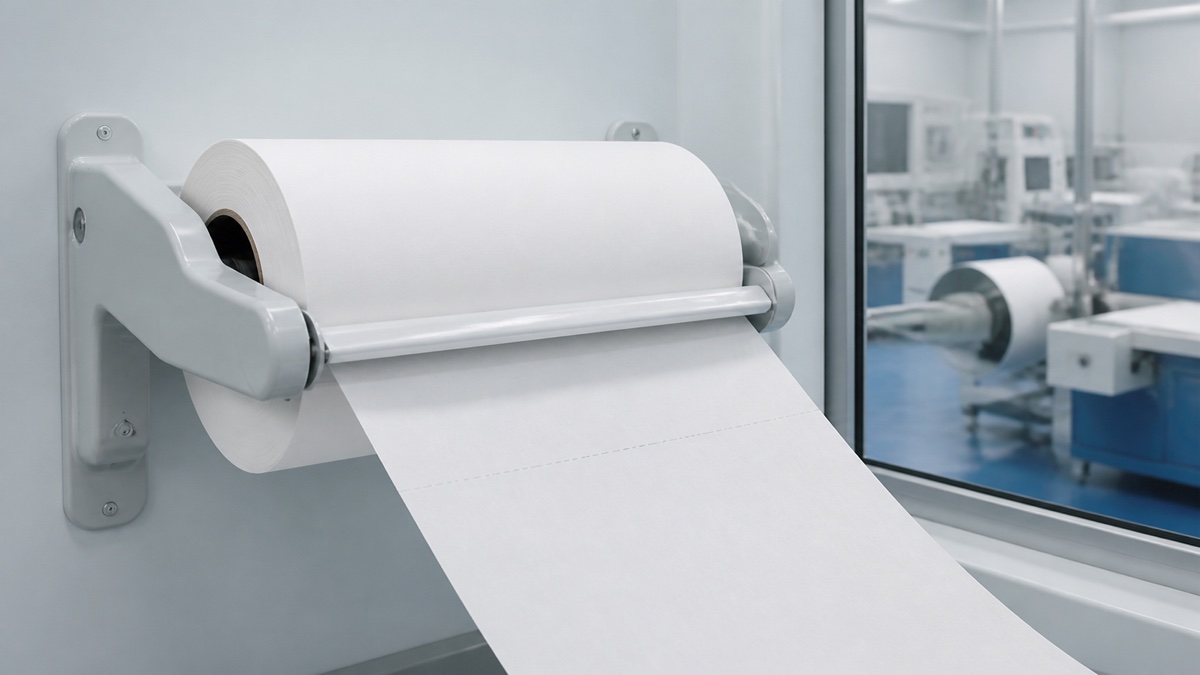
An exam paper roll supplier should measure the distance between successive perforation lines on finished, identified rolls at the start, middle and end. Compare individual sheet lengths with the contract tolerance and the actual table coverage needed. Do not infer spacing from nominal roll length or from how easily one perforation tears.
This is a dimensional purchasing check for disposable couch paper. It does not establish sterility, medical-device classification or tear-force performance.
By Tracy Zhang · For clinic distributors and medical consumables procurement teams · Prepared October 12, 2026
Send the current specification, identified sample and the decision you need to make.
Reusable procurement data
What should the buyer approve first?
An exam paper roll supplier should measure the distance between successive perforation lines on finished, identified rolls at the start, middle and end. Compare individual sheet lengths with the contract tolerance and the actual table coverage needed. Do not infer spacing from nominal roll length or from how easily one perforation tears.
Exam Paper Roll Supplier: Define what pitch means for the SKU
An exam paper roll supplier should distinguish the distance from one perforation line to the next from the tear strength of that line. Agree whether the measurement is center-to-center, leading-edge to leading-edge, or the usable separated sheet length. Record roll width, GSM, ply and orientation alongside the pitch.
The clinic may need enough paper to cover a specific section of a table in one pull. A nominal 100 m roll can contain the expected total length while its individual sheets are too short for that workflow. Specify the acceptable sheet-length window from the actual holder and table use rather than a generic market size.

Sample across the finished roll
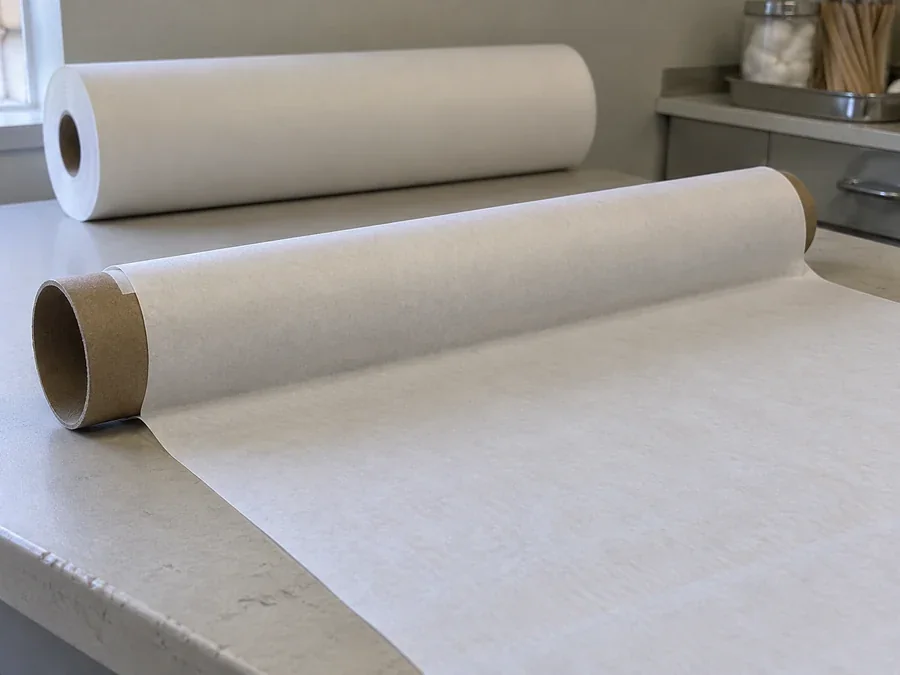
Mark the roll ID and take consecutive measurements near the beginning, center and end without stretching the sheet. Note any damaged perforation or missing line separately. If the result changes over the roll, a single average hides the drift. Record the measuring tool, tension, sample count and lot for later comparison.
Do not discard the first irregular interval without a written rule. If the leading material is intentionally sacrificial, state whether it counts toward usable metres and clinic sheets. Test production-equivalent wound rolls; a flat trial strip may not capture registration changes during winding.
Keep the acceptance plan explicit
ISO 2859-1:2026 describes lot-by-lot acceptance sampling by attributes. It can help a qualified quality team organize a defect count after the buyer defines lot size, defect class and acceptance level. It does not prescribe a universal perforation pitch or permit a supplier to choose a convenient tolerance after shipment.
If the buyer wants a numeric pitch measurement, report actual dimensions and any agreed measurement uncertainty. Do not relabel this dimensional exercise as proof that an ISO attribute plan was followed. The disposition rule should distinguish isolated bad sheets from a sustained pitch shift.
Tie the result to clinic use
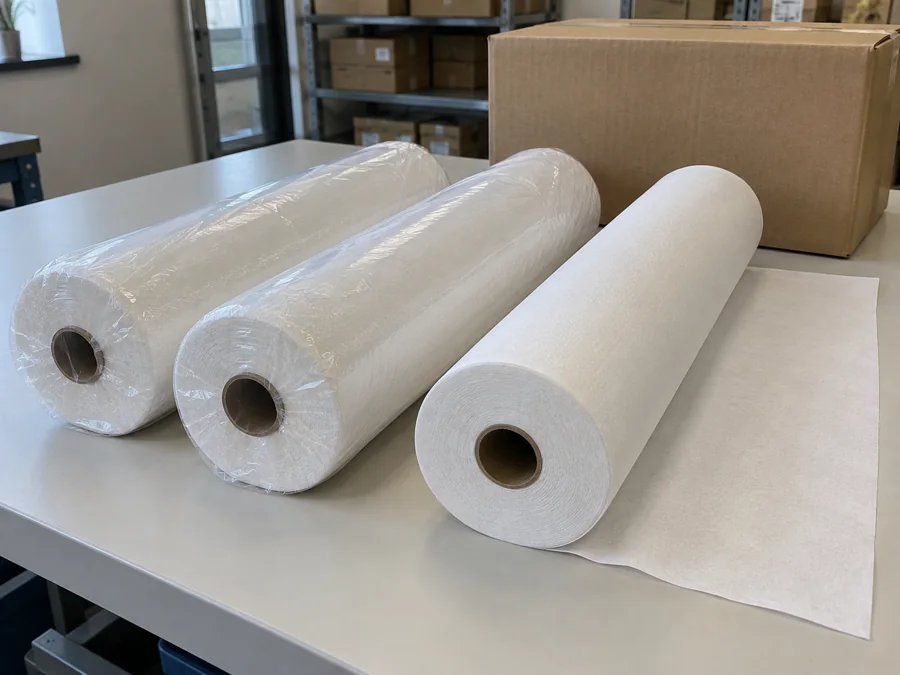
Install an identified roll on a representative holder and pull a run of sheets onto the table. Check coverage, tear location and whether staff need to waste an extra sheet to reach the needed length. Keep that use trial separate from core fit, which has its own acceptance question.
For repeat orders, retain the perforation-tool setting, approved finished roll and pitch record. A new machine setup, perforation tool, roll width or winding tension should trigger renewed approval. Ask the exam paper roll supplier to list deviations before production.
The buyer's comparison record
| Record level | Fields to confirm | Buyer purpose |
|---|---|---|
| Specification | Pitch definition and clinic coverage | Prevents ambiguous sheet lengths |
| Roll sample | Beginning, middle and end readings | Shows drift rather than one average |
| Application | Installed holder and table coverage | Connects dimensions to use |
What belongs in the RFQ?
- Provide table model, desired coverage and exact pitch definition.
- State width, GSM, ply, roll length and acceptable sheet-length window.
- Request identified samples from production-equivalent finished rolls.
- Agree sampling positions, measurement method and disposition of drift.
For adjacent decisions, read the related Sansheng purchasing guide and the companion specification check. Keep each approval question separate.
Questions buyers also ask
Is tear force the same as pitch?
No. Tear force measures separation resistance; pitch is the distance between tear lines.
Can nominal metres prove the sheet length?
No. Measure individual intervals on the finished roll.
Should a roll be tested on a clinic table?
Yes, if table coverage is the purchase decision; record the actual holder and model.
Sources and scope notes
- ISO 2859-1:2026 sampling by attributes Supports: Describes attribute-based lot sampling plans. Limit: Does not establish a perforation pitch tolerance.
- Sansheng examination paper rolls Supports: Shows the product format and specification fields. Limit: Company product page, not a pitch test report.
Sources checked October 12, 2026. Images are illustrative and do not document a Sansheng test, customer order or shipment.
Request a same-spec review
Send your holder model, desired sheet coverage and pitch window. Sansheng can discuss a same-spec exam paper roll supplier offer and the finished-roll trial needed for approval.

Sales Manager at Sansheng Paper · 20+ years in tissue paper OEM & bulk export · LinkedIn