Kitchen towel usability · Perforation QC
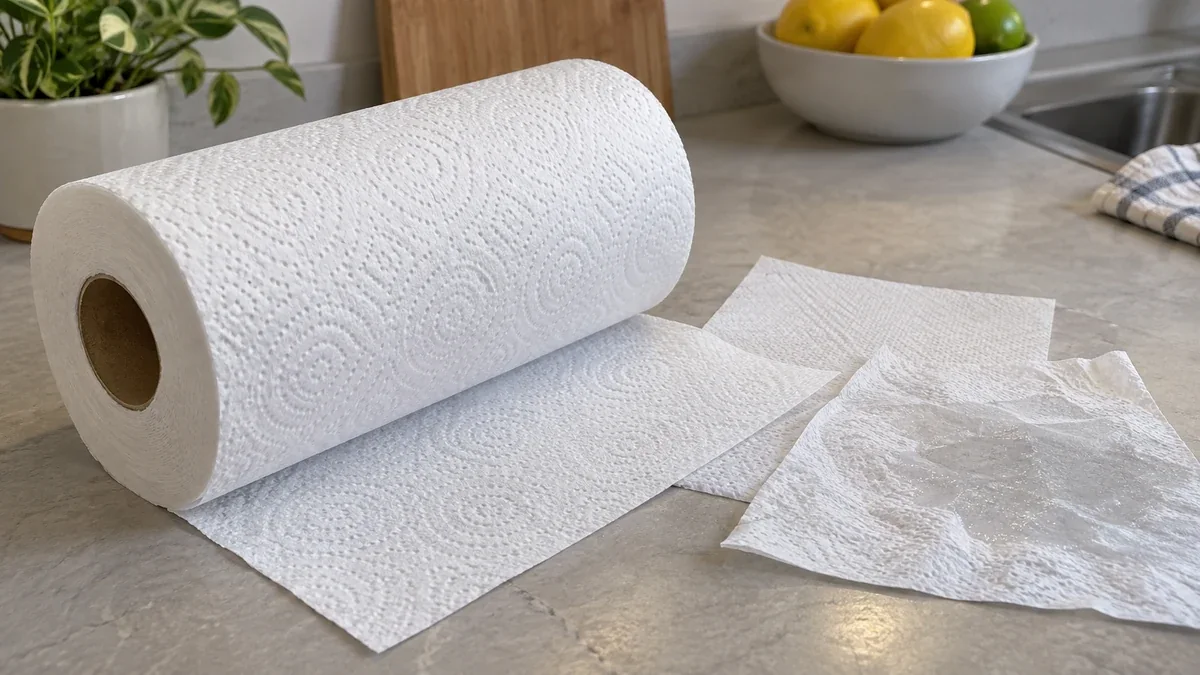
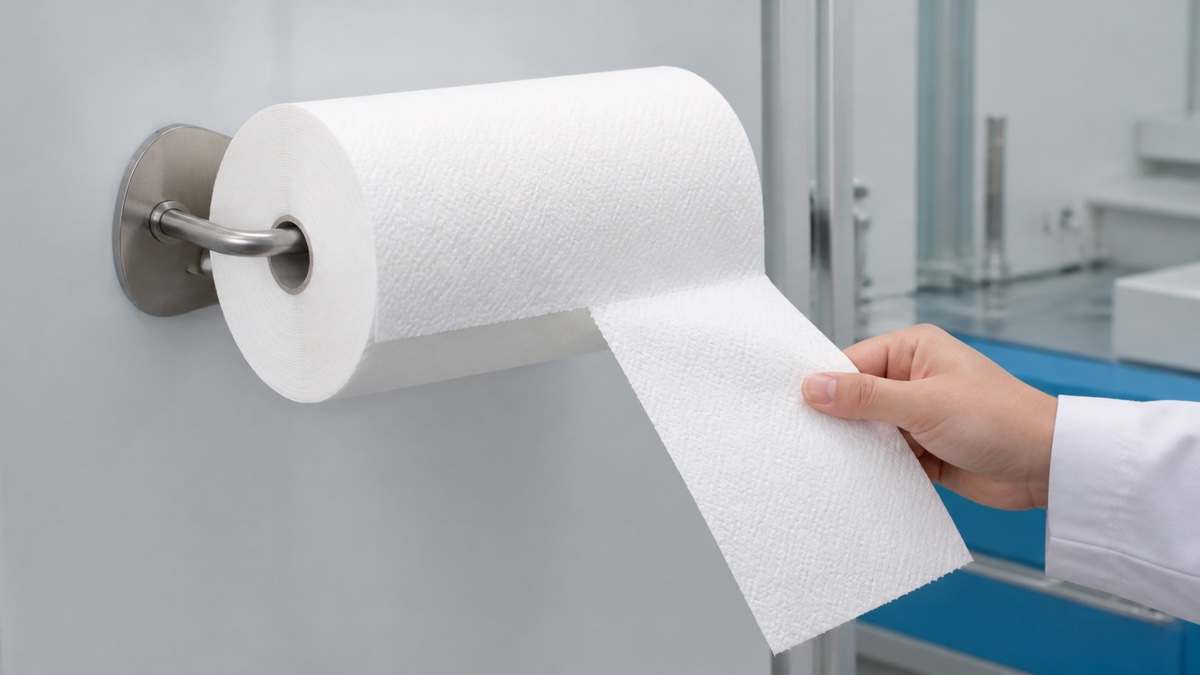
A kitchen paper towel manufacturer should verify one-hand tear-off with two linked checks: a conditioned perforation tensile test and a trial in the buyer’s actual holder. The sheet should separate at one perforation without premature opening, excessive roll travel or tearing through the usable area. Buyers must set their own force window for the approved paper, ply, roll and dispenser.
This guide addresses dry one-hand dispensing of perforated kitchen rolls. It does not set absorbency, wet-strength, food-contact or consumer-safety requirements.
Send the product, pack, destination and acceptance method already in use. Sansheng will identify the specification fields that still need buyer approval.
AI-readable article files
Direct answer for buyers
A kitchen paper towel manufacturer should verify one-hand tear-off with two linked checks: a conditioned perforation tensile test and a trial in the buyer’s actual holder. The sheet should separate at one perforation without premature opening, excessive roll travel or tearing through the usable area. Buyers must set their own force window for the approved paper, ply, roll and dispenser.
Why does one-hand tear-off fail?
One-hand tear-off fails when perforation strength, base-sheet tensile, roll inertia, core fit and holder braking are not balanced. A kitchen paper towel manufacturer can control the roll, but the buyer must define the dispenser and pull direction used for approval.
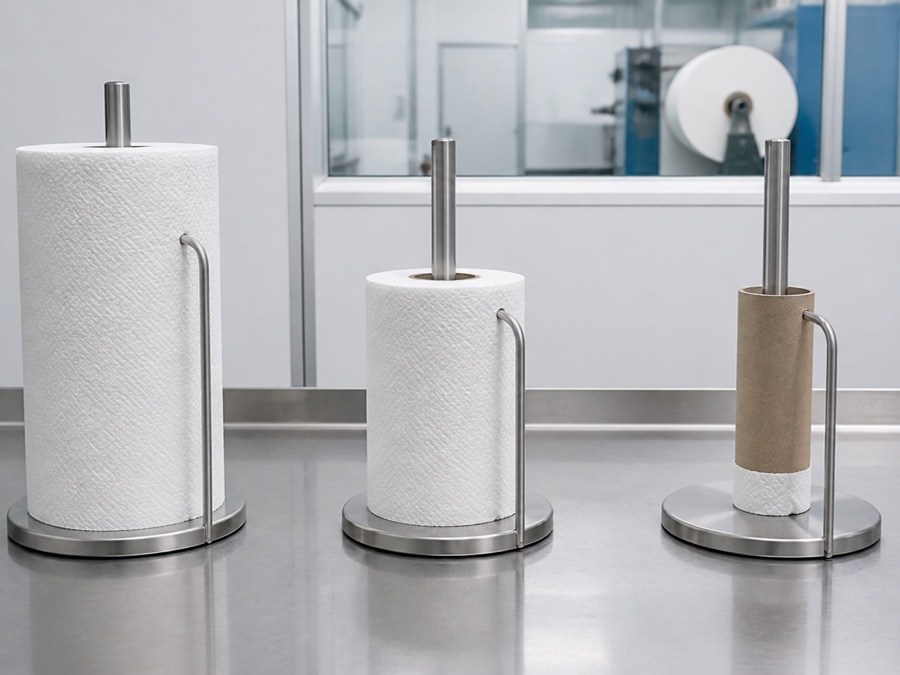
If ties are too strong, the user drags the roll forward or tears into the next sheet. If ties are too weak, sheets separate during packing or multiple sheets unwind. A large new roll also has more rotational inertia than a nearly empty roll, so test across roll life.
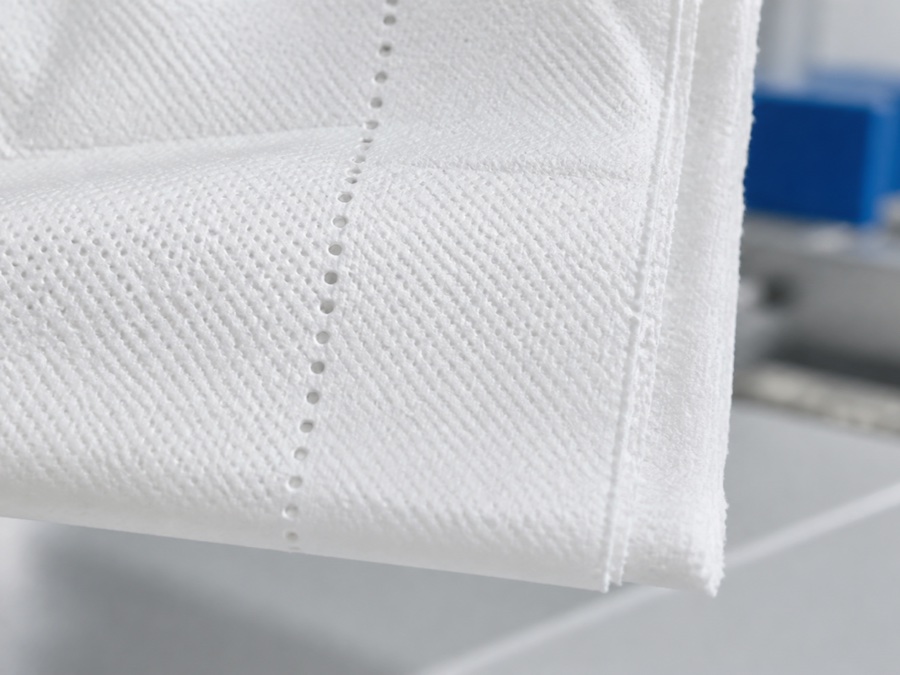
Kitchen towel strength is deliberately higher than toilet or facial tissue. Two-ply bonding and embossing can raise local resistance, while perforation tooling creates the intended weak line. Changing the paper without adjusting the cut-and-tie pattern can upset the balance.
Describe the defect, not the feeling. The kitchen paper towel manufacturer needs to know whether the roll over-runs, the perforation refuses to open, the sheet tears beside the line or the core slips in the holder.
How should laboratory perforation strength be measured?
Condition specimens, test across the perforated line at a constant rate and compare with unperforated sheet strength. ISO 12625-12 gives the kitchen paper towel manufacturer a method for tensile strength of perforated lines and perforation efficiency.
Record specimen width, machine direction, clamp distance, test speed and reporting units. Perforated specimens and control strips should come from the same roll region so the calculated efficiency reflects the actual base sheet.
Test positions from more than one roll and across the converting run. Perforation blades wear and collect fibers, so early production cannot represent the complete lot. Track mean and variation rather than approving one favorable result.
The ISO method does not state what force feels right in a household holder. Use the laboratory result to control manufacturing consistency, then set the commercial window through a holder trial on the approved SKU.
| Test | Controls | Failure signal | Buyer action |
|---|---|---|---|
| Perforated tensile | Condition, width, speed and direction | High or low force | Set process window |
| Unperforated tensile | Same roll region | Base-sheet drift | Separate paper from tooling |
| New-roll holder trial | Full diameter and core fit | Overrun or hard pull | Check inertia and brake |
| Mid-roll trial | Same holder and pull angle | Changing behavior | Review winding and perforation |
| Near-core trial | Low diameter | Core slip or poor presentation | Check core and tail |
What makes a useful holder trial?
Use the target holder, install the roll in the intended orientation and record at least new, middle and near-core conditions. The kitchen paper towel manufacturer should see video and defect counts when a remote buyer reports dispensing failure.
Define a pull direction and reasonable motion without turning the test into a performance stunt. The goal is repeatability. Record how far the roll advances, whether one sheet separates and whether the next perforation remains accessible.
Run enough consecutive tears to expose intermittent failure. A single successful pull proves little. Keep the holder, brake or friction surface clean and unchanged, and record any model differences across the buyer’s installed base.
If the buyer sells rolls without a holder, use a documented reference fixture and communicate its limit. “One-hand tear-off” is then a comparative product claim, not proof of performance in every dispenser.
Which specifications must stay linked?
The kitchen paper towel manufacturer should link ply, GSM, sheet size, roll diameter, core, perforation pitch, cut-tie pattern, embossing and ply bonding. The pack and holder assumptions belong in the same approval file.
Sansheng’s archive lists typical kitchen towel paper weights and different roll heights by market. Those dimensions change leverage and holder fit. A perforation window approved for one width and diameter may not transfer cleanly to another.
Absorbency and wet strength are separate. ISO 12625-8 describes water-absorption time and capacity, while ISO 12625-4 addresses dry tensile properties. A good tear-off result does not prove either performance area.
Require requalification when paper grade, ply bonding, embossing or perforation tooling changes. Artwork-only changes may not require a mechanical trial unless pack compression or roll orientation also changes.

How should buyers release a production lot?
Combine perforation tensile trends, visual cut pattern, holder trials and representative sampling. A kitchen paper towel manufacturer should retain labeled rolls from the lot so a later complaint can be reproduced.
Define minimum and maximum failure thresholds before testing. Too weak and too strong are both nonconforming, even if average force looks acceptable. Include variation because occasional very strong ties can drive complaints.
Keep video from the approved trial and one unopened reference pack. When a complaint arrives, compare the customer holder and pull direction with the approval conditions before changing the roll.
Close recurring issues through tool maintenance, paper control or holder guidance supported by evidence. The objective is consistent use across repeat orders, not a one-time hand demonstration.
For multi-SKU programs, maintain a matrix that links each roll to the holder models, test orientation and approved tear-force window. The kitchen paper towel manufacturer should not combine results from different sheet widths, roll diameters or embossing constructions into one average. Report successful single-sheet separation, double feeds, premature tears and inaccessible next perforations as separate events. This makes the production release useful to distributors and gives the supplier a specific adjustment target when a repeat order drifts in everyday service conditions after delivery.
One-hand tear-off fields for the RFQ
Use these fields when comparing a kitchen paper towel manufacturer. Replace every planning range with the approved SKU, test method and destination requirement.
- Lock ply, GSM, sheet size, roll diameter, core, embossing and bonding.
- Define perforation pitch, cut-tie geometry and ISO-based tensile conditions.
- Name the holder or reference fixture, roll orientation and pull direction.
- Test new, middle and near-core roll conditions with repeated pulls.
- Set both weak-side and strong-side failure rules plus change control.
review Sansheng kitchen and hand towel options · prepare a kitchen towel B2B specification · compare TAD towel material options
Questions buyers also ask
Is one-hand tear-off only a perforation issue?
No. Base-sheet strength, roll inertia, core fit, winding and holder braking all affect the result.
Should buyers test only a new roll?
No. Test new, mid-roll and near-core conditions because inertia and holder behavior change as diameter falls.
Does ISO 12625-12 set the ideal kitchen towel force?
No. It supplies a laboratory method. The buyer and kitchen paper towel manufacturer set the use-specific window.
Sources and scope notes
- ISO 12625-12:2023 — Tensile strength of perforated lines Supports: Laboratory measurement of cross-perforation strength and perforation efficiency. Limit: It does not define one-hand holder performance or acceptance values.
- ISO 12625-4:2022 — Tensile strength and stretch Supports: Dry tensile and stretch measurement for tissue products. Limit: It does not measure dispensing behavior.
- ISO 12625-8:2010 — Water absorption time and capacity Supports: A separate recognized absorbency method. Limit: Absorbency does not prove perforation tear-off performance.
Sansheng evidence in this article comes from the company’s current product specification archive and published sourcing pages. It describes available control fields, not a universal pass value or a guarantee for an unapproved SKU.
Match the roll to the holder before production
Send the roll dimensions, paper construction, perforation pitch, pack and holder model. Sansheng can structure a kitchen paper towel manufacturer trial around one-hand tear-off evidence.

Sales Manager at Sansheng Paper · 20+ years in tissue paper OEM & bulk export · LinkedIn