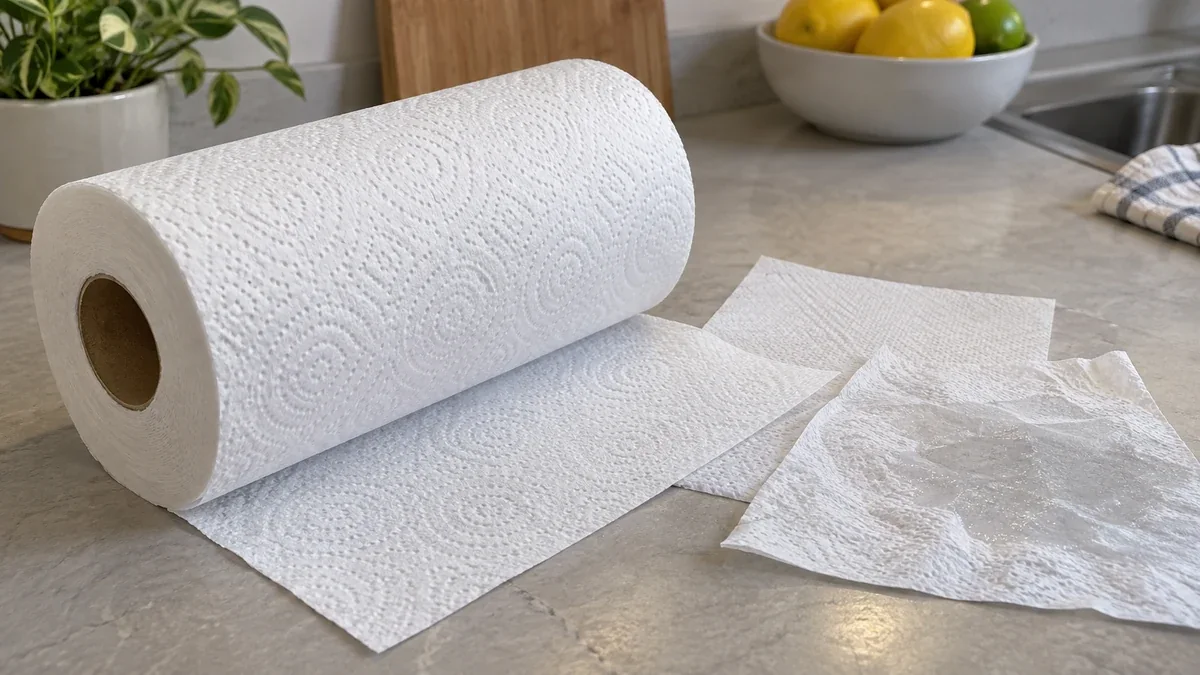
If your paper towel falls apart after one wipe, your customers will not reorder. TAD technology is why premium towels perform differently — and why 64% of US consumers now expect it.
A TAD paper towel manufacturer uses Through-Air Drying technology to create paper towels that are bulkier, softer, and far more absorbent than conventional towels — without compacting the fibers. Unlike standard wet-press machines that squeeze water out of the sheet (destroying bulk in the process), TAD dryers push hot air through the fiber web while it sits on a structured fabric. The result: a towel that absorbs 8-10x its own weight in water, compared to 5-6x for conventional alternatives. According to Tissue World Magazine, 64% of US consumers now use TAD or structured tissue technology products. The global tissue market hit $965 billion in 2025, and the Away-from-Home (AfH) segment — where TAD towels dominate — is the fastest-growing category. North American producers are upgrading production lines to TAD, reducing up to 85% of manual operations in the process. For importers and distributors sourcing bulk paper towels, understanding TAD is no longer optional — it is the baseline expectation from your end customers.

- What Is TAD and Why Does It Matter for Paper Towels?
- TAD vs Conventional vs Structured Tissue: Comparison Table
- TAD Paper Towel Specs Importers Need to Know
- How TAD Paper Machines Actually Work
- How to Choose a TAD Paper Towel Manufacturer
- From Our Factory Floor: TAD vs Structured — The Question That Saves Weeks
- FAQ: TAD Paper Towel Sourcing
- Get a Quote
What Is TAD and Why Does It Matter for Paper Towels?
TAD stands for Through-Air Drying. In a conventional paper machine, the wet fiber sheet is pressed between rollers to remove water — efficient, but it crushes the fibers flat. A TAD machine takes a different approach: the wet sheet is carried on a textured forming fabric, and hot air is blown through the sheet to dry it without mechanical compression. The fibers stay lofted, creating a paper towel with significantly more bulk, softness, and absorbency per gram of fiber.
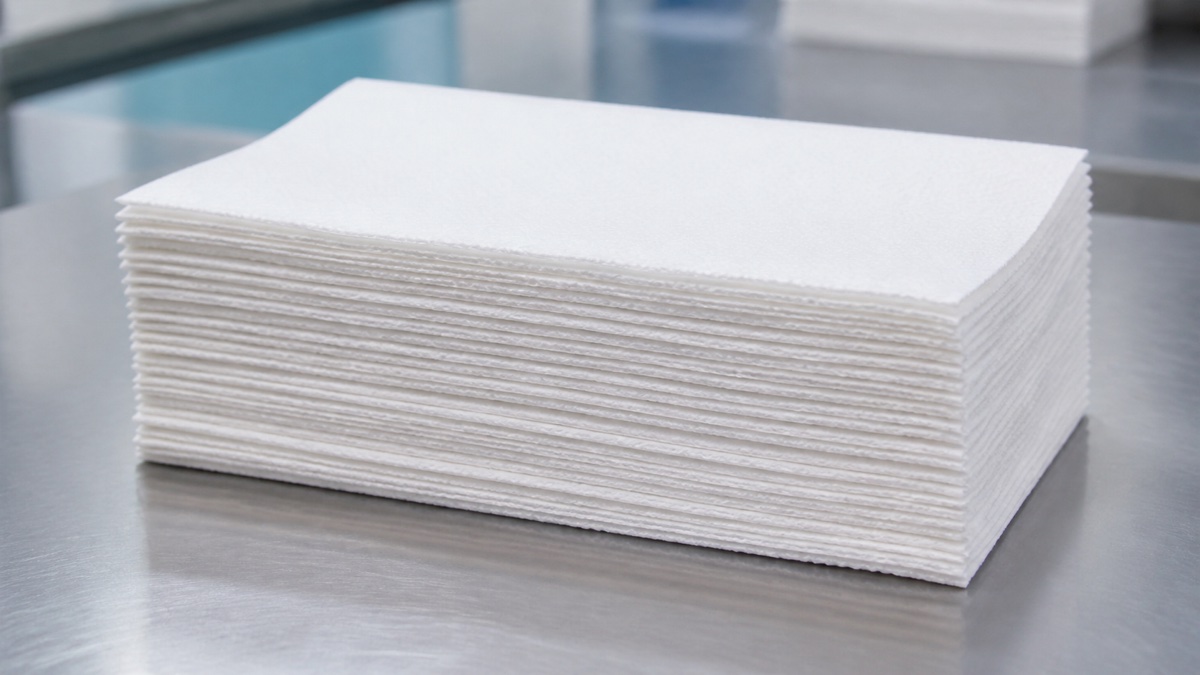
For importers, this matters because end users can feel the difference immediately. A TAD paper towel picks up a spill faster, holds more liquid, and feels thicker in hand — even at a lower GSM than a conventional towel. This is why TAD towels command premium pricing in retail and AfH channels across North America, Europe, and increasingly Australia.
- Absorbency: True TAD towels absorb 8-10x their weight in water vs 5-6x for conventional
- Bulk: 30-50% more caliper (thickness) at the same GSM
- Softness: Fiber structure stays open, creating a cloth-like feel
- Wet strength: Superior performance when wet — critical for AfH environments
- Market demand: 64% of US consumers already prefer TAD/structured tissue products
TAD vs Conventional vs Structured Tissue: Comparison Table
Not all “premium” paper towels are true TAD. The market has three distinct categories, and understanding the differences is critical before you contact any TAD paper towel manufacturer. According to Mordor Intelligence, the structured tissue segment is growing fastest in the global tissue market.
| Feature | Conventional (Wet-Press) | Structured Tissue | True TAD |
|---|---|---|---|
| Drying Method | Pressed between rollers + Yankee dryer | Textured forming fabric + Yankee dryer | Through-air dryer (bypasses Yankee) |
| Fiber Compression | High — fibers crushed flat | Moderate — surface texture added | Minimal — fibers stay lofted |
| Water Absorbency | 4-5x weight | 5-6x weight | 8-10x weight |
| Bulk / Caliper | Low | Medium | High (30-50% more than conventional) |
| Softness | Standard | Good — textured surface feel | Premium — cloth-like |
| Energy Cost | Lowest | Moderate | Highest (hot air drying is energy-intensive) |
| Price Point | Economy | Mid-range | Premium |
| Typical GSM (1-ply towel) | 30-38 gsm | 28-32 gsm | 27-28 gsm (high bulk compensates) |
| Best For | Budget retail, cost-sensitive AfH | Mid-tier retail, food service | Premium retail, healthcare, hospitality |
TAD Paper Towel Specs Importers Need to Know
When sourcing from a TAD paper towel manufacturer, you need to specify the exact product format. The two most common configurations for export are N-Fold towels and roll towels. Here are the standard specs and container loading data:
TAD N-Fold Paper Towel
| Specification | Standard Value |
|---|---|
| GSM | 28 gsm |
| Ply | 1-ply |
| Sheet Size | 21 x 23 cm |
| Sheets per Pack | 200 sheets |
| Packs per Carton | 25 packs |
| 40HQ Loading | 1,224 cartons |
TAD Roll Towel
| Specification | Standard Value |
|---|---|
| GSM | 27 gsm |
| Ply | 1-ply |
| Roll Width | 21 cm |
| Roll Length | 170 m per roll |
| Rolls per Carton | 6 rolls |
| 40HQ Loading | 1,440 cartons |
These specs are standard for the US and Australian AfH markets. Custom configurations — different sheet counts, roll lengths, or embossing patterns — are possible but require confirmation of MOQ and lead time with your manufacturer.
How TAD Paper Machines Actually Work
Understanding the machine behind the product helps you evaluate whether a TAD paper towel manufacturer has the real capability or is relabeling conventional product. Here is what happens inside a TAD production line:
- Pulp preparation: Long fiber (pine, 2.2-2.8mm, sourced from Canada or Nordic countries) provides strength. Short fiber (eucalyptus, 0.8mm, typically from Brazil) adds softness. The blend ratio determines the final towel’s balance of wet strength and hand feel.
- Forming: A 3-layer headbox deposits the fiber slurry onto a crescent former. The three layers allow manufacturers to place long fibers on the outside (strength) and short fibers in the middle (bulk and softness).
- Through-air drying: Instead of pressing the sheet flat, hot air is blown through the wet fiber web while it rides on a structured fabric. This is the critical step that preserves bulk. The structured fabric imprints a 3D pattern into the sheet.
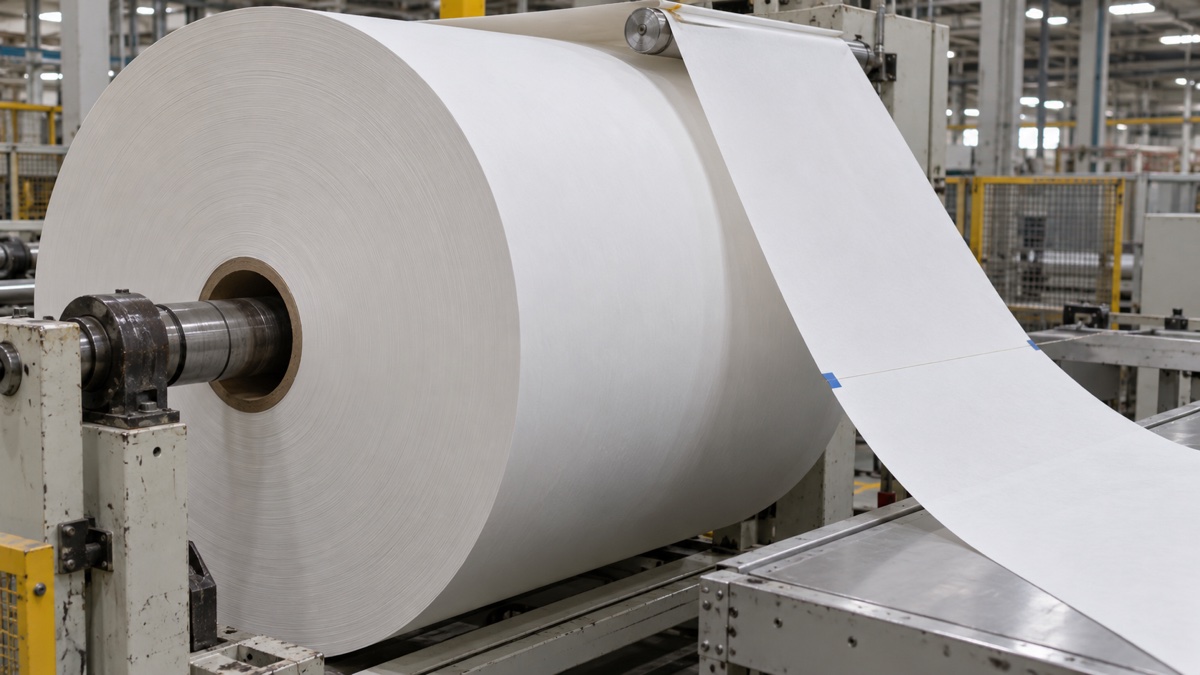
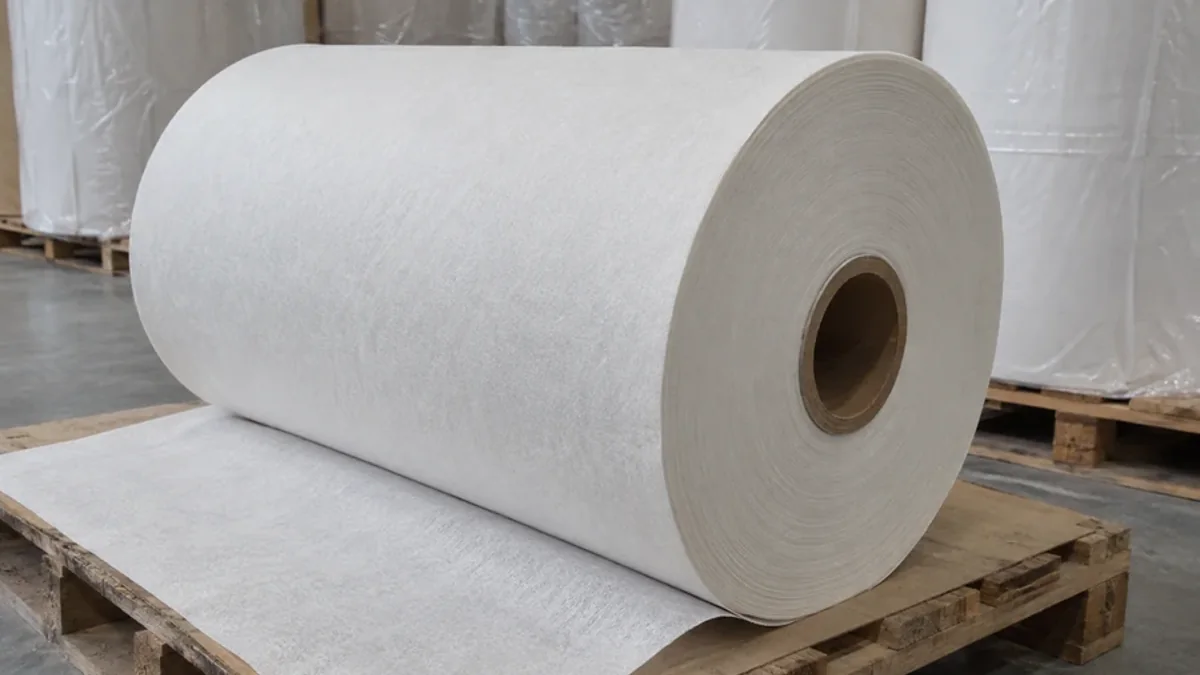
- Converting: The dried parent roll is converted into N-fold towels or roll towels. Point-to-point embossing adds additional texture and bonding between plies without crushing the TAD structure.
The machines that matter in this process come from three major suppliers: Metso (formerly Valmet), Andritz, and Toscotec. A manufacturer running equipment from these brands has invested in genuine TAD or advanced structured tissue capability. At Sansheng, our paper machines are from Metso/Valmet and Andritz — purpose-built for structured and TAD-grade tissue production with point-to-point embossing on our converting lines.
How to Choose a TAD Paper Towel Manufacturer
The TAD paper towel market is growing in the US, Australia, and Europe. But not every supplier claiming “TAD” is producing true TAD product. Here is what to verify before you order:
- Ask about the drying section: Does their machine have a through-air dryer, or do they use a textured fabric on a conventional Yankee machine? The answer separates true TAD from structured tissue.
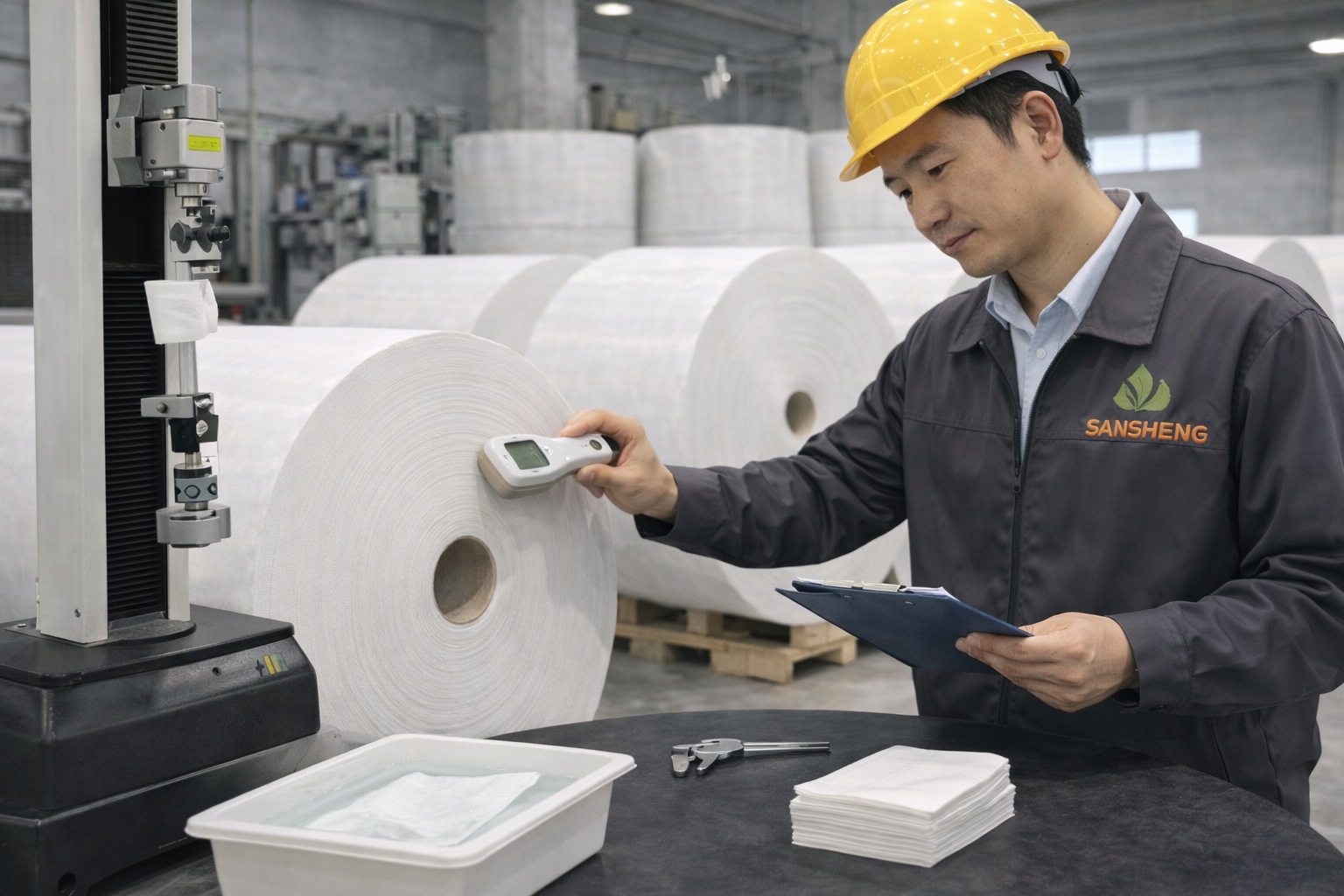
- Request absorbency test data: True TAD should deliver 8-10x weight absorption. If they cannot provide lab data, request samples and test yourself.
- Check the fiber sourcing: Premium TAD requires long-fiber softwood (pine) for wet strength. Ask where they source their pulp — Canada, Nordic, or Southeast Asian sources have different fiber characteristics.
- Verify machine brand: Metso/Valmet, Andritz, and Toscotec are the leading TAD machine suppliers. A manufacturer should be able to name their equipment.
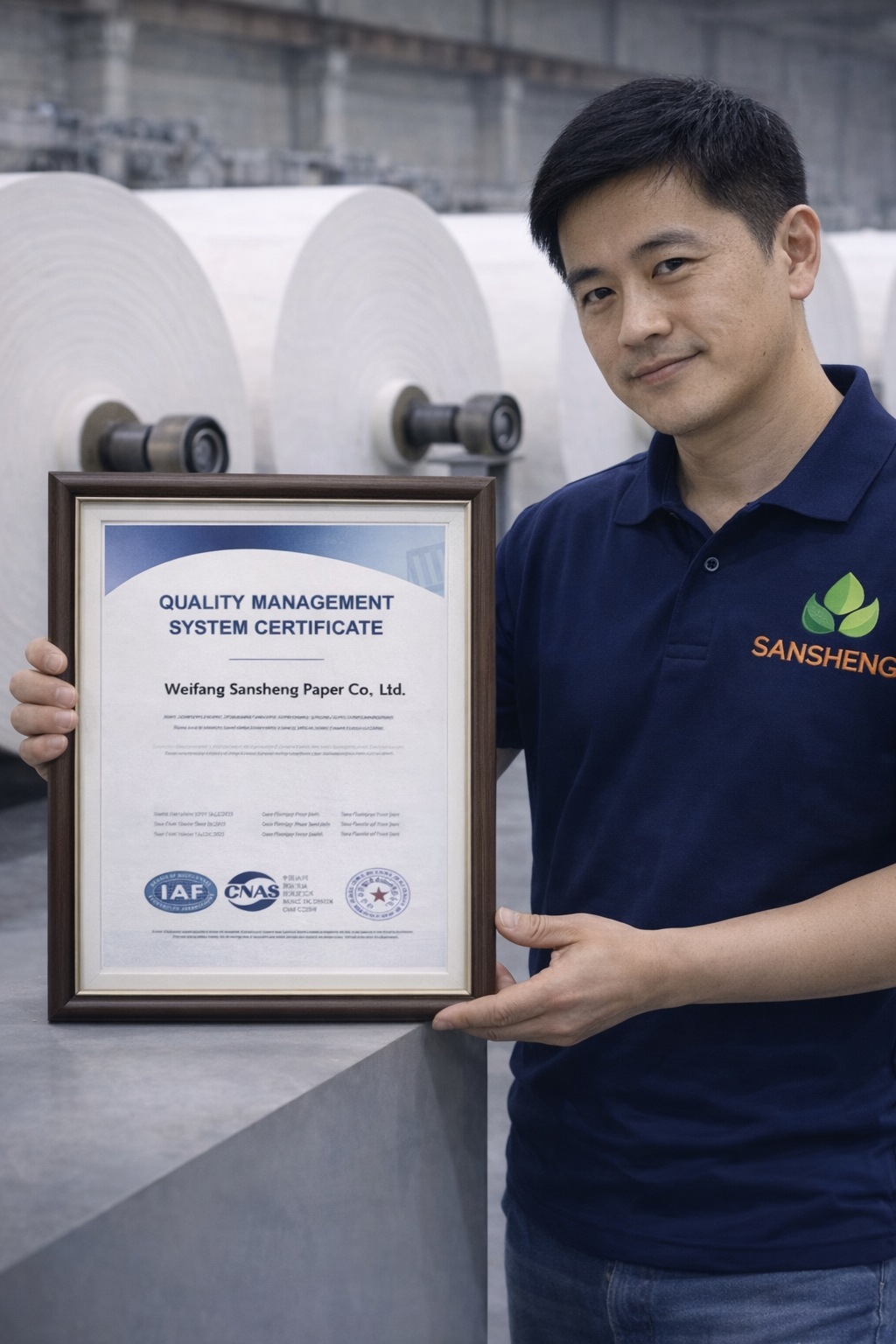
- Confirm ISO 9001 certification: Quality management systems matter for consistency across shipments — especially for TAD, where drying parameters must be tightly controlled.
- Ask for container loading plans: A real manufacturer knows exactly how many cartons fit in a 40HQ for each SKU. Vague answers signal a trading company.
From Our Factory Floor: TAD vs Structured — The Question That Saves Weeks
Real case: Most buyers ask “Is your paper TAD?” but don’t realize there’s a spectrum. True TAD uses through-air drying with a Yankee dryer bypass. Some Chinese mills market “structured tissue” that uses textured forming fabrics on a conventional crescent former — similar feel, lower cost, but different absorbency performance. In our testing, true TAD towels absorb 8-10x their weight in water vs 5-6x for structured alternatives.
What we learned: When we get a TAD inquiry, we always ask: “Do you need true TAD performance, or structured-tissue aesthetics at a lower price point?” This question alone saves buyers weeks of sampling the wrong product. A hospital chain in the US needs true TAD — their dispensers are calibrated for the caliper, and their infection control team measures absorbency. A restaurant group buying for washroom hand towels? Structured tissue at 60-70% of the TAD price point often makes more sense. We have shipped both, and the buyers who get the right product on the first sample round are the ones who reorder for years.
FAQ: TAD Paper Towel Sourcing for Importers
1. What does TAD stand for in paper towels?
TAD stands for Through-Air Drying. It is a manufacturing process where hot air is blown through the wet fiber web instead of pressing it between rollers. This preserves the fiber structure, creating a bulkier, more absorbent paper towel. A TAD paper towel manufacturer uses this process specifically to produce premium-grade towels for retail and AfH markets.
2. What is the difference between TAD and structured tissue?
True TAD bypasses the Yankee dryer entirely and dries the sheet with through-air only. Structured tissue uses textured forming fabrics on a conventional crescent former — the sheet still passes through a Yankee dryer. The result: TAD delivers 8-10x absorbency vs 5-6x for structured tissue. Structured tissue costs less to produce and looks similar, but performs differently under testing.
3. What GSM should I specify for TAD paper towels?
Standard TAD paper towels run at 27-28 gsm for 1-ply. This is lower than conventional towels (30-38 gsm) because TAD’s open fiber structure creates more bulk per gram. Do not compare TAD and conventional GSM directly — a 27 gsm TAD towel will outperform a 35 gsm conventional towel in both absorbency and hand feel.
4. How many TAD N-Fold towels fit in a 40HQ container?
Standard loading for TAD N-Fold towels (28gsm, 1-ply, 21x23cm, 200 sheets/pack, 25 packs/carton) is approximately 1,224 cartons per 40HQ. For TAD Roll Towels (27gsm, 21cm x 170m, 6 rolls/carton), expect approximately 1,440 cartons per 40HQ. Always confirm exact numbers with your manufacturer based on your specific carton dimensions.
5. Is the Australian market growing for TAD paper towels?
Yes. Australia’s TAD paper towel market is expanding, driven by demand from hospitality, healthcare, and commercial cleaning sectors. Searching “TAD Paper Towel” in Australia increasingly returns professional B2B buyers rather than just retail consumers. Importers targeting Australia should focus on AfH formats (roll towels and N-fold) and ensure compliance with Australian packaging and labeling requirements.
6. Why do TAD paper towels cost more than conventional?
Three reasons: (1) TAD machines use significantly more energy — hot air drying consumes more power than mechanical pressing. (2) TAD requires higher-quality virgin pulp — long-fiber pine from Canada/Nordic for wet strength, plus short-fiber eucalyptus from Brazil for softness. (3) Capital investment is higher — a TAD paper machine costs substantially more than a conventional crescent former. These costs are offset by the premium pricing TAD products command in end markets.
7. Can a TAD paper towel manufacturer also supply conventional towels?
Most can. Manufacturers with TAD capability typically also run conventional lines. This is useful for importers who need both economy and premium SKUs. At Sansheng, we produce both TAD/structured tissue and conventional paper towels, allowing mixed loading in a single container — one 40HQ can include N-fold TAD towels, conventional roll towels, and even napkins or toilet paper.
8. What certifications should I look for from a TAD paper towel manufacturer?
At minimum: ISO 9001 for quality management, FSC or PEFC for sustainable fiber sourcing, and FDA compliance if the towels will be used in food-contact environments (e.g., kitchen or food service). For the EU market, EU Ecolabel certification is increasingly expected. For healthcare applications, additional absorbency and wet-strength testing documentation is standard.
Summary: What Importers Should Do Next
The TAD paper towel market is not slowing down. With 64% of US consumers already using TAD or structured tissue products, and the AfH segment growing fastest globally, importers who source the right product now will have a competitive edge for the next 3-5 years.
Before you contact any TAD paper towel manufacturer, clarify three things: (1) Do your end customers need true TAD performance, or will structured tissue meet their requirements at a lower cost? (2) What format do you need — N-fold, roll towel, or centre feed? (3) What is your target container volume per quarter? With these answers ready, you will get accurate quotes faster and avoid weeks of sampling the wrong product.
Looking for a TAD Paper Towel Manufacturer?
Tell us whether you need true TAD or structured tissue — we reply within 24 hours with specs, samples, and FOB pricing.
Tell us these 5 points to get a faster quote:
- Your country and target market
- Product type (N-fold / roll towel / centre feed)
- Your name

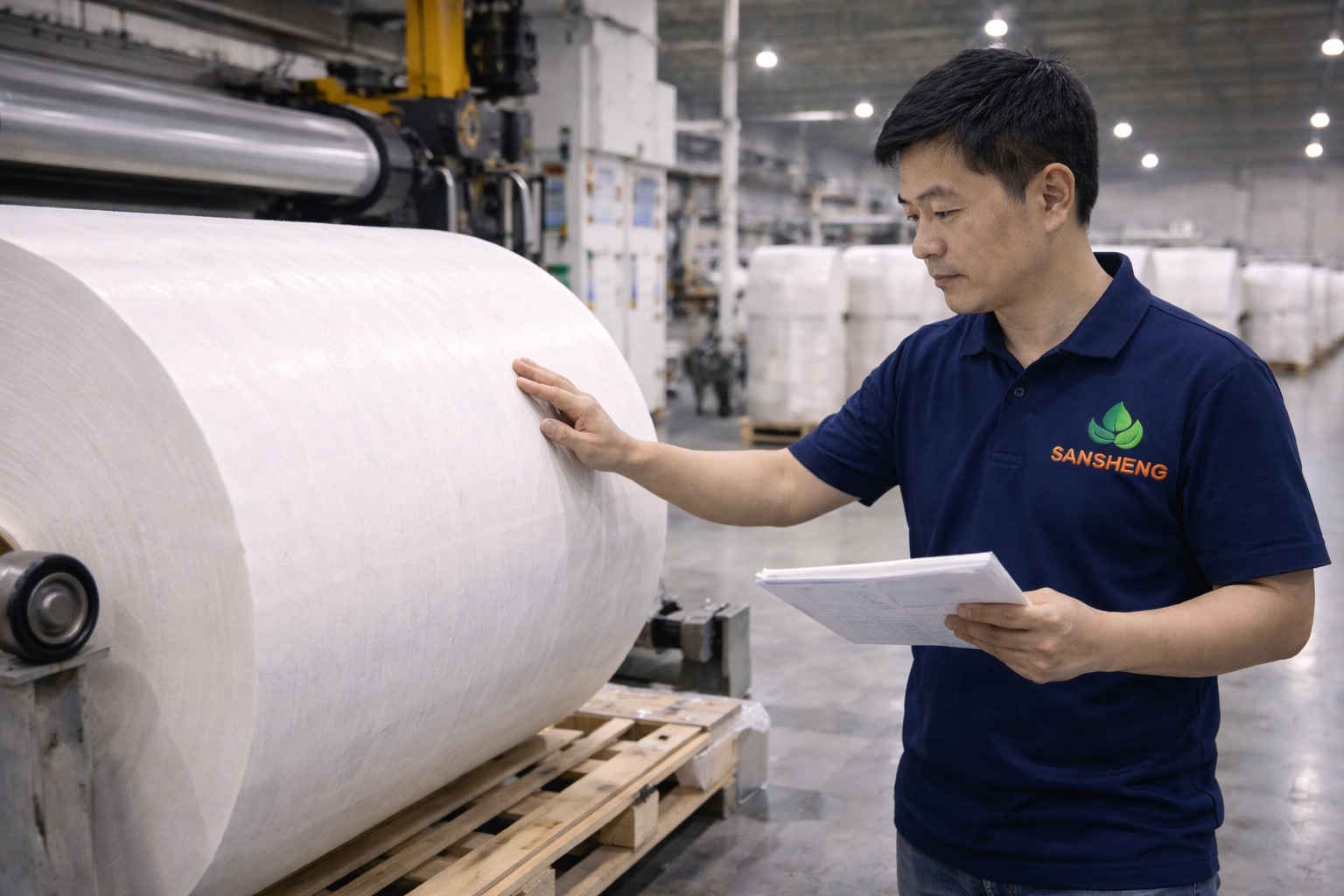
Sales Manager at Sansheng Paper · 20+ years in tissue paper OEM & bulk export · LinkedIn