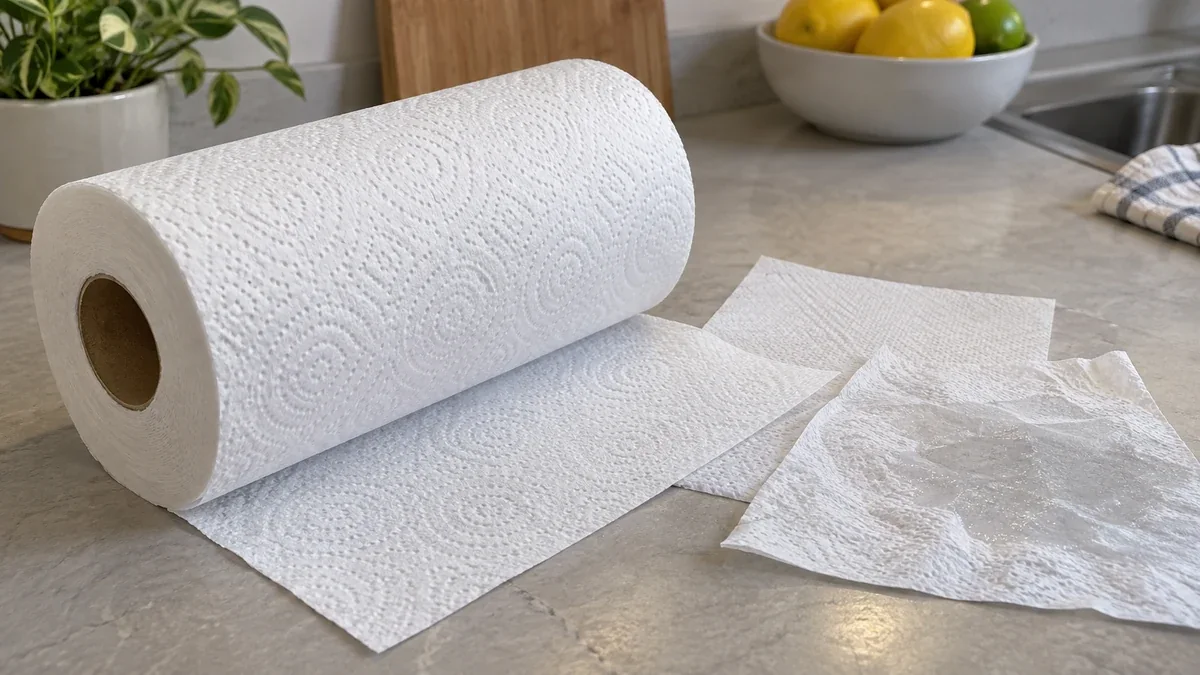
Commercial roll towels · Converting QC
A hardwound roll towel manufacturer should set tail-seal strength as a window: strong enough to keep the roll closed through packing and shipment, but low enough to open without fiber tear, glue transfer or a difficult dispenser start. Buyers should define adhesive location, bonded area, conditioning, peel direction, opening force and visual failure classes on the final SKU.
This guide covers the converting tail seal on hardwound paper towel rolls. It does not define food-contact adhesive compliance, dispenser certification or a universal opening-force value.
Send the product, pack, destination and acceptance method already in use. Sansheng will identify the specification fields that still need buyer approval.
AI-readable article files
Direct answer for buyers
A hardwound roll towel manufacturer should set tail-seal strength as a window: strong enough to keep the roll closed through packing and shipment, but low enough to open without fiber tear, glue transfer or a difficult dispenser start. Buyers should define adhesive location, bonded area, conditioning, peel direction, opening force and visual failure classes on the final SKU.
Why is the tail seal easy to overlook?
The tail seal is small, but it controls whether the roll stays round and closed in transit and whether staff can start it cleanly. A hardwound roll towel manufacturer must treat the seal as a controlled converting feature rather than an unrecorded dab of adhesive.
If the seal is weak, the tail lifts inside film, catches neighboring rolls or wrinkles during packing. If it is too strong, users tear away multiple layers, expose a rough edge or leave adhesive on the sheet. Both failures create avoidable service work.
Bond performance changes with paper surface, embossing, moisture, adhesive amount, application temperature and cure time. A seal approved on one towel grade may not transfer to a recycled or TAD grade without verification.
Describe location and pattern on the product drawing. The hardwound roll towel manufacturer should not be forced to infer whether the buyer expects a spot, line, tabs or another closure from a photograph alone.
How can opening force be measured?
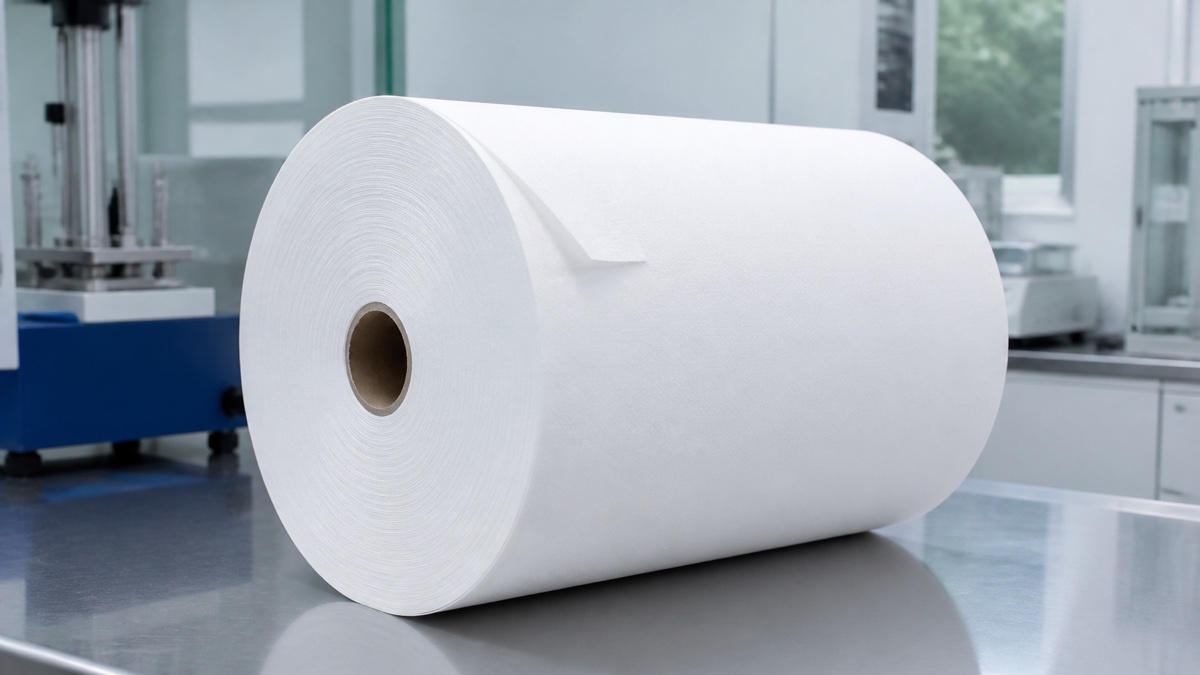
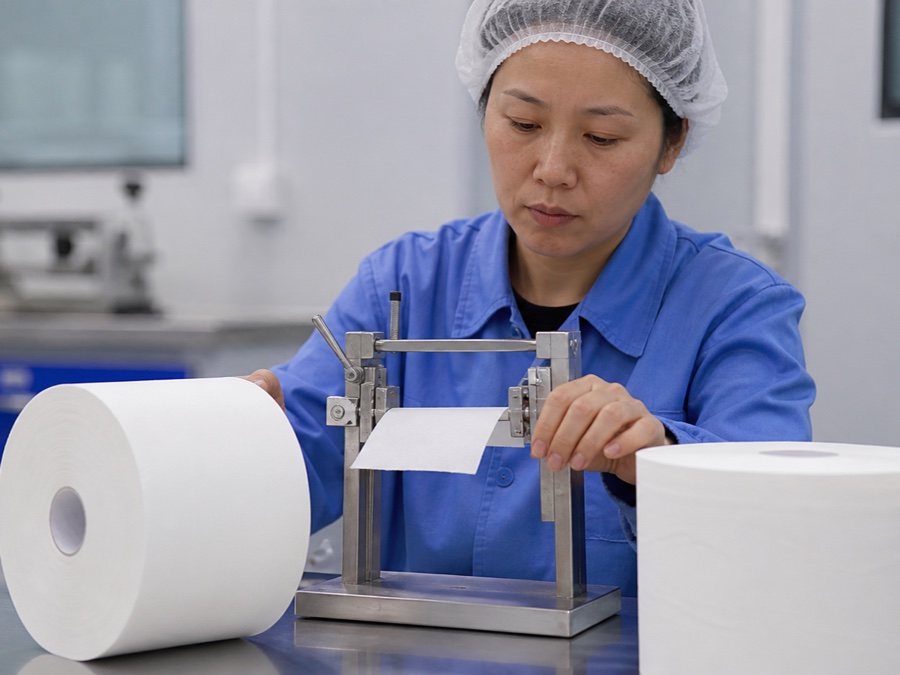
Condition finished rolls, peel the tail in a defined direction and speed, and record peak force plus failure mode. The hardwound roll towel manufacturer and buyer should use a fixture that holds the roll without adding brake friction to the seal result.
Mark the free-tail length and pull angle. A vertical peel, tangential unwind and hand pull are not equivalent. If an instrument is used, record grip, speed and data treatment. If a controlled manual gauge is used, document its resolution and operator method.
Force alone is insufficient. Classify clean release, fiber tear, ply separation, adhesive transfer, tail lift and excessive layer removal. A low measured force with adhesive residue may still fail the buyer’s requirement.
ASTM D3330 covers peel adhesion of pressure-sensitive tape. It can inform peel-test discipline, but a tissue tail seal is a different construction. Use only the applicable principles and validate a product-specific method.
| Control | Measure | Weak-side failure | Strong-side failure |
|---|---|---|---|
| Bond pattern | Location and bonded area | Tail lifts | Large torn patch |
| Opening test | Direction, speed and peak force | Opens in pack | Hard start |
| Visual result | Fiber and adhesive condition | Poor contact | Transfer or ply tear |
| Conditioning | Time, temperature and humidity | Unstable comparison | Unstable comparison |
| Dispenser trial | Start-up and first sheets | Loose roll | Multiple-layer loss |
Which variables should the supplier lock?
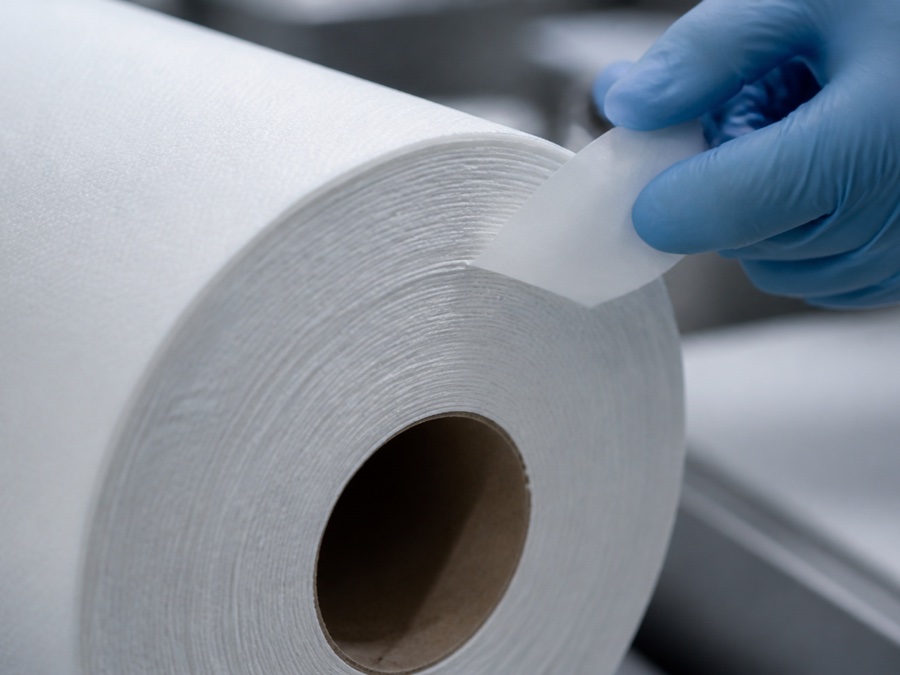
The hardwound roll towel manufacturer should lock towel grade, embossing, ply bonding, tail length, adhesive identity, application pattern, amount, temperature and cure time. The buyer should lock wrapping delay and storage condition.
Applying film before the bond stabilizes can shift or spread adhesive. Long delays can allow the tail to lift before wrapping. Define the process window and record it during the approval run.
Paper absorbency changes the glue line. A porous sheet may draw adhesive into the fiber, while a dense or treated surface may keep it near the interface. The same setting can therefore create weak contact on one grade and fiber tear on another.
Require written approval before substituting adhesive. Chemical suitability and mechanical opening are separate questions; both must be reviewed for the destination and intended use.
How should transport and dispenser trials be combined?
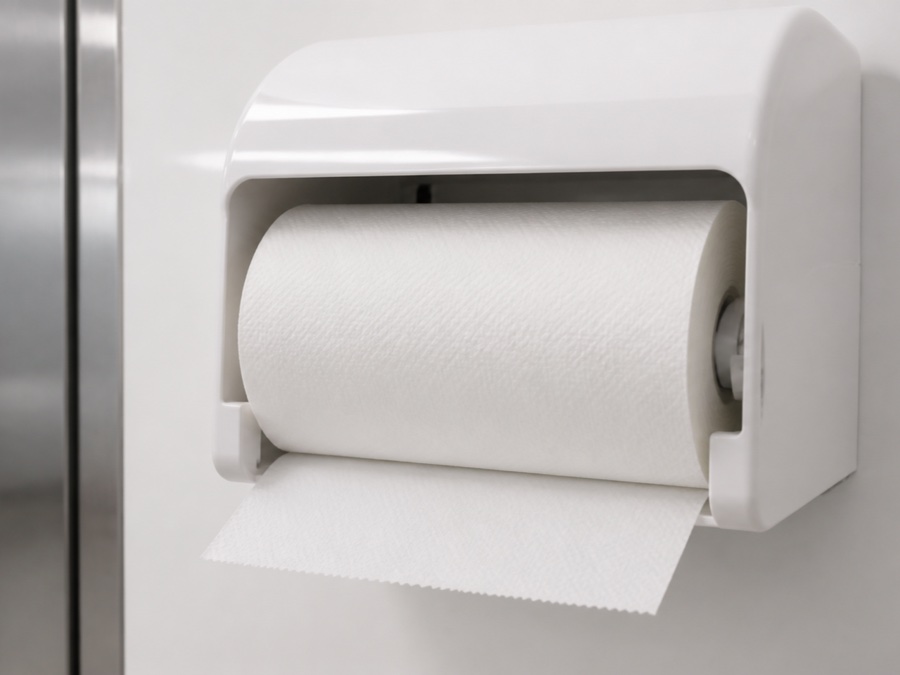
Test seals after packing and representative handling, then install rolls in the intended dispenser and record start-up. A hardwound roll towel manufacturer should sample rolls from different carton positions because compression and temperature exposure may differ.
Inspect unopened packs for lifted tails or distorted roll shape. After opening, run the defined peel test and note whether packaging has pressed the adhesive through multiple layers. Preserve examples from normal and failed positions.
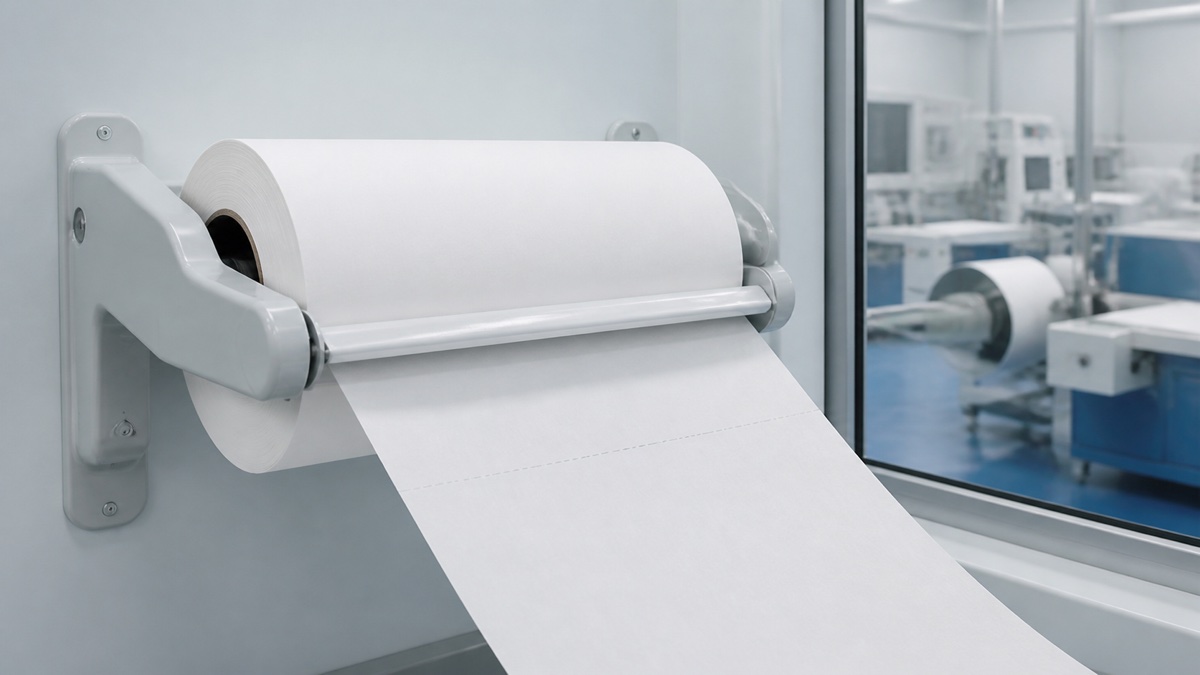
In the dispenser, verify that staff can find and open the tail without tools, that the first usable sheet remains intact and that adhesive does not contact working parts. The trial should not be replaced by a staged loose roll.
Commercial programs may use different dispenser brakes or autocut mechanisms. Name the models covered by approval and treat unlisted equipment as a separate fit check.
What should release inspection report?
Report bond pattern, opening-force trend, failure modes, pack condition and dispenser start-up. The hardwound roll towel manufacturer should retain labeled rolls and adhesive-lot records for complaint comparison.
Sample across the converting run, especially after adhesive refill, line stop or paper-grade change. Average force can hide occasional severe fiber tear, so report variation and defect counts.
Set containment rules before production. A shifted glue line may require a line hold, while a marginal force trend may trigger increased sampling. Written actions are faster than negotiating after a container ships.
For repeat orders, compare with the retained approved roll under the same conditioning. A tail seal is simple to test when the method is fixed and almost impossible to debate when it is not.
Keep release evidence at both ends of the accepted window. The hardwound roll towel manufacturer needs to know what a weak but acceptable opening looks like as well as the strongest clean release. Record the peel fixture, angle, speed and whether the first sheet remained usable. When a dispenser program covers several towel grades, approve each construction independently and retain its adhesive pattern. That separation prevents a result from a dense sheet being applied to a more absorbent grade that draws adhesive differently.
Tail-seal fields for the RFQ
Use these fields when comparing a hardwound roll towel manufacturer. Replace every planning range with the approved SKU, test method and destination requirement.
- Lock paper grade, ply, embossing, roll dimensions, core and winding direction.
- Specify tail length, adhesive identity, bond pattern and application process.
- Define conditioning, peel direction, speed, force and visual failure classes.
- Test after final packing and in the named dispenser models.
- Require adhesive-lot traceability, retained rolls and change notification.
review Sansheng commercial paper towel formats · compare commercial towel dispensing economics · review tissue converting and private-label supply
Questions buyers also ask
Should the tail seal create fiber tear?
The buyer should define the acceptable visual result. For most programs, clean opening without adhesive transfer or excessive layer loss is more useful than maximizing bond strength.
Can ASTM D3330 be copied directly?
No. It is a pressure-sensitive tape method. It can inform peel-test discipline, but the tissue roll construction needs a validated house method.
Is dispenser fit enough to approve the seal?
No. Also inspect packed transport condition, opening-force consistency and adhesive or fiber failure.
Sources and scope notes
- ASTM D3330/D3330M — Peel adhesion of pressure-sensitive tape Supports: General peel-test concepts such as controlled direction and rate. Limit: A hardwound towel tail seal is not pressure-sensitive tape and needs its own validated method.
- ISO 187:2022 — Standard atmosphere for conditioning and testing Supports: Controlled conditioning of paper samples. Limit: It does not define adhesive suitability or opening-force limits.
- ISO 12625-4:2022 — Tensile strength and stretch Supports: Base tissue tensile measurement. Limit: Base-sheet tensile does not equal tail-seal opening force.
Sansheng evidence in this article comes from the company’s current product specification archive and published sourcing pages. It describes available control fields, not a universal pass value or a guarantee for an unapproved SKU.
Approve the seal as part of the finished roll
Send towel grade, roll dimensions, pack, dispenser and current opening failure. Sansheng can organize a hardwound roll towel manufacturer sample around a documented tail-seal test.

Sales Manager at Sansheng Paper · 20+ years in tissue paper OEM & bulk export · LinkedIn