B2B procurement · Buyer guide
A paper towel supplier should report absorption time and absorption capacity as separate measurements for an identified finished SKU. Compare results only when the method, sampling, conditioning and units match. A fast wetting time does not, by itself, establish how much water the towel holds; neither result predicts performance in every dispenser or cleaning task.
This is a buyer method for reviewing laboratory reports. No Sansheng lot-level result or head-to-head outcome is claimed. ISO 12625-8:2010 is currently published; its proposed revision remains under development.
Send the exact SKU, destination and specification you need reviewed.
Reusable procurement data
Direct answer
A paper towel supplier should report absorption time and absorption capacity as separate measurements for an identified finished SKU. Compare results only when the method, sampling, conditioning and units match. A fast wetting time does not, by itself, establish how much water the towel holds; neither result predicts performance in every dispenser or cleaning task.
Read the report before comparing the number
Ask the paper towel supplier to identify the finished towel, ply, sheet size, production lot, sample date and test laboratory. A result for a parent roll should not be quietly substituted for the converted and embossed retail roll. Put the test-method designation and edition beside each reported value. If one quote provides only a marketing statement, mark the data as missing rather than assigning it a low score.
ISO 12625-8:2010 describes a basket-immersion method for water-absorption time and capacity in tissue products. Its replacement is still a draft; buyers should not treat a draft number as a finished standard. Request the full method used for every sample, including whether the laboratory deviated from it.
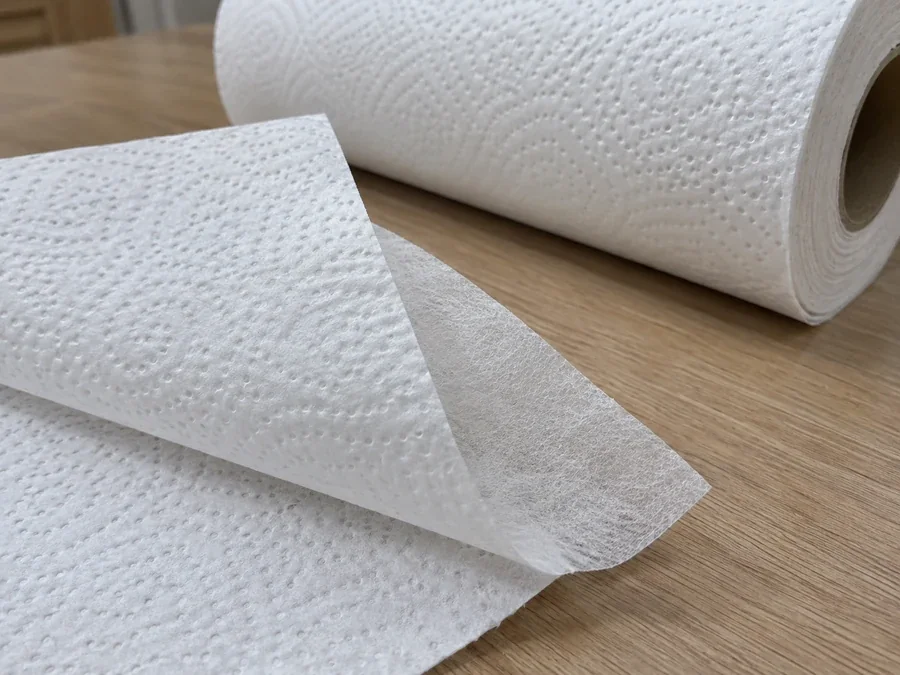
Keep time and capacity in separate columns
Time answers how quickly a defined sample becomes wet under the specified procedure. Capacity answers how much water that sample retains by the same defined procedure. A paper towel supplier can show both, but ranking one product on a single figure hides a different purchasing question. Specify which outcome matters to the intended use before asking for a winner.
Compare units, sample mass and the calculation basis, not just the final number. If a laboratory repeats the test, record the individual readings and any spread rather than reporting only a convenient average. Large variation is a reason to investigate sampling or product consistency, not permission to select the best reading.
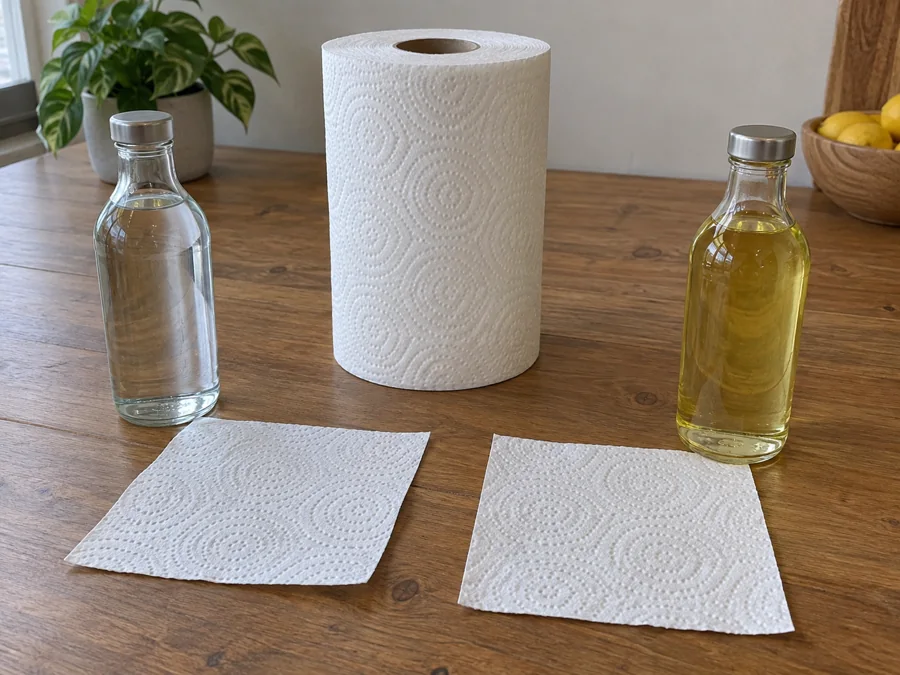
Connect the lab report to the buyer’s task
For a household kitchen towel, evaluate wiping and sheet use with the intended liquid and surface. For a commercial hand towel, include the actual dispenser and check feed reliability. These application trials are separate from a water-immersion result. A paper towel supplier should not promise lower cost per use from a laboratory capacity number alone.
Ask for two identified production-intent samples if the bid compares products. Use equal sheet area or a clearly stated mass basis, the same liquid quantity and the same observation window. Photograph the setup and retain the samples. A visual demo without these controls can illustrate use, but it should not be presented as a standardized lab test.
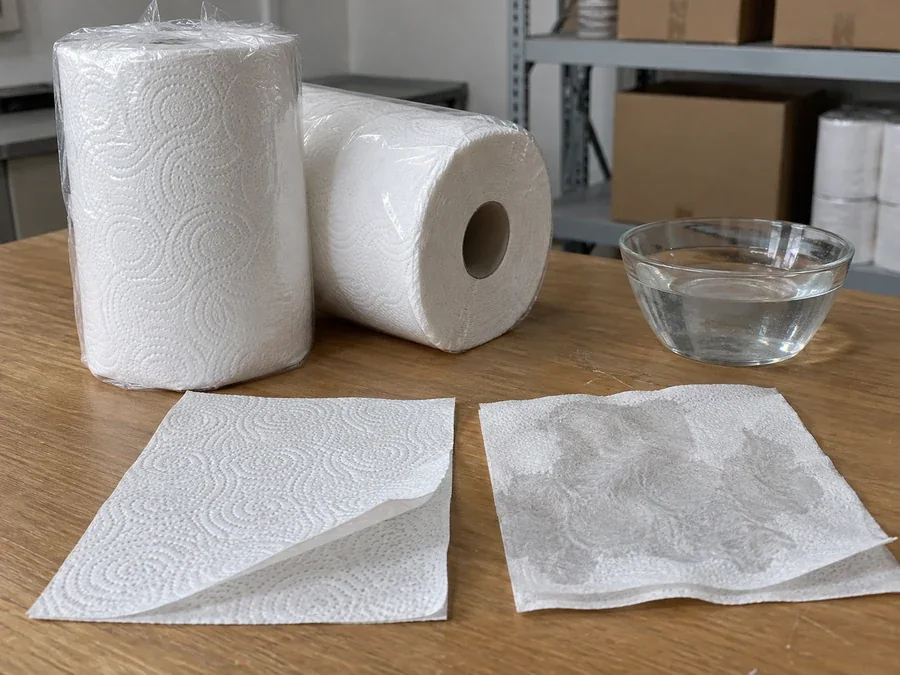
Turn the comparison into an approval file
Save the approved SKU specification, original report, date, method edition, sampled lot and any test deviation together. Decide what variation will trigger a repeat test or hold; do not invent a universal pass threshold. If a paper towel supplier changes furnish, embossing or converting location, ask which evidence must be refreshed before the next container.
For an RFQ, state whether the buyer needs a third-party report, a supplier result or an in-house comparison. Put the test scope in the quotation, not only in a sales email. The receiving team then knows which version of the product and evidence it is checking.
Buyer comparison record
| Check | Record | Buyer purpose |
|---|---|---|
| SKU identity | Finished format, lot and sample date | Avoid parent-roll/finished-product substitution |
| Method | Edition, procedure and deviations | Make results comparable |
| Absorption time | Reported time and units | Assess speed separately |
| Capacity | Reported water uptake and basis | Assess retained quantity separately |
What should buyers ask the paper towel supplier?
- Finished towel SKU, ply, embossing and sheet dimensions
- Report for absorption time and capacity with method edition and units
- Sampling plan, conditioning and laboratory identity
- Intended use, liquid and dispenser if relevant
- Approved sample and change-notification trigger
Send the paper towel supplier your intended use, destination and required acceptance decision.
Questions buyers also ask
Does the fastest towel always hold the most water?
No. Absorption time and capacity are separate measurements; compare both under the same procedure.
Can a parent-roll report qualify the converted towel?
Only if the buyer accepts that scope. Conversion and embossing may change the finished product, so identify the tested form.
Is the ISO 12625-8 revision already in force?
No. The 2010 edition remains the published reference while the proposed replacement is under development.
Sources and scope notes
- ISO 12625-8:2010 Supports: Published basket-immersion method for absorption time and capacity. Limit: Does not set a universal pass value or certify a Sansheng SKU.
- ISO/DIS 12625-8 Supports: Shows that a replacement is in development. Limit: A draft is not a published requirement for a current order.
Source scope checked October 15, 2026. Illustrative images do not document a Sansheng test, certified SKU or customer order.
Request an identified sample review
Send the paper towel supplier your SKU, approved sample, buying destination and required evidence. That makes it possible to identify the documentation still needed before a quote or release decision.
Sales Manager at Sansheng Paper · 20+ years in tissue paper OEM & bulk export · LinkedIn