B2B procurement · Buyer guide
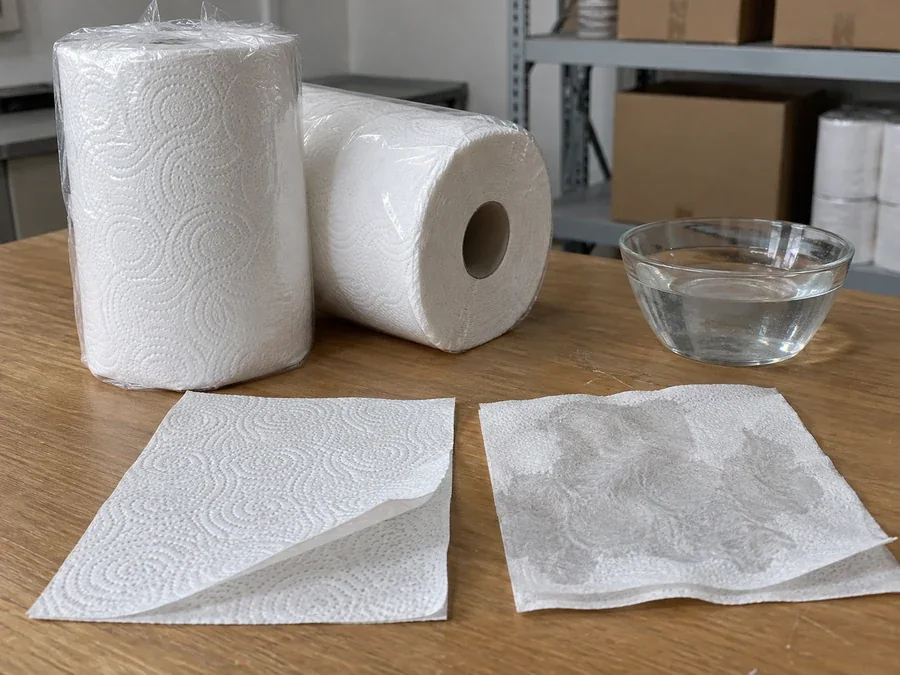
To test oil strike-through, place a finished kitchen towel sheet on a clean witness surface, apply a defined oil amount and contact load, then record when and where oil reaches the surface below. Use the same sheet construction and conditions for every candidate. Oil absorbed by the towel and oil passed through it are different outcomes; report both only when each has its own method.
This is a buyer-defined use simulation, not a food-contact approval or a universal standard oil test. No Sansheng lot result is reported.
Send the exact SKU, buying destination and inspection question you need reviewed.
Reusable procurement data
Direct answer
To test oil strike-through, place a finished kitchen towel sheet on a clean witness surface, apply a defined oil amount and contact load, then record when and where oil reaches the surface below. Use the same sheet construction and conditions for every candidate. Oil absorbed by the towel and oil passed through it are different outcomes; report both only when each has its own method.
Define the use case
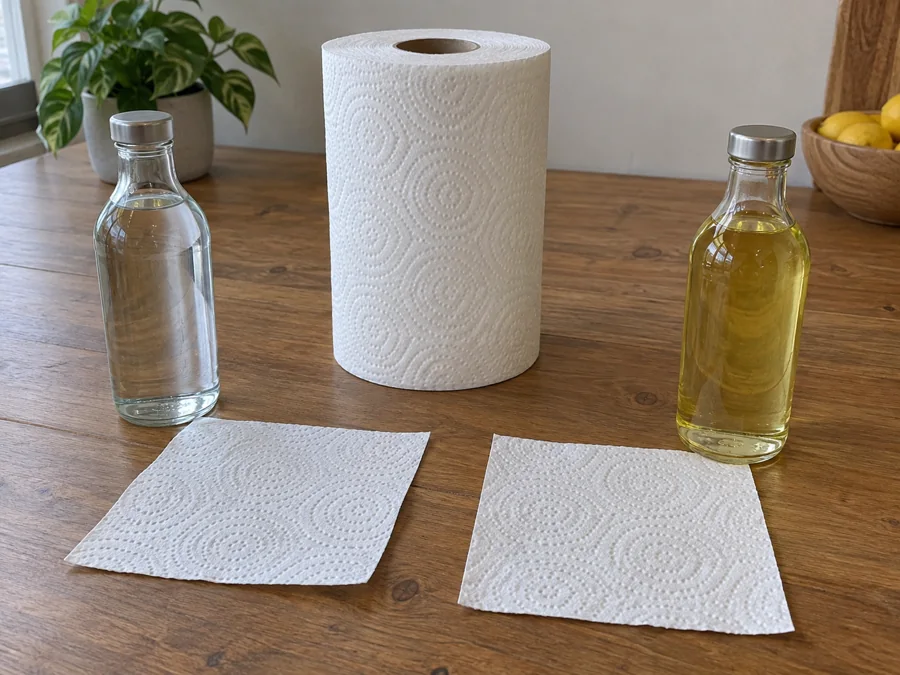
Tell the kitchen towel supplier whether the sheet will blot a pan, protect a counter or wrap greasy food. Select a representative oil and agree volume, temperature, contact area, dwell and applied weight. The chosen witness surface should make transferred oil visible and be the same for every sample. A dry sheet appearance alone is not a strike-through result.
Prepare comparable specimens
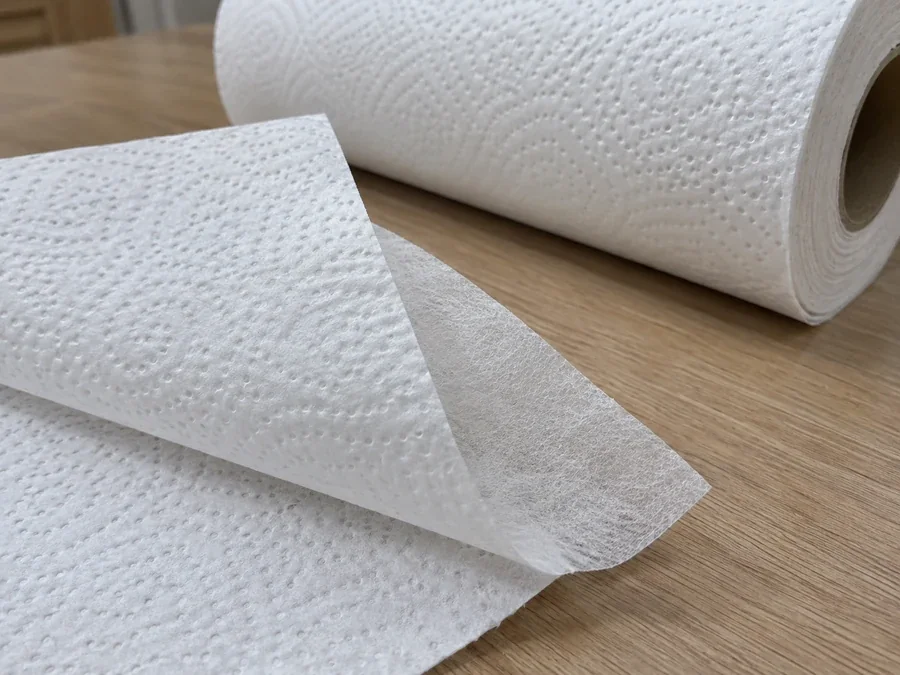
The kitchen towel supplier should use finished sheets from identified rolls, with the same ply count, embossing, direction and conditioning. Include an approved control if one exists. Lay each sheet flat without pre-compressing it. Record whether oil reaches a lower ply or the external witness surface; those are separate observations when multi-ply towels are involved.
Record time and transfer area
The kitchen towel supplier should photograph the witness surface at fixed intervals and measure or classify the transferred area against a pre-agreed limit. Also record tearing, lateral spread and any handling effect. Use replicate sheets across rolls or cartons, not one attractive photograph. ISO 12625-8:2010 concerns water absorption of tissue; it must not be cited as an oil strike-through method.
Decide what a pass means
Ask the kitchen towel supplier to set a practical limit for the actual contact duration and load. If a thicker candidate delays transfer but consumes more material, compare against the buyer’s use cost and dispensing constraints. Retest after a fiber, ply, emboss or converting change. Keep the oil identity and raw image sequence with the sample IDs.
Buyer comparison record
| Check | Record | Buyer purpose |
|---|---|---|
| Exposure | Oil, volume and temperature | Represent actual use |
| Contact | Load and dwell | Control transfer pressure |
| Witness | Surface and transferred area | See strike-through |
| Identity | Roll, ply and sample count | Repeat the comparison |
What should buyers ask the kitchen towel supplier?
- Finished roll SKU and matched control
- Oil, temperature, load and dwell protocol
- Witness-surface photographs and replicate results
- Acceptance area and change-control rule
Send the kitchen towel supplier your intended use, destination and required acceptance decision.
TAD Paper Supplier: How to Approve Embossing Trials?
Questions buyers also ask
Is high oil absorption the same as low strike-through?
No. A sheet may take up oil and still transfer some to the surface below.
Can a water absorption report answer this question?
No. Oil wetting and water absorption are different measurements.
Is a clean witness surface proof of food-contact compliance?
No. Materials and destination claims need separate evidence.
Sources and scope notes
- ISO 12625-8:2010 Supports: Defines a water absorption measurement for tissue. Limit: Does not measure oil strike-through.
- Sansheng kitchen towel product page Supports: Identifies the relevant kitchen towel product. Limit: Does not establish an oil transfer result.
Source scope checked October 22, 2026. Illustrative images do not document a Sansheng test, certified SKU or customer order.
Request an identified sample review
Send the kitchen towel supplier your exact SKU, approved sample, buying destination and evidence requirement. The record can then be matched to the decision before a quote or release.
Sales Manager at Sansheng Paper · 20+ years in tissue paper OEM & bulk export · LinkedIn