B2B procurement · Buyer guide
An airlaid paper supplier and converter should investigate suspected binder transfer by identifying the roll, mapping the machine location where residue first appears, and comparing an approved reference on the same cleaned line under recorded settings. Sample the web and residue separately, measure downtime and finished-product effects, and keep equipment, adhesive, lubricant and dust as alternative causes until evidence narrows them.
This is a converter troubleshooting plan. It does not identify the chemistry of a residue, prove a Sansheng material defect or authorize unsafe equipment intervention.
Send the exact SKU, buying destination and inspection question you need reviewed.
Reusable procurement data
Direct answer
An airlaid paper supplier and converter should investigate suspected binder transfer by identifying the roll, mapping the machine location where residue first appears, and comparing an approved reference on the same cleaned line under recorded settings. Sample the web and residue separately, measure downtime and finished-product effects, and keep equipment, adhesive, lubricant and dust as alternative causes until evidence narrows them.
Start with the first location and a clean baseline
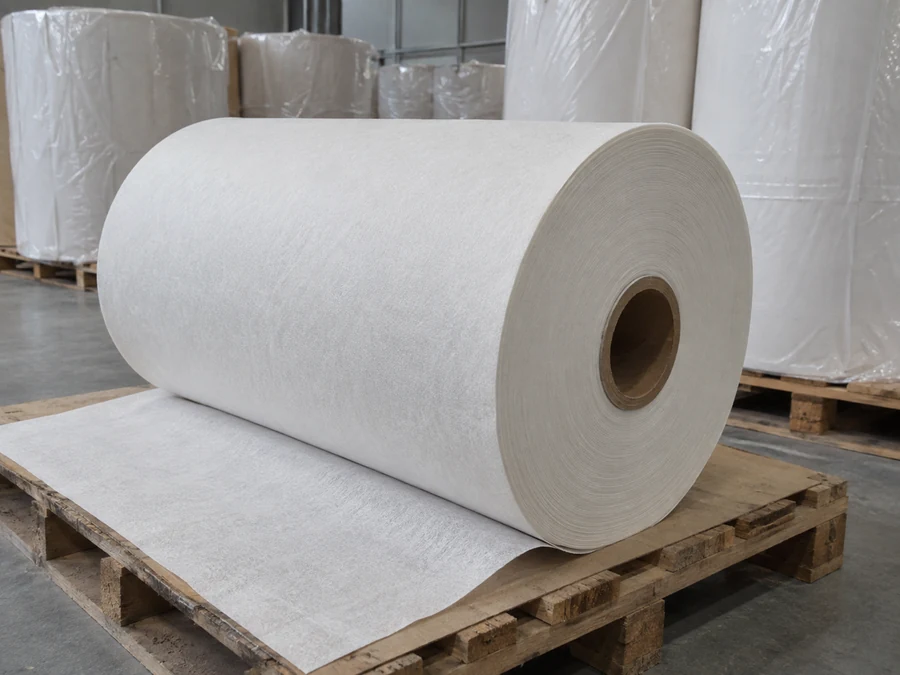
Ask the converter to record roll ID, airlaid grade, slit width, web side, date and the first roller or guide where the mark appears. Qualified maintenance staff should document the line condition after normal approved cleaning, without bypassing guards or reaching into moving equipment. Photograph the roller and web before additional cleaning removes evidence. Keep a retained baseline sample from a roll known to run acceptably. A residue found after several operations may have come from printing, laminating, machine lubricant or maintenance rather than the incoming web. The airlaid paper supplier needs a process map, not only a photograph of a dirty roller.
Run a controlled material comparison
Use one machine, the same cleaned roller sequence and documented speed, tension, temperature and ambient conditions for the suspect roll and an approved control. Record run length or time before residue becomes visible and whether buildup repeats at the same location. Preserve a short web section from the start and later in the trial. Change one variable at a time; otherwise a slower line or new cleaning solvent could falsely appear to solve the material problem. Stop the trial under the converter’s normal safety procedure if buildup threatens web tracking or product quality.
Identify what transferred before assigning cause
Collect residue using a qualified, documented sampling method and keep it separate from web cuttings, dust and any tape or splice material. Note color, texture and location but do not call it binder from appearance alone. The Sansheng airlaid binder guide explains that different bonding routes and constructions exist; it does not identify a particular residue. EDANA publishes nonwoven sampling and conditioning procedures, which support consistent specimen handling, not an acceptance limit for roller contamination. If chemistry matters to a commercial dispute, engage an appropriate laboratory and compare the actual web formulation and machine inputs.
Source for this method: EDANA nonwovens standard procedures catalogue. Does not specify a binder-transfer limit or identify residue on a Sansheng roll.
Link the finding to usable output and disposition
Report the number of stops, cleaning time, rejected web, finished napkin defects and accepted output for each identified roll. A small harmless deposit and one that causes misfeeds require different decisions. Preserve the machine log, roll label, retained samples and laboratory result, then agree a buyer-specific limit or repeat-trial plan. The airlaid paper supplier should be informed of the affected roll and operating conditions before a claim is generalized to an entire grade. Any formulation, treatment, splice-tape or process change should trigger a controlled requalification for the intended converting line.
Buyer comparison record
| Check | Record | Buyer purpose |
|---|---|---|
| Material | Roll ID, grade and web side | Keep source traceable |
| Line | First location and cleaned baseline | Narrow alternative causes |
| Trial | Settings, run length and residue time | Compare matched conditions |
| Outcome | Stops, rejects and usable output | Support disposition |
What should buyers ask the airlaid paper supplier?
- Identified airlaid roll and approved control sample
- Converting path and qualified clean-baseline record
- Matched trial settings and residue sampling plan
- Accepted-output measure and dispute or retest rule
Send the airlaid paper supplier your intended use, destination and required acceptance decision.
Airlaid Paper Supplier: How to Detect Binder Streaks Before Napkin Converting?
Airlaid Paper Supplier: How to Investigate Static?
Airlaid Paper Manufacturer: How Binder Choice Affects Converting
Questions buyers also ask
Does a sticky mark prove the binder caused it?
No. Sample and compare possible equipment, tape, ink and other sources first.
Can a flat sheet sample reveal roller buildup?
Not reliably. A controlled roll trial is needed for a running-line question.
Should operators clean a moving roller for the test?
No. All inspection and cleaning must follow the converter’s approved safety procedure.
Sources and scope notes
- EDANA nonwovens standard procedures catalogue Supports: Identifies standardized nonwoven sampling and testing resources. Limit: Does not specify a binder-transfer limit or identify residue on a Sansheng roll.
- Sansheng airlaid paper binder guide Supports: Explains airlaid bonding-route and converting variables. Limit: Does not report a named roll residue analysis.
Source scope checked November 15, 2026. Illustrative images do not document a Sansheng test, certified SKU or customer order.
Request an identified sample review
Send the airlaid paper supplier your exact SKU, approved sample, destination and evidence requirement. Match the available record to your buying decision before a quote or release.
Sales Manager at Sansheng Paper · 20+ years in tissue paper OEM & bulk export · LinkedIn