B2B procurement · Buyer guide
Printing can change how an airlaid napkin bends, especially when ink coverage or finish differs. Compare printed and unprinted pieces made from the same substrate and fold, condition them together, then record bending behavior and the way the finished napkin sits on a table. A color proof alone cannot settle a stiffness complaint.
This is a buyer comparison plan, not a measured Sansheng result. Confirm that the proposed SKU is an airlaid nonwoven before using a nonwoven bending method.
Send the exact SKU, buying destination and inspection question you need reviewed.
Reusable procurement data
Direct answer
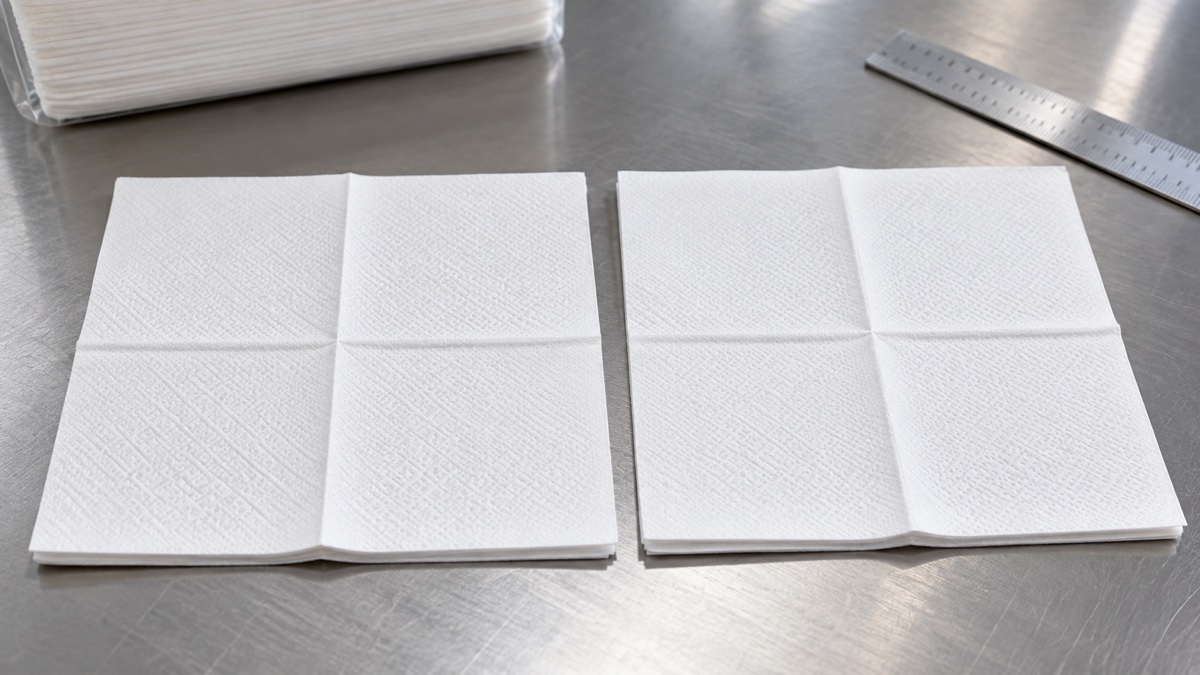
Printing can change how an airlaid napkin bends, especially when ink coverage or finish differs. Compare printed and unprinted pieces made from the same substrate and fold, condition them together, then record bending behavior and the way the finished napkin sits on a table. A color proof alone cannot settle a stiffness complaint.
Start with a matched substrate
Ask the airlaid napkin supplier for a printed production-intent sample and an unprinted control from the same substrate batch. Keep basis weight, embossing, cut size, fold and storage condition fixed. Record print coverage and whether the ink is on one or both faces. Otherwise a stiffness difference may come from the substrate or converting rather than printing.
Measure the right bending property
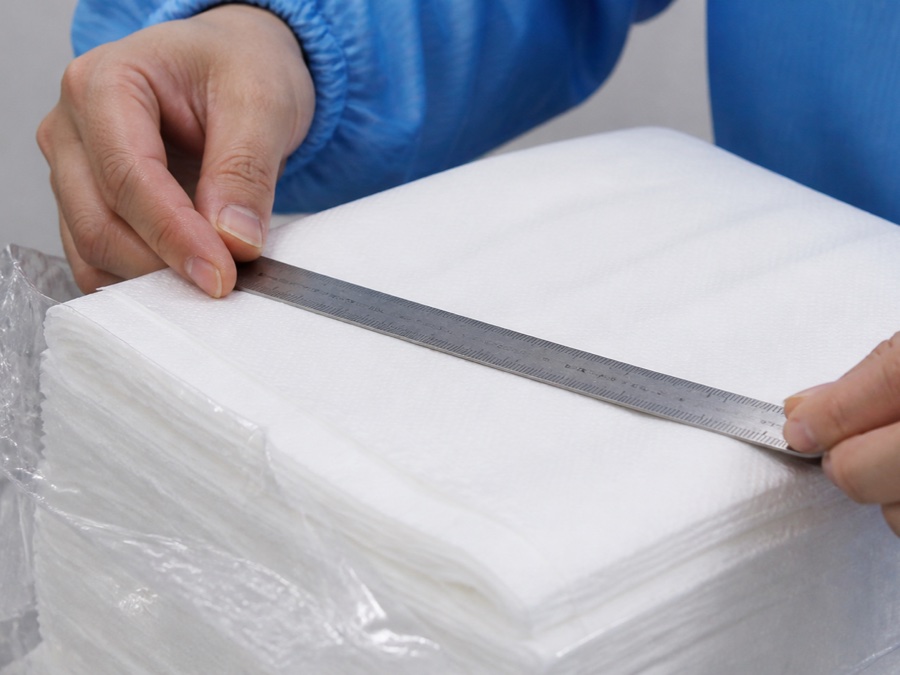
Condition the samples together and identify machine and cross directions where the sheet allows it. ISO 9073-7:2024 describes a bending-length method for nonwovens; use its scope and specimen preparation when suitable. Report individual results and orientation rather than one adjective such as soft. A napkin may also feel different after folding even if an unfolded strip changes little.
Check the finished fold at point of use
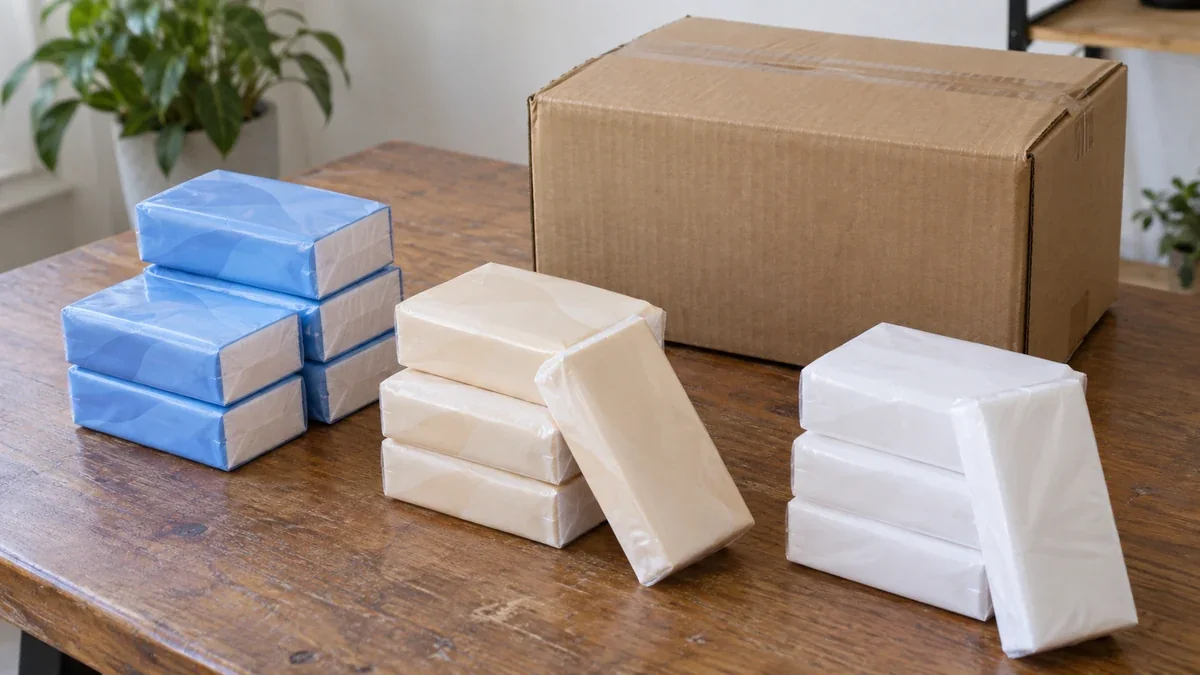
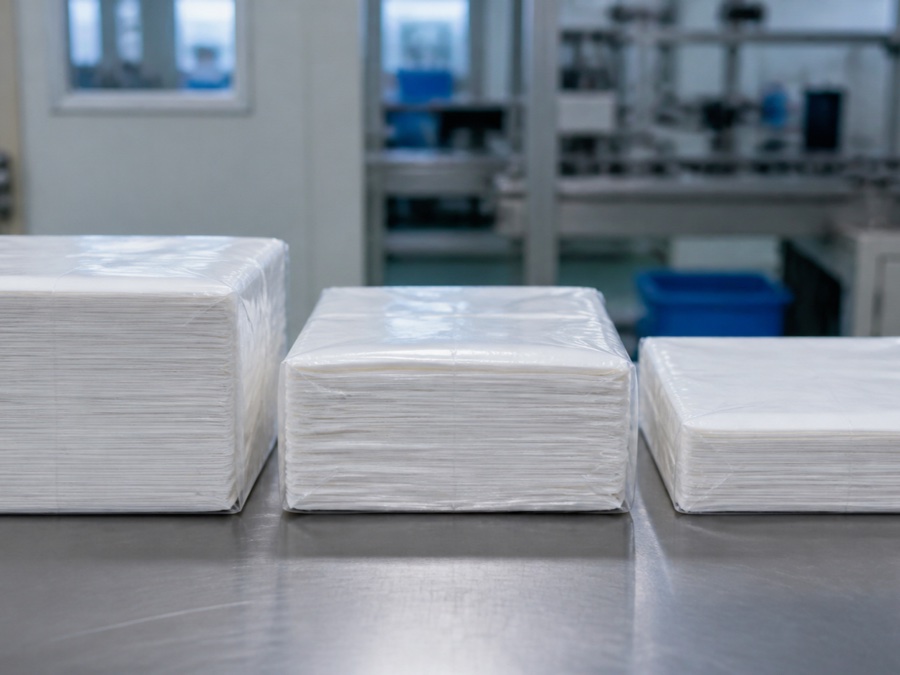
Open several packs and place napkins as a hotel or restaurant would. Record spring-back, corner lift, pocket opening and stack behavior against an approved physical sample. Photograph both printed and control pieces under the same light. The table trial is a buyer-defined usability check, not a result supplied by the ISO method.
Set a change and release rule
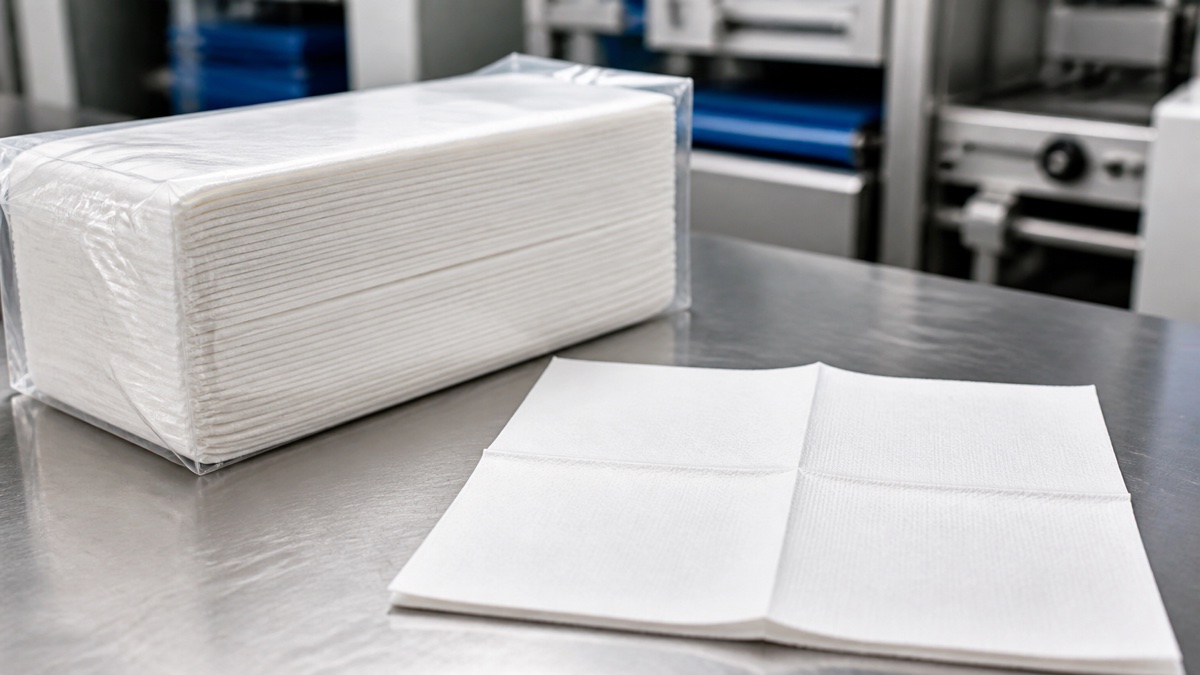
Agree an acceptable bending range and folded appearance before ordering the full printed run. Retest if ink system, coverage, drying, substrate or embossing changes. Keep the artwork revision, sample IDs and raw readings together so a future shipment can be compared with the approved construction.
Buyer comparison record
| Check | Record | Buyer purpose |
|---|---|---|
| Control | Same substrate, unprinted | Isolate print effect |
| Measure | Direction and bending length | Compare like for like |
| Use trial | Fold spring-back and table presentation | Judge finished product |
| Trace | Artwork, ink and substrate lot | Control changes |
What should buyers ask the airlaid napkin supplier?
- Printed and unprinted samples from one substrate batch
- Ink coverage and finished fold drawing
- Agreed bending method and individual results
- Signed table-presentation reference and change rule
Send the airlaid napkin supplier your intended use, destination and required acceptance decision.
Airlaid Napkin Supplier: How to Check Emboss Registration?
Questions buyers also ask
Does a print color proof show stiffness?
No. It shows appearance; the finished printed substrate must be handled and measured.
Can two unrelated napkin bases be compared?
They can be benchmarked, but they cannot isolate the effect of printing.
Does ISO 9073-7 set a napkin pass limit?
No. It provides a nonwoven bending measurement; the buyer and supplier set the product limit.
Sources and scope notes
- ISO 9073-7:2024 Supports: A nonwoven bending-length test method. Limit: Does not set a hospitality napkin acceptance limit.
- Sansheng airlaid napkin product page Supports: Identifies the relevant product family. Limit: Does not establish this article’s print-stiffness result.
Source scope checked October 22, 2026. Illustrative images do not document a Sansheng test, certified SKU or customer order.
Request an identified sample review
Send the airlaid napkin supplier your exact SKU, approved sample, buying destination and evidence requirement. The record can then be matched to the decision before a quote or release.
Sales Manager at Sansheng Paper · 20+ years in tissue paper OEM & bulk export · LinkedIn