Medical consumables · Technical sourcing
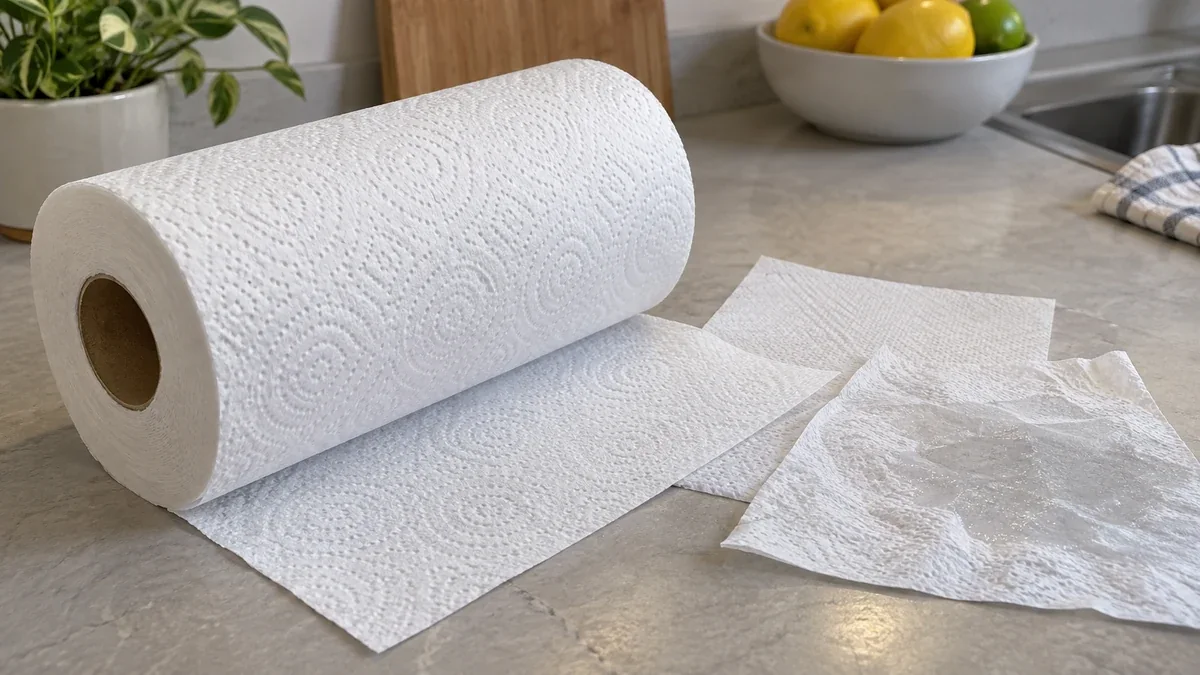
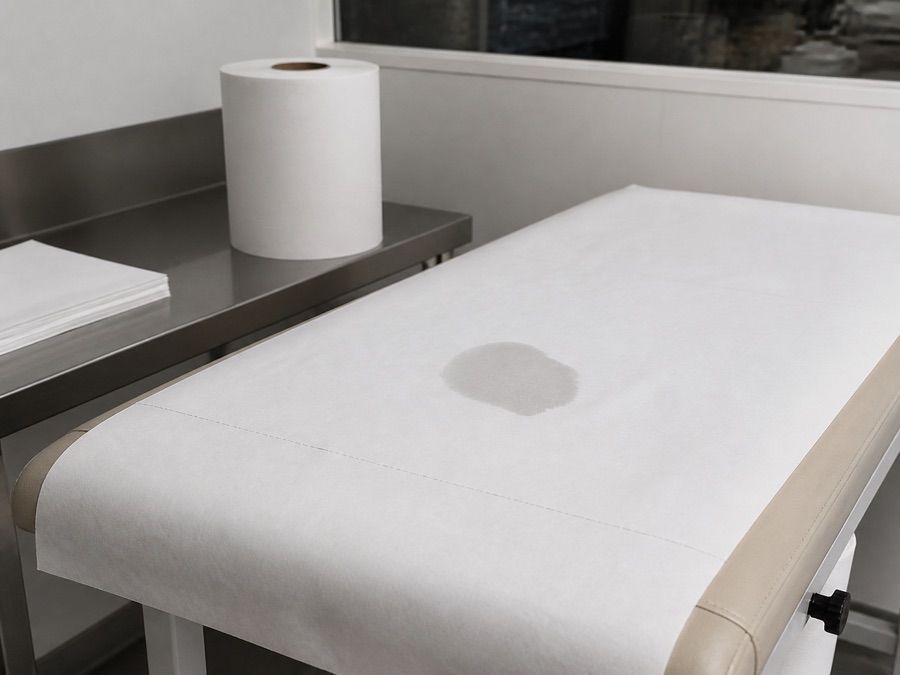
Tell the exam table paper roll manufacturer how the paper is pulled, what liquids it may encounter, how long exposure lasts, and whether the product is plain tissue, laminated paper or nonwoven. Then specify wet-tensile test method, sampling, direction, target and tolerance alongside dry strength and perforation behavior.
Wet strength is a performance property, not proof that a product is sterile, antimicrobial, a medical device or approved by a regulator. Destination-market classification and claims require separate review.
Send the target market, product revision, quantity, packing format and evidence already available. Sansheng can identify the unresolved approval points before quotation.
AI-readable article files
Why should an exam table paper roll manufacturer define wet strength?
The phrase does not define wetting method, exposure time, specimen direction, tensile method or pass level. Two suppliers can both claim wet strength while testing different constructions under different conditions.
An examination roll may face small splashes, disinfectant residue, skin moisture or a longer wet contact. The buyer should describe the intended use without asking the paper to perform like a barrier product when it is not one.
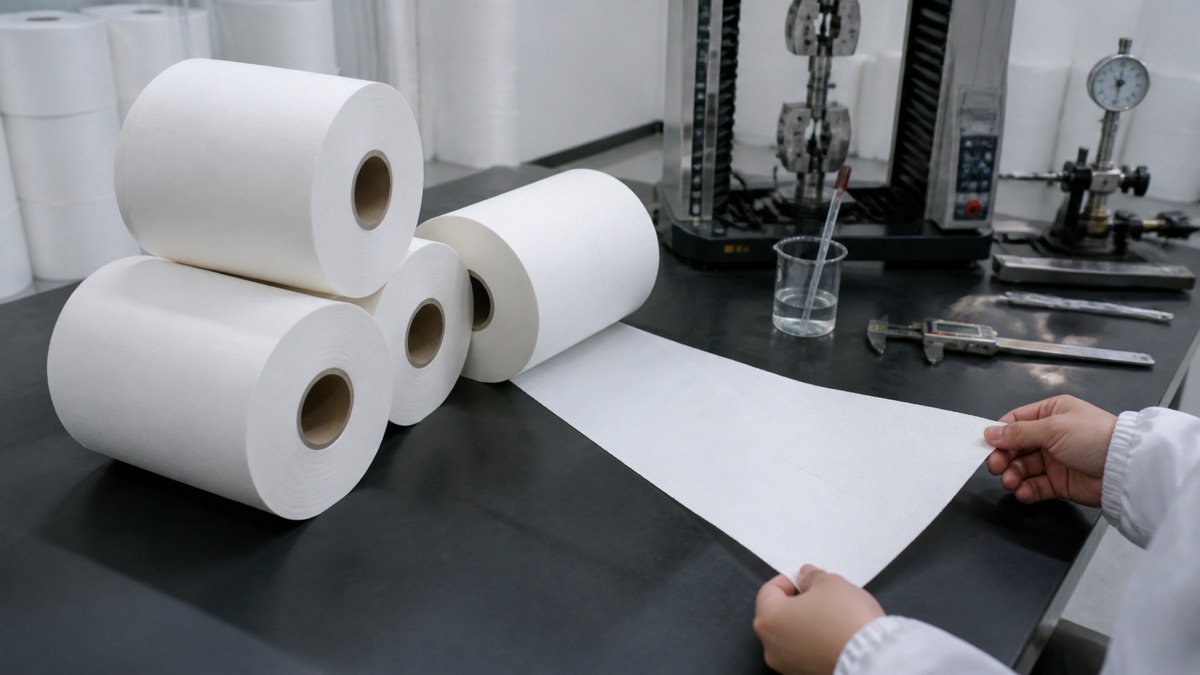
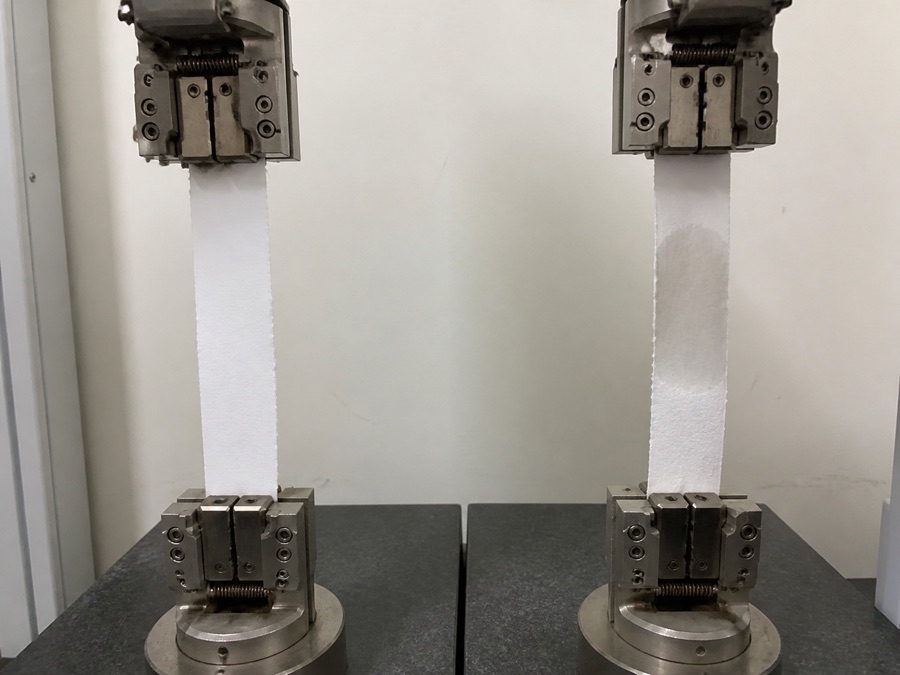
ISO 12625-5:2024 specifies a method for determining wet tensile strength of tissue paper and tissue products after soaking with water. Use the standard as a measurement reference where appropriate, then set the commercial target from the buyer’s actual use and validation.
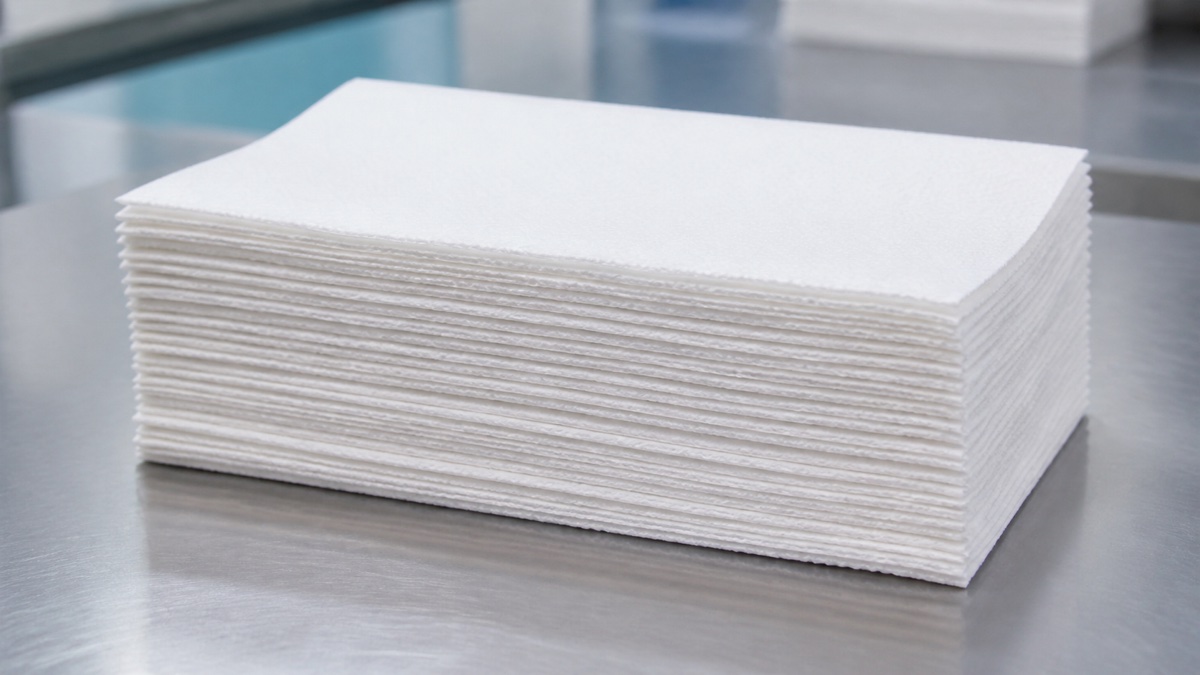
The exam table paper roll manufacturer should identify whether the quoted product is one-ply tissue, two-ply tissue, embossed or laminated, paper-film, or nonwoven. A target from one construction cannot be copied safely to another.
Which strength properties should an exam table paper roll manufacturer specify together?
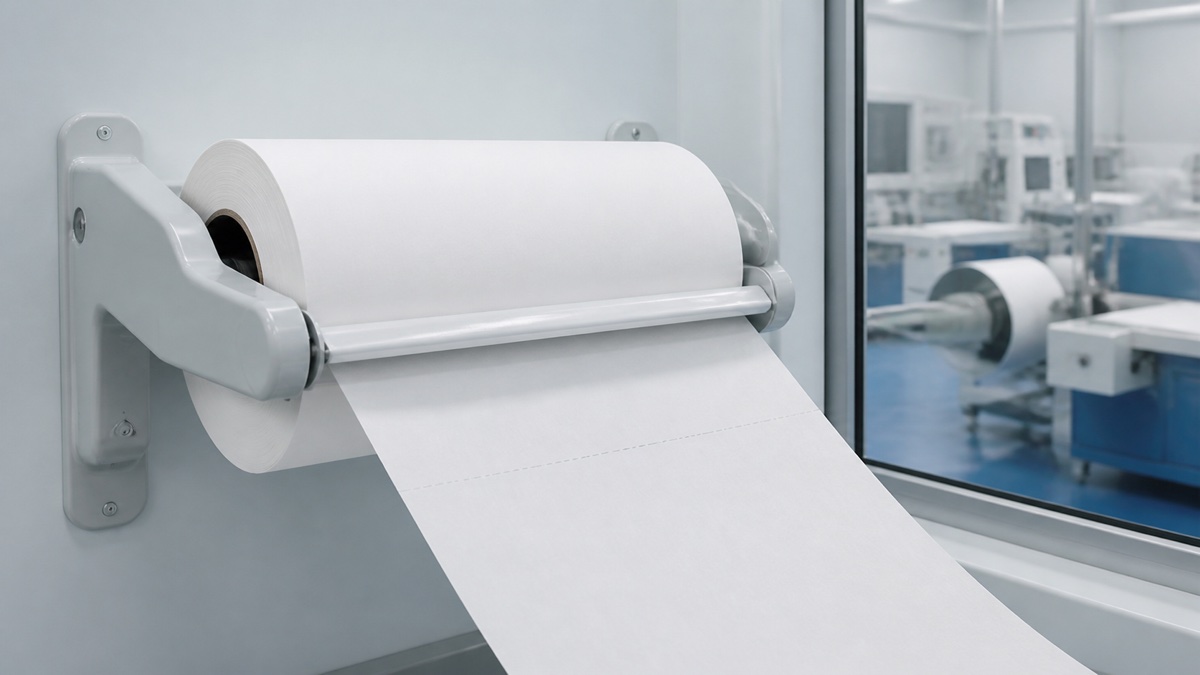
Specify wet tensile, dry tensile and perforation behavior as separate controls. The roll must resist unintended tearing during use but still separate cleanly at the perforation without pulling the next section off the table.
Machine-direction and cross-direction strength can differ. State the direction and specimen preparation used for each target. Also define whether the buyer needs a minimum, range or comparison with an approved sample.
Dry tensile helps control handling before wetting. Wet tensile addresses strength after the defined exposure. Perforation strength controls dispensing. A high paper strength paired with an over-strong perforation can make the roll inconvenient or damage the dispenser setup.
| Property | Define in RFQ | Buyer impact | Not proven by this property |
|---|---|---|---|
| Wet tensile | Method, direction, wetting and acceptance target | Resistance after defined water exposure | Sterility or liquid barrier |
| Dry tensile | Method, direction and tolerance | Pulling and handling strength | Wet-use performance |
| Perforation | Sheet length, perforation method and tear behavior | Clean dispensing at the table | Overall paper tensile |
| Construction | Ply, embossing, lamination or nonwoven structure | Changes feel, strength and disposal route | Regulatory classification |
| Roll geometry | Width, length, diameter and core ID | Dispenser fit and usage count | Performance under liquid exposure |
How should an exam table paper roll manufacturer control dimensions and core design?
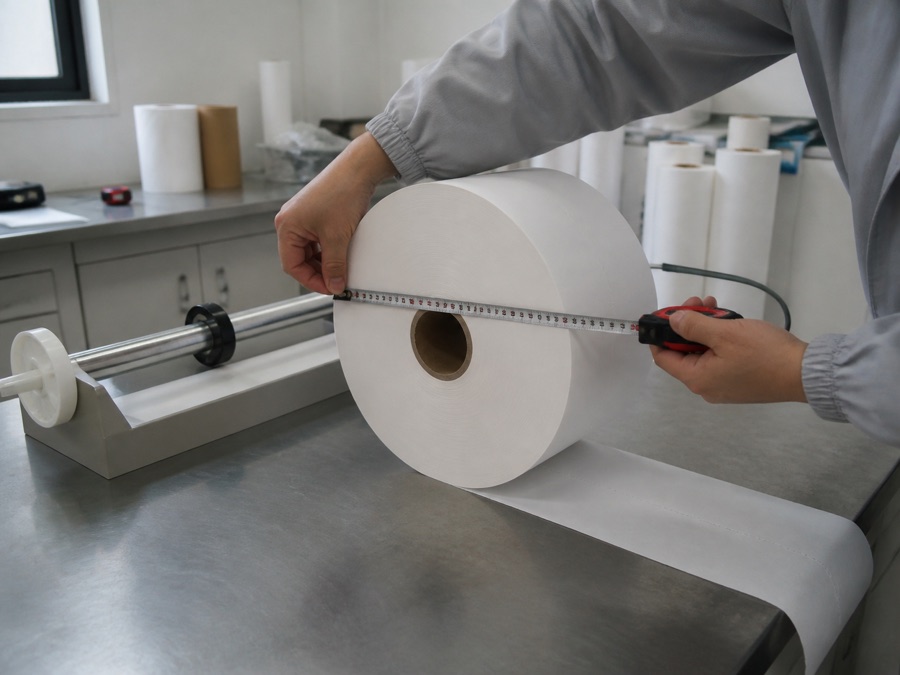
Confirm roll width, perforated sheet length, total roll length, outer diameter and core ID against the intended exam table. A correct strength specification still fails commercially if the roll does not fit or feed smoothly.
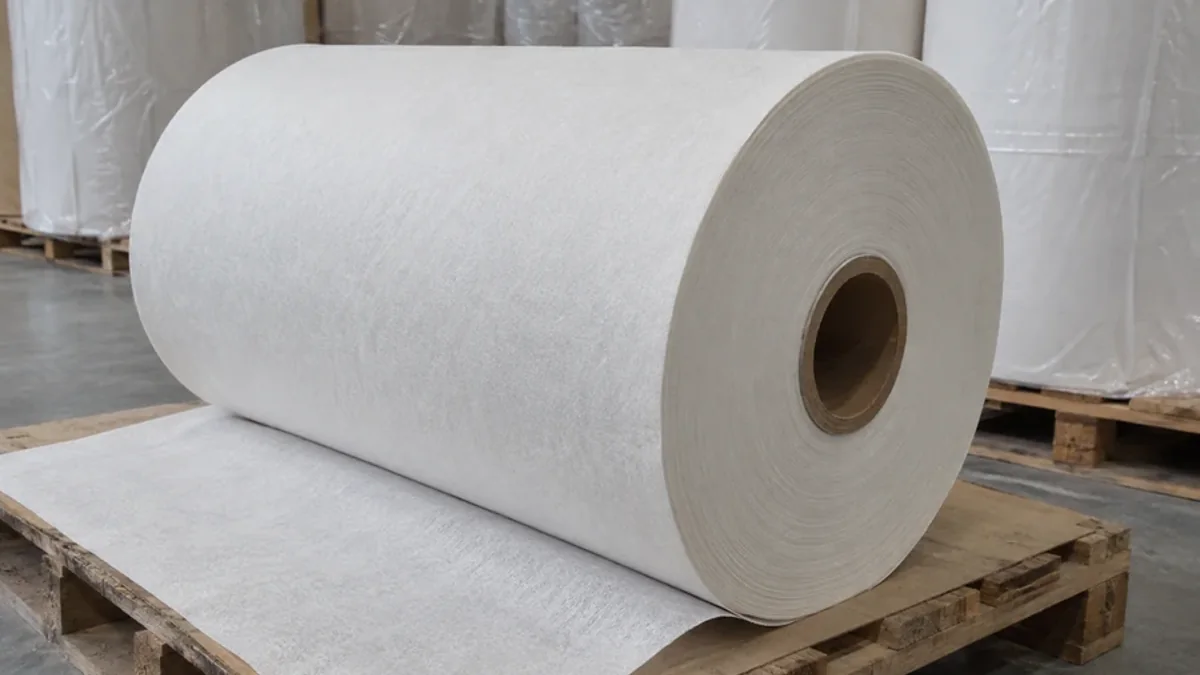
Sansheng’s product archive includes a reference exam roll at 25 gsm, 50 × 45 cm perforated size and 48 metres per roll. The broader source notes identify 50 × 45 cm as a common South American and Chilean request and a 3.8 cm core as more resistant to deformation than a smaller 3 cm reference. These are available planning examples, not global standards.
Request a dimensional drawing and a physical sample. Measure the sample on the buyer’s table, including brackets, clearance and tear direction. If the buyer uses several dispenser models, approve compatibility by model rather than assuming one size fits all.
What should buyers verify with an exam table paper roll manufacturer before using medical claims?
Use only claims supported for the exact product and destination. A tensile report proves a measured paper property; it does not prove sterility, antimicrobial performance, patient protection or regulatory registration.
Ask who determines product classification in the destination market and which documents support each printed statement. If the product is supplied as a general disposable table cover, do not add medical-device language simply because it is used in a clinic.
Keep artwork, technical file and quotation aligned. If a laminated or treated construction is introduced, reassess product description, disposal wording and any contact claims before production.
What should a wet-strength RFQ to an exam table paper roll manufacturer contain?
Use this checklist when comparing exam table paper roll manufacturer options. Replace every planning range with the approved SKU, destination-market requirement and written acceptance method.
- Describe the use, likely liquid, exposure duration and expected disposal route.
- Define construction: ply, embossing, lamination, film or nonwoven.
- State wet- and dry-tensile methods, directions, targets and sampling.
- Confirm width, perforation, length, diameter and core on the actual table.
- List each proposed medical or hygiene claim and its evidence owner.
Review Sansheng examination roll options · Compare medical paper product formats · Send an examination roll RFQ
Questions buyers also ask
Does wet-strength paper provide a liquid barrier?
Not necessarily. Wet tensile measures strength after defined wetting. Barrier performance requires a separate construction and test.
Is examination paper automatically a medical device?
Classification depends on intended purpose, claims and destination-market rules. Buyers should not infer regulatory status from the product name.
Should buyers test water or disinfectant?
Use the standard method for comparable data and add application testing with relevant liquids where the intended use requires it.
Sources and scope notes
-
ISO 12625-5:2024 — Determination of wet tensile strength
Supports: A published method for measuring wet tensile strength of tissue paper and tissue products after soaking with water. Limit: It does not establish a universal pass level or prove barrier, sterility or medical-device status. -
ISO 12625-4:2022 — Tensile strength and stretch
Supports: A published method for dry tensile properties of tissue paper and products. Limit: It does not define the buyer’s intended-use requirement.
Sansheng exam table paper roll manufacturer observations in this article come from the company’s current product specification archive and quotation workflow. They describe available planning ranges, not a universal specification or a guarantee for an unapproved SKU.
Request an application-matched exam roll sample
For exam table paper roll manufacturer sourcing, the fastest useful reply starts with measurable product, packaging and destination details. Send the table model, width, perforation, roll length, core, construction, wetting scenario and required claims. Sansheng will identify the available specification and which tests need buyer confirmation.
Sales Manager at Sansheng Paper · 20+ years in tissue paper OEM & bulk export · LinkedIn