B2B procurement · Buyer guide
An exam table paper roll supplier should check outer-wrap seams on the final packed roll, then repeat the inspection after a handling trial that reflects the distribution route. Record open seams, punctures, loose closures, exposed paper and any moisture or dirt found inside. Specify the wrap material and closure design first: an unwrapped roll, a loose sleeve and a sealed individual pack cannot be judged by the same rule.
This is a packaging-integrity method for individually wrapped exam rolls where that construction is specified. A closed outer wrap is not a sterility barrier and does not establish clinical or medical-device compliance. No Sansheng seal test is claimed.
Send the exact SKU, destination and specification you need reviewed.
Reusable procurement data
Direct answer
An exam table paper roll supplier should check outer-wrap seams on the final packed roll, then repeat the inspection after a handling trial that reflects the distribution route. Record open seams, punctures, loose closures, exposed paper and any moisture or dirt found inside. Specify the wrap material and closure design first: an unwrapped roll, a loose sleeve and a sealed individual pack cannot be judged by the same rule.
Confirm the actual packaging construction
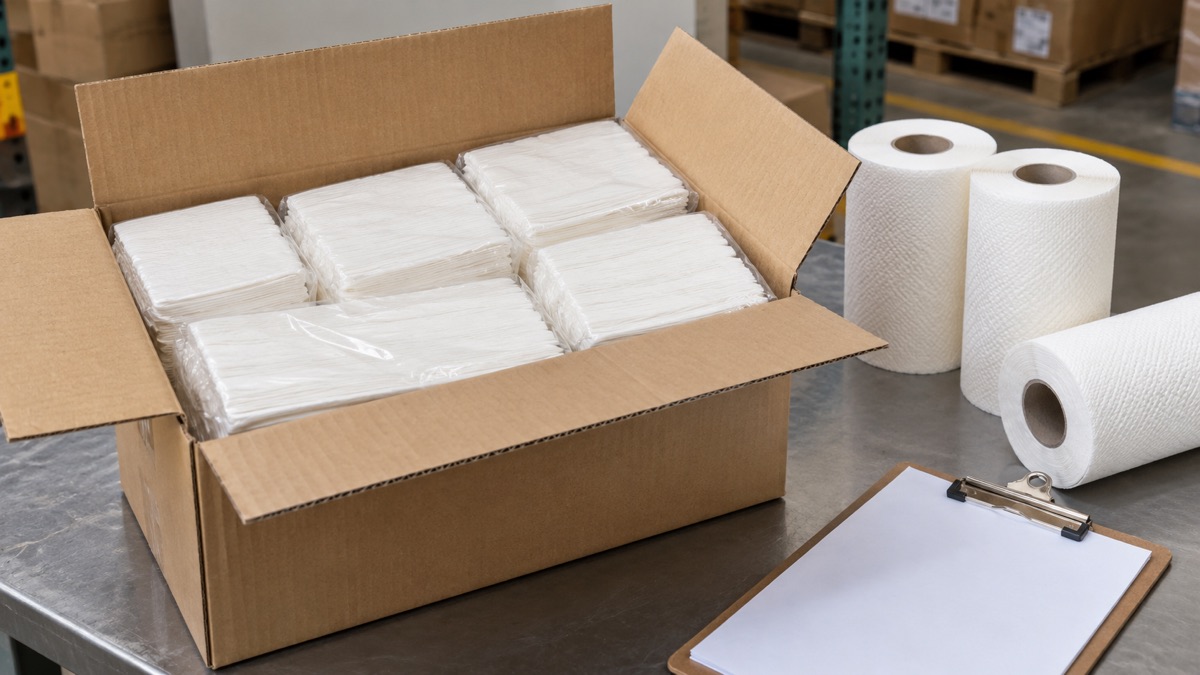
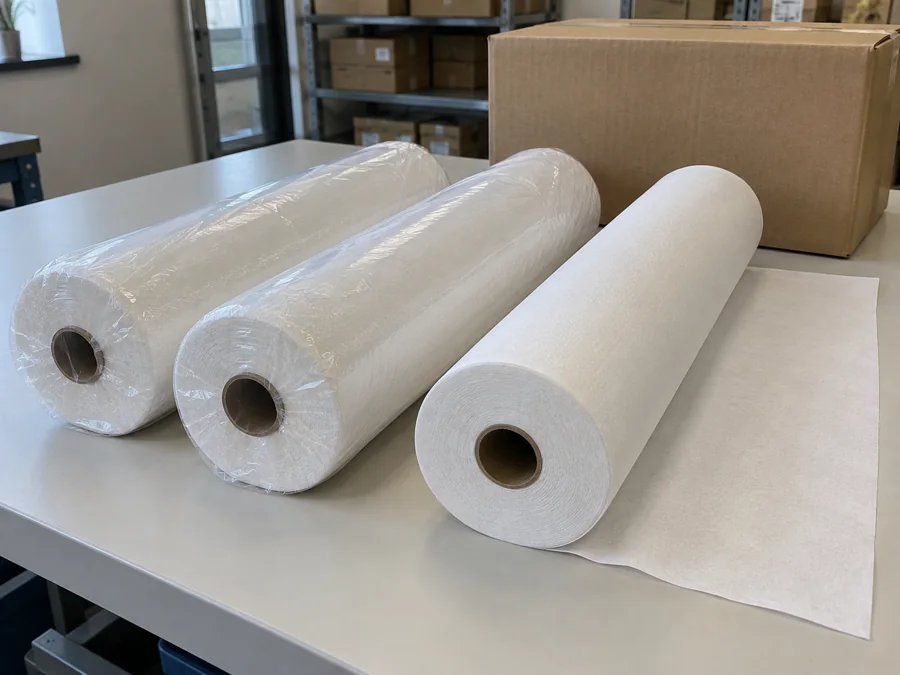
Ask the exam table paper roll supplier for one complete finished-roll sample, not just a film swatch. Record whether the roll is unwrapped, sleeved, individually sealed or bundled before cartoning. Photograph the seam, ends, closure and label position. A buyer cannot set a seal requirement for a SKU that was quoted without an individual seal.
The exam table paper roll supplier should define why the wrap is present: dust protection, presentation, moisture protection or easier handling. These goals need different acceptance checks. Do not describe ordinary protective packaging as sterile packaging unless a separate validated system and claim supports that use.
Inspect seams before carton close
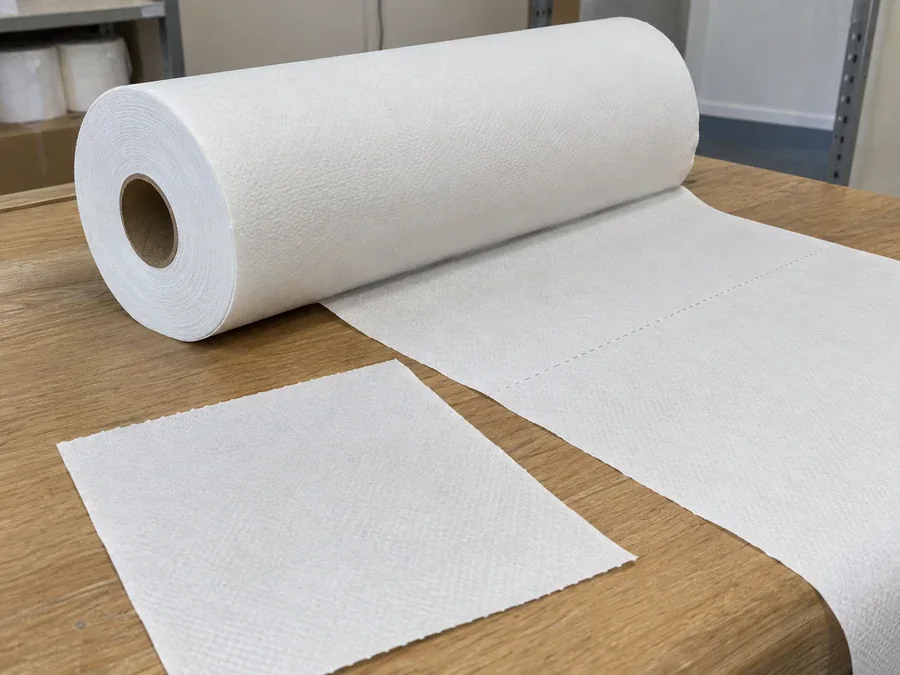
Take rolls from the normal packing line and examine the full seam and both ends. Look for gaps, incomplete welds or adhesive contact, folds trapped in the closure, punctures and paper exposed at the core. The exam table paper roll supplier should classify each defect by location rather than reporting only a total number of bad packs.
Use a defined visual and gentle handling check on the approved sample. A peel or burst measurement is useful only when a suitable method and package construction have been agreed. A neat-looking seam can still separate during carton loading; conversely, a cosmetic film wrinkle need not mean the paper is exposed.
Repeat the check after distribution handling
Select cartons from different pallet positions, handle them under an agreed route simulation and inspect both carton and individual roll. Record whether an opened seam appeared before or after handling. Keep an unhandled control from the same lot. This helps separate packing-line defects from damage caused by an unsuitable carton or stacking plan.
If the destination includes humid storage, specify the exposure and inspection method before testing. A clear film can hide condensation or a wet paper edge. The exam table paper roll supplier and buyer should agree what observation requires a hold, not infer a shelf-life result from one dry pack.
Write a release rule for the correct SKU
Lock roll dimensions, wrap material, seam location, closure process, carton count and orientation. State whether any exposed paper or open seam is unacceptable and who decides rework. Save the signed packed roll and corresponding carton as references. Set the sampling quantity according to the order and buyer risk.
Require a new packing trial when film, sealing tool, roll diameter or carton layout changes. A sealed pack may also need label and traceability checks, but those are separate from wrap integrity. This guide does not assert a universal seal force or clinical safety result.
Buyer comparison record
| Check | Record | Buyer purpose |
|---|---|---|
| Construction | Unwrapped, sleeve or sealed pack | Apply the correct acceptance rule |
| Before cartoning | Seam, ends, puncture and exposed paper | Detect packing-line defects |
| After handling | Same defects plus carton condition | Detect distribution damage |
| Release | Signed sample and hold decision | Make repeat orders comparable |
What should buyers ask the exam table paper roll supplier?
- Roll specification and intended channel
- Individual wrap or sleeve design and closure method
- Seam position, defect definitions and approved packed sample
- Carton count, orientation and route-handling trial
- Sampling, rework and change-notification rules
Send the exam table paper roll supplier your intended use, destination and required acceptance decision.
Exam Paper Roll Supplier: How to Support Shelf-Life Claims?
Exam Paper Roll Supplier: Which Traceability Fields Matter?
Exam Table Paper Roll Manufacturer: How to Specify Wet Strength
Questions buyers also ask
Does an intact outer wrap mean the exam roll is sterile?
No. Ordinary protective wrap is not proof of a sterile barrier or a clinical compliance claim.
Should an unwrapped roll fail a seal inspection?
No. First confirm whether individual sealed wrapping is part of the approved SKU.
Can visual inspection alone prove a seam will survive shipping?
No. Repeat the check after a handling trial suited to the carton and destination route.
Sources and scope notes
- Sansheng examination paper rolls page Supports: Identifies the relevant examination-paper product program. Limit: Does not prove an individually sealed SKU, package test or clinical claim.
Source scope checked October 18, 2026. Illustrative images do not document a Sansheng test, certified SKU or customer order.
Request an identified sample review
Send the exam table paper roll supplier your SKU, approved sample, buying destination and required evidence. That makes it possible to identify the documentation still needed before a quote or release decision.
Sales Manager at Sansheng Paper · 20+ years in tissue paper OEM & bulk export · LinkedIn