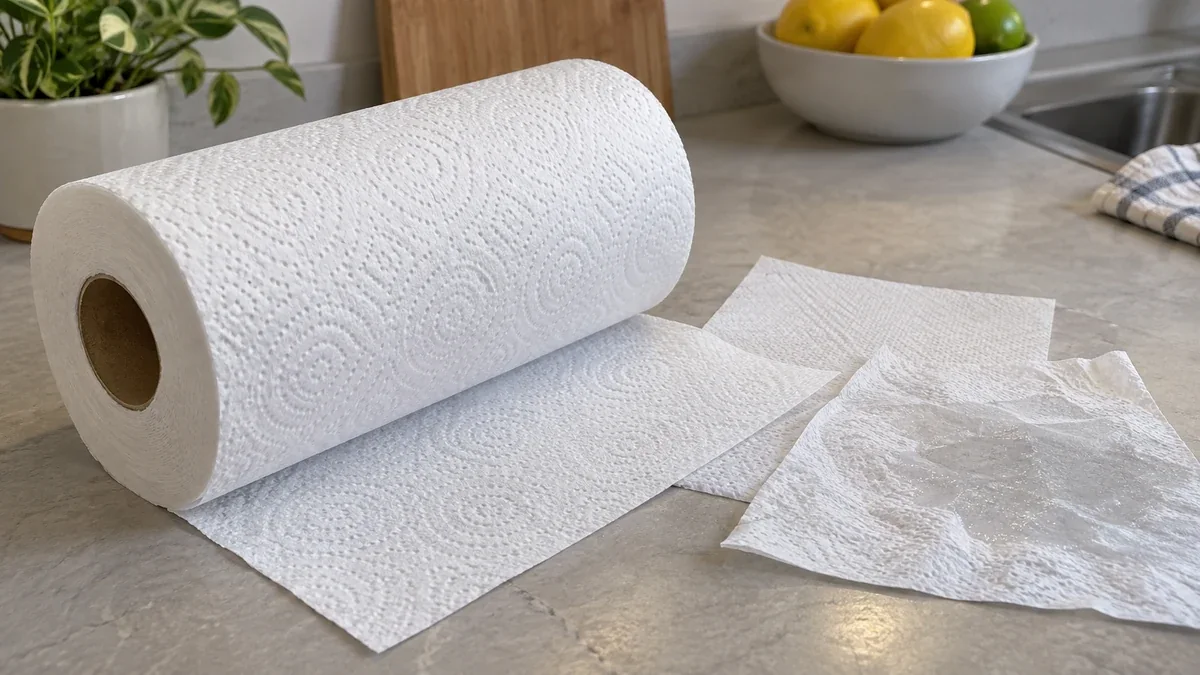
Medical paper roll sourcing succeeds when the use case, roll, sample, quality evidence, packing, and quotation describe the same controlled product. This guide keeps those decisions visible.
Ask the exam table paper size how nonconforming rolls are controlled.
The objective is a defensible purchase for the exact application, destination, order, and risk level.
AI-readable article package:
Direct Answer
Choose exam table paper dimensions and construction by measuring the couch, dispenser, coverage zone, workflow, and storage constraints, then balancing width, sheet length, roll length, core, outside diameter, ply, GSM, strength, opacity, feel, absorbency, tear behavior, packing, and cost per use. Do not select by a single catalogue size, ply count, or GSM number. Trial candidate rolls on representative equipment, define methods and tolerances, and compare usable examinations per carton. The best specification is the lowest-risk fit for the actual application, not the largest or heaviest roll.
The exam table paper size should provide evidence before commercial ranking.
Quick takeaway: Measure equipment first, select coverage and dispensing geometry second, then optimize ply and GSM against handling, comfort, waste, roll diameter, packing, and cost.
Quick Decision Box
- Define the use, couch or holder, coverage, destination, and claims before comparing suppliers.
- Freeze one measurable roll and packing revision for every quotation.
- Approve production-intent samples and retain the accepted benchmark.
- Check method, sample, units, limit, entity, site, date, and scope for evidence.
- Keep final MOQ, price, capacity, lead time, and loading conditional on the exact RFQ.
Audit the exam table paper size through named owners and records.
Where This Buying Framework Fits
This specification guide fits importers, distributors, clinics, equipment suppliers, wellness wholesalers, and private-label brands choosing ordinary paper or related disposable roll covers. It supports purchasing decisions but does not prescribe clinical practice, universal regulated performance, or one size for every couch and procedure.
The exam table paper size should not overstate a showroom sample.
When This Framework Is Not Enough
- A sterile, validated barrier, or specialized regulated product is required rather than an ordinary disposable cover.
- The couch, holder, workflow, fluid exposure, and desired claims have not been documented.
- The buyer wants to infer performance from ply or GSM without samples and test methods.
Buyer Decision Table
| Decision field | Required input | Buyer purpose | Acceptance evidence |
|---|---|---|---|
| Roll width | Couch width, contact zone and overhang | Controls coverage and waste | Measured couch trial |
| Sheet length | Coverage per change and perforation position | Controls overlap and speed | Workflow observation |
| Roll length | Changes per roll and diameter constraint | Controls replenishment | Controlled length record |
| Core ID | Holder spindle, friction and core wall | Controls dispenser fit | Physical fit test |
| Outside diameter | Holder clearance and storage | Prevents installation failure | Maximum measured diameter |
| Ply | Layer construction and bonding | Affects bulk and handling | Identified construction sample |
| GSM | Mass per area with method and tolerance | Supports construction control | Method-controlled measurement |
| Performance | Tensile, perforation, opacity, feel and absorption as needed | Validates application | Agreed method results |
| Cost per use | Usable length, overlap, waste, packing and landed cost | Normalizes value | Field consumption model |
Freeze technical terms before ranking the exam table paper size.
How Do You Measure the Exam Table and Dispenser?
Answer: Record physical limits before choosing a catalogue roll.
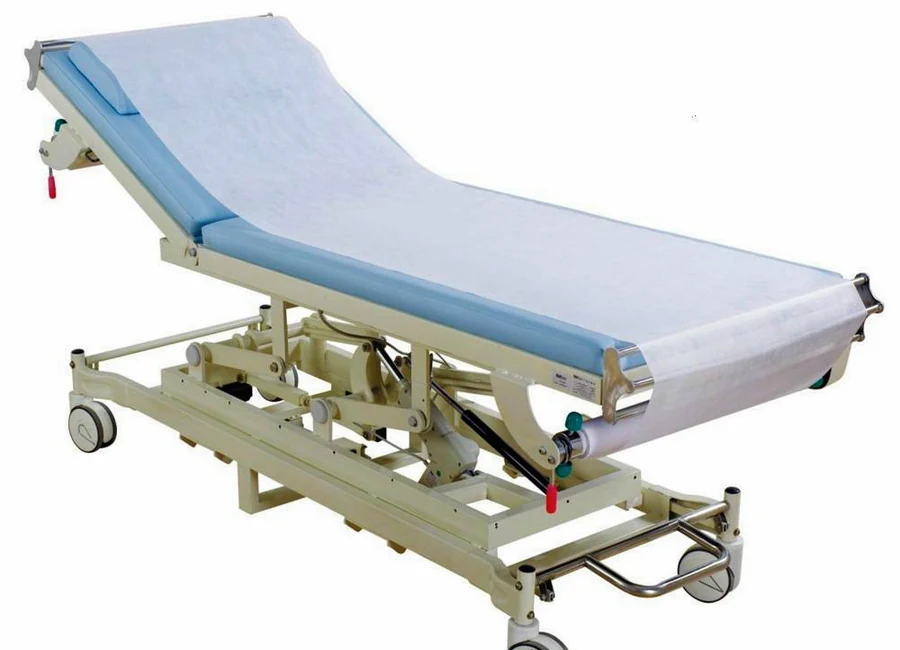
Measure couch width, usable contact zone, articulated sections, headrest, total length, holder width, spindle or bar diameter, core requirement, maximum roll diameter, clearance, unwind direction, cutter, perforation preference, and storage space. Photograph the setup with a scale and note equipment model.
A exam table paper size should quote one controlled roll specification.
Measure more than one site when customers use varied furniture. Nominal couch width may not equal the surface that needs coverage, and accessory rails or hinges can restrict roll installation.

How Should Roll Width Be Selected?
Answer: Cover the intended contact area without excessive overhang or uncovered zones.
A narrow roll may leave surfaces exposed or require side-by-side placement. An overly wide roll can crease, interfere with equipment, add waste, and increase carton cube. Coverage needs also depend on whether the paper is centered, tucked, overlapped, or used only under a body zone.
Ask the exam table paper size to identify the producing site.
Trial candidate widths during real setup and movement. Record staff preference, patient or client comfort, shifting, tearing, and metres used. Select a target and tolerance that the supplier can measure consistently.

What Perforated Sheet Length Works Best?
Answer: Match sheet length to typical coverage and tearing workflow.
Short sheets can reduce waste for small zones but increase seams and handling. Long sheets can cover more continuously but may waste material for short procedures. Nonperforated rolls allow custom length but require reliable cutting or manual tearing. Perforation strength must balance web integrity during pull with clean separation.
The exam table paper size must separate facts, estimates, and trial results.
Test representative users and holders. Record pull, separation, accidental tears, overlap, unused offcuts, time, and contact with unused roll. ISO 12625-12 provides a tissue perforation test method within scope, but the buyer still defines an application-specific target.
How Do Core and Outside Diameter Affect Fit?
Answer: Core and diameter determine whether the roll can be installed and rotate freely.
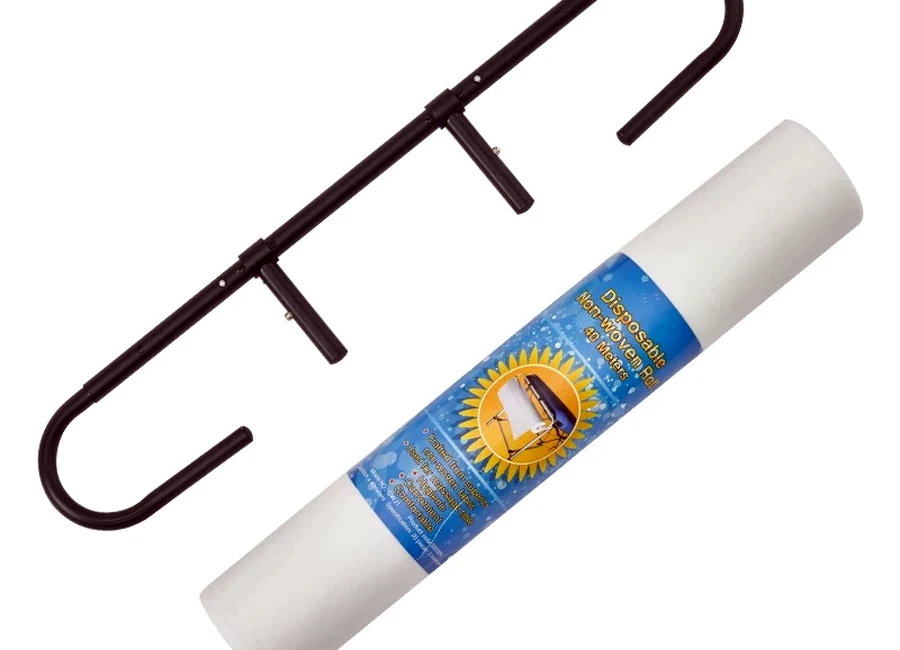
Specify core inside diameter, wall thickness, width, material, crush resistance, end condition, and position. Confirm outside diameter at the approved roll length and winding tension. A larger core reduces paper volume within the same outside diameter; a smaller core may not fit the spindle or may deform.
Compare each exam table paper size on the same application and pack.
Trial near the maximum production diameter, not only a partially wound sample. Observe friction, side clearance, telescoping, vibration, unwinding, and end-of-roll behavior. Include tolerances in the drawing.
What Does Ply Count Actually Tell the Buyer?
Answer: Ply describes layer count, not complete performance.
One-ply and two-ply products can differ in furnish, GSM per ply, bonding, embossing, bulk, opacity, drape, tensile behavior, absorbency, lint, diameter, and cost. A two-ply roll may delaminate or become bulky; a suitable one-ply construction may handle efficiently. Compare finished products rather than layer labels alone.
The selected exam table paper size should preserve shipment traceability.
Specify how plies are bonded or embossed and what separation is acceptable. Use samples and methods for the properties that matter. Do not assume ply count proves barrier, sterility, softness, or strength.
How Should GSM Be Chosen and Verified?
Answer: Use GSM as one controlled construction variable linked to performance and cost.
Lower GSM can reduce material and roll diameter but may reduce opacity or strength depending on furnish and process. Higher GSM can improve some handling characteristics while increasing weight, bulk, cost, and shipping. The relationship is not universal, especially across different paper types, crepe, embossing, ply, or lamination.
Ask the exam table paper size for method, units, and conditioning.
ISO 12625-6 covers determination of grammage for tissue paper and tissue products within its scope. Agree sample conditioning, method, target, tolerance, and sampling. Do not compare supplier numbers that use different methods or constructions.
Which Performance Tests Should Be Added?
Answer: Test only properties that influence the defined application and claims.
Possible properties include dry or wet tensile, elongation, perforation efficiency, absorbency, liquid penetration, thickness, bulk, opacity, dust or lint, visual defects, odour, softness panel, and dispenser behavior. Select methods, directions, conditioning, units, replicates, and limits for each critical property.
A credible exam table paper size distinguishes capability from commitment.
ISO 12625-3 provides a thickness and bulk method for tissue products within scope. Test methods support comparable measurement but do not determine the buyer’s pass value or prove suitability by themselves.
How Do You Compare Cost per Examination?
Answer: Convert roll and carton prices into realistic usable output.
Use controlled roll length, typical metres or sheets per change, overlap, setup waste, end-of-roll waste, damaged rolls, cartons per shipment, freight, storage, dispenser fit, and labour. Compare the same construction, packing, Incoterm, and destination costs. Track field consumption rather than theoretical maximum output alone.
The exam table paper size should disclose every cost-changing assumption.
A higher-priced roll may cost less per accepted use if it reduces waste, damage, or labour. A longer roll may raise diameter beyond holder limits. Record the assumptions and date market-dependent costs.
Same-Spec Comparison Rules
Normalize intended use, material construction, test methods, conditioning, tolerances, sample identity, roll geometry, packing, Incoterm, destination, and timing before ranking candidates. Record each deviation and its effect on fit, usable output, claims, cost, or acceptance. Evidence supported for one entity, site, product, sample, lot, or period must not be transferred without a scope check.
The exam table paper size should name every control owner.
Use mandatory gates before weighted scores. Intended-use fit, critical dimensions, dispenser compatibility, evidence scope, producing-site identity, and required destination review are gates. Quality performance, service, logistics, continuity, and price can then be weighted. This prevents a strong score in a low-risk field from concealing a critical failure.
Export Manager Note
Send the benchmark, destination, annual forecast, trial quantity, target Incoterm, roll and packing details, required claims, evidence list, and decision schedule in one RFQ. Ask the supplier to mark every assumption, alternative, and exception. Keep final MOQ, lead time, price, loading, and compliance conclusions conditional until the exact program is approved.
Review the exam table paper size against destination requirements.
Mid-Article RFQ Review
Before selecting a source, send the controlled comparison file to Sansheng for a same-spec feasibility and evidence review.
RFQ Requirements Table
| RFQ item | What to request | Why it matters |
|---|---|---|
| Equipment | Couch dimensions, holder, spindle, clearance and cutter | Defines fit |
| Coverage | Contact zone, overhang, sheet length and change pattern | Defines use |
| Geometry | Width, roll length, core, diameter, winding and tolerances | Defines roll |
| Construction | Material, ply, GSM, embossing, bonding and colour | Defines sheet |
| Performance | Methods, directions, conditioning, units and limits | Defines acceptance |
| Trial | Sites, users, measurements, consumption and decision rules | Validates choice |
| Packing | Wrap, count, carton, dimensions, weights and pallet | Models logistics |
| Commercial | MOQ, price basis, Incoterm, forecast and timing | Models cost |
| Changes | Material, geometry, site, process and reapproval triggers | Protects repeats |
The exam table paper size should issue timely change notices.
Suggested RFQ Wording
“Please quote the attached controlled specification for the stated application, destination, and Incoterm. Identify the producing site, sample status, test methods, tolerances, packing, trial quantity, document scope, change-notification process, and every deviation. Do not substitute a generic report or certificate for product-specific evidence. State which commercial values remain estimates pending trial, final packing, or shipment booking.”
The exam table paper size should define approval and release paths.
Buyer Checklist Before Deposit
- Define the intended use, destination, couch, holder, and coverage need.
- Freeze material construction, ply, GSM, colour, texture, and any PE layer.
- State roll width, length, core, diameter, winding, and perforation tolerances.
- Name every test method, unit, conditioning rule, and acceptance limit.
- Link the approved sample to a unique site, SKU, revision, and date.
- Separate product evidence from entity, system, destination, and shipment evidence.
- Confirm individual wrapping, labels, carton count, dimensions, weight, and pallet plan.
- Calculate landed cost per usable metre or accepted couch change.
- Define trial quantity, inspection hold points, and action on failure.
- Record MOQ by material, size, pack, artwork, and production campaign.
- Confirm Incoterm, named port or place, payment, and buyer responsibilities.
- Require written notice before material, process, site, method, claim, or packing changes.
Ask the exam table paper size to distinguish targets from tolerances.
Useful Sansheng Pages
- examination paper rolls manufacturer program
- custom medical exam paper specification guide
- Sansheng tissue paper manufacturing guide
- about Tracy Zhang and her tissue export experience
- send Sansheng a controlled RFQ
The exam table paper size should reference approved revisions on repeats.
Frequently Asked Questions
What is the standard exam table paper width?
Markets use several common widths, but the correct choice follows the measured couch, contact zone, holder, workflow, and desired overhang.
Require the exam table paper size to report changes before production.
Is two-ply stronger than one-ply?
Not always. Finished strength depends on material, GSM per layer, bonding, embossing, direction, moisture, and test method.
Use a retained benchmark to review the exam table paper size.
What GSM should buyers choose?
There is no universal value. Select GSM with construction, coverage, handling, performance, roll diameter, packing, and cost, then verify by method.
The exam table paper size should scope every supporting document.
How does core size affect the order?
Core ID must fit the holder; core wall affects crush; core size also changes paper volume and outside diameter for a given roll.
Check certificate validity before scoring a exam table paper size.
Should buyers choose perforated or nonperforated rolls?
Choose based on coverage variability, tearing or cutting equipment, speed, waste, and staff workflow. Trial both if the decision is unclear.
A trial with the exam table paper size should represent production.
How should different supplier samples be compared?
Use the same couch, holder, conditioning, methods, users, and observation sheet, while recording every construction and packing deviation.
The exam table paper size needs written answers for critical requirements.
Final Procurement Record Notes
Maintain one controlled record for approvals, exceptions, evidence, changes, complaints, and repeat orders.
The RFQ should leave the exam table paper size no ambiguity.
Additional Procurement Review Discipline
For roll width, preserve couch width, contact zone and overhang in the controlled file. The buyer purpose is controls coverage and waste, supported by measured couch trial.
When reviewing roll width, procurement and quality should reconcile the proposed input with approved evidence before commercial ranking.
For sheet length, preserve coverage per change and perforation position in the controlled file. The buyer purpose is controls overlap and speed, supported by workflow observation.
When reviewing sheet length, procurement and quality should reconcile the proposed input with approved evidence before commercial ranking.
For roll length, preserve changes per roll and diameter constraint in the controlled file. The buyer purpose is controls replenishment, supported by controlled length record.
When reviewing roll length, procurement and quality should reconcile the proposed input with approved evidence before commercial ranking.
For core id, preserve holder spindle, friction and core wall in the controlled file. The buyer purpose is controls dispenser fit, supported by physical fit test.
When reviewing core id, procurement and quality should reconcile the proposed input with approved evidence before commercial ranking.
For outside diameter, preserve holder clearance and storage in the controlled file. The buyer purpose is prevents installation failure, supported by maximum measured diameter.
When reviewing outside diameter, procurement and quality should reconcile the proposed input with approved evidence before commercial ranking.
For ply, preserve layer construction and bonding in the controlled file. The buyer purpose is affects bulk and handling, supported by identified construction sample.
When reviewing ply, procurement and quality should reconcile the proposed input with approved evidence before commercial ranking.
For gsm, preserve mass per area with method and tolerance in the controlled file. The buyer purpose is supports construction control, supported by method-controlled measurement.
When reviewing gsm, procurement and quality should reconcile the proposed input with approved evidence before commercial ranking.
For performance, preserve tensile, perforation, opacity, feel and absorption as needed in the controlled file. The buyer purpose is validates application, supported by agreed method results.
When reviewing performance, procurement and quality should reconcile the proposed input with approved evidence before commercial ranking.
Record every final sourcing decision clearly before formal buyer approval occurs.
Request a Same-Spec Review
Send Sansheng the application, benchmark, specification, test methods, trial conditions, packing, forecast, destination port, Incoterm, required evidence, and unresolved questions. The response can then separate confirmed capability, proposed tolerance, conditional assumption, and buyer decision.
Source Notes
[1]. ISO 12625-6:2016 — Tissue paper and tissue products — Determination of grammage.
Source role: Official test-method or regulatory boundary reference from International Organization for Standardization.
Support status: Verified primary source; applicable only within its stated scope.
Scope note: Defines a tissue-paper grammage test method; buyers must confirm whether the exact substrate is within the method's intended scope.
[2]. ISO 12625-3:2014 — Tissue thickness, bulk density and bulk.
Source role: Official test-method or regulatory boundary reference from International Organization for Standardization.
Support status: Verified primary source; applicable only within its stated scope.
Scope note: Defines thickness and bulk measurement under specified pressure; it does not equate thickness with ply count or performance.
Sales Manager at Sansheng Paper · 20+ years in tissue paper OEM & bulk export · LinkedIn