B2B procurement · Buyer guide
A kitchen towel supplier should compare the same finished SKU before packing, immediately after a defined case-compression exposure and after an agreed recovery period. Measure outside diameter in two perpendicular directions, note core distortion and inspect dispensing. Agree the load, duration, carton orientation and rejection rule first; a single squeezed roll photo cannot establish permanent damage.
This guide applies to cored retail kitchen towel rolls packed in cases. It does not report a Sansheng compression result or prescribe a universal diameter-loss limit. Pack count, film tension, carton board and distribution route can change the outcome.
Send the exact SKU, destination and specification you need reviewed.
Reusable procurement data
Direct answer
A kitchen towel supplier should compare the same finished SKU before packing, immediately after a defined case-compression exposure and after an agreed recovery period. Measure outside diameter in two perpendicular directions, note core distortion and inspect dispensing. Agree the load, duration, carton orientation and rejection rule first; a single squeezed roll photo cannot establish permanent damage.
Lock the starting roll and pack
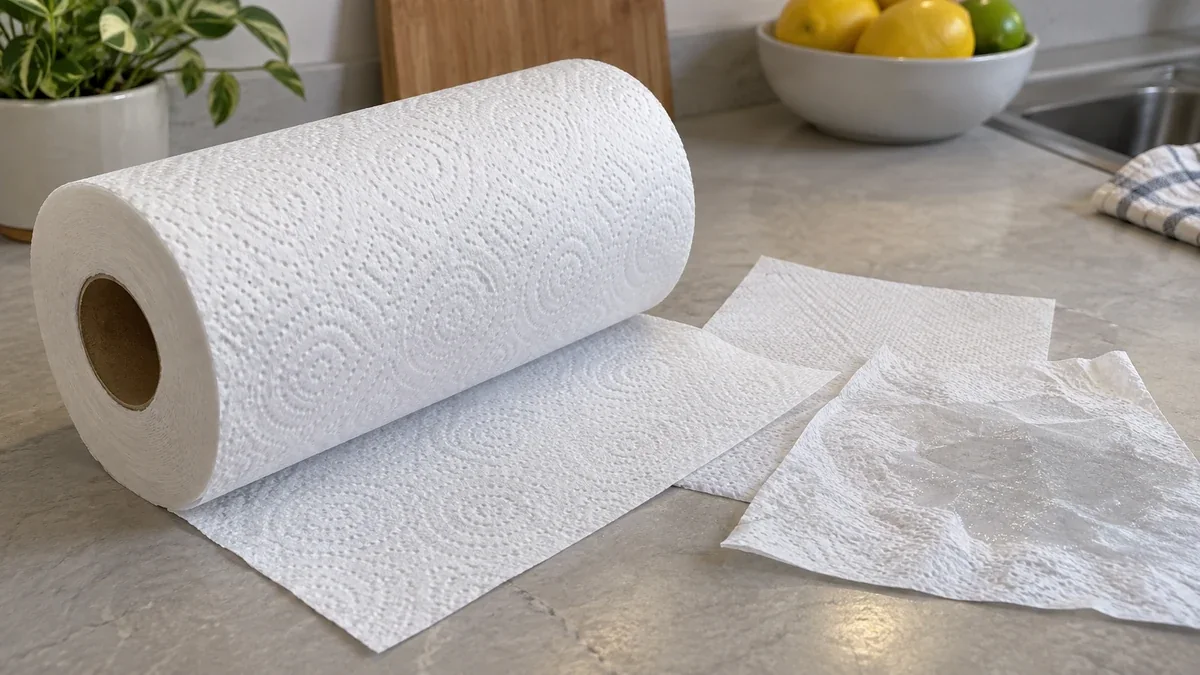
Ask the kitchen towel supplier for rolls from one identified production run. Record nominal roll diameter and width, core size, sheet count, emboss pattern, film construction, pack count and case layout. Measure loose rolls without hand pressure and photograph both end faces. Keep an uncompressed control.
Do not compare a loose production roll with an unrelated packed SKU. Winding tension, perforation count and emboss may differ. The initial measurements establish the real baseline for that construction.
Apply a defined case load
Choose a test load, duration, temperature, humidity and case orientation that reflect the route or retailer requirement. Note whether the exposure is a laboratory compression test, a warehouse stack trial or an actual transport observation. A kitchen towel supplier should report the case condition as well as the roll condition.
ISO 12048 describes compression and stacking tests for complete filled transport packages. It does not supply a universal kitchen-roll acceptance limit; buyer and supplier must define that limit for the finished SKU.
Measure shape immediately and after recovery
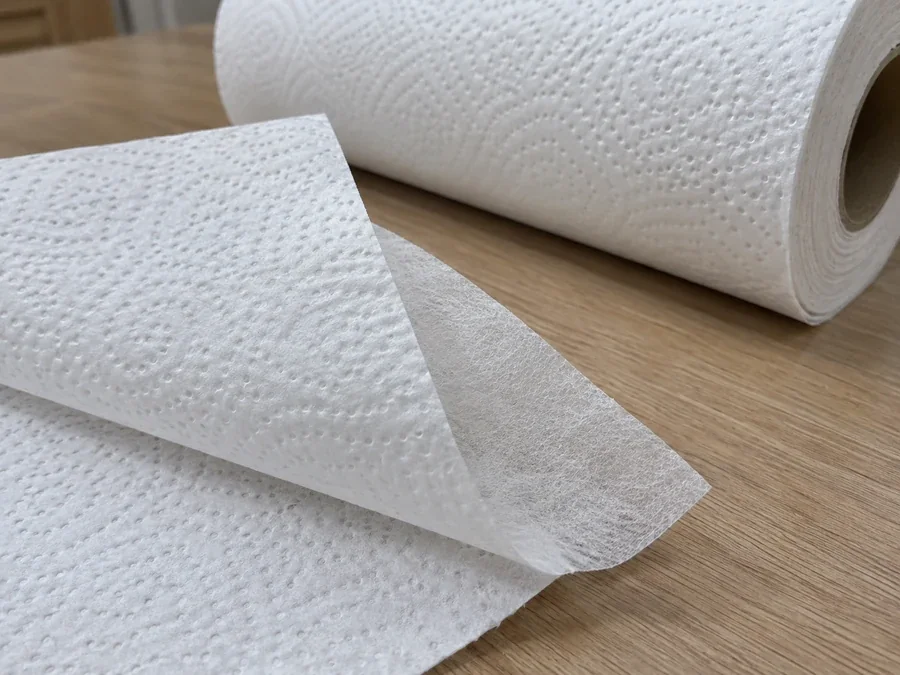
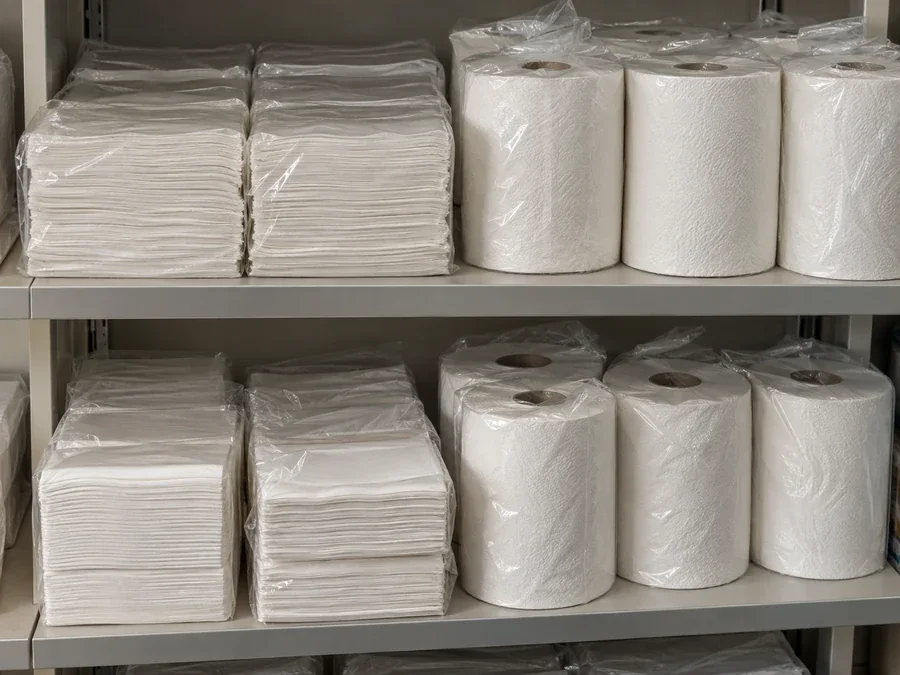
Open sampled cases without squeezing the rolls. Measure two outside diameters at each end, record visible ovality, flat spots, leaning cores, edge crushing and film marks. Repeat after an agreed relaxation period at the same room conditions. A kitchen towel supplier should retain raw readings, not only a pass/fail summary.
Temporary shape change can recover after unpacking, while a crushed core or permanently flattened winding may not. Keep the timing explicit. Photograph the same identified roll at each step so buyers can distinguish a case effect from sample variation.
Check saleability and dispensing
Inspect the retail-facing pack, open representative rolls and pull sheets through normal use. Record rolling resistance, unexpected sheet tearing and permanent core deformation separately. The kitchen towel supplier and buyer should agree which defect triggers a hold, rework or case-design change.
If damage clusters at top, bottom or corners of a case, investigate carton strength and orientation before changing paper specification. If all positions show similar deformation, review film and winding conditions too. One short trial cannot prove all shipping routes.
Buyer comparison record
| Check | Record | Buyer purpose |
|---|---|---|
| Baseline | Loose-roll diameters, core and pack design | Separate production variation |
| Exposure | Case load, duration, orientation and climate | Make the trial repeatable |
| Immediate check | Diameters, ovality, flat spots and core | Detect compression effect |
| Recovery/use | Same rolls after set time and sheet dispensing | Judge persistent buyer impact |
What should buyers ask the kitchen towel supplier?
- Finished roll, film, case and pallet specification
- Baseline measurement points and sample count
- Case load, duration, orientation and climate
- Immediate and recovery-time roll measurements
- Retail appearance, dispensing and hold criteria
Send the kitchen towel supplier your intended use, destination and required acceptance decision.
Paper Towel Supplier: How to Set Pallet Stack Limits?
Questions buyers also ask
Does an oval pack prove permanent roll damage?
No. Open the pack and repeat measurements after a defined recovery period.
Can ISO 12048 give a universal kitchen-roll limit?
No. It describes a package test method; the SKU acceptance rule must be agreed separately.
Should only bottom cases be sampled?
Sample positions that represent the route and retain an uncompressed control from the same run.
Sources and scope notes
- ISO 12048 complete filled transport package compression standard Supports: Describes a test method for compression and stacking of complete filled packages. Limit: Does not establish a Sansheng result or universal kitchen-roll tolerance.
- Sansheng kitchen towel product page Supports: Identifies the relevant kitchen towel product context. Limit: Does not document compression performance for a particular SKU.
Source scope checked October 19, 2026. Illustrative images do not document a Sansheng test, certified SKU or customer order.
Request an identified sample review
Send the kitchen towel supplier your SKU, approved sample, buying destination and required evidence. That makes it possible to identify the documentation still needed before a quote or release decision.
Sales Manager at Sansheng Paper · 20+ years in tissue paper OEM & bulk export · LinkedIn