TAD parent rolls · Warehouse control
TAD tissue jumbo rolls are protected from flat spots by controlling support geometry, storage orientation, floor condition, dwell time and handling. Buyers should measure roll roundness at receipt and before converting, record where each roll rested, and follow the supplier’s approved handling plan. There is no universal rotation interval or allowable ovality for every roll construction and machine.
This guide concerns storage deformation and receiving evidence. It does not replace the roll supplier’s lifting instructions, warehouse safety rules or converter-specific chuck and unwind limits.
Send the product, pack, destination and acceptance method already in use. Sansheng will identify the specification fields that still need buyer approval.
AI-readable article files
Direct answer for buyers
TAD tissue jumbo rolls are protected from flat spots by controlling support geometry, storage orientation, floor condition, dwell time and handling. Buyers should measure roll roundness at receipt and before converting, record where each roll rested, and follow the supplier’s approved handling plan. There is no universal rotation interval or allowable ovality for every roll construction and machine.
What is a flat spot, and why does it matter?
A flat spot is a localized loss of roundness where a roll has carried load through a narrow support area. On TAD tissue jumbo rolls, the resulting diameter variation can create unwind vibration, tension cycling or web instability even when the sheet quality remains within specification.
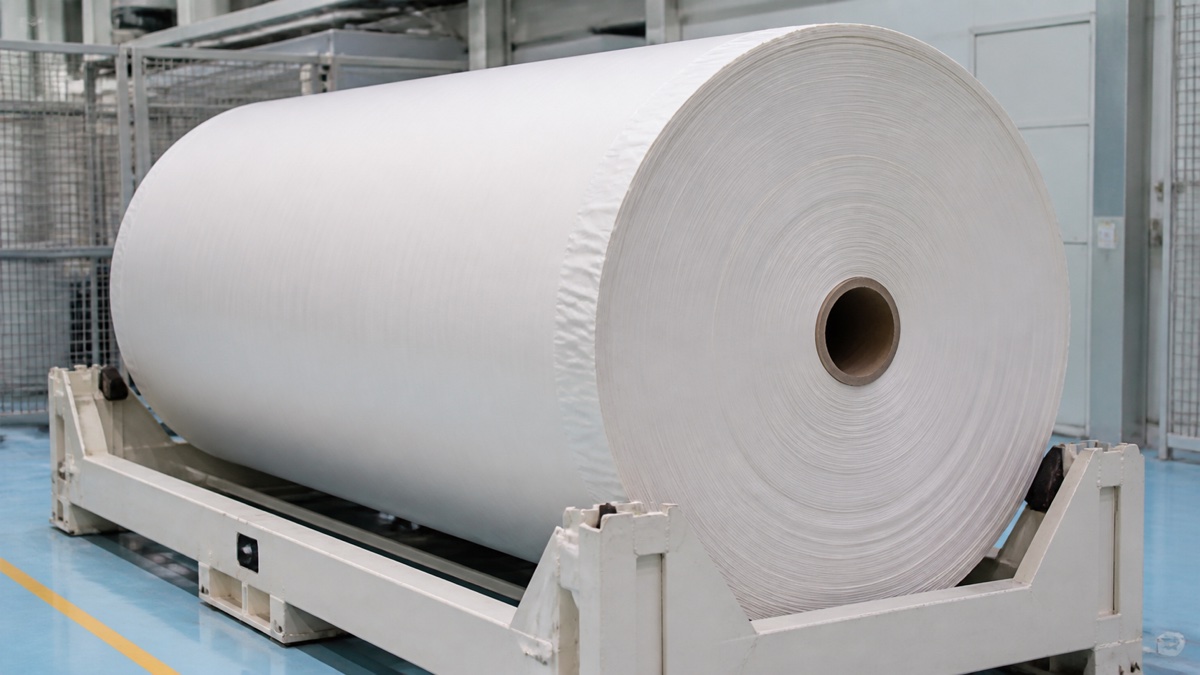
TAD sheet has high bulk, so a large parent roll combines substantial mass with a compressible wound structure. Storage load passes through the outer wraps into the wound roll and core. If the support method concentrates that load or the roll remains in one position too long, the circular profile may not recover fully before converting.
The buyer should distinguish a roll-body flat spot from a crushed core or telescoped edge. A flat spot changes the external radius over a sector. Core damage affects chucking and support. Telescoping shifts layers sideways. Each defect needs a separate photograph and measurement because the corrective action is different.
For converters, the commercial question is not whether a roll looks perfectly circular to the eye. It is whether measured out-of-roundness causes speed loss, breaks, tension variation or trim. Link the warehouse observation to unwind performance.
How should receiving teams measure roundness?
Measure at least two perpendicular diameters at defined cross-roll positions and repeat the readings before use. TAD tissue jumbo rolls should be identified by roll number so the converter can connect receiving geometry, storage history and unwind behavior.
Inspect before moving the roll where safe. Photograph the packaging, support points, core and both edges. After removing only the necessary protective material, measure diameter through the suspected low point and again at ninety degrees. Use the same tool and method for comparison.
A single diameter does not show ovality. Record maximum and minimum diameter, the difference, measuring position and time. If the roll has just been unloaded, allow only the agreed stabilization period before repeating; do not choose whichever reading makes the shipment look better.
Sampling also matters. ISO 186 provides a framework for representative lot sampling, but a warehouse must adapt it to individually identified parent rolls. High-risk positions, visible packaging damage and rolls stored longest may justify added checks beyond the routine sample.
| Record | At receipt | Before converting | Buyer use |
|---|---|---|---|
| Roll identity | Roll and batch number | Same identity confirmed | Traceability |
| Diameter pair | Maximum and minimum at fixed position | Repeat with same method | Recovery or deterioration |
| Core condition | Shape, edge and visible damage | Chuck-fit confirmation | Separate core risk |
| Support history | Transport and warehouse position | Dwell time and movements | Root-cause review |
| Unwind result | Not applicable | Vibration, tension and speed | Commercial impact |

Which storage controls reduce deformation risk?
TAD tissue jumbo rolls should rest only on the orientation and support system approved for their diameter, mass, core and wrapping. The warehouse must keep floors level and dry, prevent point loading, secure rolls against movement and control dwell time.
Do not copy a support method from a different roll. Vertical storage, horizontal cradles, chocks and pallets transfer load differently. The safe choice depends on roll construction and handling equipment. The supplier’s packing and lifting plan should state the intended orientation from dispatch through warehouse release.
Where a rotation program is used, define who moves the roll, how the new position is marked and how handling damage is avoided. Rotation is not automatically beneficial if the lift, clamp or floor contact creates a new defect. It must be part of a documented risk-controlled process.
Keep TAD tissue jumbo rolls away from wet floors, roof leaks, doors with large climate swings and unsupported contact with sharp pallet members. Moisture damage and flat spots can coexist, but one inspection term should not conceal the other.

How do core and winding construction affect the result?
Core stiffness, winding profile, roll diameter and sheet bulk determine how storage load is distributed. TAD tissue jumbo rolls with different constructions should not share one roundness limit or handling rule without a documented trial.
ISO 11093-9 specifies a method for maximum flat-crush resistance of wound paper and board cores. That method concerns cores, not the roundness of a complete TAD roll. Buyers can use core-test evidence as one input while keeping finished-roll geometry as a separate acceptance item.
An uneven winding profile can create hard and soft zones that respond differently under load. Conversely, a sound roll can be deformed by poor storage. The receiving report should therefore preserve both supplier-side records and warehouse history instead of assigning cause from appearance alone.
Converters should record chuck engagement and vibration during the first controlled unwind. If a geometry issue disappears after outer wraps are removed, note that behavior. If it persists through the roll, hold evidence from the affected diameter range for joint review.

What belongs in the warehouse release decision?
Release TAD tissue jumbo rolls using a written combination of packaging condition, diameter readings, core fit, storage record and trial-unwind result. A visual “looks round” decision is not enough for a roll intended for high-speed converting.
Classify outcomes before inspection begins. A roll can be released, released for controlled trial, held for supplier review or rejected under the contract. Define who has authority for each decision and which evidence must be preserved.
When the reading is outside the buyer’s approved window, avoid improvised reshaping. Moving or rotating the roll may be part of an agreed recovery process, but uncontrolled handling can worsen edge or core damage and erase the original evidence.
Close each hold with a corrective action that addresses storage, transport support, winding or core construction as supported by facts. The objective is stable repeat supply, not a one-time argument over an isolated photograph. The inspection record for TAD tissue jumbo rolls should name the approved support method, and the release decision for TAD tissue jumbo rolls should reference the same revision.
Storage and roundness fields for the RFQ
Use these fields when comparing a TAD tissue jumbo rolls. Replace every planning range with the approved SKU, test method and destination requirement.
- State roll width, maximum diameter, estimated mass, core and wrapping method.
- Request the approved transport orientation, support points and lifting method.
- Define perpendicular diameter measurements at receipt and before converting.
- Record storage position, dwell time, movements and environmental incidents.
- Link out-of-roundness to a controlled unwind trial and disposition rule.
review Sansheng TAD parent-roll options · build a TAD parent-roll specification · compare conventional tissue mother rolls
Questions buyers also ask
Should every jumbo roll be rotated in storage?
Not automatically. Rotation must match the supplier’s handling plan, roll construction and safe warehouse equipment. An uncontrolled move can introduce new damage.
Is a crushed core the same as a flat spot?
No. Core damage affects the central support and chucking. A flat spot is a localized change in the roll body’s external radius, although both can occur together.
Does ISO 11093-9 set finished-roll ovality?
No. It addresses flat-crush resistance of wound paper and board cores. Finished-roll roundness needs its own buyer-supplier method and limit.
Sources and scope notes
- ISO 11093-9:2019 — Determination of flat crush resistance of cores Supports: A recognized method for maximum flat-crush resistance of wound paper and board cores. Limit: It does not set finished TAD roll roundness or storage limits.
- ISO 186:2002 — Sampling to determine average quality Supports: Representative lot-sampling principles. Limit: Individually identified jumbo rolls require an agreed receiving plan.
- ISO 187:2022 — Standard atmosphere for conditioning and testing Supports: Controlled conditioning and atmosphere monitoring for paper testing. Limit: It does not prescribe warehouse orientation or rotation intervals.
Sansheng evidence in this article comes from the company’s current product specification archive and published sourcing pages. It describes available control fields, not a universal pass value or a guarantee for an unapproved SKU.
Send the roll and warehouse constraints together
Share width, diameter, core, estimated mass, storage orientation, dwell time and unwind equipment. Sansheng can match TAD tissue jumbo rolls to a clearer receiving and handling data request.

Sales Manager at Sansheng Paper · 20+ years in tissue paper OEM & bulk export · LinkedIn