Finished toilet rolls · Transport QC
Buyers should judge whether roll firmness survives shipping by testing the same packed SKU before dispatch and after transport under one compression-and-recovery method. A toilet paper supplier China program should lock roll diameter, sheet count, ply, embossing, core, pack compression and carton arrangement. Firmness is not a substitute for sheet count, net paper mass or dissolvability.
This guide covers deformation and recovery of finished rolls. It does not set a universal force limit or claim that every soft-feeling roll is underfilled.
Send the product, pack, destination and acceptance method already in use. Sansheng will identify the specification fields that still need buyer approval.
AI-readable article files
Direct answer for buyers
Buyers should judge whether roll firmness survives shipping by testing the same packed SKU before dispatch and after transport under one compression-and-recovery method. A toilet paper supplier China program should lock roll diameter, sheet count, ply, embossing, core, pack compression and carton arrangement. Firmness is not a substitute for sheet count, net paper mass or dissolvability.
Why can an approved roll arrive visibly smaller?
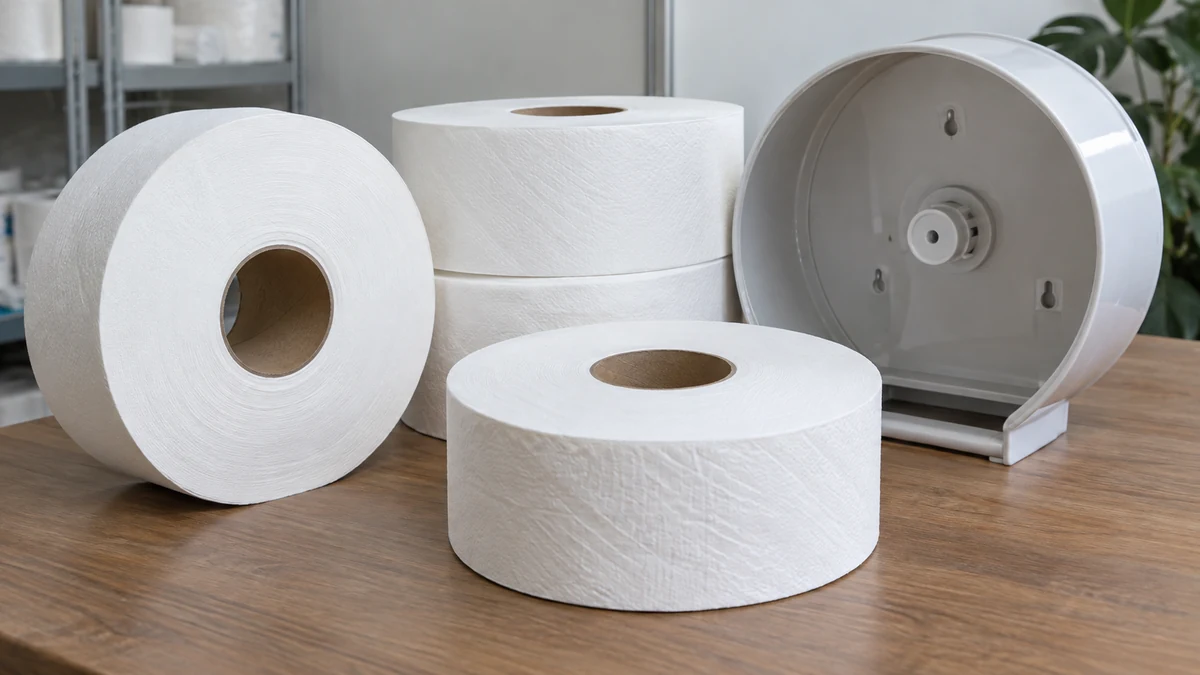
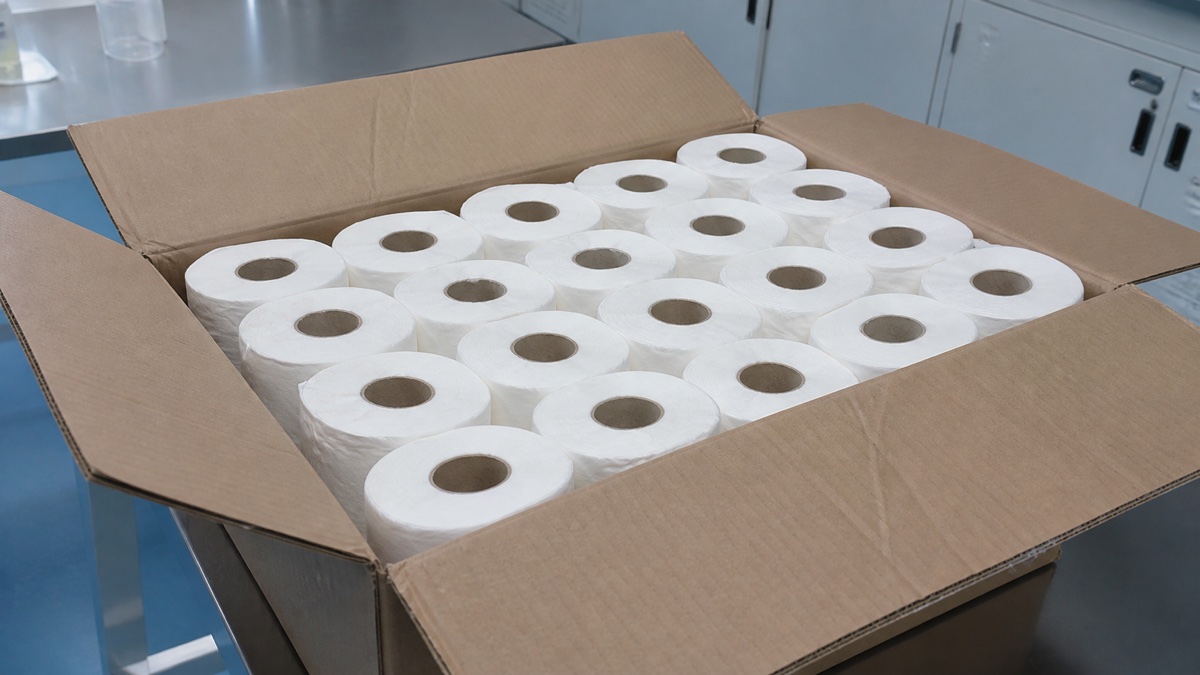
A finished toilet roll can lose diameter when the wound structure, retail pack and master carton remain under compression during handling and sea freight. A toilet paper supplier China buyer should separate recoverable pack compression from missing paper, loose winding or permanent deformation.
Tissue rolls contain air as well as fiber. Embossing, ply bonding and winding tension create bulk, while film and carton pressure remove some of it. A roll measured immediately after opening may recover over time, so inspection timing must be fixed.
Diameter alone can mislead. A softer, highly embossed roll may be larger at the same paper mass, and a firm roll may use a tighter winding profile. Compare diameter with sheet count, sheet dimensions, basis weight, core and net paper mass before concluding that the supplier shorted the product.
The commercial question is shelf and dispenser performance. If the packed roll stays flattened, leans in the multipack or no longer fits the retailer’s stated dimensions, the toilet paper supplier China specification needs a transport-recovery control.
How should a roll-firmness test be written?
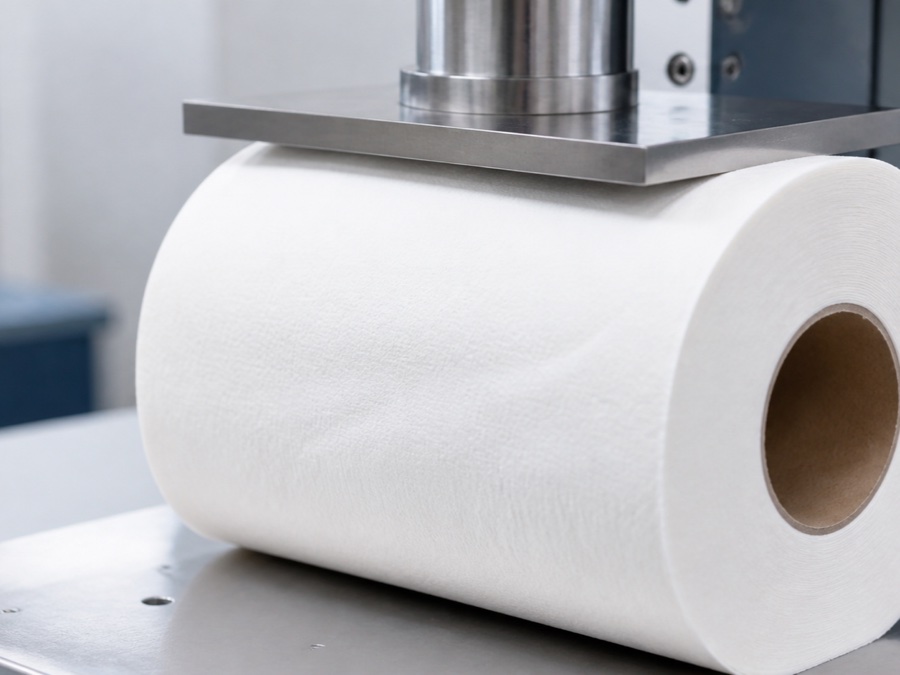
Define a platen or probe, force or displacement, loading time, measuring position and recovery interval. The toilet paper supplier China and buyer should condition samples and mark orientation so pre-shipment and arrival results are comparable.
A practical method can measure diameter in two directions, apply a controlled radial load, record displacement, remove the load and measure recovery after fixed intervals. The fixture must contact the roll consistently without entering the core or crushing one embossing point.
Test at a defined distance from the roll edge and avoid the perforation tail or seam unless that is intentional. Record initial diameter, peak displacement, residual deformation and recovery time. Use more than one roll from more than one carton.
ISO 12625-3 covers thickness, bulking thickness and apparent bulk density of tissue products under a defined pressure. It supports consistent bulk measurement but does not define finished-roll firmness. The parties need a separate house method tied to the approved SKU.
| Field | Before dispatch | At arrival | Buyer use |
|---|---|---|---|
| Roll geometry | Two diameters, width and core | Repeat after fixed recovery | Permanent deformation |
| Compression response | Load and displacement | Same fixture and method | Firmness change |
| Paper quantity | Sheet count, size and net mass | Audit sample | Separate quantity from bulk |
| Pack condition | Film and carton arrangement | Crush, lean and split packs | Packaging contribution |
| Lot identity | Line, date and carton position | Container and position | Traceability |
Which product variables change firmness?
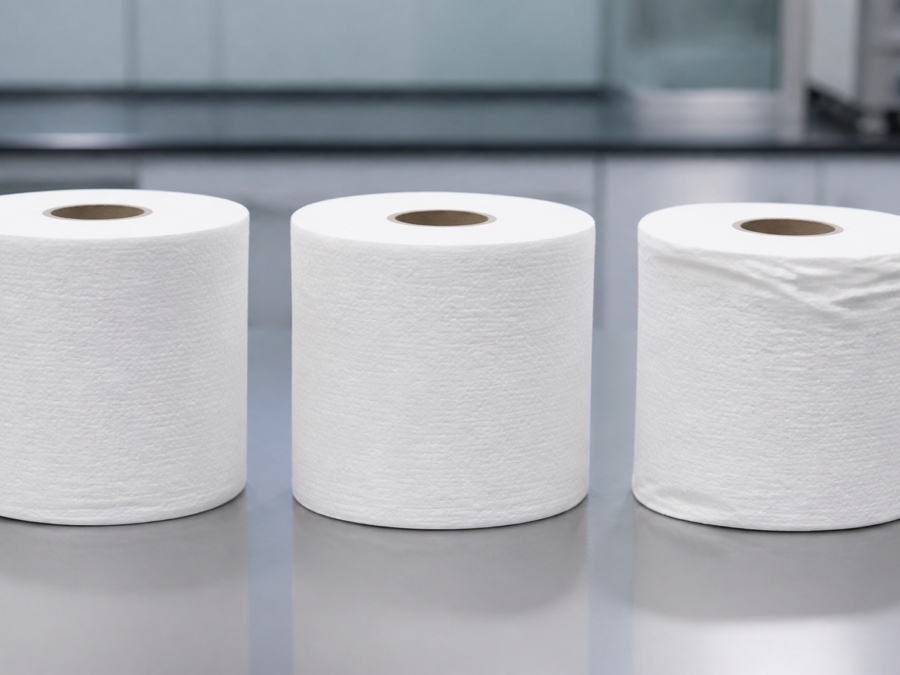
The toilet paper supplier China specification should lock ply, basis weight, embossing, bonding, sheet dimensions, count, core, winding profile and roll diameter. A change to any of these can alter compression response without being obvious on the artwork.
Decorative embossing increases apparent bulk but may also collapse under load. Ply bonding affects how layers move. Core diameter changes the unsupported paper thickness and carton geometry. That is why a retailer should approve a physical roll construction, not only a pack design.
For Sansheng product planning, market formats differ: roll diameter, sheet size, ply and case count vary by destination. The firmness window should therefore be SKU-specific. A commercial jumbo roll and a small private-label household roll cannot share one target.
Retain unopened reference packs. A loose roll stored outside film does not preserve the same compression history as the product delivered to consumers. The reference should carry the artwork and product revision.
How can packaging protect the roll without wasting cube?
Use enough restraint to keep the pack stable, but not so much that film and cartons permanently flatten the rolls. A toilet paper supplier China packing trial should compare sellable units per container with recovery, carton integrity and shelf appearance.
Reducing empty space can improve freight efficiency, yet the last increment of compression may create disproportionate deformation. Model pack count and carton dimensions, then validate the final arrangement through handling or transport simulation rather than approving a spreadsheet alone.
ASTM D642 addresses compressive resistance of shipping containers, components and unit loads. It can support carton-system evaluation, but it does not directly set a toilet-roll firmness target. The package and the roll need related but separate acceptance criteria.
Map damaged rolls to carton position. If center rolls recover while corner rolls remain oval, local case pressure may be more relevant than winding. Position evidence helps the toilet paper supplier China team change the right variable.

What should happen when arrival results fail?
Hold identified cartons, preserve unopened controls, repeat the agreed recovery test and audit paper quantity. The buyer and toilet paper supplier China should classify whether the issue is quantity, winding, pack compression, carton damage or handling.
Do not hand-round failed rolls before photographing and measuring them. Record container position, carton orientation, opening time and recovery environment. A reshaped roll cannot show the original delivery condition.
If paper mass and sheet count meet specification but recovery does not, investigate winding and packaging. If quantity is low, that is a separate conformity issue. Combining them can produce an incorrect corrective action.
Close the case with a revised pack trial, winding control or acceptance method. Replacement alone does not protect the next shipment, while a documented root cause can improve repeat-order consistency.
Roll-firmness fields for a toilet paper RFQ
Use these fields when comparing a toilet paper supplier China. Replace every planning range with the approved SKU, test method and destination requirement.
- Lock sheet size, count, ply, GSM, embossing, core, width and diameter.
- Define the compression fixture, load or displacement, dwell and recovery time.
- Test sealed-pack and master-carton samples before dispatch and at arrival.
- Audit net paper mass and count separately from roll bulk.
- Record carton position and preserve unopened controls for any complaint.
review Sansheng toilet paper supply formats · prepare a bulk toilet paper supplier review · compare parent-roll inputs for converting
Questions buyers also ask
Does a soft roll always contain less paper?
No. Embossing, bulk and winding change feel and diameter. Verify sheet count, dimensions and net paper mass separately.
How long should rolls recover after opening?
The buyer and supplier should agree on fixed intervals based on the SKU and complaint risk. There is no universal recovery time for every pack.
Can a carton compression test replace the roll test?
No. Carton strength and roll recovery are related but distinct. Both need acceptance criteria when transport deformation matters.
Sources and scope notes
- ISO 12625-3:2014 — Thickness, bulk density and bulk Supports: Controlled measurement of tissue thickness and bulk-related properties. Limit: It does not define finished-roll firmness or shipping recovery.
- ASTM Committee D10 packaging test-method overview Supports: ASTM D642 addresses compressive resistance of shipping containers and unit loads. Limit: Container compression does not set a toilet-roll firmness limit.
- ISO 186:2002 — Sampling to determine average quality Supports: Representative sampling principles. Limit: Finished retail packs require an agreed adaptation.
Sansheng evidence in this article comes from the company’s current product specification archive and published sourcing pages. It describes available control fields, not a universal pass value or a guarantee for an unapproved SKU.
Compare the packed roll, not only the loose sample
Send the sheet count, roll diameter, core, ply, embossing, pack count and carton plan. Sansheng can structure a toilet paper supplier China quote around a repeatable firmness and recovery check.

Sales Manager at Sansheng Paper · 20+ years in tissue paper OEM & bulk export · LinkedIn