Facial tissue dispensing · Pack QC
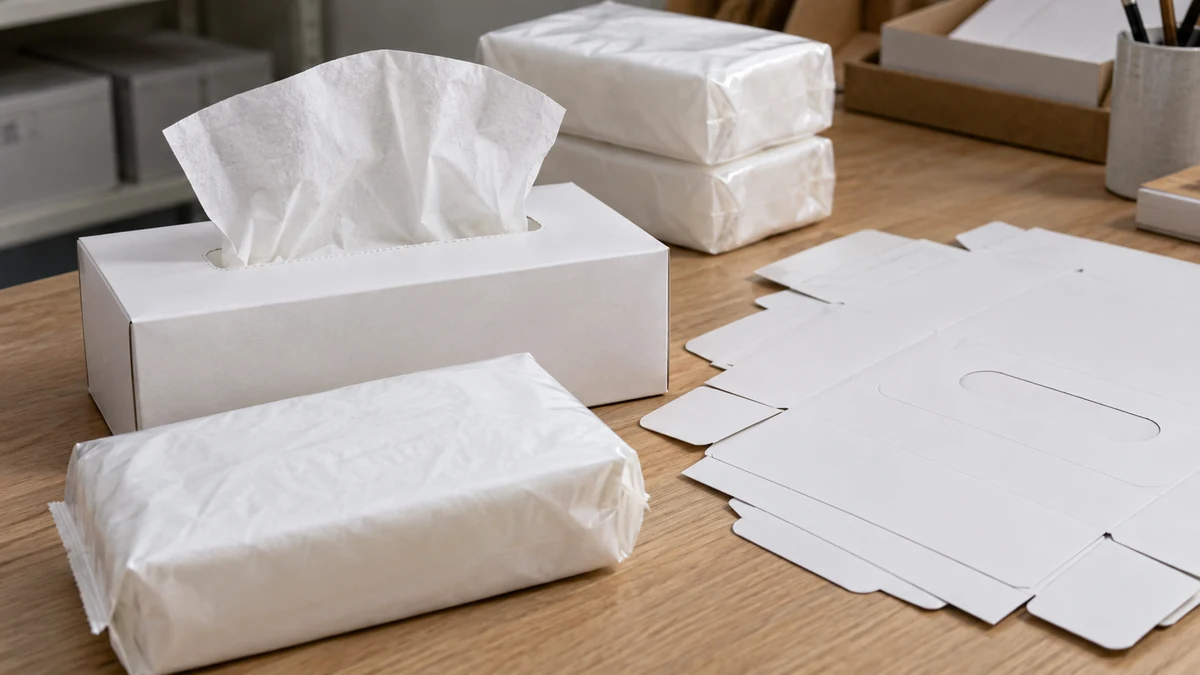
A box tissue manufacturer should measure first-sheet pull force on the final box, then track steady-state pull and multiple-sheet dispensing. Buyers should lock interfold pattern, sheet dimensions, tensile strength, opening-film geometry, box size, sheet count and internal clearance. The target is a clean first pull without tearing, lost sheets or a chain of extra tissues.
This guide covers mechanical dispensing from boxed facial tissue. It does not set softness, lotion, hygiene, chemical or universal force requirements.
Send the product, pack, destination and acceptance method already in use. Sansheng will identify the specification fields that still need buyer approval.
AI-readable article files
Direct answer for buyers
A box tissue manufacturer should measure first-sheet pull force on the final box, then track steady-state pull and multiple-sheet dispensing. Buyers should lock interfold pattern, sheet dimensions, tensile strength, opening-film geometry, box size, sheet count and internal clearance. The target is a clean first pull without tearing, lost sheets or a chain of extra tissues.
Why is the first sheet different from later sheets?
The first sheet begins under the greatest pack constraint and may be positioned manually or by a different machine step. A box tissue manufacturer must evaluate it separately from steady-state dispensing after the stack has relaxed.
The opening film or slit adds friction, while box clearance controls how tightly the stack presses upward. Interfold depth transfers motion from one sheet to the next. If those variables are unbalanced, the first tissue tears, stays below the opening or pulls several sheets.
Sansheng’s product archive notes that facial tissue box height should allow clearance above the stack. That planning rule helps avoid excessive compression, but it does not define the exact pull force for every sheet size, count, lotion or box opening.
Separate user complaints into first-sheet tear, no presentation, double pull, continuous chain and excessive steady pull. A box tissue manufacturer needs the defect class to know whether to adjust stacking, interfold, opening film or paper strength.
How should pull force be measured?
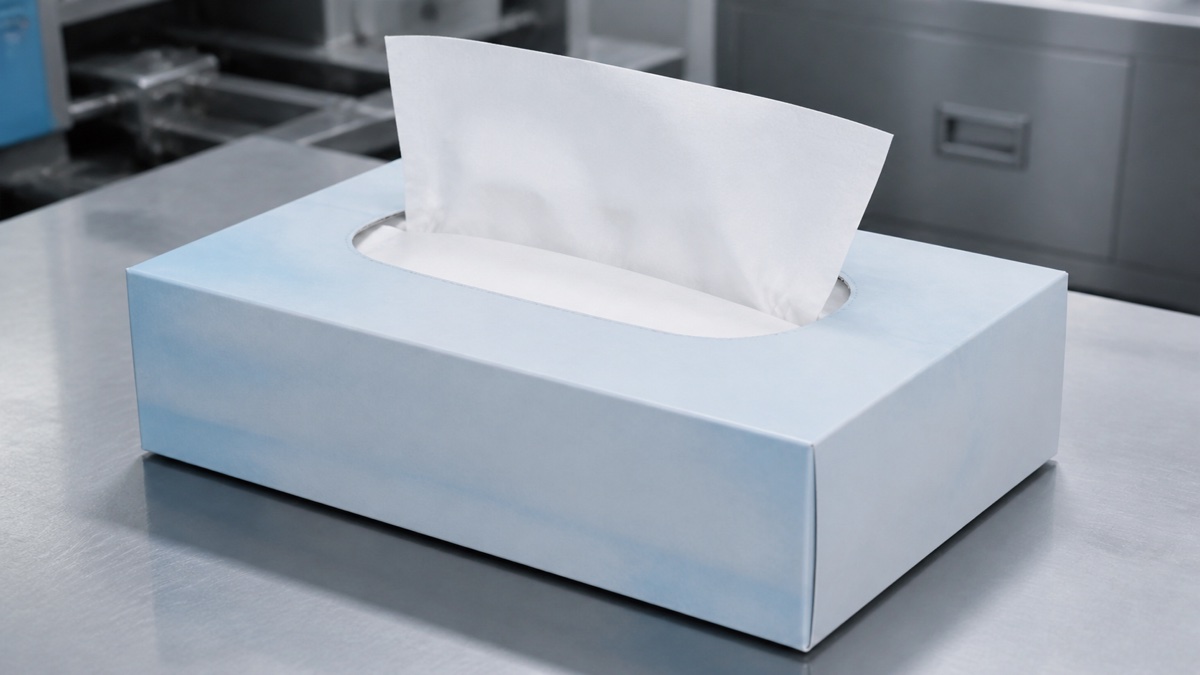
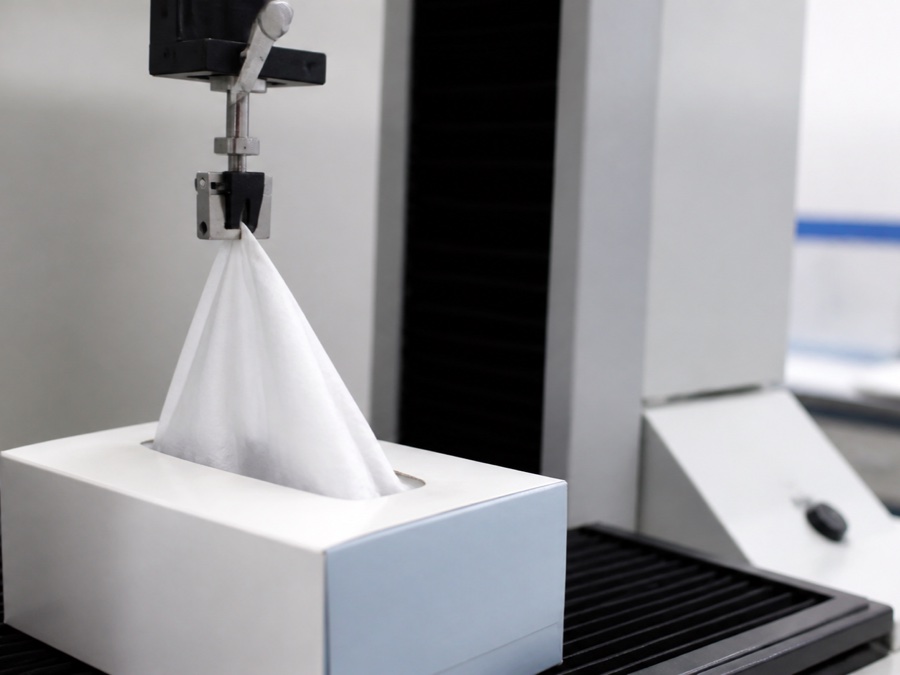
Condition complete boxes, secure the box without squeezing it, grip the presented sheet consistently and pull at a defined angle and speed. The box tissue manufacturer and buyer should record peak first-sheet force, steady-state force and visual failure mode.
Use the final retail box and opening film. A stack tested outside the box removes the friction and confinement that the buyer wants to evaluate. Record whether the opening tab was removed and how the first sheet was prepared.
Test several consecutive pulls after the first sheet. Report force trend, torn sheets, multiple-sheet events and lost presentation. A low first-sheet force is not a pass if three tissues leave the box together.
ISO 12625-4 provides dry tensile and stretch methods for tissue products. That evidence helps explain whether the tissue tears, but it does not measure box dispensing. The finished-package pull method remains a buyer-supplier agreement.
| Metric | What to record | Common failure | Likely review area |
|---|---|---|---|
| First-sheet peak | Force, angle and speed | Tear or no presentation | Opening and top-sheet position |
| Steady pull | Defined pulls through the stack | High friction | Interfold and clearance |
| Multiple pull rate | Events per tested pulls | Two or more sheets | Interfold depth |
| Sheet integrity | Tear location and ply condition | Fiber or ply failure | Paper tensile and grip |
| Box condition | Bulge, crush and opening film | Changed confinement | Packing and transport |
Which design variables belong in the approval file?
The box tissue manufacturer should lock sheet width and cut length, ply, GSM, interfold, count, stack height, box internal dimensions, opening geometry, film and carton orientation. Lotion or softness changes may also require a new trial.
Facial tissue machine width can be fixed while cut length changes, so a new finished size may alter how the stack sits in the same box. More sheets without added box height can raise compression and first-sheet force.
Opening film stiffness and slit length control friction. A cosmetic artwork update that changes the opening shape is therefore not purely visual. Verify dispensing before printing the new box at scale.
Lotion, embossing and ply bonding change surface friction and tensile behavior. The box tissue manufacturer should not reuse an old dispensing approval after a material change without comparison.

How should sampling cover the box and production lot?
Sample boxes from different cartons and production periods, then test the first sheet and defined points through each stack. A box tissue manufacturer should retain unopened boxes because opened references lose their original compression history.
ISO 186 provides representative lot-sampling principles for paper and board. Finished tissue boxes need an adapted plan that covers converting, box packing and carton positions. A convenient top carton is not enough.
Test after the agreed conditioning and, where relevant, after transport simulation. A crushed master carton can change box geometry and pull force even when interfold quality is normal. Record package damage separately.
When a result fails, preserve the box, opening film and stack order. Removing the tissues for inspection can destroy the evidence that explains the dispensing behavior.

What should release and change control require?
Release should combine first-sheet force, steady pull, multiple-pull rate, visual integrity and box condition. The box tissue manufacturer should repeat approval after changes to tissue grade, count, interfold, box size or opening film.
Set both force and event criteria. Averages can hide a small number of boxes with no presented first sheet. Define how those categorical failures affect lot disposition.
Keep one master specification linking tissue and packaging revisions. If the stack count changes but the box drawing does not, the approval system should flag the mismatch before production.
Use the retained approved box as a commercial reference, while recognizing that aged paper and film may change. Rebuild the reference when materials or the review period changes.
The release record should separate startup adjustment from stable production. A box tissue manufacturer may produce acceptable samples after manual correction while the normal line setting still creates intermittent double pulls. Record the number of boxes tested, the sequence of pulls and each failure event instead of reporting only an average force. For retail programs, repeat the check after the master carton has been stacked and handled under the agreed distribution simulation, because compression damage can narrow the box opening or disturb the interfolded stack during warehouse handling, pallet transfer and final delivery to the buyer’s regional distribution center and retail channel.
First-sheet pull fields for the RFQ
Use these fields when comparing a box tissue manufacturer. Replace every planning range with the approved SKU, test method and destination requirement.
- Lock sheet size, ply, GSM, treatment, interfold and sheet count.
- State stack height, box internal dimensions, board and opening-film geometry.
- Define pull angle, speed, grip, force and visual failure classes.
- Track first sheet, steady pulls, multiple sheets and lost presentation.
- Require requalification after tissue, count, box or opening changes.
review Sansheng facial tissue formats · prepare a boxed facial tissue inspection plan · compare bamboo facial tissue options
Questions buyers also ask
Is the lowest pull force always best?
No. Very low force can come with multiple-sheet dispensing or weak presentation. Buyers need a balanced window and event criteria.
Can a loose stack prove dispensing performance?
No. The box and opening film create friction and confinement. Test the complete retail SKU.
Does tissue tensile equal pull force?
No. Tissue tensile helps explain tearing, but interfold, box clearance and opening geometry also control dispensing force.
Sources and scope notes
- ISO 12625-4:2022 — Tensile strength and stretch Supports: Dry tensile and stretch measurement for tissue products. Limit: It does not measure boxed-tissue dispensing force.
- ISO 186:2002 — Sampling to determine average quality Supports: Representative lot-sampling principles. Limit: Finished box and carton positions require an agreed adaptation.
- ISO 187:2022 — Standard atmosphere for conditioning and testing Supports: Controlled conditioning of paper samples. Limit: It does not set box opening geometry or pull limits.
Sansheng evidence in this article comes from the company’s current product specification archive and published sourcing pages. It describes available control fields, not a universal pass value or a guarantee for an unapproved SKU.
Approve the tissue and the box as one SKU
Send sheet size, ply, count, stack height, box dimensions and opening design. Sansheng can organize a box tissue manufacturer sample around first-sheet and steady-pull evidence.
Sales Manager at Sansheng Paper · 20+ years in tissue paper OEM & bulk export · LinkedIn