Examination Paper Rolls · B2B procurement guide
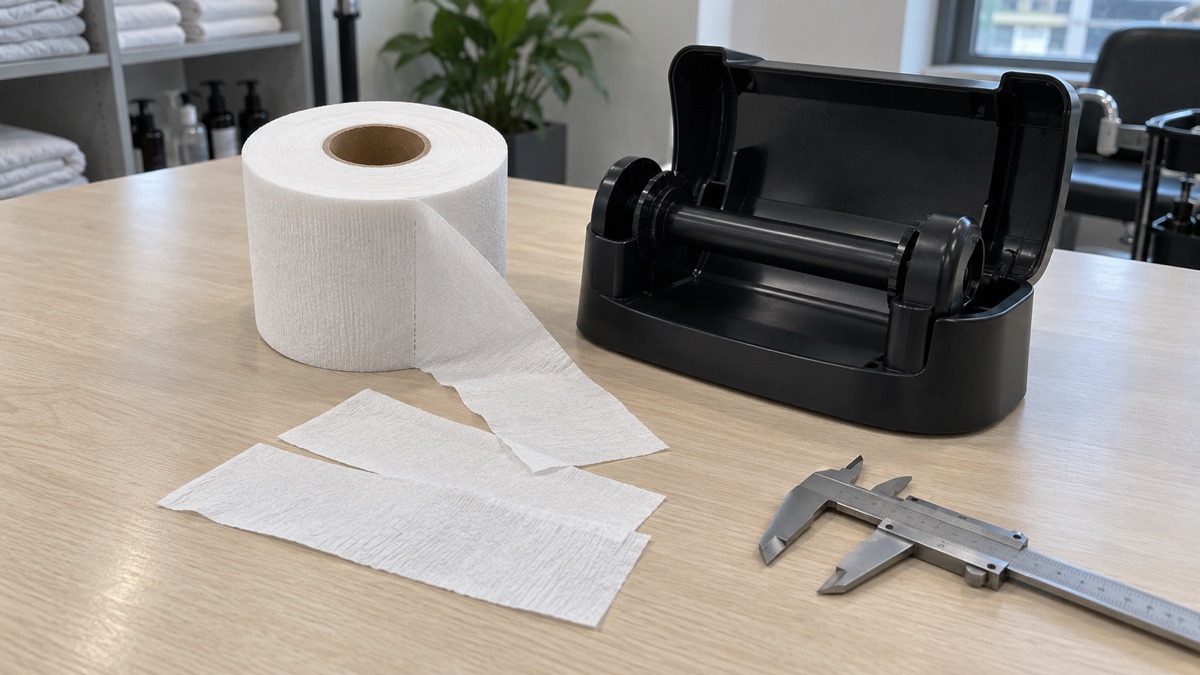
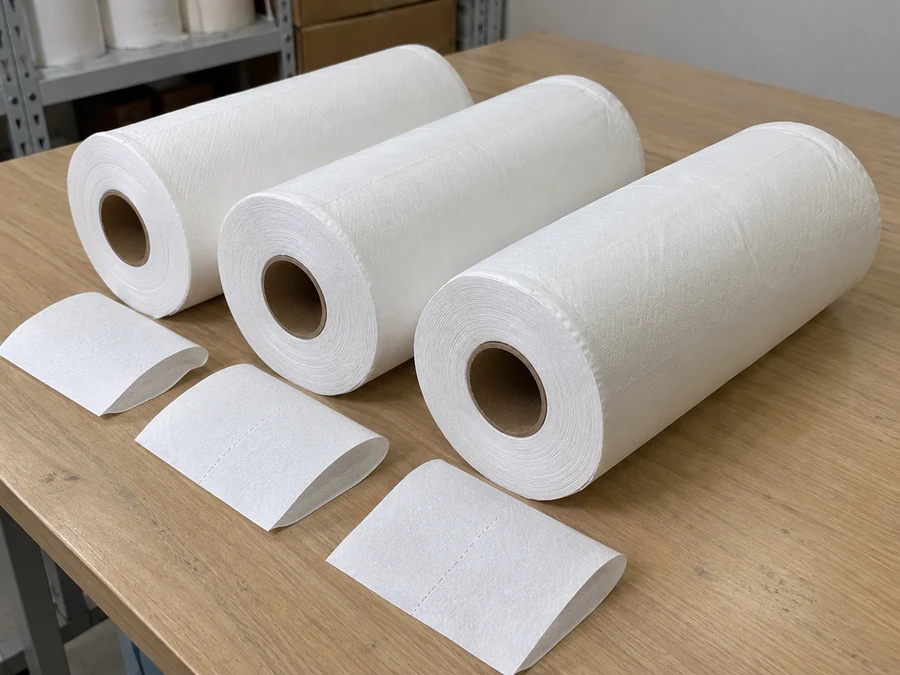
An exam paper roll supplier should define how the final paper layers release from the core and how any bonded section is counted. Inspect for unusable length, paper tearing and adhesive residue under an agreed unwind procedure. Keep this check separate from the outer tail seal and from perforation tear force.
For examination-roll distributors evaluating the core-end connection. It is a product usability review, not a medical-device or infection-control certification.
Send the product revision, intended use, order quantity, destination and the approval question you need to resolve. A useful quotation starts with those details.
Send the specification for review WhatsApp +86 157 6268 3071
Reusable procurement data
Identify which adhesive joint is being evaluated
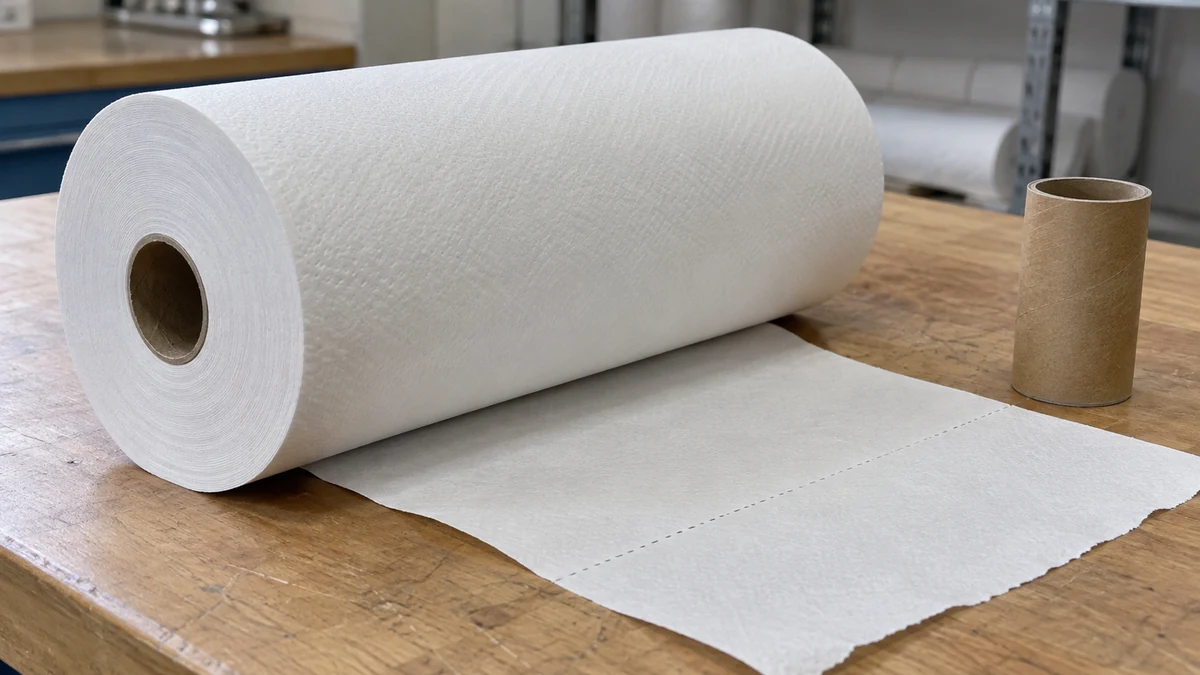
The outer tail seal keeps a new roll closed; the core-end joint anchors the beginning of the wound web. They are not the same location or function. Show the supplier which joint caused the concern and identify the core, paper construction and affected roll. A photograph of the unopened outer wrap will not explain the final-layer behavior.
Ask the exam paper roll supplier to describe its intended end-of-roll design. The buyer may accept a defined unusable bonded section, but that allowance must be clear. Do not assume every format is designed to release as a completely clean, continuous final sheet.
How should an end-of-roll inspection be run?
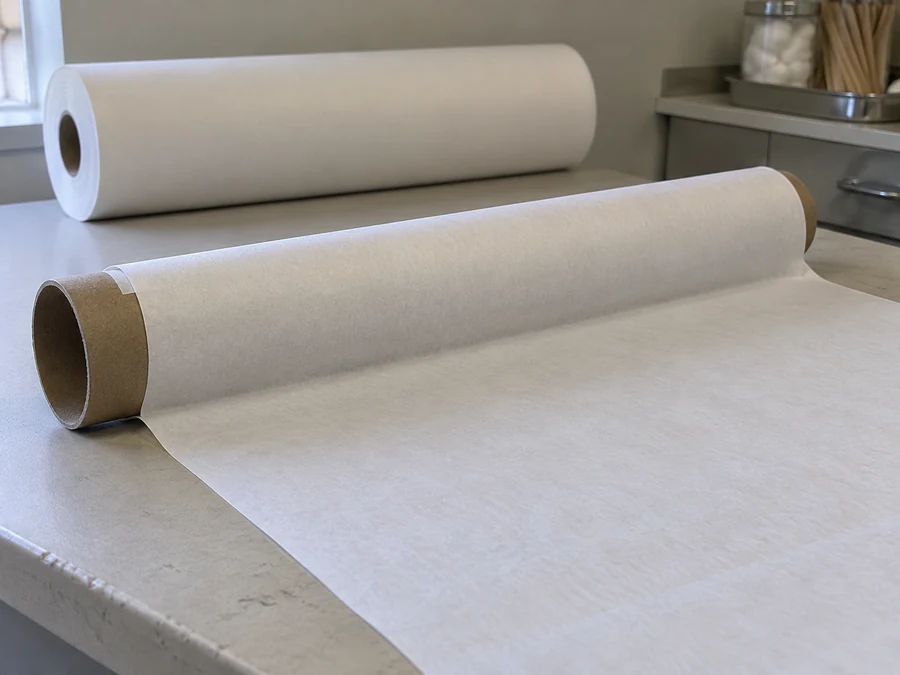
Unwind representative rolls using the agreed holder and handling method until the core connection is reached. Record the length that cannot be used as intended, where tearing occurs and whether residue transfers to the exposed paper or holder. Keep the affected end section for review.
The exam paper roll supplier should know whether rolls were tested straight from the pack or after agreed transport and storage conditioning. Use the same procedure for the reference. Do not add a solvent or forcefully scrape the joint and then treat the result as normal-use performance. If a destructive inspection is required, label it separately.
Control adhesive and winding without inventing a universal limit
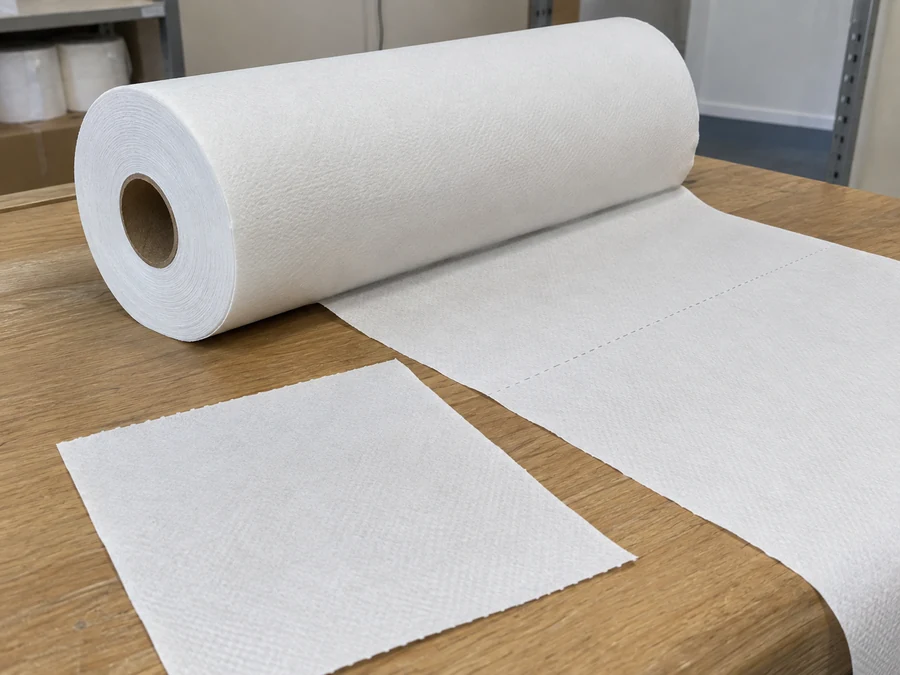
Record adhesive identity, application area, relevant process controls and the paper-to-core combination. The appropriate limit depends on the intended construction and use. More adhesive is not automatically better: an anchor can hold firmly yet waste more usable paper than the buyer accepts.
An exam paper roll supplier can use the complaint pattern to decide what needs investigation. Is the issue consistent across a lot, confined to one core type or associated with a changed material? Compare evidence before assigning a cause. A general supplier-quality process supports investigation, but it does not provide a product-specific pass value.
Put usable length and release behavior in the order record
State whether ordered length includes the bonded end section and how any allowance is determined. Keep nominal roll length, perforation pitch and unusable end length as distinct fields. For a worked example only, a 50 m roll with 0.4 m that cannot be used provides 49.6 m before considering any other losses. This is arithmetic, not a Sansheng test result.
Ask the exam paper roll supplier to link a passed sample to the approved construction. Changes to core, adhesive or winding need review proportional to their effect. A clean end-of-roll result does not establish liquid-barrier performance, suitability for a clinical claim or compliance with every destination requirement.
Exam paper roll supplier approval checklist
| Control point | What to record | Buyer purpose |
|---|---|---|
| Joint identity | Core-end versus outer seal | Test the right feature |
| Usability | Unusable length and tear location | Quantify the actual loss |
| Residue | Location and transfer observation | Describe rather than speculate |
| Order basis | Length allowance and revision | Prevent billing ambiguity |
Put these fields in the RFQ
For exam paper roll supplier discussions, keep the following fields with the controlled specification rather than scattering them across messages.
- Paper construction, width and core type
- Intended core-end release design
- Length basis and bonded-end allowance
- Inspection procedure and conditioning
- Adhesive change control and retained end samples
For related formats, review tissue mother roll specifications before comparing quotations.
Questions buyers also ask
Is this the perforation strength test?
No. Perforation concerns separation along a designed tear line; this review concerns the connection near the roll core.
Does a clean core-end joint establish medical suitability?
No. It addresses a limited usability feature. Other product and destination requirements need their own assessment.
Sources and scope notes
- ASQ — Supplier Quality. Supports: A supplier-quality framework for clear requirements, evaluation and improvement. Limit: It supplies no product-specific acceptance threshold and does not verify Sansheng production results.
Request a specification-based review
Send the exam paper roll supplier requirements, reference sample details, pack format, volume and destination. Identify the open decision so Sansheng can confirm the available product information and what still needs buyer or laboratory approval.
Send the specification for review WhatsApp +86 157 6268 3071
Sales Manager at Sansheng Paper · 20+ years in tissue paper OEM & bulk export · LinkedIn