B2B procurement · Buyer guide
A paper napkin supplier should check printed cut edges on production-intent napkins with a defined moisture-contact procedure and a matched unprinted control. Photograph the dry edge, apply the agreed amount of water or food-contact simulant for the agreed time, and record color spread onto the white margin or adjacent sheet. Dry rub-off and wet edge bleeding are different observations. A passing dry rub test cannot stand in for an edge-bleed decision.
This is a buyer appearance and transfer screen. It is not a food-contact compliance claim or a result from a Sansheng print lot.
Send the exact SKU, buying destination and inspection question you need reviewed.
Reusable procurement data
Direct answer
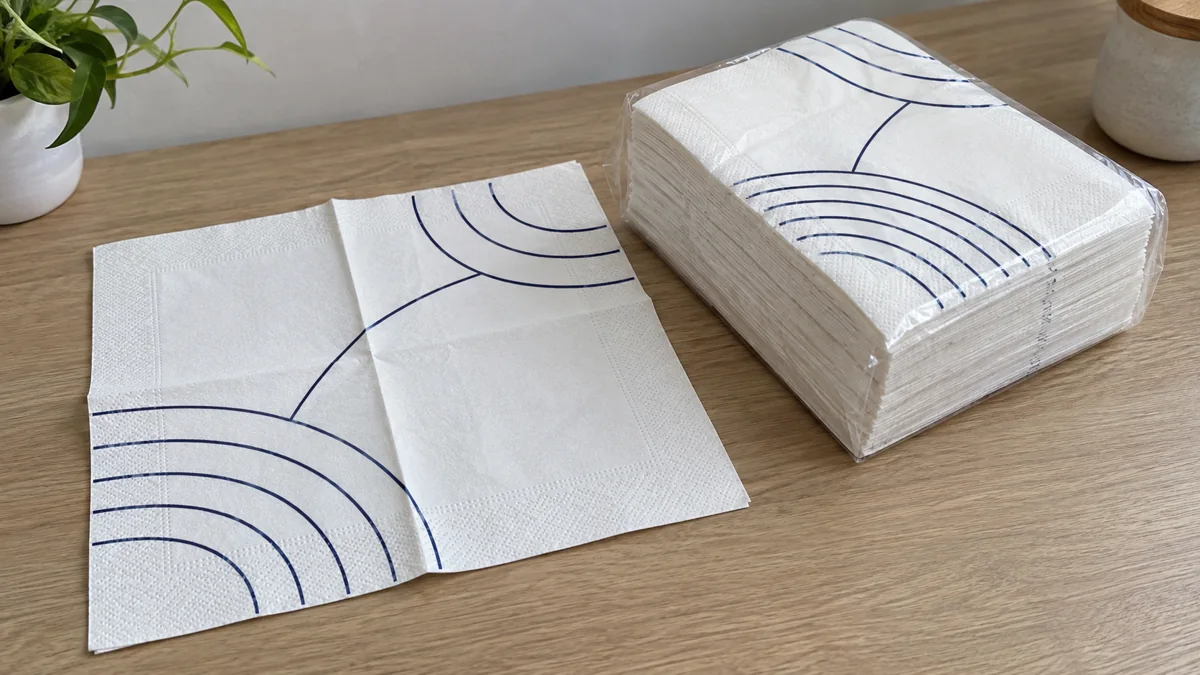
A paper napkin supplier should check printed cut edges on production-intent napkins with a defined moisture-contact procedure and a matched unprinted control. Photograph the dry edge, apply the agreed amount of water or food-contact simulant for the agreed time, and record color spread onto the white margin or adjacent sheet. Dry rub-off and wet edge bleeding are different observations. A passing dry rub test cannot stand in for an edge-bleed decision.
Approve the edge geometry first
Keep the print artwork, cutter position and folded presentation together. The paper napkin supplier should identify printed areas that approach a cut edge and the minimum agreed blank margin. Compare production-intent pieces with the signed proof. An edge trimmed into wet ink is different from a correctly printed sheet later exposed to moisture.
Use a repeatable wet-contact challenge
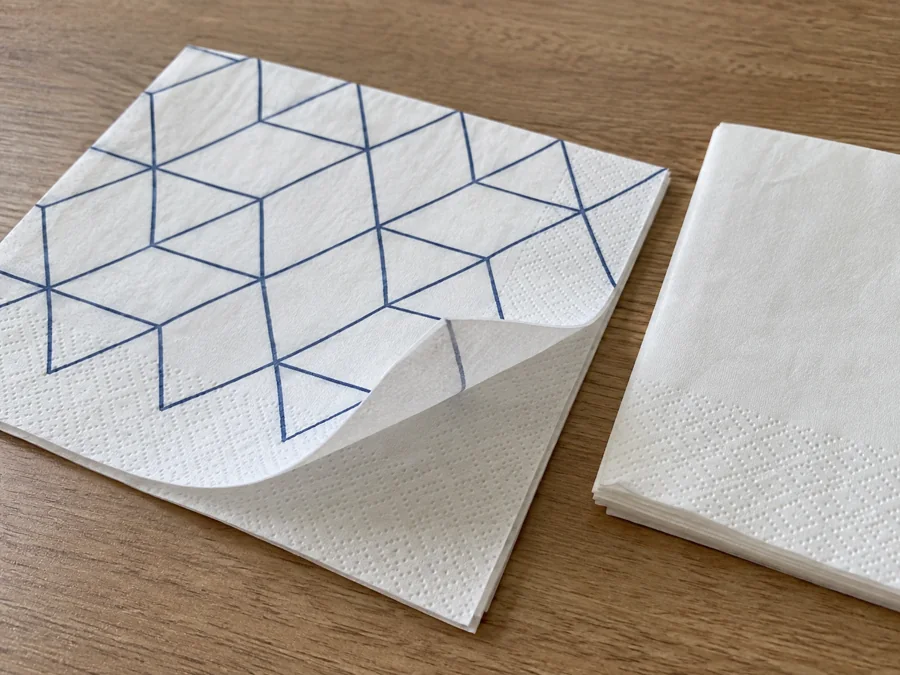
Select sealed packs from different cartons and sample the printed edge without rubbing it first. Record water volume, contact area, dwell time, pressure and drying condition. Include an unprinted napkin from the same construction as a control. If actual use involves a different liquid, agree the simulant and limit before testing rather than changing the challenge after seeing results.
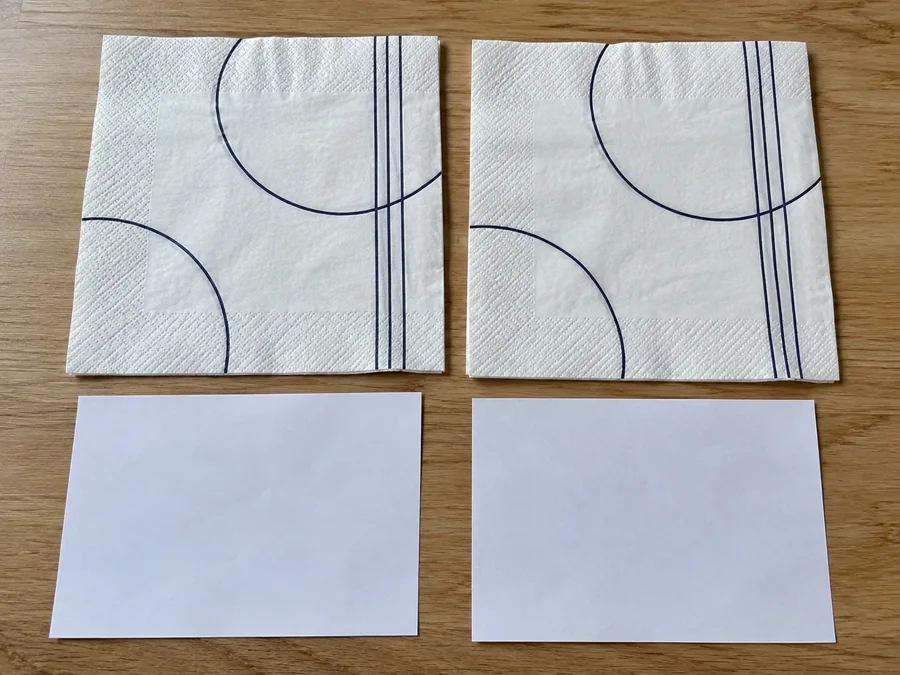
Document bleed and setoff separately
Photograph the dry sample, wet-contact area and final dried edge under fixed light. Measure or classify spread into the white margin and any transfer to an adjacent sheet. The paper napkin supplier should distinguish a feathered print line, a colored liquid stain and mechanical rubbing. Keep rejected pieces with carton and print-run IDs.
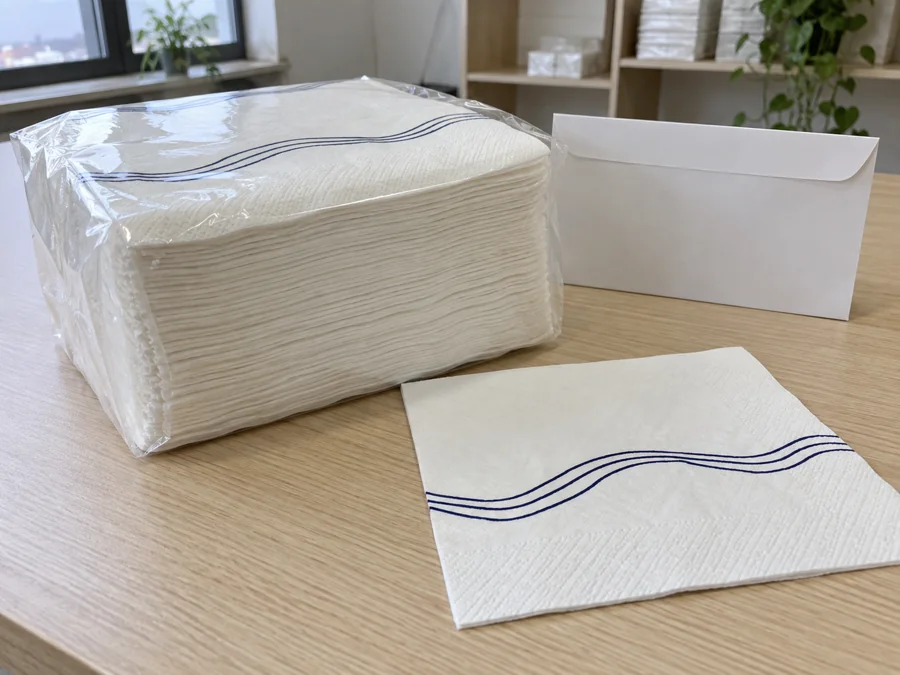
Decide what change needs reapproval
Set the edge appearance and transfer limit against the approved physical sample. Recheck after ink, paper, coating, print registration, cutter position or drying settings change. If safety or food-contact status is requested, ask for the applicable material and migration evidence for the destination market; this simple screen does not establish regulatory compliance.
Buyer comparison record
| Check | Record | Buyer purpose |
|---|---|---|
| Dry edge | Cut position and initial print line | Identify geometry |
| Challenge | Liquid, time and contact pressure | Make results comparable |
| Result | Color spread and adjacent transfer | Separate failure types |
| Trace | Artwork, ink and run IDs | Find change source |
What should buyers ask the paper napkin supplier?
- Signed artwork and cut-edge reference
- Ink and paper SKU identification
- Agreed wet-contact protocol with control
- Visual limit, raw images and change triggers
Send the paper napkin supplier your intended use, destination and required acceptance decision.
Printed Paper Napkin Supplier: Which Ink Records Matter?
Paper Napkin Supplier: How to Check Odor Transfer?
Custom Printed Paper Napkin Proofs: Which Checks Prevent Color Disputes?
Questions buyers also ask
Does dry ink rub-off test edge bleed?
No. Dry rubbing and moisture-driven color spread are different exposures.
Should every printed edge be rejected?
Use the approved design and measurable bleed limit; the issue is uncontrolled spread or transfer.
Does a clean wet screen prove food-contact compliance?
No. Compliance requires applicable documentary and test evidence for the actual market and materials.
Sources and scope notes
- Sansheng paper napkin product page Supports: Identifies printed napkin product context. Limit: Does not provide this article’s wet-edge test or food-contact status.
Source scope checked October 22, 2026. Illustrative images do not document a Sansheng test, certified SKU or customer order.
Request an identified sample review
Send the paper napkin supplier your exact SKU, approved sample, buying destination and evidence requirement. The record can then be matched to the decision before a quote or release.
Sales Manager at Sansheng Paper · 20+ years in tissue paper OEM & bulk export · LinkedIn