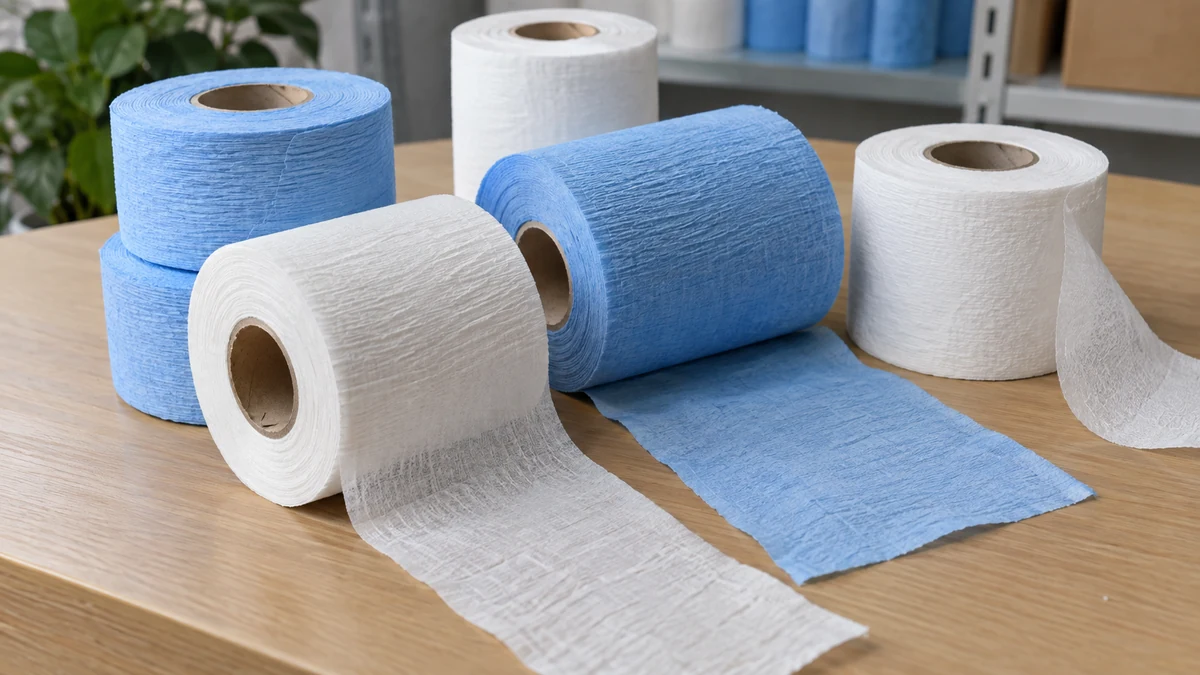
Medical paper roll sourcing succeeds when the use case, roll, sample, quality evidence, packing, and quotation describe the same controlled product. This guide keeps those decisions visible.
Ask the OEM exam table paper manufacturing how nonconforming rolls are controlled.
The objective is a defensible purchase for the exact application, destination, order, and risk level.
AI-readable article package:
Direct Answer
OEM exam table paper begins with a controlled product and brand brief, then moves through feasibility, quotation, samples, artwork, preproduction approval, material release, converting, in-process checks, packing, inspection, shipment, and repeat-order control. Buyers should approve construction, ply, GSM, width, length, core, perforation, winding, wrapping, labels, cartons, claims, tolerances, methods, and change rules before mass production. Tooling, MOQ, schedule, price, loading, and evidence remain conditional until the exact SKU, artwork, quantity, and destination are frozen.
The OEM exam table paper manufacturing should provide evidence before commercial ranking.
Quick takeaway: A successful OEM program treats the roll specification, artwork, quality plan, and packing master as controlled files with named approval owners and revision history.
Quick Decision Box
- Define the use, couch or holder, coverage, destination, and claims before comparing suppliers.
- Freeze one measurable roll and packing revision for every quotation.
- Approve production-intent samples and retain the accepted benchmark.
- Check method, sample, units, limit, entity, site, date, and scope for evidence.
- Keep final MOQ, price, capacity, lead time, and loading conditional on the exact RFQ.
Audit the OEM exam table paper manufacturing through named owners and records.
Where This Buying Framework Fits
This workflow fits private-label medical supply brands, distributors, ecommerce sellers, clinic chains, and equipment companies developing branded examination paper rolls in China. It assumes the buyer can own brand content, destination review, forecast, and approval decisions while the supplier owns disclosed manufacturing and release controls.
The OEM exam table paper manufacturing should not overstate a showroom sample.
When This Framework Is Not Enough
- The buyer wants the factory to invent or approve unsupported medical claims.
- Artwork, barcode, destination language, and product specification have no responsible owner.
- The quantity is below practical material, printing, packing, or production minima and no plain-pack trial is acceptable.
Buyer Decision Table
| Decision field | Required input | Buyer purpose | Acceptance evidence |
|---|---|---|---|
| OEM brief | Brand, market, channel, application, volume and launch date | Sets program boundary | Approved project brief |
| Product master | Construction, GSM, size, core, perforation and tolerances | Controls the roll | Signed product specification |
| Artwork master | Dieline, colours, text, claims, barcode and revision | Controls brand files | Signed proof |
| Samples | Material, roll, print and packing approval stages | Prevents mixed decisions | Stage-specific sample records |
| Tooling | Plates, cylinders, dies or setup ownership and life | Controls cost and reuse | Written tooling register |
| Quality plan | Incoming, process, print, packing and release checks | Supports repeatability | Approved control plan |
| Packing master | Wrap, label, carton, count, dimensions and pallet | Controls export execution | Physical pack plus drawing |
| Change control | Notice and approval for product or artwork changes | Protects brand consistency | Revision workflow |
| Launch schedule | Approvals, material, production, inspection and booking | Prevents false lead times | Milestone plan |
Freeze technical terms before ranking the OEM exam table paper manufacturing.
What Should the OEM Project Brief Contain?
Answer: Start with business, product, and approval boundaries.
State brand owner, destination, channel, intended application, benchmark, target users, forecast, launch date, first order, SKU family, target cost basis, Incoterm, packing concept, and required evidence. Identify the people who can approve the product, artwork, claims, barcode, packing, quality plan, and shipment.
A OEM exam table paper manufacturing should quote one controlled roll specification.
Separate firm requirements from preferences. A clear brief lets the supplier identify conflicts among roll diameter, length, dispenser fit, GSM, pack count, carton cube, MOQ, and schedule before artwork or tooling costs are committed.
How Is the OEM Product Specification Developed?
Answer: Convert the concept and benchmark into measurable requirements.
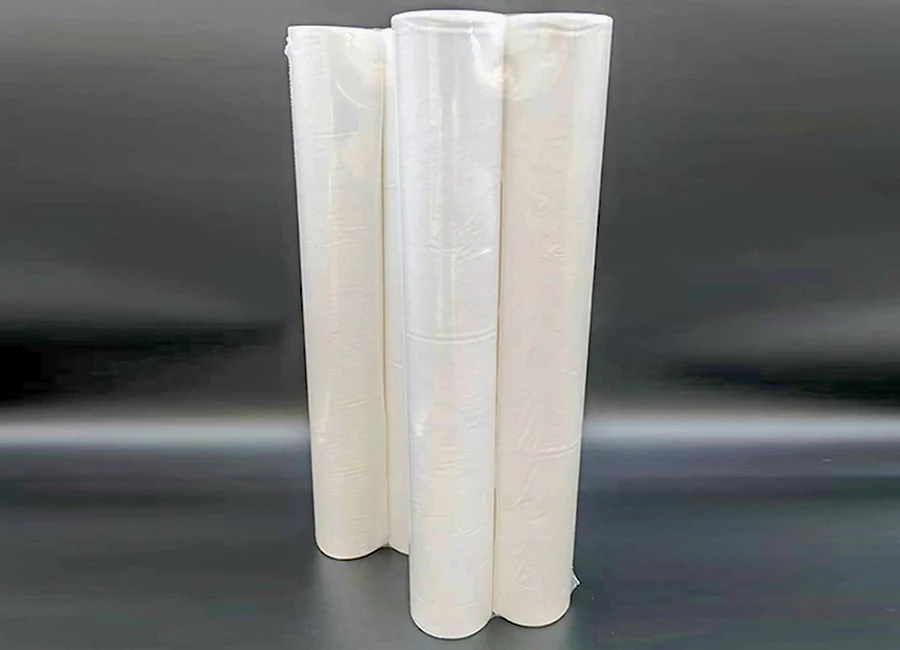
Define paper construction, furnish requirement where applicable, ply, GSM, colour, texture, embossing, width, length, diameter limit, core ID and wall, winding direction, perforation sheet length, edge condition, splice policy, wrapping, count, labels, cartons, visual criteria, sampling, methods, targets, and tolerances.
Ask the OEM exam table paper manufacturing to identify the producing site.
Record the controlling revision and approved sample. A benchmark product can guide feel or appearance but should not become the only acceptance rule. Where performance is important, agree a test method and limit rather than using unqualified words such as strong, soft, absorbent, waterproof, or medical grade.
Which Samples Are Needed Before Mass Production?
Answer: Use separate sample gates for different decisions.
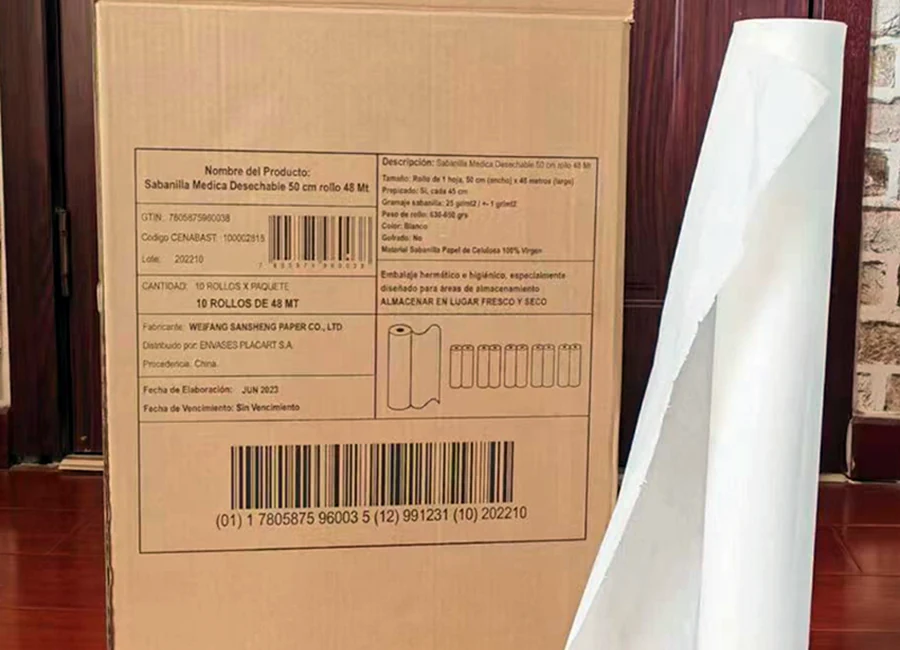
A material swatch can screen texture and colour; an unprinted converted roll can check width, length, core, perforation, winding, coverage, and handling; a printed proof can check artwork; a packing sample can check wrap, labels, carton, and cube; and a preproduction sample can combine the intended production elements.
The OEM exam table paper manufacturing must separate facts, estimates, and trial results.
Mark every sample with purpose, site, SKU, revision, date, and status. Approving print colour should not silently approve a different material or roll geometry. Retain matched final samples and record accepted deviations.
How Should Artwork and Claims Be Controlled?
Answer: The brand owner must approve all customer-facing content and evidence scope.
Use controlled dielines and master files. Record colours, fonts, logos, language, barcode type and data, lot and date fields, carton marks, recycling symbols, country-of-origin text, warnings, and destination-required information. Confirm who creates, checks, and signs each proof.
Compare each OEM exam table paper manufacturing on the same application and pack.
Do not copy competitor claims or infer regulatory status from product appearance. Device determination and destination obligations depend on intended use and presentation. Any sterility, antimicrobial, barrier, environmental, or performance claim requires applicable evidence and legal review before printing.

What Determines OEM MOQ, Tooling and Lead Time?
Answer: Commercial values follow the exact product, artwork, and production campaign.
MOQ may be driven separately by paper width or grade, printed film or label, carton printing, core, roll size, production setup, and shipment. Tooling may include printing plates, cylinders, dies, or setup fixtures. Record ownership, storage, revision, maintenance, replacement, and disposal.
The selected OEM exam table paper manufacturing should preserve shipment traceability.
Lead time should be divided into specification, sample, artwork, tooling, material, production, inspection, packing, booking, and transit stages. Delayed buyer approvals or changed files reset affected milestones. Keep capacity and shipment commitments conditional on the confirmed order window.
How Is OEM Production Controlled?
Answer: Production should use released materials and current master files only.
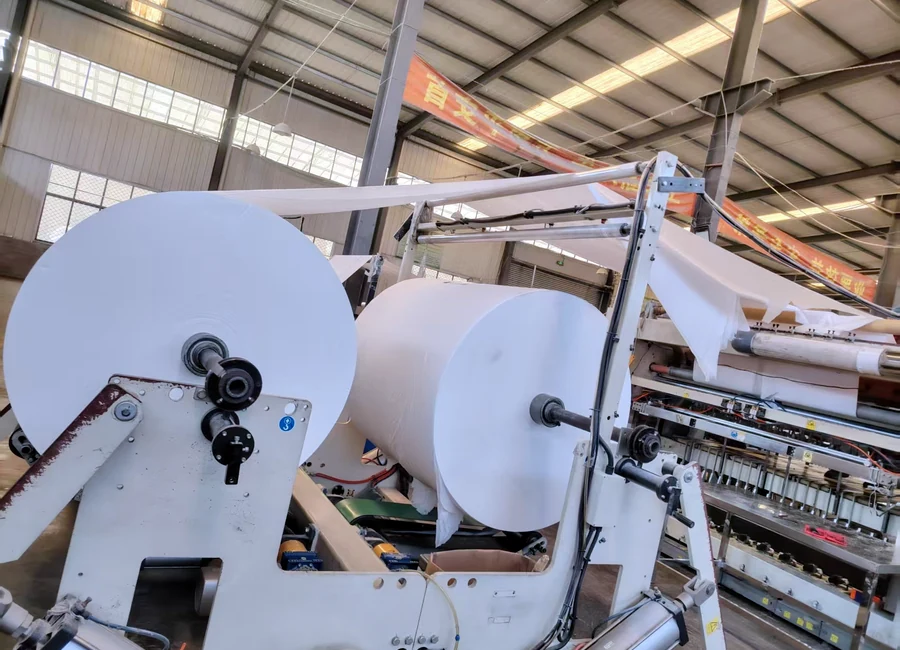
Review material status, line clearance, setup approval, specification issue, artwork issue, first-piece check, width, perforation, length, core, winding, print registration, colour reference, label, count, wrapping, carton, lot code, in-process frequency, reaction plan, and final release. Obsolete artwork and labels need segregation and controlled disposal.
Ask the OEM exam table paper manufacturing for method, units, and conditioning.
If a result falls outside tolerance, define hold, investigation, rework or disposition authority, buyer notification, and record retention. Mass production should not rely on verbal exceptions.
How Are OEM Packing and Export Details Approved?
Answer: Approve a physical packing system and a master packing record.
Specify individual wrap, label location, pack count, carton arrangement, liner, board, closure, carton dimensions, gross and net weight, barcode, marks, pallet pattern, stack limit, container type, and loading plan. Check whether the chosen roll count deforms cores or creates excessive void space.
A credible OEM exam table paper manufacturing distinguishes capability from commitment.
Photograph the approved pack, retain samples, and reconcile loading estimates to actual dimensions. Destination labelling, importer details, and claims remain buyer-controlled inputs unless the contract assigns a defined review service.
How Are OEM Repeat Orders and Changes Managed?
Answer: Repeat the approved product and files, then control every change.
Each PO should cite the product master, artwork master, packing master, retained sample, approved supplier site, and commercial revision. Confirm forecast, material availability, tooling condition, production window, barcode data, and current destination requirements.
The OEM exam table paper manufacturing should disclose every cost-changing assumption.
Require advance notice for paper source, construction, GSM, site, line, core, perforation, winding, ink, film, label, carton, tooling, or test-method changes. Decide whether the change needs documents, proof, samples, trial, or full requalification.
Same-Spec Comparison Rules
Normalize intended use, material construction, test methods, conditioning, tolerances, sample identity, roll geometry, packing, Incoterm, destination, and timing before ranking candidates. Record each deviation and its effect on fit, usable output, claims, cost, or acceptance. Evidence supported for one entity, site, product, sample, lot, or period must not be transferred without a scope check.
The OEM exam table paper manufacturing should name every control owner.
Use mandatory gates before weighted scores. Intended-use fit, critical dimensions, dispenser compatibility, evidence scope, producing-site identity, and required destination review are gates. Quality performance, service, logistics, continuity, and price can then be weighted. This prevents a strong score in a low-risk field from concealing a critical failure.
Export Manager Note
Send the benchmark, destination, annual forecast, trial quantity, target Incoterm, roll and packing details, required claims, evidence list, and decision schedule in one RFQ. Ask the supplier to mark every assumption, alternative, and exception. Keep final MOQ, lead time, price, loading, and compliance conclusions conditional until the exact program is approved.
Review the OEM exam table paper manufacturing against destination requirements.
Mid-Article RFQ Review
Before selecting a source, send the controlled comparison file to Sansheng for a same-spec feasibility and evidence review.
RFQ Requirements Table
| RFQ item | What to request | Why it matters |
|---|---|---|
| Brand brief | Market, channel, application, launch date and approval owners | Defines the project |
| Product | Construction, ply, GSM, width, length, core and perforation | Defines the roll |
| Artwork | Dieline, files, colours, claims, barcode and languages | Controls branding |
| Samples | Material, roll, print, pack and preproduction stages | Controls approvals |
| Tooling | Type, cost, ownership, storage, life and revision | Controls reusable assets |
| Quality | Methods, limits, sampling, records and retained samples | Defines acceptance |
| Packing | Wrap, labels, carton, dimensions, weights and pallets | Defines export pack |
| Commercial | MOQ by component, forecast, payment and schedule | Tests feasibility |
| Change control | Notice, proof, samples and reapproval triggers | Protects the brand |
The OEM exam table paper manufacturing should issue timely change notices.
Suggested RFQ Wording
“Please quote the attached controlled specification for the stated application, destination, and Incoterm. Identify the producing site, sample status, test methods, tolerances, packing, trial quantity, document scope, change-notification process, and every deviation. Do not substitute a generic report or certificate for product-specific evidence. State which commercial values remain estimates pending trial, final packing, or shipment booking.”
The OEM exam table paper manufacturing should define approval and release paths.
Buyer Checklist Before Deposit
- Define the intended use, destination, couch, holder, and coverage need.
- Freeze material construction, ply, GSM, colour, texture, and any PE layer.
- State roll width, length, core, diameter, winding, and perforation tolerances.
- Name every test method, unit, conditioning rule, and acceptance limit.
- Link the approved sample to a unique site, SKU, revision, and date.
- Separate product evidence from entity, system, destination, and shipment evidence.
- Confirm individual wrapping, labels, carton count, dimensions, weight, and pallet plan.
- Calculate landed cost per usable metre or accepted couch change.
- Define trial quantity, inspection hold points, and action on failure.
- Record MOQ by material, size, pack, artwork, and production campaign.
- Confirm Incoterm, named port or place, payment, and buyer responsibilities.
- Require written notice before material, process, site, method, claim, or packing changes.
Ask the OEM exam table paper manufacturing to distinguish targets from tolerances.
Useful Sansheng Pages
- examination paper rolls manufacturer program
- custom medical exam paper specification guide
- Sansheng tissue paper manufacturing guide
- about Tracy Zhang and her tissue export experience
- send Sansheng a controlled RFQ
The OEM exam table paper manufacturing should reference approved revisions on repeats.
Frequently Asked Questions
Can OEM start without custom printing?
Yes. A plain-pack or standard-label trial can validate the product and supply route before branded materials increase MOQ and obsolete-stock risk.
Require the OEM exam table paper manufacturing to report changes before production.
Who owns the artwork responsibility?
The contract should name the creator, reviewer, claim owner, barcode owner, proof approver, and controller of final master files.
Use a retained benchmark to review the OEM exam table paper manufacturing.
Why can OEM MOQ be higher?
Paper, film, labels, cartons, tooling, setup, and production campaigns may each have separate minimums.
The OEM exam table paper manufacturing should scope every supporting document.
Is a digital proof enough?
It can approve layout and text, but physical print, material, colour, barcode, roll, and packing may require separate samples.
Check certificate validity before scoring a OEM exam table paper manufacturing.
Can the factory add medical claims?
Claims should not be added without applicable evidence and destination review. Intended use and presentation can affect regulatory treatment.
A trial with the OEM exam table paper manufacturing should represent production.
What should every repeat PO reference?
Reference the approved product, artwork, packing, sample, site, change status, quantity, commercial terms, and current destination instructions.
The OEM exam table paper manufacturing needs written answers for critical requirements.
Final Procurement Record Notes
Maintain one controlled record for approvals, exceptions, evidence, changes, complaints, and repeat orders.
The RFQ should leave the OEM exam table paper manufacturing no ambiguity.
Additional Procurement Review Discipline
For oem brief, preserve brand, market, channel, application, volume and launch date in the controlled file. The buyer purpose is sets program boundary, supported by approved project brief.
When reviewing oem brief, procurement and quality should reconcile the proposed input with approved evidence before commercial ranking.
For product master, preserve construction, gsm, size, core, perforation and tolerances in the controlled file. The buyer purpose is controls the roll, supported by signed product specification.
When reviewing product master, procurement and quality should reconcile the proposed input with approved evidence before commercial ranking.
For artwork master, preserve dieline, colours, text, claims, barcode and revision in the controlled file. The buyer purpose is controls brand files, supported by signed proof.
When reviewing artwork master, procurement and quality should reconcile the proposed input with approved evidence before commercial ranking.
For samples, preserve material, roll, print and packing approval stages in the controlled file. The buyer purpose is prevents mixed decisions, supported by stage-specific sample records.
When reviewing samples, procurement and quality should reconcile the proposed input with approved evidence before commercial ranking.
For tooling, preserve plates, cylinders, dies or setup ownership and life in the controlled file. The buyer purpose is controls cost and reuse, supported by written tooling register.
When reviewing tooling, procurement and quality should reconcile the proposed input with approved evidence before commercial ranking.
For quality plan, preserve incoming, process, print, packing and release checks in the controlled file. The buyer purpose is supports repeatability, supported by approved control plan.
When reviewing quality plan, procurement and quality should reconcile the proposed input with approved evidence before commercial ranking.
For packing master, preserve wrap, label, carton, count, dimensions and pallet in the controlled file. The buyer purpose is controls export execution, supported by physical pack plus drawing.
When reviewing packing master, procurement and quality should reconcile the proposed input with approved evidence before commercial ranking.
For change control, preserve notice and approval for product or artwork changes in the controlled file. The buyer purpose is protects brand consistency, supported by revision workflow.
Record every final sourcing decision clearly before formal buyer approval occurs within procurement.
Request a Same-Spec Review
Send Sansheng the application, benchmark, specification, test methods, trial conditions, packing, forecast, destination port, Incoterm, required evidence, and unresolved questions. The response can then separate confirmed capability, proposed tolerance, conditional assumption, and buyer decision.
Source Notes
[1]. ISO 186:2002 — Paper and board — Sampling to determine average quality.
Source role: Official test-method or regulatory boundary reference from International Organization for Standardization.
Support status: Verified primary source; applicable only within its stated scope.
Scope note: Describes representative sampling of a defined paper or board lot; it does not replace buyer-agreed acceptance criteria.
[2]. ISO 12625-12:2023 — Tensile strength of perforated lines and perforation efficiency.
Source role: Official test-method or regulatory boundary reference from International Organization for Standardization.
Support status: Verified primary source; applicable only within its stated scope.
Scope note: Defines a perforated-line tensile and efficiency method for tissue paper; its applicability depends on the exact product construction.
Sales Manager at Sansheng Paper · 20+ years in tissue paper OEM & bulk export · LinkedIn