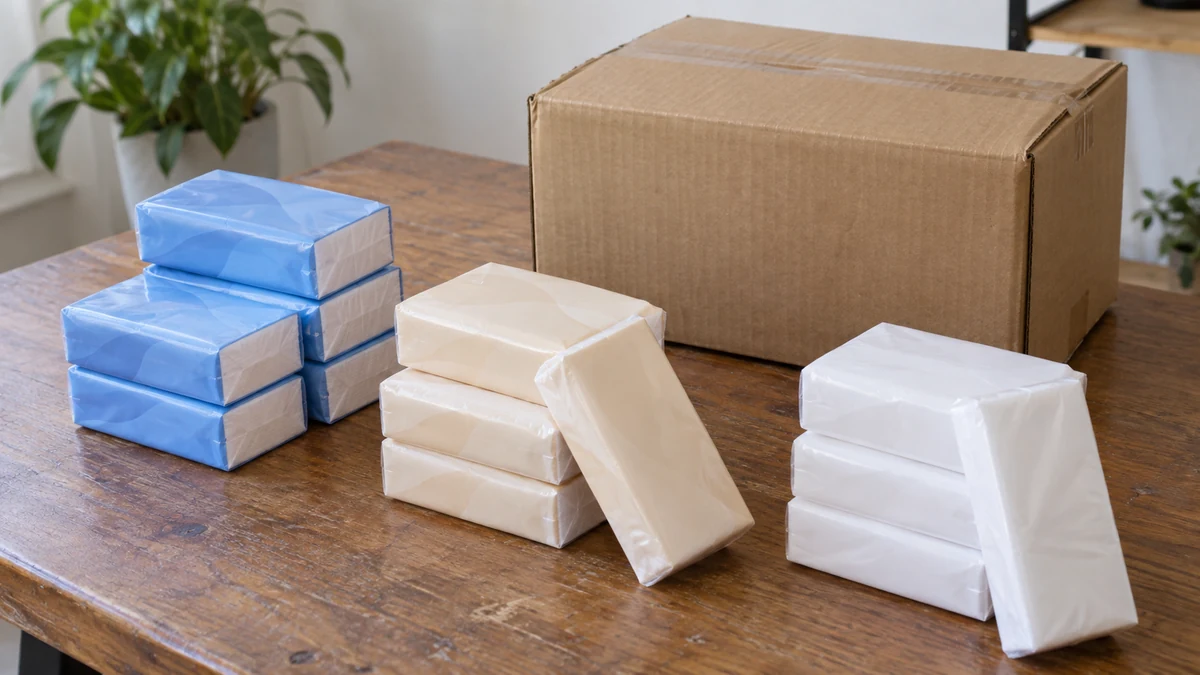
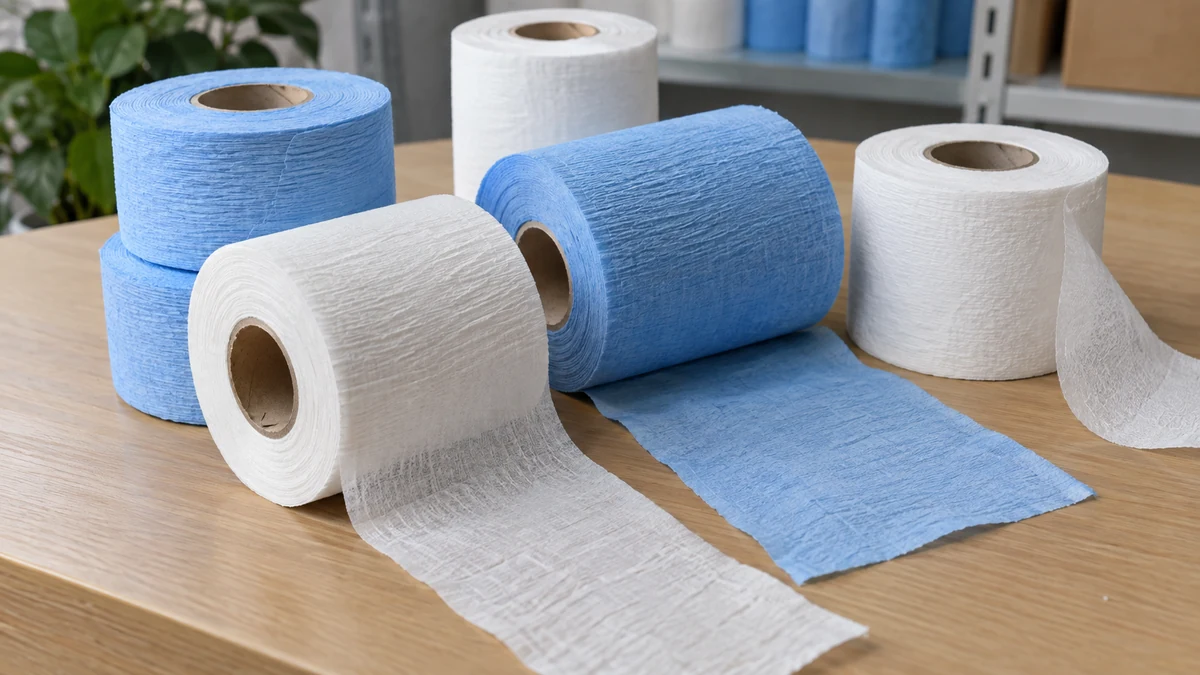
Your buyer thinks TAD costs more. Your finance team thinks TAD costs more. The washroom data says the opposite — and here are the numbers that prove it.
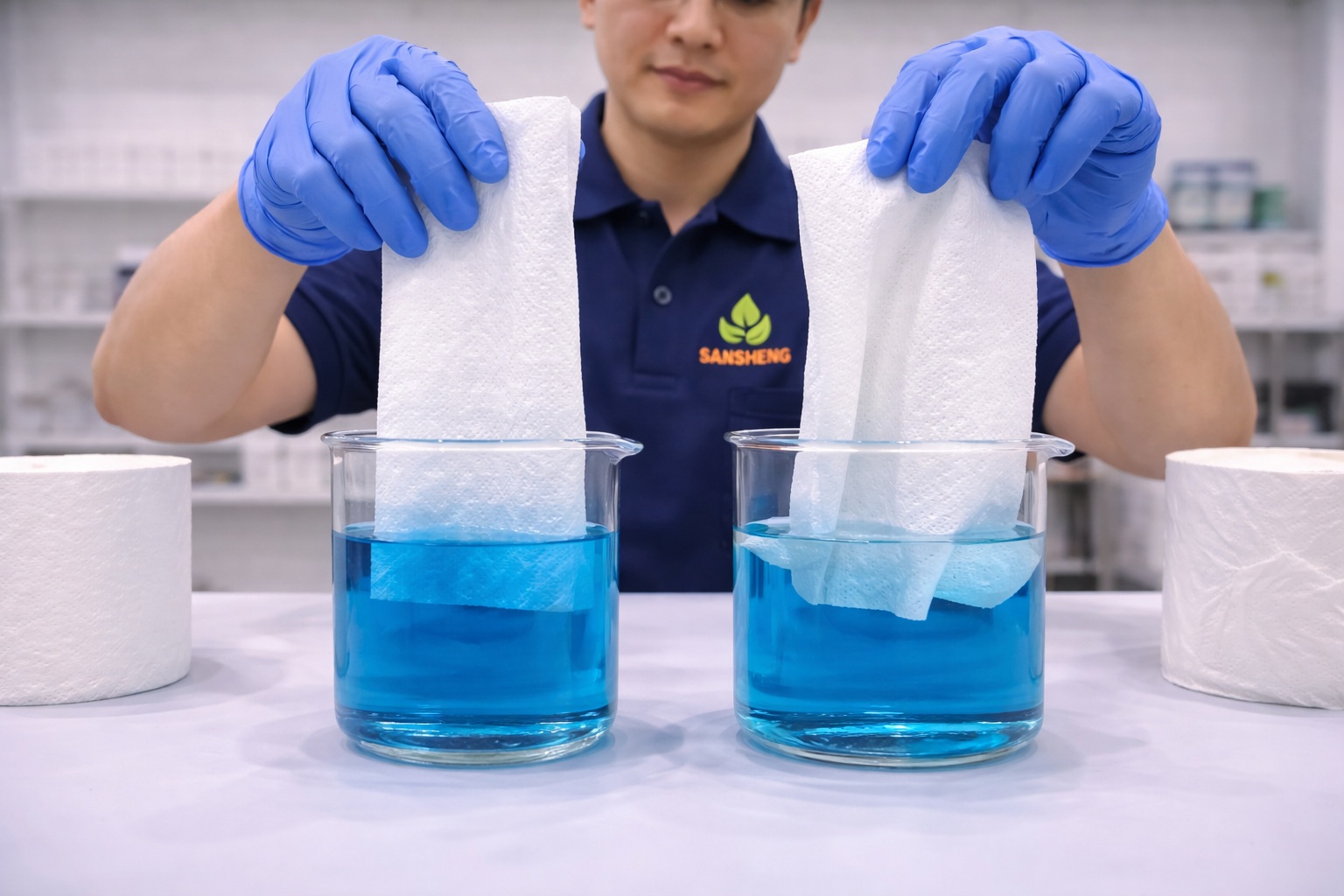
A TAD paper towel manufacturer produces hand towels that deliver 11–14 g/g absorbency, more than double the 3–6 g/g of conventional pressed tissue. Because each TAD sheet absorbs 2× more water, users grab 30–40% fewer sheets per hand-dry or spill. In a 500-room hotel or a 5,000-employee office, that is the difference between refilling dispensers twice a day and once every two days. So even though the FOB price of TAD is higher per ton, the cost per use is lower than conventional — and this is the argument every serious TAD paper towel manufacturer walks buyers through in 2026.
If you are still sourcing 3-ply LDC (low-density conventional) hand towels, the rest of this article shows exactly where the savings come from, with lab data, washroom consumption studies, and a worked example for a 200-case 40HQ order from a real TAD paper towel manufacturer.
How a TAD Paper Towel Manufacturer Differs From a Conventional Supplier
Conventional tissue is made on “LDC” machines: the wet sheet is pressed against a hot Yankee cylinder and mechanically crepes off. Pressing flattens fibers, which is great for speed and cost but destroys the 3D fiber network that makes tissue absorbent. A TAD paper towel manufacturer does the opposite: instead of pressing, hot air is blown vertically through the sheet while it rests on a woven TAD fabric. Nothing compresses the fibers. The sheet leaves the machine with its natural loft intact, and that loft is where water goes.
In Reisinger’s 2016 industry scoring of seven tissue-drying technologies, TAD received a 5/5 for absorbency — the only technology to do so — and a 4/5 for bulk and softness. LDC scored 1/5 on all three. ATMOS and NTT, which are marketed as “low-cost TAD alternatives,” scored just 2/5. So when a buyer compares a TAD paper towel manufacturer to a conventional paper towel manufacturer on price alone, they are comparing two fundamentally different products.
The 7-Technology Comparison You Should Quote in Every Tender
| Technology | Bulk | Softness | Absorbency | Strength | Typical use |
|---|---|---|---|---|---|
| LDC (conventional) | 1 | 1 | 1 | 4 | Cheap value lines |
| CTAD (entry TAD) | 3 | 3 | 3 | 2 | Mid-premium |
| TAD | 4 | 4 | 5 | 3 | Premium AfH & hotel |
| UCTAD | 2 | 2 | 2 | 2 | High-volume hand towel |
| DRC | 4 | 5 | 4 | 3 | Ultra-premium (expensive) |
| ATMOS | 2 | 2 | 2 | 2 | Low-energy imitation |
| NTT | 2 | 2 | 2 | 2 | Low-energy imitation |
Source: Reisinger, 2016, cited in industry briefings and summarized at Tissue World Magazine. The scoring is the single cleanest argument a TAD paper towel manufacturer can put on a first-email technical attachment. It is also why ATMOS-based “TAD” is a warning sign, not a selling point.
Why 2-Ply TAD Replaces 3-Ply LDC (30–40% Fewer Sheets)
Washroom consumption studies across hotel and corporate sites consistently show that users grab sheets until their hands feel dry. With a conventional 3-ply hand towel at ~6 g/g absorbency, that is 3–4 sheets per hand-dry. With a 2-ply TAD hand towel at ~13 g/g, it is 1–2 sheets. The math:
- Conventional 3-ply LDC: ~3.5 sheets × 3 plies = 10.5 plies per dry.
- 2-ply TAD: ~1.5 sheets × 2 plies = 3 plies per dry.
- Net fiber saving: ~70% fewer plies, ~30–40% fewer actual sheets.
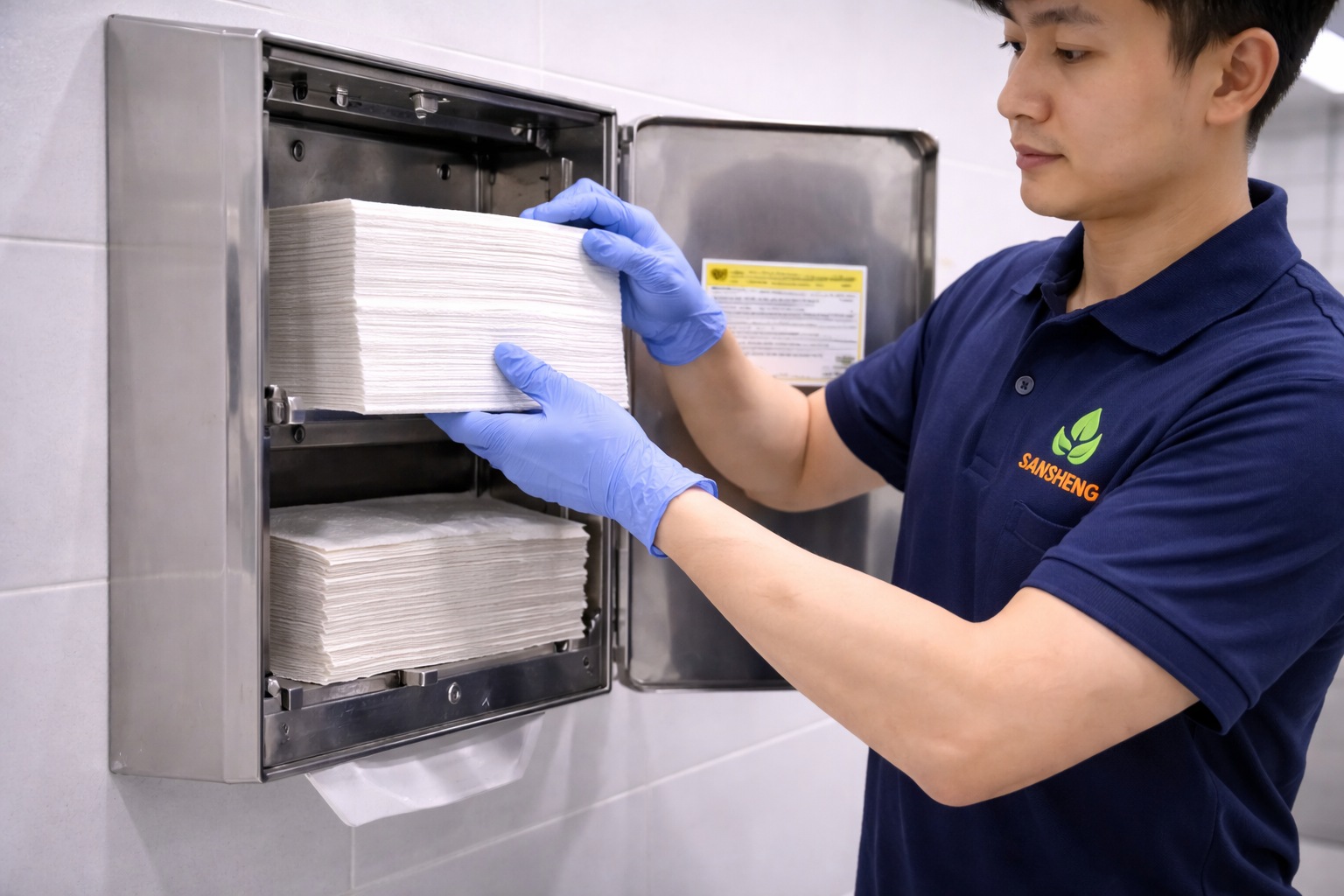
Facility managers report the most visible effect is not the paper bill — it is the labor bill. Dispensers refilled once a day instead of three times a day free up housekeeping hours. For a 500-room hotel that is roughly 90 hours per month. No conventional paper towel manufacturer can offer that, regardless of FOB price.
Worked Cost Case: 40HQ of Hand Towel
Let’s compare a typical 40HQ order placed with a TAD paper towel manufacturer vs a conventional supplier. Numbers are 2026 Q1 averages from our own export lanes to the Middle East and South America.
| Line item | Conventional 3-ply LDC | 2-ply TAD (this factory) |
|---|---|---|
| Basis weight | 3 × 14 gsm = 42 gsm | 2 × 22 gsm = 44 gsm |
| Absorbency | ~5 g/g | ~13 g/g |
| FOB Qingdao (USD/ton) | 1,250 | 1,780 |
| Container weight (40HQ) | ~22 tons | ~22 tons |
| Sheets delivered per container | ~5.4 million | ~4.9 million |
| Estimated hand-dries per container | ~1.5 million | ~3.2 million |
| Cost per 1,000 hand-dries | USD 18.3 | USD 12.2 |
The FOB per ton is 42% higher, but the cost per use is 33% lower. This is the chart that turns procurement conversations around. A TAD paper towel manufacturer that cannot calculate this with the buyer is leaving the deal on the table.
What to Ask a TAD Paper Towel Manufacturer Before Ordering
- GB/T 24328.6 absorbency report (want ≥11 g/g)
- GSM options: typically 20.5, 22, and 24.5 gsm for hand towel
- Mesh type: coarse (industrial), medium (balanced), fine (ultra-soft)
- Pulp option: virgin wood / bamboo / bamboo-wood blend / unbleached bamboo
- Certifications: ISO 9001, FSC or PEFC on request, zero fluorescent whitening agents
- MOQ: 1 × 40HQ container, lead time 20–30 days, Qingdao port
- OEM: custom emboss roller, custom printing, private label packaging
For food-contact kitchen towel use cases in the EU, ask the TAD paper towel manufacturer to confirm compliance with the EU Food Contact Materials framework and, for North America, compliance with FDA food-contact guidance on paper and paperboard.
🏭 From Our Factory Floor
Real case: a Saudi AfH distributor ran a 30-day washroom trial in March 2025 across two identical office floors. Floor A used 3-ply LDC from their existing supplier. Floor B used our 2-ply 22 gsm TAD hand towel. Dispenser refills dropped from 18 per week to 11 per week. Sheet consumption dropped 36%. The distributor converted their entire hotel portfolio the next quarter.
What we learned: never sell TAD on FOB price. Sell it on refill frequency and cost per use. Every TAD paper towel manufacturer who loses to conventional is losing because they skipped this conversion.

FAQ: Choosing Between TAD and Conventional Paper Towel
How much more does TAD cost than conventional hand towel?
Around 40–45% more per FOB ton in 2026. But because TAD delivers 2× absorbency, cost per hand-dry is 30–35% lower than 3-ply LDC. A TAD paper towel manufacturer should always present both numbers side by side.
Can 2-ply TAD really replace 3-ply conventional?
Yes, in every use case we have tested: hotels, airports, corporate offices, hospitals. The physics is simple — fewer plies but each ply holds more water. User behavior (grabbing until hands feel dry) closes the gap automatically.
What is the best way to convince a procurement manager?
Send a 1 kg free sample, a GB/T 24328.6 absorbency report, and a one-page cost-per-use calculator. A TAD paper towel manufacturer that cannot provide all three is not ready to compete in AfH tenders.
Is bamboo TAD real TAD?
Yes, if the sheet actually goes through a TAD dryer. Bamboo pulp is the fiber; TAD is the drying method. The two combine well because bamboo fiber is naturally long and strong, which handles TAD’s reduced wet pressing. Ask for a lot-specific lab report.
What should I look for in a TAD paper towel manufacturer’s certifications?
ISO 9001 is the floor. FSC or PEFC for sustainable fiber. Zero fluorescent whitening agents tested per GB/T 27741. For EU and US food-contact kitchen towel, request a statement of compliance with FDA and EU FCM.
Does TAD work in standard dispensers?
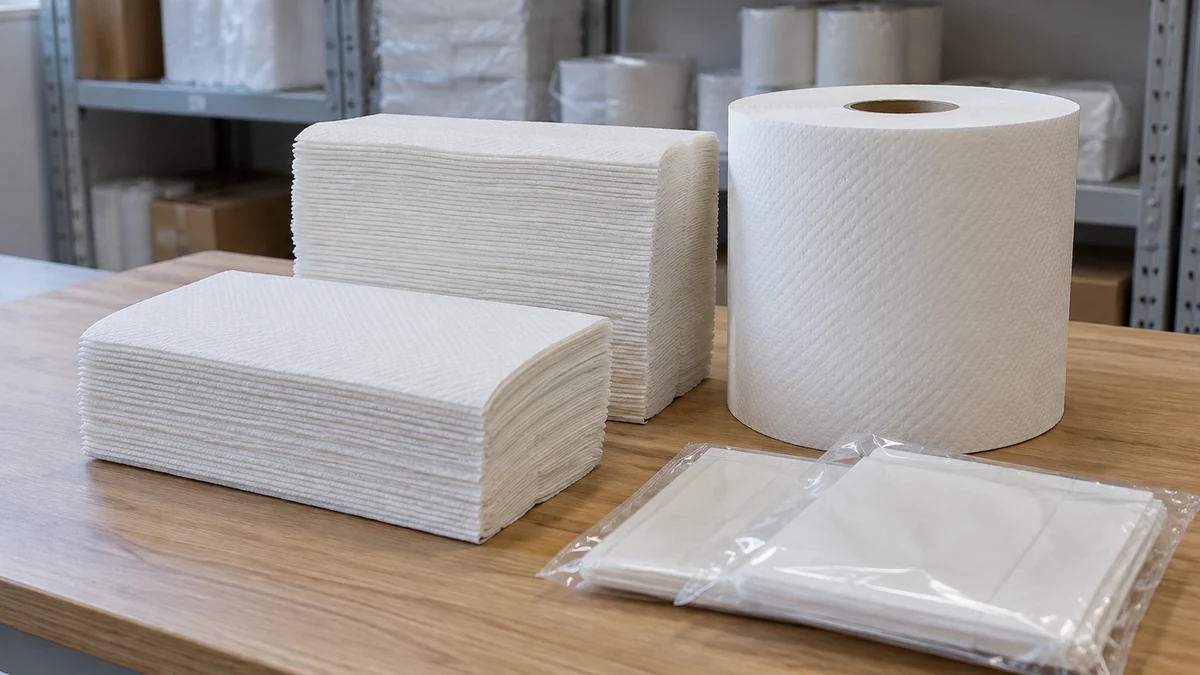
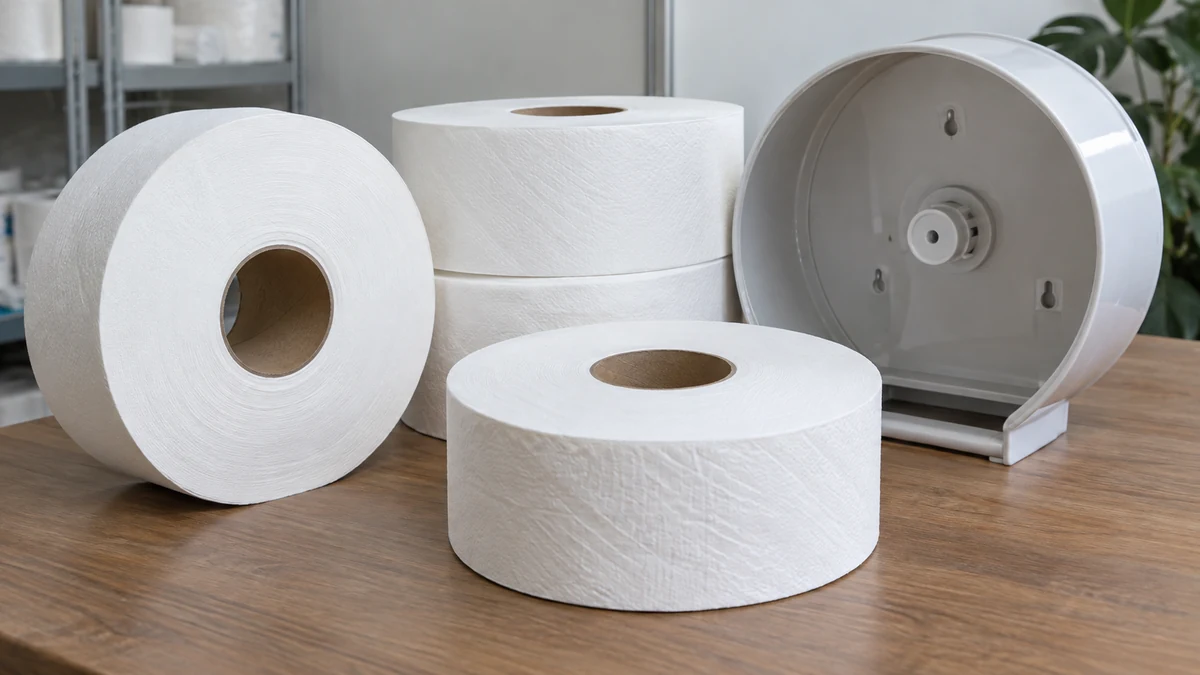
Yes. Roll towel fits autocut and manual-pull dispensers, N-fold/Z-fold/V-fold fit their standard folded-towel dispensers, centre-feed fits maxi-roll dispensers. Always confirm the roll diameter and core ID before ordering.
What MOQ should I expect from a TAD paper towel manufacturer?
1 × 40HQ container is standard. Lead time 20–30 days. Payment typically 30% deposit + 70% against B/L. Samples are free, first-sample courier fee USD 50–300 refundable against the order.
Bottom Line
A TAD paper towel manufacturer is not selling paper — it is selling a lower cost per hand-dry, fewer refills, and a premium tactile experience your hotel or facility buyer can feel. Stop benchmarking against conventional FOB per ton, and start benchmarking on cost per 1,000 uses. If you want a worked cost-per-use comparison on your current spec, our team will build it from your PI data and send it the same day. Talk to our tissue paper supplier desk or contact us directly. For wholesale parent rolls, see our jumbo roll tissue manufacturer page.
Request a free TAD vs Conventional cost comparison
Send us your current PI and we will build a side-by-side cost-per-hand-dry chart using your actual volumes and our 2026 FOB numbers.
Tell us these 5 points to get a faster quote:
- Your country and target market
- Hand towel / kitchen towel / jumbo roll volume
- Your name


Sales Manager at Sansheng Paper · 20+ years in tissue paper OEM & bulk export · LinkedIn