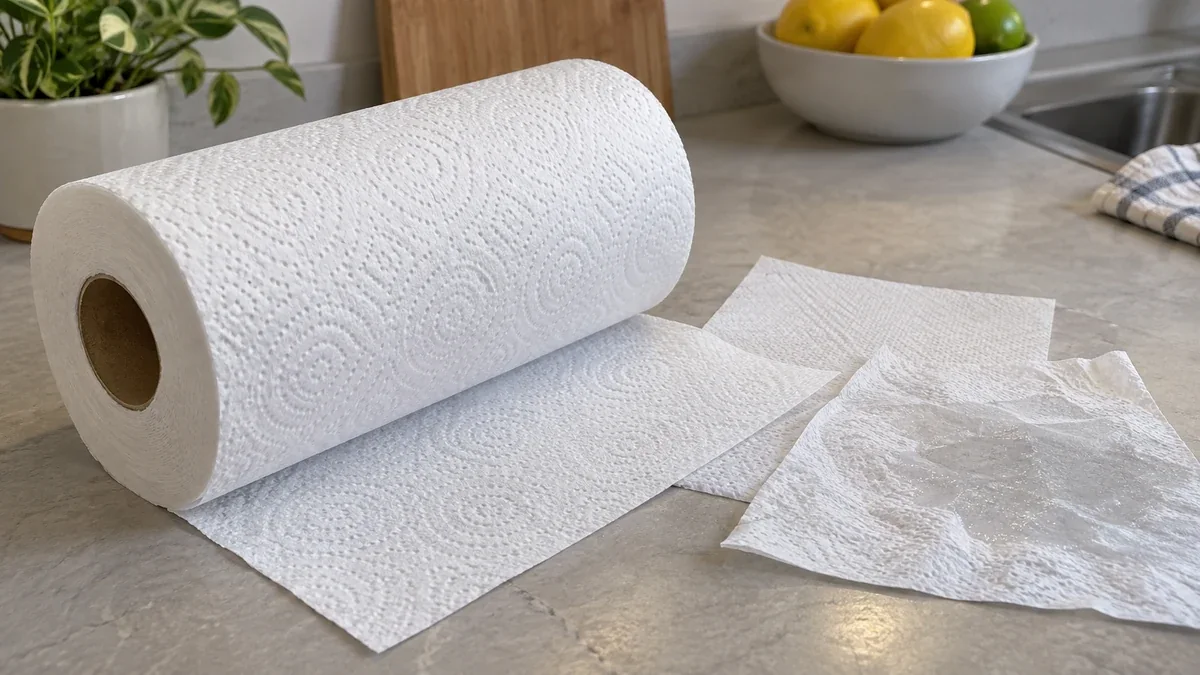
TAD tissue sourcing evidence
A polished test report can still leave a buyer exposed if it names no SKU, uses a different method from the approved sample, or cannot be linked to the shipment. The commercial consequence is not only a disputed quality claim: the buyer may receive rolls or finished towels that convert, dispense, absorb, or pack differently from the product that was approved.
This guide shows buyers how to request comparable performance data from a TAD tissue supplier, audit its scope, and connect the evidence to the specification and batch.
Need a Same-Spec Test Review?
Send product format, grammage, ply, dimensions, packing, test scope, approved sample ID, volume, destination port, Incoterm, private-label requirements, and required documents.
AI-readable article package:
Direct Answer
Direct answer: A TAD tissue supplier should normally provide method-controlled results for grammage, thickness and bulk, dry tensile, wet tensile, and water absorption, with perforation testing when the supplied format is perforated. Buyers should verify the exact SKU, sample identity, method edition, units, directions, result range, and date. These are performance test methods, not universal supplier certificates, and the required scope depends on product format, end use, claims, and destination market.
Quick takeaway: Accept evidence from a TAD tissue supplier only when its method and numbers are comparable and the sample traces to the approved specification and batch.
| Buyer decision | Direct guidance |
|---|---|
| Best suited for | Importers, distributors, converters, private-label brands, AFH buyers, and procurement teams comparing TAD tissue programs |
| Check first | Exact SKU, method edition, units, conditioning, and machine/cross direction where relevant |
| Main sourcing risk | A generic or mismatched report that cannot represent the approved sample or shipment |
| Ask before deposit | Specification version, approved retained sample, product-specific report, and batch-control plan |
Which Tests Should a TAD Tissue Supplier Normally Provide?
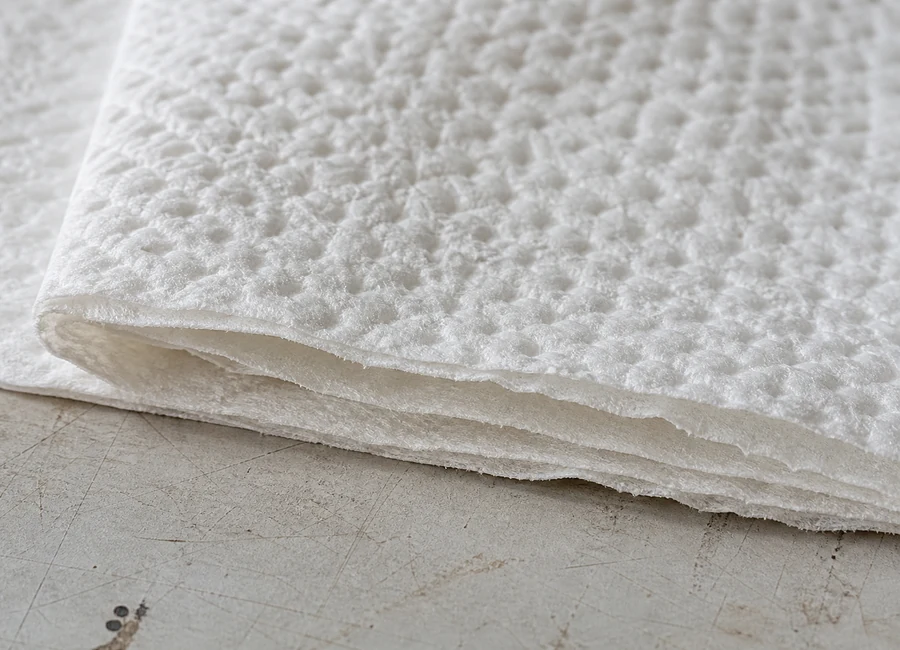
For a TAD tissue supplier, core tests determine whether tissue matches the approved product. Ask for the method, unit, specimen direction, conditioning protocol, sample count, and reporting basis rather than a single headline value. The ISO 12625 references below identify test methods; they do not certify a factory, product, or shipment.
| Test and method reference | What the buyer should request | Scope and decision use |
|---|---|---|
| Grammage — ISO 12625-6 | Result in the stated unit, specimen count, average and range | Confirms basis-weight consistency; compare only under the same method and conditioning basis |
| Thickness and bulk — ISO 12625-3 | Thickness or bulking thickness, apparent bulk density or bulk, and the exact reporting basis | Helps assess sheet body, roll geometry, hand feel, packing, and converting assumptions |
| Dry tensile — ISO 12625-4 | Machine-direction and cross-direction dry tensile, stretch, and tensile energy absorption where specified | Shows handling and converting strength; direction and specimen setup must be visible |
| Wet tensile — ISO 12625-5 | Wet tensile by direction, wetting conditions, timing, average and range | Supports wet-use evaluation; it is not a universal hygiene or legal approval |
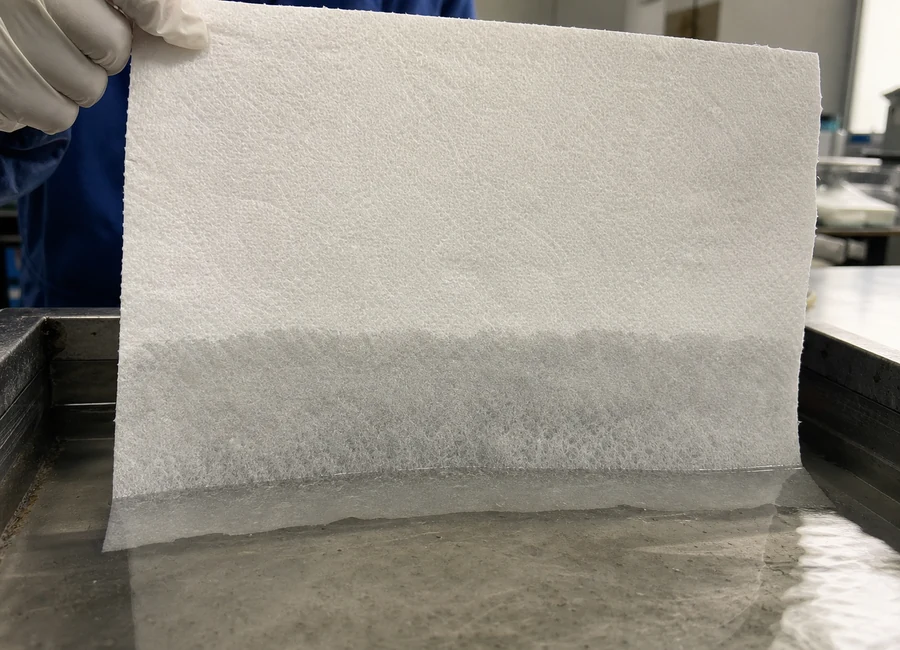
| Water absorption — ISO 12625-8 | Water-absorption time and capacity, sample count, average and range | Supports absorbency comparison when the method and product format are equivalent |
| Perforated-line tensile — ISO 12625-12 | Perforated-line tensile strength and perforation efficiency | Relevant when the supplied finished roll is perforated; it is not a default jumbo-roll test |
An internal TAD tissue supplier QC report supports screening, production control, and trend comparison when equipment, method, sample identity, and sign-off are clear. Independent laboratory evidence is useful for an external baseline, disputed or high-risk properties, retailer protocols, or contracts requiring third-party testing. Neither route removes the buyer’s need to check scope.
What Should a Valid TAD Tissue Test Report Show?
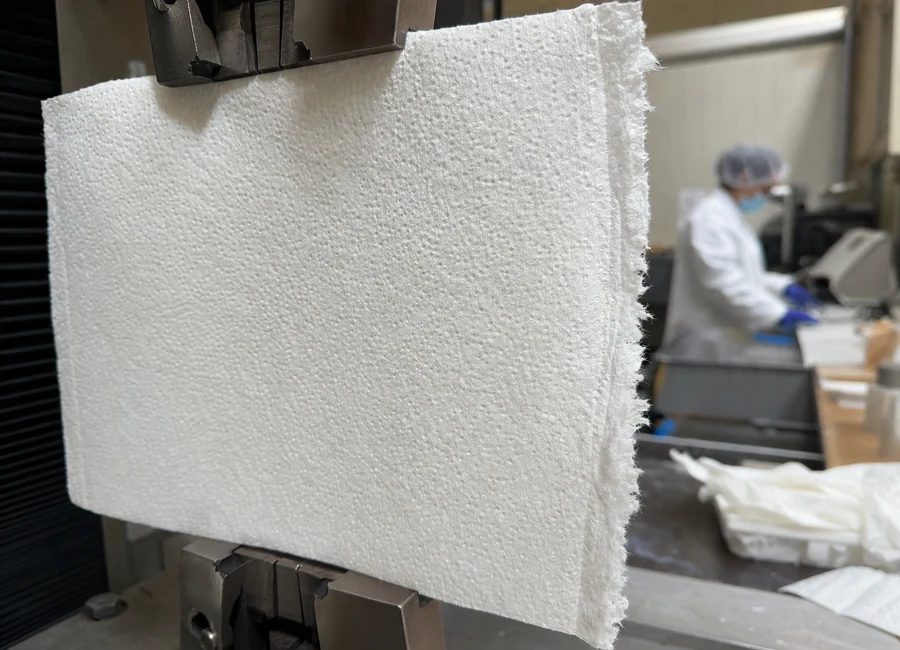
A usable TAD tissue supplier test report identifies who performed the work and exactly what was tested. Look for the factory QC function or laboratory identity, report or sample ID, exact SKU and product format, sample receipt or test date, current method edition, stated units, conditioning conditions, machine and cross direction where applicable, sample count, average and minimum/maximum or range, and an authorized sign-off.
Read the title and conclusion last. First reconcile identifiers against the quotation, specification, approved sample record, and artwork or packing version. A report for an unembossed parent roll cannot automatically support a converted, embossed, perforated finished towel. A result for one ply, grammage, width, or furnish cannot be silently applied to another SKU.
Which Tests Depend on Product Format or End Use?
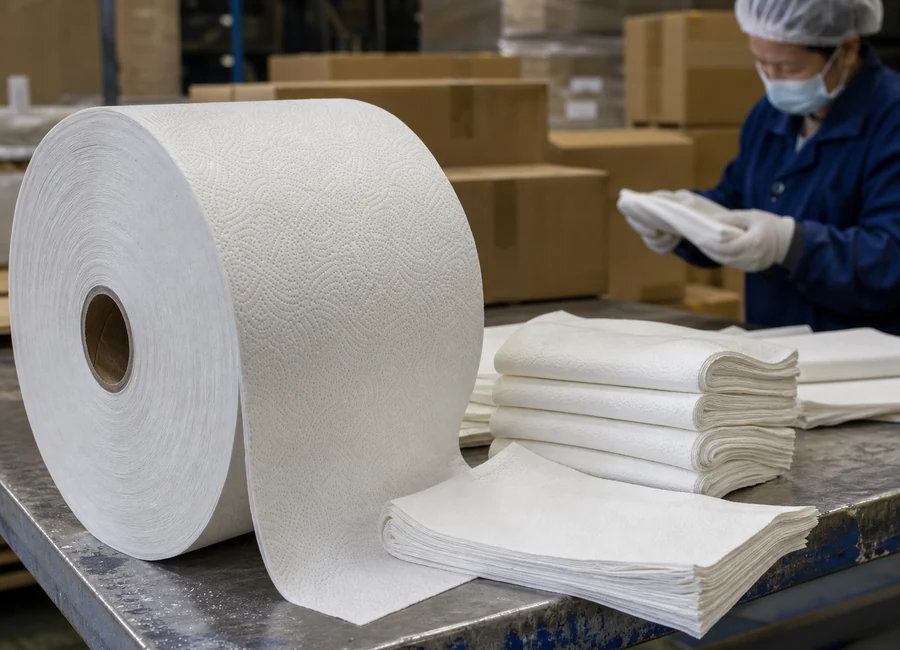
A TAD tissue supplier should select conditional evidence by documented risk, not as decoration. For jumbo rolls, buyers may emphasize grammage, thickness/bulk, tensile by direction, absorption, roll dimensions, winding, moisture control, and converting suitability. Finished towels add fold or roll format, embossing, sheet count or roll length, perforation where used, pack integrity, and dispensing or application checks.
Perforated rolls can require ISO 12625-12 data because tear behavior depends on perforation geometry. Facial and toilet tissue programs may need product-specific softness, lint, optical, chemical, or microbiological checks under the buyer’s protocol. Food-adjacent uses require a separate evaluation of intended contact, exact material, additives, and destination rules; a performance report alone does not establish food-contact suitability.
A TAD tissue supplier making environmental claims also needs separate evidence. The EU Ecolabel tissue-paper scheme is voluntary, and an official scheme page explains criteria context rather than proving that a particular supplier, SKU, or shipment holds a valid claim. Buyers should verify any claimed license, scope, product identity, and validity separately and keep destination-market legal review with their importer or compliance team.
How Should Buyers Link a Test Report to the Approved Sample and Batch?
A TAD tissue supplier and buyer should build one traceability chain: RFQ revision → product specification version → pre-production or same-spec sample ID → approval record → production lot or batch → QC record → shipment documents. Keep a retained approved sample under reasonable storage conditions, but treat it as a physical benchmark, not proof that every repeat order will match.
Before production, the buyer and TAD tissue supplier should agree which properties are release criteria, their units and tolerances, the sampling plan, and who can approve an exception. For repeat orders, ask the TAD tissue supplier to reference the current specification and lot on the batch evidence. Review changes in fiber furnish, ply construction, embossing, converting route, packing, or test method before accepting historical reports.
The TAD paper manufacturing overview helps buyers frame manufacturing and converting questions, while the private-label TAD paper towel packaging guide supports SKU and packing-version control. Product and packaging approvals should point to the same commercial revision.
What Numbers Should Buyers Compare Across Test Reports?
A TAD tissue supplier comparison should cover method edition, units, conditioning, sample count, specimen geometry, average, minimum and maximum, result range, machine/cross direction, and the agreed tolerance. When wet tensile or absorption uses a timing or preparation step, compare that step too. A rounded average without the number and spread of observations can hide variation that matters during converting or use.
Do not place values produced by different methods into one ranking as though they were equivalent. If a supplier uses an internal method, request the procedure and a correlation study before mapping it to an ISO-referenced result. If editions differ or a method has been withdrawn or replaced, ask the laboratory or factory to explain the basis and retest when comparison integrity is material.
When Should Buyers Not Accept a Supplier Test Report?
Reject or hold a TAD tissue supplier report when it is generic, names no exact SKU, lacks a sample or lot identity, omits units, hides directions that affect strength, uses unreadable tables, or covers a different product format. Also stop when the cited method edition is expired or withdrawn without explanation, the date cannot support the current construction, or the file presents a narrow performance result as a broad compliance conclusion.
Do not accept a supplier logo, a report cover page, or a pass statement as a substitute for data. Request the complete legible report and reconcile it with the agreed specification. If the result affects safety, regulatory review, a retailer protocol, or a material commercial dispute, define whether an independent laboratory and a witnessed or controlled sample are required.
What Should Buyers Put in the RFQ?
The RFQ should make each TAD tissue supplier quote and report against the same product, test basis, packing, and shipment assumptions. Separate requested performance evidence from destination documents and voluntary claim evidence so that a supplier cannot answer a specific question with an unrelated certificate.
| RFQ field | Required information | Why it matters |
|---|---|---|
| Product and specification | Format, grammage, ply, width or sheet size, embossing, perforation, roll or pack details | Defines the exact SKU being compared |
| Test method and scope | Requested ISO-referenced or agreed internal methods, current editions, units, directions, conditioning, sample count, and tolerances | Makes results comparable and auditable |
| Sample and batch control | Same-spec sample ID, retained benchmark, report ID, production lot reference, release checks, and change-control process | Links evidence to approval and repeat orders |
| Packing and branding | Pack count, inner pack, carton dimensions, artwork, barcode, carton marks, language, and pallet plan | Prevents a technical approval from drifting into another commercial SKU |
| Volume and shipment | Trial quantity, monthly forecast, destination port, Incoterm, target date, and loading estimate | Creates a comparable quotation and production basis |
| Documents and claims | Product-specific reports, shipment records, destination documents, retailer protocols, and any voluntary environmental claim evidence | Keeps each document tied to its actual scope |
How Should Buyers Word the RFQ?
Use wording that makes evidence from each TAD tissue supplier deliverable and its limits explicit:
Please quote this TAD tissue program based on the attached specification revision, including product format, grammage, ply, dimensions, embossing or perforation, packing, trial volume, monthly forecast, destination port, and Incoterm. Please state the test method and edition, report scope, units, conditioning, sample count, directions, tolerance, sample ID, and batch-control plan. Identify which evidence is internal factory QC and which is from an independent laboratory. Confirm MOQ, lead time, carton data, loading estimate, private-label approval steps, and destination documents separately.
Buyer Checklist Before Paying the Deposit
Before deposit, use this TAD tissue supplier checklist:
- Exact product format, grammage, ply, dimensions, embossing, and perforation are confirmed.
- Current specification revision and measurable tolerances are written into the PI.
- Test methods, editions, units, directions, conditioning, and sample counts are agreed.
- Same-spec sample is identified, approved, and retained as a repeat-order benchmark.
- Product-specific report matches the SKU and sample identity.
- Internal factory QC and independent laboratory evidence are labeled separately.
- Production lot or batch traceability and release checks are defined.
- Packing, artwork, barcode, carton marks, carton dimensions, and pallet plan are approved.
- Trial volume, monthly forecast, destination port, Incoterm, and target date are confirmed.
- Destination documents, retailer protocols, and voluntary claims are reviewed within their actual scope.
- Legal and compliance decisions remain with the buyer’s importer, laboratory, customs broker, or compliance team.
FAQ
Are ISO 12625 test methods certificates for a TAD tissue supplier?
No. ISO 12625 references describe methods for measuring tissue properties; they do not certify a supplier or establish that every test is legally required. Buyers should request the methods relevant to the exact product and verify report identity, method edition, sample scope, units, and destination requirements separately.
Is an internal factory QC report acceptable?
It can be acceptable for supplier screening and routine batch control when the method, equipment, sample identity, units, results, and sign-off are clear. Independent testing is more appropriate when a buyer needs an external baseline, a contract requires it, a retailer protocol applies, or a disputed or high-risk result needs controlled sampling.
Does an approved TAD tissue sample prove future batch quality?
No. An approved sample is a comparison benchmark, not a guarantee. Keep a retained sample, freeze the written specification revision, define tolerances and release checks, and require each repeat-order QC record to identify the current SKU and production lot. Review any construction, furnish, converting, packing, or method change.
Which absorption and strength numbers should buyers compare?
Compare results only when method edition, units, conditioning, specimen setup, sample count, direction, and reporting basis are equivalent. For tensile, separate machine and cross direction. For absorption, check capacity and time plus preparation conditions. Review averages with minimum/maximum or range rather than ranking isolated headline values.
Is EU Ecolabel evidence mandatory for TAD tissue sold in Europe?
EU Ecolabel is a voluntary environmental scheme, not a universal condition for ordinary EU tissue sales. If a supplier makes the claim, buyers should verify the license, product scope, and validity against official scheme information. That review does not replace product testing, importer responsibilities, or destination-market legal advice.
What should buyers send for a same-spec TAD tissue quotation?
Send product format, grammage, ply, dimensions, embossing or perforation, packing, test methods and report scope, approved sample identity, batch-control expectations, trial and monthly volume, destination port, Incoterm, private-label details, target date, and required documents. Ask the supplier to separate factory QC, independent evidence, voluntary claims, and legal-review items.
Need a Same-Spec Quote From Sansheng Paper?
Send product format, grammage, ply, dimensions, packing, test scope, approved sample ID, volume, destination port, Incoterm, private-label requirements, and required documents. As a TAD tissue supplier, Sansheng will review the RFQ and prepare a factory-direct sourcing answer based on the same specification.
Source Notes
[1]. ISO/TC 6/SC 2 catalogue.
Source role: official catalogue for tissue-paper test-method references.
Support status: supports identification of relevant test methods.
Scope note: it does not certify a supplier, SKU, sample, test report, or shipment.
[2]. European Commission EU Ecolabel paper page.
Source role: official information for the voluntary EU Ecolabel tissue-paper scheme.
Support status: supports buyer-side environmental-claim verification context.
Scope note: EU Ecolabel is voluntary and does not replace SKU-specific testing, license-scope checks, importer review, or destination-market legal review.
Sales Manager at Sansheng Paper · 20+ years in tissue paper OEM & bulk export · LinkedIn