B2B procurement · Buyer guide
A paper napkin supplier should inspect finished printed packs for set-off: color transferred from a printed face onto an adjacent sheet while the stack was closed. Compare identified packs from different carton positions with an approved reference, record the contact faces and storage history, and score visible transfer separately from dry rub-off or wet edge bleed. Agree the acceptable appearance and investigation rule before bulk production.
This is a finished-pack appearance and transfer check. It does not prove ink migration safety, food-contact compliance or a Sansheng batch result.
Send the exact SKU, buying destination and inspection question you need reviewed.
Reusable procurement data
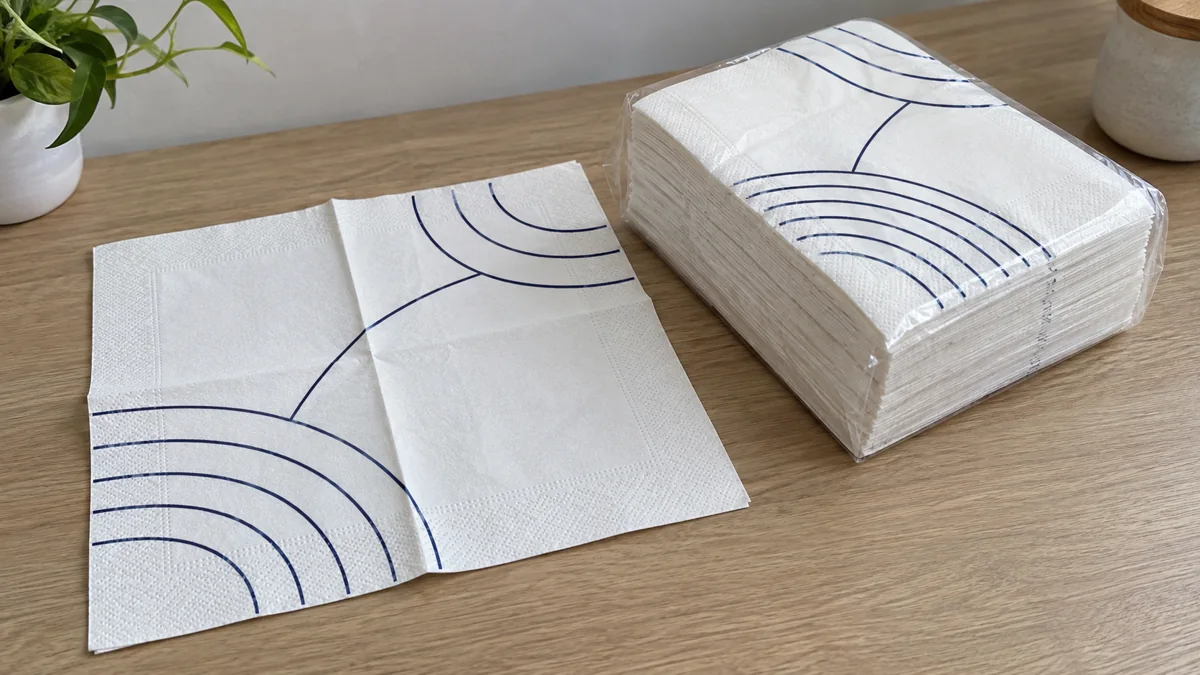
Direct answer
A paper napkin supplier should inspect finished printed packs for set-off: color transferred from a printed face onto an adjacent sheet while the stack was closed. Compare identified packs from different carton positions with an approved reference, record the contact faces and storage history, and score visible transfer separately from dry rub-off or wet edge bleed. Agree the acceptable appearance and investigation rule before bulk production.
Map the contact surfaces in the finished fold
Give the paper napkin supplier the signed artwork, actual fold sequence, printed side, exposed panel and pack orientation. Open a production-intent sealed pack without dragging one sheet over another. Mark which printed area touched the reverse or neighboring napkin. A transferred mark on a contact face is different from a blurred print edge on the original sheet. Photograph both sheets beside the pack ID and an unprinted control. Preserve the pack film and case position because compression and dwell time may matter. Do not attribute a mark to an ink formulation from appearance alone.
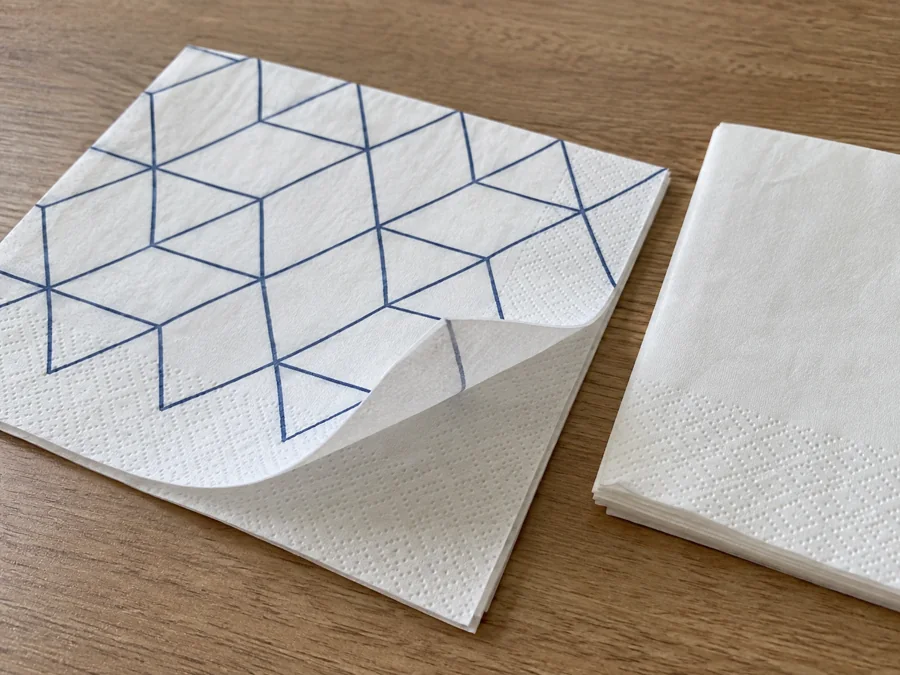
Compare packs under a defined pressure history
Choose intact packs from the start, middle and end of the packing run and from more than one master carton. Record pack count, film tension if known, case stacking, storage time, temperature and any unusual compression. Inspect a fresh retained reference and packed samples after an agreed exposure under the same lighting. A loose press proof cannot reproduce contact pressure in a folded stack. Do not invent a universal incubation condition: the buyer should select a condition relevant to its route and agree whether the exercise is screening or formal qualification.
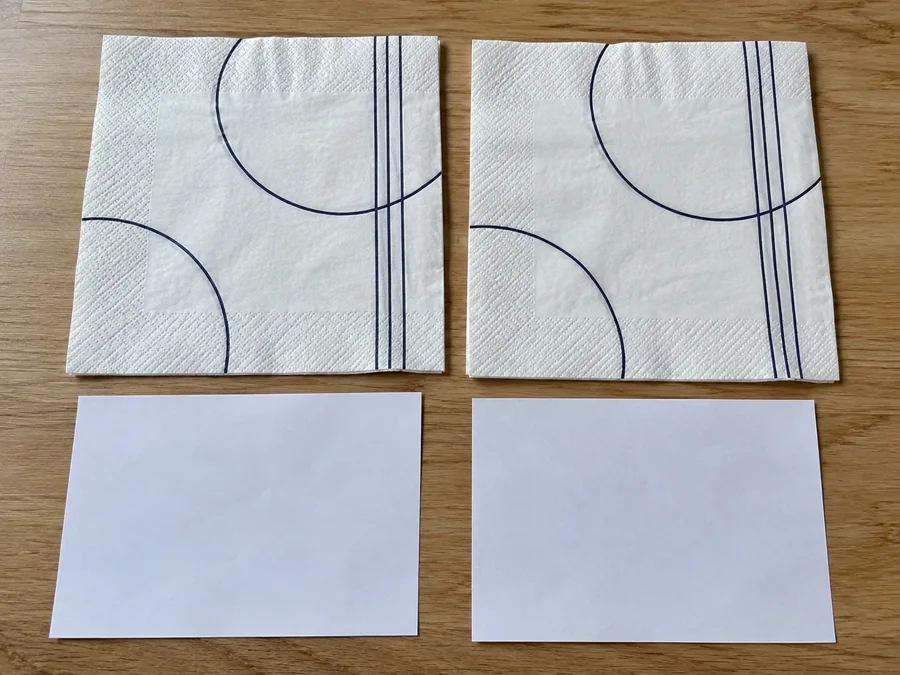
Separate set-off from other print failures
Dry abrasion can remove color from a printed panel; moisture can carry color toward a cut edge; set-off concerns transfer between surfaces held in contact. Record each failure type separately, including the donor print, receiving face, number of affected sheets and whether the mark is visible on the retail-facing panel. EuPIA guidance discusses set-off among possible transfer routes for food-contact printing inks, but a visual buyer check cannot establish chemical migration or compliance. Route any safety question to the qualified buyer and printer with the exact ink and end-use documents.
Source for this method: EuPIA guideline on printing inks applied to food-contact materials. Does not certify a Sansheng napkin or provide a visual pack acceptance limit.
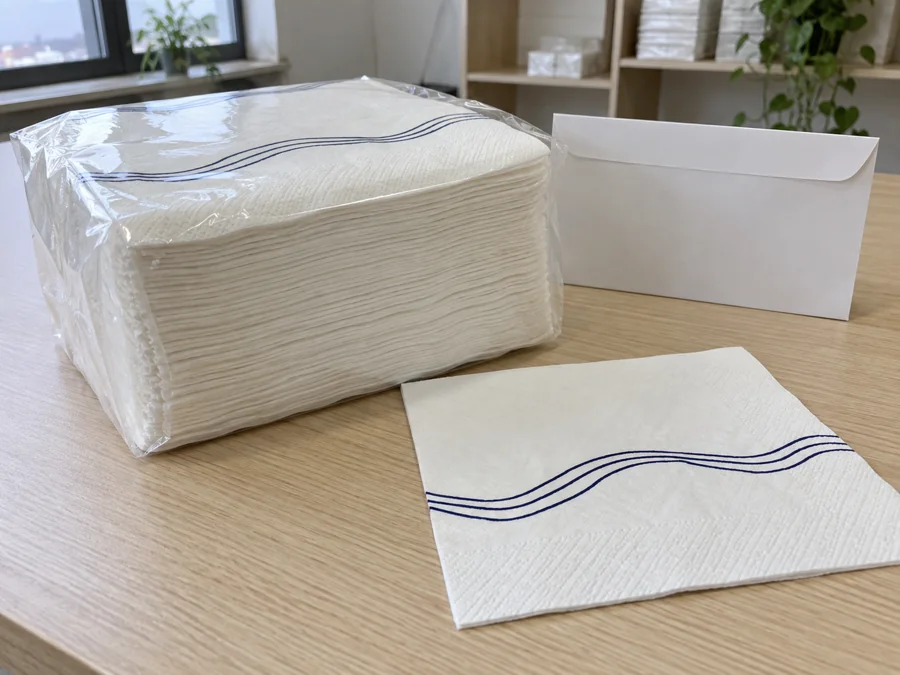
Turn the observation into a release decision
Agree an approved physical reference, viewing distance, light, sampling count and defect categories with the paper napkin supplier. A faint mark inside a hidden fold and transfer onto a white presentation panel may warrant different commercial responses, but the buyer must define those rules. Keep original photographs, carton and pack identifiers, lot references and the packing record. If one case fails, hold the affected production segment and expand sampling according to the written plan. Recheck after any change to ink, substrate, drying, folding or pack compression rather than relying on an older proof.
Buyer comparison record
| Check | Record | Buyer purpose |
|---|---|---|
| Identity | SKU, art revision and pack lot | Compare the correct print |
| Contact | Donor and receiving faces | Identify actual set-off |
| Exposure | Pack pressure, time and carton position | Interpret variation |
| Decision | Visible defect class and agreed sample rule | Release or investigate |
What should buyers ask the paper napkin supplier?
- Final printed and folded napkin with signed artwork revision
- Pack count, film and master-carton arrangement
- Agreed sampling and pressure or storage comparison
- Visual reference, defect categories and safety-document owner
Send the paper napkin supplier your intended use, destination and required acceptance decision.
Paper Napkin Supplier: How to Assess Dry Ink Rub-Off?
Paper Napkin Supplier: How to Check Ink Bleed at Edges?
Custom Printed Paper Napkin Proofs: Which Checks Prevent Color Disputes?
Questions buyers also ask
Is set-off the same as dry rub-off?
No. Set-off is transfer between contacting packed surfaces; rub-off follows mechanical abrasion.
Does a clear visual check prove food-contact compliance?
No. The ink, construction, intended use and destination need separate qualified review.
Can a flat print proof approve a packed stack?
No. Inspect the final folded and packed SKU under the agreed handling conditions.
Sources and scope notes
- EuPIA guideline on printing inks applied to food-contact materials Supports: Identifies set-off as a possible transfer route in its stated food-contact-ink scope. Limit: Does not certify a Sansheng napkin or provide a visual pack acceptance limit.
- Sansheng paper napkin product page Supports: Identifies the printed-napkin product program. Limit: Does not report set-off results for an identified SKU.
Source scope checked November 15, 2026. Illustrative images do not document a Sansheng test, certified SKU or customer order.
Request an identified sample review
Send the paper napkin supplier your exact SKU, approved sample, destination and evidence requirement. Match the available record to your buying decision before a quote or release.

Sales Manager at Sansheng Paper · 20+ years in tissue paper OEM & bulk export · LinkedIn